Agnosticism
In-game article clicks load inline without leaving the challenge.
Agnosticism is the stance that the existence of God, the divine, the supernatural, or any other untestable claim is either unknowable in principle or unknown in fact. It can also mean an apathy towards such religious belief and refer to personal limitations rather than a worldview. Another definition is the view that "human reason is incapable of providing sufficient rational grounds to justify either the belief that God exists or the belief that God does not exist."
The English biologist Thomas Henry Huxley claimed that he originally coined the word agnostic in 1869 "to denote people who, like [himself], confess themselves to be hopelessly ignorant concerning a variety of matters [including the matter of God's existence], about which metaphysicians and theologians, both orthodox and heterodox, dogmatise with the utmost confidence." In this sense, agnosticism reflects a stance of withholding belief on any claim that cannot be tested or verified. Although Huxley coined the term in 1869, the agnostic viewpoint itself had been expressed by earlier thinkers, such as Sanjaya Belatthiputta, a 5th-century BCE Indian philosopher who expressed agnosticism about any afterlife; and Protagoras, a 5th-century BCE Greek philosopher who expressed agnosticism about the existence of "the gods".
Definition
Agnosticism is a questioning attitude toward the existence of God or the divine. It is a neutral position in which an individual neither affirms nor denies God's existence. Instead, they withhold judgment and remain open to both possibilities. Agnosticism is typically contrasted with belief and disbelief and is understood either as the absence of both or as a distinct mental attitude, such as a settled indecision. A commonly discussed criterion is that the agnostic person has considered the question of God's existence but has not reached a positive or negative conclusion. In this sense, someone who does not comprehend the question or has never thought about it, such as an infant, does not count as agnostic. Agnostics are often motivated by the idea that the available evidence is inconclusive, preferring to withhold assent as an expression of intellectual humility rather than adopt a dogmatic stance.
Philosophers often define agnosticism in a stronger sense as the theory that the existence of God is unknowable. This attitude goes beyond suspension of belief by embracing the claim that human cognition is too limited to access or verify this information. In its broadest sense, agnosticism is not restricted to religious questions but can be applied to any field. For example, a person can be agnostic about the existence of intelligent extraterrestrial life or free will if they are unable to reach a verdict on these issues.
Agnosticism is often contrasted with theism and atheism and treated either as a middle ground between the two or as a rejection of their shared assumption that knowledge about God is attainable. Some approaches group agnosticism with atheism as an irreligious attitude in which belief in God is absent. However, agnostics are not necessarily opposed to religion and may engage in some religious practices and traditions while remaining uncommitted about God's existence.
The word agnosticism derives from the ancient Greek terms ἀ-, (a-) meaning 'not, without', and γνῶσις, (gnōsis) meaning 'knowledge'. It was coined by Thomas Henry Huxley in a speech to the Metaphysical Society in 1869 to describe the view that humans lack the cognitive capacity to attain definitive knowledge about God and related matters.
Types
Various types of agnosticism are discussed in the academic literature, distinguished by kind of attitude, form of inquiry, and scope of subject matter.
Based on attitude
Psychological or doxastic agnosticism is a suspension of judgment. In this sense, a person is agnostic if they have considered God's existence but neither believe nor disbelieve it. Psychological agnosticism describes someone's state of mind without implying that this state is rational or demanded by a general lack of evidence. It contrasts with epistemological or cognitive agnosticism, which asserts that the existence of God is unknown or unknowable. This view argues that humans are unable to acquire this kind of information or that there is insufficient evidence to reach a definitive verdict. Some versions maintain that no evidence is available, while others hold that the evidence for and against is mixed and balances out. In either case, epistemological agnosticism concerns what people should or should not believe, not what they actually believe. Accordingly, it rejects both theism and atheism for claiming more than the evidence permits. Epistemological agnosticism is sometimes interpreted as skepticism about God because of its focus on the limits of knowledge.
A related distinction focuses on the degree of the agnostic commitment. Weak agnosticism is a personal attitude of someone who neither believes nor disbelieves. It is a lack of conviction in which an individual does not commit to either option without generalizing this stance into a universal claim about what others can or cannot know. Strong agnosticism, by contrast, embraces the more assertive position that knowledge of God's existence is impossible. The contrast between weak and strong agnosticism is sometimes framed as a claim about what it is reasonable to believe. In this sense, weak agnosticism holds that it is rational to suspend judgment about God. This view does not deem theism and atheism irrational; it merely treats suspension of judgment as a permissible option. Strong agnosticism, by contrast, involves the more wide-sweeping claim that agnosticism is the only viable option, meaning that claims about the existence or non-existence of God lack sufficient justification and should be withheld.
Based on inquiry
A different set of distinctions targets the inquiry involved in the agnostic stance. Grounded agnosticism is the result of serious inquiry: the person has considered the different options, tried to gather relevant evidence, and reflected on the arguments for and against. After taking everything into account, they have concluded that neither belief nor disbelief is decisively justified, leading them to see the matter as unresolvable. Ungrounded agnosticism, by contrast, withholds judgment without engaging in substantive investigation. In this case, the person understands the issue and has a basic idea of how an inquiry could proceed but has not undertaken it, for example, because they do not consider the issue important enough to merit an in-depth examination. The term stored agnosticism is sometimes used for an even weaker form in which a person lacks an opinion because they have never considered the issue. However, it is controversial whether this attitude should be regarded as a genuine form of agnosticism.
Optimistic, pessimistic, and hesitant agnosticism agree about the current lack of knowledge but disagree about the prospects of future inquiry. According to optimistic agnosticism, also called temporary agnosticism in practice, current evidence is insufficient, but the issue may be decided in the future. In this case, a person suspends judgment for now but remains open to the possibility that future discoveries could provide decisive evidence one way or the other. Pessimistic agnosticism, or permanent agnosticism in principle, rejects this possibility. It holds that the question is irresolvable in principle, meaning that no amount of inquiry can conclusively settle the matter. Hesitant agnosticism is undecided both about the issue itself and about the prospects of future inquiry. Accordingly, it is unsure whether further investigation can provide evidence or whether the obstacles to knowledge are insurmountable.
Pessimistic forms of agnosticism differ over whether the problem is with available evidence or with the underlying fact. According to evidence-based views, the available evidence is insufficient to settle the matter. One suggestion holds that there is no serious evidence and that all proposed arguments fall short of the standards of rationality. Another suggestion acknowledges the presence of evidence but contends that the considerations for and against God's existence cancel each other out, meaning that the balance of all reasons favors neither side. Fact-based views assert that no future inquiry can resolve the issue because there is no determinate fact of the matter one way or the other. According to this view, the statement "God exists" is neither true nor false but indeterminate. For example, ignosticism challenges the definition of the word God, arguing that the term is incoherent or meaningless.
Others
Researchers also distinguish types of agnosticism based on the subject matter about which judgment is suspended. Agnosticism is typically associated with the existence of God but can be applied to various other topics. For example, someone can be agnostic about the existence of intelligent extraterrestrial life or the possibility of a Grand Unified Theory in physics. Accordingly, a person is agnostic about any religious or non-religious statement if they suspend judgment about it or hold that it is unknowable. This form of local or partial agnosticism is limited to a specific domain: one can be agnostic about God without being agnostic about alien life. Global or complete agnosticism, by contrast, is a broader stance that seeks to suspend judgment about everything, arguing that nothing is knowable. It is similar to radical or philosophical skepticism, which puts everything into question. Global agnosticism is rarely defended as a serious position in contemporary philosophy.
Secular and religious agnosticism are distinguished by their relation to religious attitudes and practices. Agnosticism is typically associated with a secular or atheistic outlook in which doubts about the existence of the divine and the truth of sacred scriptures result in a non-religious lifestyle that avoids traditional worship and favors naturalistic explanations. Agnostic atheists directly combine these two strands, justifying their lack of belief by arguing that knowledge is unattainable. However, not all forms of agnosticism are opposed to religion. For example, a person may suspend judgment only about specific aspects of doctrine while accepting others and engaging in religious practices. Some religious traditions explicitly embrace a form of agnosticism, such as agnostic theism and Christian agnosticism. Such an approach can be motivated by the idea that true knowledge of the divine is impossible and that religious devotion should be guided by faith rather than reason.
The distinction between existential agnosticism, truth agnosticism, and semantic agnosticism concerns the type of phenomenon that is put into question. Existential agnosticism focuses on a specific entity, such as God, questioning its existence. It can also be applied to a type or group of entities, such as the question about whether moral facts exist. Truth agnosticism targets a specific proposition and asks whether its truth can be known. For example, someone may be agnostic about the proposition that their preferred football team will win the next match. Semantic agnosticism is also concerned with a proposition. However, it does not ask whether it is true but what it means or under which conditions it would be true. This is the case, for example, if a person is unsure under which conditions a moral statement like "murder is wrong" would be true. Semantic agnosticism is sometimes contrasted with meta-linguistic agnosticism, which suspends judgment about whether religious language aims to report truths.
Methodological agnosticism is an approach to the study of religion that suspends judgment about the truth of religious doctrines. Following this approach, researchers describe, analyze, and compare the beliefs, experiences, and practices of religious traditions and their followers without endorsing or critiquing their truth claims. A key motivation is to ensure scholarly neutrality and to examine religious phenomena on their own terms without importing the researcher's personal naturalistic or supernaturalistic assumptions.
History
Hindu philosophy
Throughout the history of Hinduism there has been a strong tradition of philosophic speculation and skepticism.
The Rig Veda takes an agnostic view on the fundamental question of how the universe and the gods were created. Nasadiya Sukta (Creation Hymn) in the tenth chapter of the Rig Veda says:
But, after all, who knows, and who can say Whence it all came, and how creation happened? The gods themselves are later than creation, so who knows truly whence it has arisen? Whence all creation had its origin, He, whether he fashioned it or whether he did not, He, who surveys it all from highest heaven, He knows – or maybe even he does not know.
Hume, Kant, and Kierkegaard
Aristotle, Anselm, Aquinas, Descartes, and Gödel presented arguments attempting to rationally prove the existence of God. The skeptical empiricism of David Hume, the antinomies of Immanuel Kant, and the existential philosophy of Søren Kierkegaard convinced many later philosophers to abandon these attempts, regarding it impossible to construct any unassailable proof for the existence or non-existence of God.
In his 1844 book Philosophical Fragments, Kierkegaard writes:
Let us call this unknown something: God. It is nothing more than a name we assign to it. The idea of demonstrating that this unknown something (God) exists, could scarcely suggest itself to Reason. For if God does not exist it would of course be impossible to prove it; and if he does exist it would be folly to attempt it. For at the very outset, in beginning my proof, I would have presupposed it, not as doubtful but as certain (a presupposition is never doubtful, for the very reason that it is a presupposition), since otherwise I would not begin, readily understanding that the whole would be impossible if he did not exist. But if when I speak of proving God's existence I mean that I propose to prove that the Unknown, which exists, is God, then I express myself unfortunately. For in that case I do not prove anything, least of all an existence, but merely develop the content of a conception.
Hume was Huxley's favourite philosopher, calling him "the Prince of Agnostics". Diderot wrote to his mistress, telling of a visit by Hume to the Baron D'Holbach, and describing how a word for the position that Huxley would later describe as agnosticism did not seem to exist, or at least was not common knowledge, at the time.
The first time that M. Hume found himself at the table of the Baron, he was seated beside him. I don't know for what purpose the English philosopher took it into his head to remark to the Baron that he did not believe in atheists, that he had never seen any. The Baron said to him: "Count how many we are here." We are eighteen. The Baron added: "It isn't too bad a showing to be able to point out to you fifteen at once: the three others haven't made up their minds."
— Denis Diderot
United Kingdom
Charles Darwin
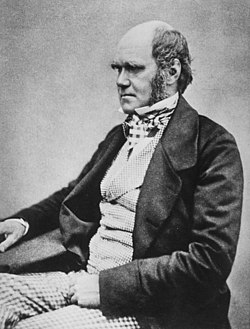
Raised in a religious environment, Charles Darwin (1809–1882) studied to be an Anglican clergyman. While eventually doubting parts of his faith, Darwin continued to help in church affairs, even while avoiding church attendance. Darwin stated that it would be "absurd to doubt that a man might be an ardent theist and an evolutionist". Although reticent about his religious views, in 1879 he wrote that "I have never been an atheist in the sense of denying the existence of a God. – I think that generally ... an agnostic would be the most correct description of my state of mind."
Thomas Henry Huxley

Agnostic views are as old as philosophical skepticism, but the terms agnostic and agnosticism were created by Huxley (1825–1895) to sum up his thoughts on contemporary developments of metaphysics about the "unconditioned" (William Hamilton) and the "unknowable" (Herbert Spencer). Though Huxley began to use the term agnostic in 1869, his opinions had taken shape some time before that date. In a letter of September 23, 1860, to Charles Kingsley, Huxley discussed his views extensively:
I neither affirm nor deny the immortality of man. I see no reason for believing it, but, on the other hand, I have no means of disproving it. I have no a priori objections to the doctrine. No man who has to deal daily and hourly with nature can trouble himself about a priori difficulties. Give me such evidence as would justify me in believing in anything else, and I will believe that. Why should I not? It is not half so wonderful as the conservation of force or the indestructibility of matter ...It is no use to talk to me of analogies and probabilities. I know what I mean when I say I believe in the law of the inverse squares, and I will not rest my life and my hopes upon weaker convictions ...That my personality is the surest thing I know may be true. But the attempt to conceive what it is leads me into mere verbal subtleties. I have champed up all that chaff about the ego and the non-ego, noumena and phenomena, and all the rest of it, too often not to know that in attempting even to think of these questions, the human intellect flounders at once out of its depth.
And again, to the same correspondent, May 6, 1863:
I have never had the least sympathy with the a priori reasons against orthodoxy, and I have by nature and disposition the greatest possible antipathy to all the atheistic and infidel school. Nevertheless I know that I am, in spite of myself, exactly what the Christian would call, and, so far as I can see, is justified in calling, atheist and infidel. I cannot see one shadow or tittle of evidence that the great unknown underlying the phenomenon of the universe stands to us in the relation of a Father [who] loves us and cares for us as Christianity asserts. So with regard to the other great Christian dogmas, immortality of soul and future state of rewards and punishments, what possible objection can I—who am compelled perforce to believe in the immortality of what we call Matter and Force, and in a very unmistakable present state of rewards and punishments for our deeds—have to these doctrines? Give me a scintilla of evidence, and I am ready to jump at them.
Of the origin of the name agnostic to describe this attitude, Huxley gave the following account:
When I reached intellectual maturity and began to ask myself whether I was an atheist, a theist, or a pantheist; a materialist or an idealist; Christian or a freethinker; I found that the more I learned and reflected, the less ready was the answer; until, at last, I came to the conclusion that I had neither art nor part with any of these denominations, except the last. The one thing in which most of these good people were agreed was the one thing in which I differed from them. They were quite sure they had attained a certain "gnosis"—had, more or less successfully, solved the problem of existence; while I was quite sure I had not, and had a pretty strong conviction that the problem was insoluble. And, with Hume and Kant on my side, I could not think myself presumptuous in holding fast by that opinion ... So I took thought, and invented what I conceived to be the appropriate title of "agnostic". It came into my head as suggestively antithetic to the "gnostic" of Church history, who professed to know so much about the very things of which I was ignorant. ... To my great satisfaction the term took.
William Stewart Ross
William Stewart Ross (1844–1906) wrote under the name of Saladin. He was associated with Victorian Freethinkers and the organization the British Secular Union. He edited the Secular Review from 1882; it was renamed Agnostic Journal and Eclectic Review and closed in 1907. Ross championed agnosticism in opposition to the atheism of Charles Bradlaugh as an open-ended spiritual exploration.
In Why I am an Agnostic (c.1889) he claims that agnosticism is "the very reverse of atheism".
Bertrand Russell
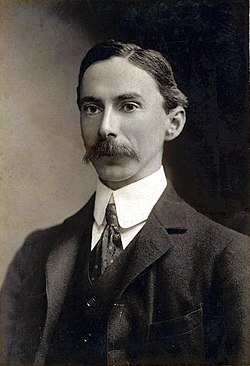
Bertrand Russell (1872–1970) declared Why I Am Not a Christian in 1927, a classic statement of agnosticism. He calls upon his readers to "stand on their own two feet and look fair and square at the world with a fearless attitude and a free intelligence".
In 1939, Russell gave a lecture on The existence and nature of God, in which he characterized himself as an atheist. He said:
The existence and nature of God is a subject of which I can discuss only half. If one arrives at a negative conclusion concerning the first part of the question, the second part of the question does not arise; and my position, as you may have gathered, is a negative one on this matter.
However, later in the same lecture, discussing modern non-anthropomorphic concepts of God, Russell states:
That sort of God is, I think, not one that can actually be disproved, as I think the omnipotent and benevolent creator can.
In Russell's 1947 pamphlet, Am I An Atheist or an Agnostic? (subtitled A Plea For Tolerance in the Face of New Dogmas), he ruminates on the problem of what to call himself:
As a philosopher, if I were speaking to a purely philosophic audience I should say that I ought to describe myself as an Agnostic, because I do not think that there is a conclusive argument by which one can prove that there is not a God. On the other hand, if I am to convey the right impression to the ordinary man in the street I think I ought to say that I am an Atheist, because when I say that I cannot prove that there is not a God, I ought to add equally that I cannot prove that there are not the Homeric gods.
In his 1953 essay, What Is An Agnostic? Russell states:
An agnostic thinks it impossible to know the truth in matters such as God and the future life with which Christianity and other religions are concerned. Or, if not impossible, at least impossible at the present time.Are Agnostics Atheists?No. An atheist, like a Christian, holds that we can know whether or not there is a God. The Christian holds that we can know there is a God; the atheist, that we can know there is not. The Agnostic suspends judgment, saying that there are not sufficient grounds either for affirmation or for denial.
Later in the essay, Russell adds:
I think that if I heard a voice from the sky predicting all that was going to happen to me during the next twenty-four hours, including events that would have seemed highly improbable, and if all these events then produced to happen, I might perhaps be convinced at least of the existence of some superhuman intelligence.
Leslie Weatherhead
In 1965, Christian theologian Leslie Weatherhead (1893–1976) published The Christian Agnostic, in which he argues:
... many professing agnostics are nearer belief in the true God than are many conventional church-goers who believe in a body that does not exist whom they miscall God.
Although radical and unpalatable to conventional theologians, Weatherhead's agnosticism falls far short of Huxley's, and short even of weak agnosticism:
Of course, the human soul will always have the power to reject God, for choice is essential to its nature, but I cannot believe that anyone will finally do this.
United States
Robert G. Ingersoll
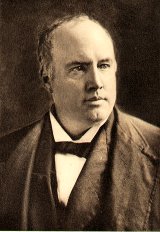
Robert G. Ingersoll (1833–1899), an Illinois lawyer and politician who evolved into a well-known and sought-after orator in 19th-century America, has been referred to as the "Great Agnostic".
In an 1896 lecture titled Why I Am An Agnostic, Ingersoll stated this:
Is there a supernatural power—an arbitrary mind—an enthroned God—a supreme will that sways the tides and currents of the world—to which all causes bow? I do not deny. I do not know—but I do not believe. I believe that the natural is supreme—that from the infinite chain no link can be lost or broken—that there is no supernatural power that can answer prayer—no power that worship can persuade or change—no power that cares for man.I believe that with infinite arms Nature embraces the all—that there is no interference—no chance—that behind every event are the necessary and countless causes, and that beyond every event will be and must be the necessary and countless effects.Is there a God? I do not know. Is man immortal? I do not know. One thing I do know, and that is, that neither hope, nor fear, belief, nor denial, can change the fact. It is as it is, and it will be as it must be.
In the conclusion of the speech he simply sums up the agnostic position as:
We can be as honest as we are ignorant. If we are, when asked what is beyond the horizon of the known, we must say that we do not know.
In 1885, Ingersoll explained his comparative view of agnosticism and atheism as follows:
The Agnostic is an Atheist. The Atheist is an Agnostic. The Agnostic says, 'I do not know, but I do not believe there is any God.' The Atheist says the same.
Bernard Iddings Bell
Canon Bernard Iddings Bell (1886–1958), a popular cultural commentator, Episcopal priest, and author, lauded the necessity of agnosticism in Beyond Agnosticism: A Book for Tired Mechanists, calling it the foundation of "all intelligent Christianity". Agnosticism was a temporary mindset in which one rigorously questioned the truths of the age, including the way in which one believed God. His view of Robert Ingersoll and Thomas Paine was that they were not denouncing true Christianity but rather "a gross perversion of it". Part of the misunderstanding stemmed from ignorance of the concepts of God and religion. Historically, a god was any real, perceivable force that ruled the lives of humans and inspired admiration, love, fear, and homage; religion was the practice of it. Ancient peoples worshiped gods with real counterparts, such as Mammon (money and material things), Nabu (rationality), or Ba'al (violent weather); Bell argued that modern peoples were still paying homage—with their lives and their children's lives—to these old gods of wealth, physical appetites, and self-deification. Thus, if one attempted to be agnostic passively, he or she would incidentally join the worship of the world's gods.
In Unfashionable Convictions (1931), he criticized the Enlightenment's complete faith in human sensory perception, augmented by scientific instruments, as a means of accurately grasping Reality. Firstly, it was fairly new, an innovation of the Western World, which Aristotle invented and Thomas Aquinas revived among the scientific community. Secondly, the divorce of "pure" science from human experience, as manifested in American Industrialization, had completely altered the environment, often disfiguring it, so as to suggest its insufficiency to human needs. Thirdly, because scientists were constantly producing more data—to the point where no single human could grasp it all at once—it followed that human intelligence was incapable of attaining a complete understanding of universe; therefore, to admit the mysteries of the unobserved universe was to be actually scientific.
Bell believed that there were two other ways that humans could perceive and interact with the world. Artistic experience was how one expressed meaning through speaking, writing, painting, gesturing—any sort of communication which shared insight into a human's inner reality. Mystical experience was how one could "read" people and harmonize with them, being what we commonly call love. In summary, man was a scientist, artist, and lover. Without exercising all three, a person became "lopsided".
Bell considered a humanist to be a person who cannot rightly ignore the other ways of knowing. However, humanism, like agnosticism, was also temporal, and would eventually lead to either scientific materialism or theism. He lays out the following thesis:
- Truth cannot be discovered by reasoning on the evidence of scientific data alone. Modern peoples' dissatisfaction with life is the result of depending on such incomplete data. Our ability to reason is not a way to discover Truth but rather a way to organize our knowledge and experiences somewhat sensibly. Without a full, human perception of the world, one's reason tends to lead them in the wrong direction.
- Beyond what can be measured with scientific tools, there are other types of perception, such as one's ability know another human through loving. One's loves cannot be dissected and logged in a scientific journal, but we know them far better than we know the surface of the sun. They show us an indefinable reality that is nevertheless intimate and personal, and they reveal qualities lovelier and truer than detached facts can provide.
- To be religious, in the Christian sense, is to live for the Whole of Reality (God) rather than for a small part (gods). Only by treating this Whole of Reality as a person—good and true and perfect—rather than an impersonal force, can we come closer to the Truth. An ultimate Person can be loved, but a cosmic force cannot. A scientist can only discover peripheral truths, but a lover is able to get at the Truth.
- There are many reasons to believe in God but they are not sufficient for an agnostic to become a theist. It is not enough to believe in an ancient holy book, even though when it is accurately analyzed without bias, it proves to be more trustworthy and admirable than what we are taught in school. Neither is it enough to realize how probable it is that a personal God would have to show human beings how to live, considering they have so much trouble on their own. Nor is it enough to believe for the reason that, throughout history, millions of people have arrived at this Wholeness of Reality only through religious experience. The aforementioned reasons may warm one toward religion, but they fall short of convincing. However, if one presupposes that God is in fact a knowable, loving person, as an experiment, and then lives according to that religion, he or she will suddenly come face to face with experiences previously unknown. One's life becomes full, meaningful, and fearless in the face of death. It does not defy reason but exceeds it.
- Because God has been experienced through love, the orders of prayer, fellowship, and devotion now matter. They create order within one's life, continually renewing the "missing piece" that had previously felt lost. They empower one to be compassionate and humble, not small-minded or arrogant.
- No truth should be denied outright, but all should be questioned. Science reveals an ever-growing vision of our universe that should not be discounted due to bias toward older understandings. Reason is to be trusted and cultivated. To believe in God is not to forego reason or to deny scientific facts, but to step into the unknown and discover the fullness of life.
Demographics


Demographic research services normally do not differentiate between various types of non-religious respondents, so agnostics are often classified in the same category as atheists or other non-religious people.
A 2010 survey published in Encyclopædia Britannica found that the non-religious people or the agnostics made up about 9.6% of the world's population. A November–December 2006 poll published in the Financial Times gives rates for the United States and five European countries. The rates of agnosticism in the United States were at 14%, while the rates of agnosticism in the European countries surveyed were considerably higher: Italy (20%), Spain (30%), Great Britain (35%), Germany (25%), and France (32%).
A study conducted by the Pew Research Center found that about 16% of the world's people, the third largest group after Christianity and Islam, have no religious affiliation. According to a 2012 report by the Pew Research Center, agnostics made up 3.3% of the US adult population. In the 2024 U.S. Religious Landscape Survey, conducted by the Pew Research Center, 54% of agnostic respondents stated that they do not believe in God, whereas 41% stated that they thought that they felt a tension "being non-religious in a society where most people are religious".
According to the 2021 Australian Bureau of Statistics, 38.9% of Australians have "no religion", a category that includes agnostics. Between 64% and 65% of Japanese, and up to 81% of Vietnamese, are atheists, agnostics, or do not believe in a god. An official European Union survey reported that 3% of the EU population is unsure about their belief in a god or spirit.
Criticism
Agnosticism is criticized from a variety of standpoints. Some atheists criticize the use of the term agnosticism as functionally indistinguishable from atheism; this results in frequent criticisms of those who adopt the term as avoiding the atheist label.
Theistic
Theistic critics claim that agnosticism is impossible in practice, since a person can live only either as if God did not exist (etsi deus non-daretur), or as if God did exist (etsi deus daretur).
Christian
According to Pope Benedict XVI, strong agnosticism in particular contradicts itself in affirming the power of reason to know scientific truth. He blames the exclusion of reasoning from religion and ethics for dangerous pathologies such as crimes against humanity and ecological disasters. "Agnosticism", said Benedict, "is always the fruit of a refusal of that knowledge which is in fact offered to man ... The knowledge of God has always existed". He asserted that agnosticism is a choice of comfort, pride, dominion, and utility over truth, and is opposed by the following attitudes: the keenest self-criticism, humble listening to the whole of existence, the persistent patience and self-correction of the scientific method, a readiness to be purified by the truth.
The Catholic Church sees merit in examining what it calls "partial agnosticism", specifically those systems that "do not aim at constructing a complete philosophy of the unknowable, but at excluding special kinds of truth, notably religious, from the domain of knowledge". However, the Church is historically opposed to a full denial of the capacity of human reason to know God. The Council of the Vatican declares, "God, the beginning and end of all, can, by the natural light of human reason, be known with certainty from the works of creation".
Blaise Pascal argued that even if there were truly no evidence for God, agnostics should consider what is now known as Pascal's Wager: the infinite expected value of acknowledging God is always greater than the finite expected value of not acknowledging his existence, and thus it is a safer "bet" to choose God.
Atheistic
According to Richard Dawkins, a distinction between agnosticism and atheism is unwieldy and depends on how close to zero a person is willing to rate the probability of existence for any given god-like entity. About himself, Dawkins continues, "I am agnostic only to the extent that I am agnostic about fairies at the bottom of the garden." Dawkins also identifies two categories of agnostics; "Temporary Agnostics in Practice" (TAPs), and "Permanent Agnostics in Principle" (PAPs). He states that "agnosticism about the existence of God belongs firmly in the temporary or TAP category. Either he exists or he doesn't. It is a scientific question; one day we may know the answer, and meanwhile we can say something pretty strong about the probability", and considers PAP a "deeply inescapable kind of fence-sitting".
Ignosticism
A related concept is ignosticism, the view that a coherent definition of a deity must be put forward before the question of the existence of a deity can be meaningfully discussed. If the chosen definition is not coherent, the ignostic holds the noncognitivist view that the existence of a deity is meaningless or empirically untestable. A. J. Ayer, Theodore Drange, and other philosophers see both atheism and agnosticism as incompatible with ignosticism on the grounds that atheism and agnosticism accept the statement "a deity exists" as a meaningful proposition that can be argued for or against.
See also
- Acatalepsy
- Agnostic atheism
- Agnostic theism
- Apatheism
- Apophatic theology
- Asimov's Guide to the Bible
- Avidyā (Buddhism)
- Christian agnosticism
- Existentialism
- Ietsism
- Ignoramus et ignorabimus
- Instrumentalism
- List of agnostics
- Objectivism
- Possibilianism
- Rationalism
- Relativism
- Religiosity
- Religious skepticism
- Russell's teapot
- Scientism
- Secularism
- Solipsism
- Spirituality
- Spiritual but not religious
- Subjectivism
- Unknown God
- Philosophy portal
- Religion portal
Notes
Citations
Sources
Further reading
- . Forgotten Books. pp. 164–. ISBN 978-1-4400-6878-2.
- Alexander, Nathan G. The Humanist, February 19, 2019.
- Annan, Noel. Leslie Stephen: The Godless Victorian (U of Chicago Press, 1984)
- Cockshut, A.O.J. The Unbelievers, English Thought, 1840–1890 (1966).
- Dawkins, Richard. "The poverty of agnosticism", in The God Delusion, Black Swan, 2007 (ISBN 978-0-552-77429-1).
- Huxley, Thomas H. (February 4, 2013). . Courier Dover Publications. pp. 1–. ISBN 978-0-486-15134-2.
- Hume, David (1779). . Penguin Books, Limited. pp. –.
- Kant, Immanuel (May 28, 2013). . Loki's Publishing. ISBN 978-0-615-82576-2.
- Kierkegaard, Sören (1985). . Religion-online.org. ISBN 978-0-691-02036-5. Archived from on February 22, 2014.
- Lightman, Bernard. The Origins of Agnosticism (1987).
- Royle, Edward. Radicals, Secularists, and Republicans: Popular Freethought in Britain, 1866–1915 (Manchester UP, 1980).
- Smith, George H. (1979). (PDF). Prometheus Books. ISBN 0-87975-124-X. Archived from on November 26, 2013.
External links
- Zalta, Edward N. (ed.). . Stanford Encyclopedia of Philosophy. ISSN . OCLC .
- at PhilPapers
- at the Indiana Philosophy Ontology Project
- Shapell Manuscript Foundation
- by Robert G. Ingersoll, [1896].
- – from
- Fides et Ratio Karol Wojtyla [1998]
- by Brendan Connolly, 2008
- Nielsen, Kai (1973) [1968]. . Dictionary of the History of Ideas. University of Virginia Library.