Bitlis Province
In-game article clicks load inline without leaving the challenge.
Bitlis Province (Turkish:Bitlis ili; Armenian:Բաղեշի մարզ,romanized:Bagheshi marz; Kurdish:Parêzgeha Bidlîsê) is a province of eastern Turkey, located to the west of Lake Van. It takes its name from the central city, Bitlis. Its area is 8,294km2, and its population is 353,988 (2022). The province was part of Moxoene of the Kingdom of Armenia. Before the Armenian genocide, the area was part of the Six Armenian Vilayets and considered part of Western Armenia by Armenians. The province is considered part of Turkish Kurdistan and has a Kurdish majority. The current Governor of the province is Erol Karaömeroğlu.
History
The administrative center was the town of Bitlis which was called Bagesh, in old Armenian sources.
In 1927 the office of the Inspector General was created, which governed with martial law. The Bitlis province was included in the first Inspectorate General (Umumi Müfettişlik, UM) over which the Inspector General ruled. The UM span over the provinces of Hakkâri, Siirt, Van, Mardin, Bitlis, Sanlıurfa, Elaziğ and Diyarbakır. The Inspectorate General was dissolved in 1952 during the Government of the Democrat Party.


Tourism
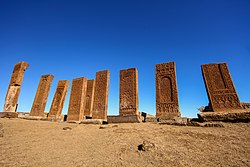
The main places with tourism potential in Bitlis are Lake Nemrut, Ahlat Seljuk Cemetery, Ahlat Museum, Mount Süphan, Güroymak Hot Springs and Lake Nazik.
Demographics
| Year | Pop. | ±% p.a. |
|---|---|---|
| 1927 | 90,631 | — |
| 1940 | 68,825 | −2.09% |
| 1950 | 88,634 | +2.56% |
| 1960 | 128,966 | +3.82% |
| 1970 | 185,473 | +3.70% |
| 1980 | 257,908 | +3.35% |
| 1990 | 330,115 | +2.50% |
| 2000 | 388,678 | +1.65% |
| 2010 | 328,767 | −1.66% |
| 2020 | 350,994 | +0.66% |
| Source:Turkstat |
Districts

Bitlis Province is divided into 7 districts (the capital district is in bold):
Geology and geomorphology
The main lakes in Bitlis province are Lake Sodalı, Lake Nemrut, Lake Aygır, Lake Batmış and Lake Nazik.
Economy
As of 1920, the province was producing small amounts of iron, copper, lead, and sulphur. Even smaller amounts of gold and silver were found in the areas of Sairt and Khairwan. Salt made up the largest mineral industry in the province, so much that it was exported to surrounding provinces. The salt was produced in pans, using evaporation, and taking 8 to 10 days to mature. The technique and trade was mainly run by local Kurds.
Attractions
External links
38°23′13″N 42°07′00″E/38.38694°N 42.11667°E/ 38.38694; 42.11667