Classical albedo features on Mars
In-game article clicks load inline without leaving the challenge.

The classical albedo features of Mars are the light and dark features that can be seen on the planet Mars through an Earth-based telescope. Before the age of space probes, several astronomers created maps of Mars on which they gave names to the features they could see. The most popular system of nomenclature was devised by Giovanni Schiaparelli, who used names from classical antiquity. Today, the improved understanding of Mars enabled by space probes has rendered many of the classical names obsolete for the purposes of cartography; however, some of the old names are still used to describe geographical features on the planet.
History
Observing albedo features

Early telescopic astronomers, observing Mars from a great distance through primitive instruments (though they were advanced for their day), were limited to studying albedo contrasts on the surface of the planet. These lighter and darker patches rarely correspond to topographic features and in many cases obscure them. The origins of the albedo contrasts were a mystery. The lighter patches at the poles were correctly believed to be a frozen substance, either water or carbon dioxide, but the nature of the dark patches seen against the general reddish tint of Mars was uncertain for centuries. When Giovanni Schiaparelli began observing Mars in 1877, he believed that the darker features were seas, lakes, and swamps and named them accordingly in Latin (mare, lacus, palus etc.). Within a few decades, however, most astronomers came to agree that Mars lacks large bodies of surface water. The dark features were then thought by some to be indications of Martian vegetation, since they changed shape and intensity over the course of the Martian year. They are now known to be areas where the wind has swept away the paler dust, exposing a darker surface, often basaltic rock; so their borders change in response to windstorms on the Martian surface that move the dust around, widening or narrowing the features.
The dust-storms themselves also appear as light patches, can cover vast areas and sometimes last for many weeks; when Mariner 9 arrived in Martian orbit in November 1971 the entire planet was covered by a single enormous dust-storm, with only the peaks of the four or five highest mountains showing above it. This variability may explain many of the differences between telescopic observations over the years.
Early non-classical names
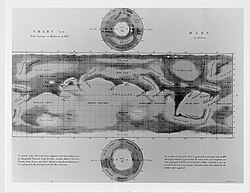
The first map of Martian albedo features was published in 1840 by Johann Heinrich Mädler and Wilhelm Beer, but they simply labelled the features a, b, c ... without giving them names. Over the next two decades the most prominent features picked up various informal names (such as the Hourglass Sea for what is now Syrtis Major Planum) but there was no overall system.
The first astronomer to name Martian albedo features systematically was Richard A. Proctor, who in 1867 created a map (based in part on the observations of William Rutter Dawes) in which several features were given the names of astronomers who had been involved in mapping Mars. In some cases, the same names were used for multiple features. Proctor's names remained in use for several decades, notably in several early maps drawn by Camille Flammarion in 1876 and Nathaniel Green in 1877.
Schiaparelli's classical names

However, within a few decades Proctor's names were superseded by a new scheme devised by Giovanni Schiaparelli, whose observations differed from Proctor's, and who used this difference to justify drawing up an entirely new system of nomenclature. Schiaparelli was an expert on ancient astronomy and geography, and used Latin names, drawn from the myths, history and geography of classical antiquity; dark features were named after ancient seas and rivers, light areas after islands and legendary lands.
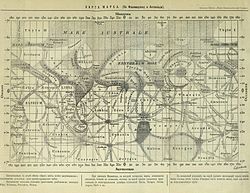
When E. M. Antoniadi took over as the leading telescopic observer of Mars in the early 20th century, he followed Schiaparelli's names rather than Proctor's, and the Proctorian names quickly became obsolete. In his encyclopedic work La Planète Mars (1930) Antoniadi used all Schiaparelli's names and added more of his own from the same classical sources. However, there was still no 'official' system of names for Martian features.
In 1958, the International Astronomical Union set up an ad hoc committee under Audouin Dollfus, which settled on a list of 128 officially recognised albedo features. Of these, 105 came from Schiaparelli, 2 from Flammarion, 2 from Percival Lowell, and 16 from Antoniadi, with an additional 3 from the committee itself. This involved a considerable amount of pruning; Antoniadi's La Planète Mars had mentioned 558 named features.
The pictures returned by interplanetary spacecraft, notably the observations made from Martian orbit by Mariner 9 over the course of 1972, have revolutionized the scientific understanding of Mars, and some of the classical albedo features have become obsolete as they do not correspond clearly with the detailed images provided by the spacecraft. However, many of the names used for topographic features on Mars are still based on the classical nomenclature for the feature's location; for instance, the albedo feature 'Ascraeus Lacus' provides the basis of the name of the volcano Ascraeus Mons in roughly the same position.
In addition, since most Earth-based amateur telescopes are not powerful enough to resolve the topographic surface features of Mars, amateur astronomers still use many of the old feature-names to orient themselves and record their observations.


Common feature names

Several Latin words involved here are common nouns. These are generally, but not always, second in the name, but are usually ignored in alphabetizing below:
- Campi (/ˈkæmpaɪ/) – fields
- Cherso (/ˈkɜːrsoʊ/) – peninsula
- Cornu (/ˈkɔːrnjuː/) – horn, peninsula
- Depressio (/dɪˈprɛʃioʊ/) – lowland
- Fastigium (/fæsˈtɪdʒiəm/) – summit
- Fons (/ˈfɒnz/) – fountain
- Fretum (/ˈfriːtəm/) – strait
- Insula (/ˈɪnsjʊlə/) – island
- Lacus (/ˈleɪkəs/) – lake
- Lucus (/ˈljuːkəs/) – grove
- Mare (/ˈmɑːreɪ,ˈmɛəriː/) – sea
- Nix (/ˈnɪks/) – snow
- Palus (/ˈpeɪləs/) – marsh
- Pons (/ˈpɒnz/) – bridge
- Promontorium (/ˌprɒmənˈtɔːriəm/) – cape
- Regio (/ˈriːdʒioʊ/) – region
- Silva (/ˈsɪlvə/) – wood
- Sinus (/ˈsaɪnəs/) – bay
List of albedo features
Not listed here are the "canals" also observed and named by Schiaparelli, for which see the articles Martian canals and List of Martian canals.
Note that the pronunciation refers to English pronunciation, not Latin or Italian.
A
| Name | Pronunciation | Meaning | Modern name(s) |
|---|---|---|---|
| Abalos | /ˈæbəlɒs/ | A no-longer existent island in the North Sea, east of Heligoland | Abalos Colles, Abalos Mensa, Abalos Scopuli, Abalos Undae |
| Achæorum Portus | /ˌækiːˈɔːrəmˈpɔːrtəs/ | "Harbor of the Achaeans" | —N/a |
| Acherusia Palus | /ˌækɪˈruːʒiəˈpeɪləs/ | "Marsh of Acherusia", named after the legendary swamps in Greek mythology | —N/a |
| Achillis Pons | /əˈkɪlɪsˈpɒnz/ | "Bridge of Achilles" | —N/a |
| Mare Acidalium | /ˈmɛəriːˌæsɪˈdeɪliəm/ | "Sea of Acidalia", named for the fountain Acidalia where the Graces bathed | Acidalia Colles, Acidalia Mensa, Acidalia Planitia |
| Æolis | /ˈiːəlɪs/ | a modification of Aeolia, the name of the floating western island of Aiolos, the ruler of the winds | Aeolis Mensae, Aeolis Planum |
| Aëria | /eɪˈɪəriə/ | From a poetic name for Egypt | Aeria, IAU recognized albedo feature |
| Ætheria | /ɪˈθɪəriə/ | – the land of the living, as referred to in Virgil's Aeneid | Aetheria, IAU recognized albedo feature |
| Æthiopis | /ɪˈθaɪəpɪs/ | Land of the Ethiopians | Aethiopis, IAU recognized albedo feature |
| Aganippe Fons | /ˌæɡəˈnɪpiːˈfɒnz/ | "Aganippe's Fountain", legendary home of a Greek naiad | Aganippe Fossa |
| Alcyonia | /ˌælsiˈoʊniə/ | Land of kingfishers. | —N/a |
| Amazonis | /əˈmæzənɪs/ | "Land of the Amazon", legendary warrior women | Amazonis Mensa, Amazonis Planitia, Amazonis Sulci |
| Amenthes | /əˈmɛnθiːz/ | Alternate name for Duat, the Egyptian land of the dead | Amenthes Cavi, Amenthes Fossae, Amenthes Planum, Amenthes Rupes |
| Ammonium | /əˈmoʊniəm/ | Ancient name for the Siwa Oasis | —N/a |
| Mare Amphitrites | /ˈmɛəriːˌæmfɪˈtraɪtiːz/ | "Sea of Amphitrite", a Greek sea-goddess | Amphitrites Patera |
| Lucus Angitiæ | /ˈljuːkəsænˈdʒɪʃɪiː/ | "Grove of Angitia", named after the snake goddess | —N/a |
| Depressiones Aoniæ | /dɪˌprɛʃiˈoʊniːzeɪˈoʊnɪiː/ | "Lowlands of the Muses", who came from Helicon in Aonia[citation needed] | —N/a |
| Aonius Sinus | /eɪˈoʊniəsˈsaɪnəs/ | "Bay of the Muses"[citation needed] | Aonia Mons, Aonia Planum, Aonia Terra, Aonia Tholus |
| Aponi Fons | /ˈæpənaɪˈfɒnz/ | Roman name for the Bagni d'Abano, warm-water baths near Padua | —N/a |
| Aquæ Apollinares | /ˈeɪkwiːəˌpɒlɪˈnɛəriːz/ | "Apollo's Waters"; Roman name for the Bagni di Stigliano baths in Canale Monterano, Tuscany[citation needed] | —N/a |
| Aquæ Calidæ | /ˈeɪkwiːˈkælɪdiː/ | "Hot spring" | —N/a |
| Aquarii Depressio | /əˈkwɛəriaɪdɪˈprɛʃioʊ/ | "Lowland of Aquarius" | —N/a |
| Arabia | /əˈreɪbiə/ | Arabian Peninsula | Arabia Terra |
| Arachoti Fons | /ˌærəˈkoʊtaɪˈfɒnz/ | "Fountain of Arachotus", a river in Afghanistan[citation needed] | —N/a |
| Aram | /ˈɛərəm/ | Aram, Biblical land of the Aramaeans | Aram Chaos |
| Arcadia | /ɑːrˈkeɪdiə/ | From Arcadia, a region of the central Peloponnesus | Arcadia Chaos, Arcadia Dorsa, Arcadia Planitia |
| Arduenna | /ˌɑːrdjuˈɛnə/ | Latin names for the Ardennes forests | —N/a |
| Arethusa Fons | /ˌærɪˈθjuːzəˈfɒnz/ | "Arethusa's Fountain", after the Greek nymph | —N/a |
| Argyre I | /ˈɑːrdʒəriːˈpraɪmə/ | One of a pair of legendary islands, Chryse and Argyre, located in the Indian Ocean and said to be made of gold and silver | Argyre Cavi, Argyre Planitia, Argyre Rupes, Argyre quadrangle |
| Argyre II | /ˈɑːrdʒəriːsɪˈkʌndə/ | "Second Silver Land" (see above) | —N/a |
| Argyroporos | /ˌɑːrdʒɪˈrɒpərɒs/ | "Silver Strait" | —N/a |
| Ariadnes Depressio | /ˌæriˈædniːzdɪˈprɛʃioʊ/ | "Lowland of Ariadne", a Greek heroine | Ariadnes Colles |
| Aromatum Promontorium | /əˈrɒmətəmˌprɒmənˈtɔːriəm/ | "Cape of Fragrant Spices"[citation needed] | Aromatum Chaos |
| Arsia Silva | /ˈɑːrʃiəˈsɪlvə/ | Arsia Silva, forest northwest of Rome where the Tarquinii were defeated | Arsia Chasmata, Arsia Mons, Arsia Sulci |
| Arsinoës Depressio | /ɑːrˈsɪnoʊiːzdɪˈprɛʃioʊ/ | Lowland of Arsinoë, the name of various Greek and Egyptian figures | Arsinoes Chaos |
| Artynia Fons | /ɑːrˈtɪniəfɒnz/ | "Artynia's Fountain", referring to Lake Artynia in Asia Minor | Artynia Catena |
| Aryn Promontorium | /ˈɛərɪnˌprɒmənˈtɔːriəm/ | "Cape of Aryn" | —N/a |
| Fastigium Aryn | /fæsˈtɪdʒiəmˈɛərɪn/ | "Summit of Aryn" | —N/a |
| Ascræus Lacus | /æˈskriːəsˈleɪkəs/ | "Ascraeus Lake", a poetic paraphrase of "heliconian" or "rural"[citation needed] | Ascraeus Chasmata, Ascraeus Mons, Ascraeus Sulci |
| Astræ Lacus | /ˈæstriːˈleɪkəs/ | "Lake of the Astra", Greek star-gods [citation needed] | —N/a |
| Atalantes Depressio | /ætəˈlæntiːzdɪˈprɛʃioʊ/ | Lowland of Atalanta, Greek heroine | —N/a |
| Nix Atlantica | /ˈnɪksætˈlæntɪkə/ | "Snows of Atlas",[citation needed] a Titan in Greek mythology | —N/a |
| Atlantidum Sinus | /ætˈlæntɪdəmˈsaɪnəs/ | "Bay of the Atlantises" (just south of Atlantis I and II, see below) | —N/a |
| Atlantis I | /ætˈlæntɪsˈpraɪmə/ | "First Atlantis", mythical drowned land | Atlantis Chaos |
| Atlantis II | /ætˈlæntɪssɪˈkʌndə/ | "Second Atlantis" (see above) | Atlantis Chaos |
| Augila | /ˈɔːdʒələ/ | Awjila, a city in Cyrenaica | —N/a |
| Aurea Cherso | /ˈɔːriːəˈkɜːrsoʊ/ | "Golden Peninsula", ancient name for the Malay Peninsula | —N/a |
| Aureum Cornu | /ˈɔːriːəmˈkɔːrnjuː/ | "Golden Horn", inlet dividing Constantinople | Aureum Chaos |
| Auroræ Sinus | /ɔːˈrɔːriːˈsaɪnəs/ | "Bay of the Dawn" | Aurorae Planum, Aurorae Chaos |
| Ausonia | /ɔːˈzoʊniə/ | From a poetic name for Italy | Ausonia Cavus, Ausonia Mensa, Ausonia Montes |
| Mare Australe | /ˈmɛəriːɒsˈtreɪliː/ | "Southern Sea" | Chasma Australe, Australe Lingula, Australe Mensa, Australe Montes, Planum Australe, Australe Scopuli, Australe Sulci, Mare Australe quadrangle |
B-E
| Name | Pronunciation | Meaning | Modern name(s) |
|---|---|---|---|
| Baltia | /ˈbælʃiə/ | From a name for the regions near the Baltic Sea | Baltia, IAU recognized albedo feature |
| Bandusiæ Fons | /bænˈdjuːʒɪiːˈfɒnz/ | "Fountain of Bandusia", title of a poem by Horace | —N/a |
| Bathys Portus | /ˈbeɪθɪsˈpɔːrtəs/ | "Deep Harbor", the port of Aulis in Boeotia[citation needed] | Bathys Planum, changed to Icaria Planum |
| Benacus Lacus | /bɪˈneɪkəsˈleɪkəs/ | "Lake Benacus" (Lago di Garda in northern Italy) | —N/a |
| Biblis Fons | /ˈbɪblɪsˈfɒnz/ | "Biblis Fountain", a Carian well near Miletus[citation needed] | Biblis Patera, Biblis Tholus |
| Bosporium Promontorium | /bɒsˈpɔːriəmˌprɒmənˈtɔːriəm/ | "Cape of the Bosphorus" | |
| Bosporus/Bosphorus Gemmatus | /ˈbɒspərəs,ˈbɒsfərəsdʒɪˈmeɪtəs/ | "Bejewelled Bosphorus" | Bosporos Planum, Bosporus Regio, Bosporos Rupes |
| Brangæna | /brænˈdʒiːnə/ | —N/a | |
| Capri | "Isle of Capri" | Capri Chasma, Capri Mensa | |
| Casius | Mt Casius in Egypt, famous in antiquity for the nearby coastal marshes in which whole armies were reputed to have drowned | Casius quadrangle | |
| Castalia Fons | /kæsˈteɪliəfɒnz/ | "Castalian Springs" | |
| Cebrenia | /sɪˈbriːniə/ | Land of Cebrenia near Troy | Cebrenia quadrangle |
| Cecropia | /sɪˈkroʊpiə/ | "Land of Cecrops" | |
| Ceraunius | /sɪˈrɔːniəs/ | Ceraunius Catena, Ceraunius Fossae | |
| Chalce | /ˈkælsiː/ | Chalce Montes | |
| Charitum Promontorium | /ˈkærɪtəmˌprɒmənˈtɔːriəm/ | "Cape of the Graces" | Charitum Montes |
| Chironis Fretum | /kaɪˈroʊnɪsˈfriːtəm/ | "Strait of Chiron" | |
| Mare Chronium | /ˈmɛəriːˈkroʊniəm/ | Planum Chronium, Chronius Mons | |
| Chryse | /ˈkraɪsiː/ | One of a pair of legendary islands, Chryse and Argyre, located in the Indian Ocean and said to be made of gold and silver | Chryse Chaos, Chryse Colles, Chryse Planitia |
| Chrysokeras | /krɪˈsɒkərəs/ | The Golden Horn | |
| Cimmeria Insula | /sɪˈmɪəriəˈɪnsjʊlə/ | "Cimmerian Island" | —N/a |
| Mare Cimmerium | /ˈmɛəriːsɪˈmɪəriəm/ | "Cimmerian Sea", named after an ancient Thracian seafaring people | Terra Cimmeria |
| Circaeum Promontorium | /sərˈsiːəmˌprɒmənˈtɔːriəm/ | "Cape of Circe" | |
| Claritas | Latin for "bright" | Claritas Fossae, Claritas Rupes | |
| Clepsydra Fons | /klɛpˈsaɪdrəˈfɒnz/ | "Water-clock fountain", a well in the Athenian acropolis. | |
| Coprates | /ˈkɒprətiːz/ | River Coprates, now called the Dez, in modern Iran | Coprates Chasma |
| Coracis Portus | /ˈkɒrəsɪsˈpɔːrtəs/ | "Haven of Corax" | |
| Cyane Fons | /ˈsaɪəniːˈfɒnz/ | "Cyane fountain", a spring in Sicily from which the Cyane river sprang, named for a nymph. | Cyane Catena, Cyane Fossae |
| Cydonia | /saɪˈdoʊniə/ | poetic name for Crete | Cydonia, Cydonia Mensae, Cydonia Labyrinthus, Cydonia Colles |
| Cynia Lacus | |||
| Danaïdum Depressio | /dəˈneɪədəmdɪˈprɛʃioʊ/ | "Lowland of the daughters of Danaüs" | |
| Daphne | /ˈdæfniː/ | From Daphne ("bay laurel"), a nymph pursued by Apollo. | |
| Deucalionis Regio | /djuːˌkeɪliˈoʊnɪsˈriːdʒioʊ/ | "Region of Deucalion" | |
| Dia | /ˈdaɪə/ | An island north of Crete | |
| Diacria | /daɪˈeɪkriə/ | Diacria highlands around Marathon | Diacria quadrangle |
| Dioscuria | /ˌdaɪəsˈkjʊəriə/ | "Land of the Dioscuri" | |
| Eden | /ˈiːdən/ | From Eden, the biblical paradise | Eden Patera |
| Edom | /ˈiːdəm/ | From Edom, an ancient kingdom in modern Jordan | |
| Edom Promontorium | /ˈiːdəmˌprɒmənˈtɔːriəm/ | "Cape of Edom" | |
| Electris | /ɪˈlɛktrɪs/ | The principal island of the "Electrides", islands said to produce amber. | Electris Mons |
| Elysium | /ɪˈlɪʒiəm/ | From Elysium, the Greek land of dead heroes | Elysium Planitia, Elysium Mons, Elysium Fossae, Elysium quadrangle |
| Eridania | /ˌɛrɪˈdeɪniə/ | Land of the River Eridanus | Eridania Mons, Eridania Planitia, Eridania quadrangle, Eridania Scopulus |
| Mare Erythræum | /ˈmɛəriːˌɛrɪˈθriːəm/ | "Red Sea" | Erythraea Fossa |
F-L
| Name | Pronunciation | Meaning | Modern name(s) |
|---|---|---|---|
| Famæ Depressio | /ˈfeɪmiːdɪˈprɛʃioʊ/ | "Lowland of Fame" | |
| Ferentinæ Lucus | /ˌfɛrɪnˈtaɪniːˈljuːkəs/ | "Grove of Ferentina" | |
| Lucus Feronia | "Grove of Wild Beasts" | ||
| Flevo Lacus | /ˈfliːvoʊˈleɪkəs/ | ||
| Gallinaria Silva | /ˌɡælɪˈnɛəriəˈsɪlvə/ | ||
| Mare Hadriaticum | /ˈmɛəriːˌheɪdriˈætɪkəm/ | "Adriatic Sea" Aka Hadriaticum Mare | Hadriacus Mons, Hadriaca Patera |
| Hammonis Cornu | /həˈmoʊnɪsˈkɔːrnjuː/ | "Horn of Ammon" | |
| Hellas | /ˈhɛləs/ | "Greece" | Hellas Planitia, Hellas Montes, Hellas quadrangle |
| Hellespontus | /ˌhɛləsˈpɒntəs/ | "Hellespont" | Hellespontus Montes |
| Heræum Promontorium | /hɪˈriːəmˌprɒmənˈtɔːriəm/ | "Cape of Hera" | |
| Hercynia Silva | /hɜːrˈsɪniəˈsɪlvə/ | Hercynian Forest | |
| Herculis Columnæ | /ˈhɜːrkjʊlɪskɒˈlʌmniː/ | "Pillars of Hercules" | |
| Herculis Pons | /ˈhɜːrkjʊlɪsˈpɒnz/ | "Bridge of Hercules" | |
| Hesperia | /hɛsˈpɪəriə/ | "Land of the Setting Sun" | Hesperia Dorsa, Hesperia Planum |
| Hesperidum Lacus | /hɛsˈpɛrɪdəmˈleɪkəs/ | "Lake of the Hesperides" | |
| Hibe | /ˈhaɪbiː/ | ||
| Hippocrene Fons | /ˌhɪpəˈkriːniːˈfɒnz/ | "Fountain of Hippocrene", near Mount Helicon | |
| Hipponitis Palus | |||
| Horarum Promontorium | /hɒˈrɛərəmˌprɒmənˈtɔːriəm/ | "Cape of the Hours" | Horarum Mons |
| Hypelæus | /ˌhɪpɪˈliːəs/ | A fountain in Ephesus. | |
| Hyperboreus Lacus | Greek/Latin: Far Northern Lake | Hyperboreae Undae | |
| Iapygia | /ˌaɪəˈpɪdʒiə/ | Salento in Italy, ancient home of the Iapyges | Iapygia quadrangle |
| Icaria | /aɪˈkɛəriə/ | Icaria Fossae, Icaria Planum | |
| Mare Icarium | /ˈmɛəriːaɪˈkɛəriəm/ | ||
| Ierne | /aɪˈɜːrniː/ | A name for Ireland | |
| Isidis Regio | /ˈɪsɪdɪsˈriːdʒioʊ/ | "Region of Isis" | Isidis Planitia |
| Ismenius Lacus | /ɪzˈmiːniəsˈleɪkəs/ | The Ismenian Spring near Thebes where Cadmus slew the guardian dragon | Ismenia Patera, Ismeniae Fossae Ismenius Cavus, Ismenius Lacus quadrangle |
| Jani Fretum | /ˈdʒeɪnaɪˈfriːtəm/ | "Strait of Janus" | Iani Chaos |
| Juventæ Fons | /dʒuːˈvɛntiːˈfɒnz/ | "Fountain of Youth" a.k.a. Fons Juventæ | Juventae Chasma, Juventae Dorsa |
| Labeatis Lacus | /læbiːˈeɪtɪsˈleɪkəs/ | Lake of the Labeates, a people of Illyria | |
| Lausonius Lacus | /lɔːˈsoʊniəsˈleɪkəs/ | ||
| Lemuria | /lɪˈmjʊəriə/ | From Lemuria, a fictional sunken land in the Pacific or Indian Ocean | |
| Lerne | /ˈlɜːrniː/ | ||
| Libya | /ˈlɪbiə/ | "Libya" | Libya Montes |
| Lucrinus Lacus | The Lucrine Lake in Roman Italy | ||
| Lunæ Lacus | /ˈljuːniːˈleɪkəs/ | "Lake of the Moon" a.k.a. Lacus Lunæ | Lunae Palus quadrangle, Lunae Planum |
M-N
| Name | Pronunciation | Meaning | Modern name(s) |
|---|---|---|---|
| Mæisia Silva | |||
| Mapharitis | |||
| Mareotis | /ˌmæriːˈoʊtɪs/ | "Land about Mareota", in Lower Egypt. | Mareotis Fossae |
| Margaritifer Sinus | /ˌmɑːrɡəˈrɪtɪfərˈsaɪnəs/ | "Pearlbearing Bay" | Margaritifer Terra, Margaritifer Sinus quadrangle |
| Lucus Maricæ | /ˈljuːkəsməˈraɪsiː/ | "Grove of Maríca", a nymph of Latium. | Lucus Planum |
| Memnonia | /mɛmˈnoʊniə/ | "Land of Memnon" | Memnonia Fossae, Memnonia quadrangle |
| Meroë Insula | /ˈmɛroʊiːˈɪnsjʊlə/ | "Island of Meroe" | Meroe Patera |
| Messeis Fons | |||
| Lacus Mœris | /ˈleɪkəsˈmɪərɪs/ | Lake Moeris, a lake in the Egyptian Fayum | |
| Mons Argenteus | /ˈmɒnzɑːrˈdʒɛntiːəs/ | "Silver mountain" | Dorsa Argentea, Argentea Planum |
| Neith Regio | /ˈniːθˈriːdʒioʊ/ | "Region of Neith" | |
| Nepheles Depressio | /ˈnɛfɪliːzdɪˈprɛʃioʊ/ | "Lowland of cloud" | |
| Nereïdum Promontorium | /nɪˈriːɪdəmˌprɒmənˈtɔːriəm/ | "Cape of the Nereids | Nereidum Montes |
| Nerigos | /ˈnɛrɪɡɒs/ | Name of a fictional country, supposedly in or near Scandinavia | |
| Nessonis Lacus | |||
| Niliacus Lacus | /nɪˈlaɪəkəsˈleɪkəs/ | "Lake of the Nile" | Colles Nili |
| Nilokeras | "Horn of the Nile" | Nilokeras Fossae, Nilokeras Mensae | |
| Nitriæ | /ˈnaɪtrɪiː/ | ||
| Nix Atlantica | /ˈnɪksætˈlæntɪkə/ | "Atlantic Snow" | —N/a |
| Nix Olympica | /ˈnɪksɒˈlɪmpɪkə/ | "Olympian Snow" | Olympus Maculae, Olympus Mons, Olympus Patera, Olympus Rupes |
| Noachis | /ˈnoʊəkɪs/ | "Land of Noah" | Noachis quadrangle, Noachis Terra |
| Nodus Gordii | /ˈnoʊdəsˈɡɔːrdiaɪ/ | "Gordian Knot" | Gordii Dorsum |
| Noti Sinus | /ˈnoʊtaɪˈsaɪnəs/ | "Bay of Notus" | |
| Novissima Thyle | /noʊˈvɪsəməˈθaɪliː/ | "Newest Thule" | |
| Nuba Lacus | /ˈnjuːbəˈleɪkəs/ |
O-S
| Name | Pronunciation | Meaning | Modern name(s) |
|---|---|---|---|
| Mare Oceanidum | /ˈmɛəriːoʊʃiːˈænɪdəm/ | "Sea of the Oceanids" | Oceanidum Fossa, Oceanidum Mons |
| Octantis Depressio | /ɒkˈtæntɪsdɪˈprɛʃioʊ/ | "Lowland of Octans" | Octantis Cavi, Octantis Mons |
| Œnotria | /ɪˈnoʊtriə/ | Oenotria Plana, Oenotria Scopuli | |
| Ogygis Regio | /ˈɒdʒɪdʒɪsˈriːdʒioʊ/ | "Region of Ogyges" | Ogygis Rupes, Ogygis Undae |
| Ophir | /ˈoʊfər/ | From Ophir, a biblical land of gold | Ophir Catenae, Ophir Cavi, Ophir Chasma, Ophir Planum |
| Ortygia | /ɔːrˈtɪdʒiə/ | Ortygia Colles | |
| Oxia Palus | /ˈɒkʃiəˈpeɪləs/ | Oxeia, a Greek Island in Ionian Sea | Oxia Chaos, Oxia Colles, Oxia Palus quadrangle |
| Palicorum Lacus | /ˌpælɪˈkɔːrəmˈleɪkəs/ | ||
| Palinuri Fretum | /ˌpælɪˈnjʊəraɪˈfriːtəm/ | "Strait of Palinurus" | |
| Palinuri Sinus | /ˌpælɪˈnjʊəraɪˈsaɪnəs/ | "Bay of Palinurus" | |
| Pallas Lacus | /ˌpæləsˈleɪkəs/ | "Lake of Pallas" | |
| Panchaia | /pæŋˈkeɪə/ | From the name of an island supposed to be in South Arabia | Panchaia Rupes |
| Pandorae Fretum | /pænˈdɔːraɪ/ | Pandora's strait | |
| Phaëthontis | /ˌfeɪ.ɪˈθɒntɪs/ | "Land of Phaethon or Phaethon (son of Eos)" | Phaethontis quadrangle |
| Phlegra | /ˈfliːɡrə/ | From a district in Macedonia. | Phlegra Montes |
| Campi Phlegræi | /ˈkæmpaɪflɪˈɡriːaɪ/ | "Fields of Phlegra" | Phlegra Montes |
| Phœnicis Lacus | /fɪˈnaɪsɪsˈleɪkəs/ | "Lake of the Phoenix" a.k.a. Lacus Phœnicis | Phoenicis Lacus quadrangle |
| Phrixi Regio | /ˈfrɪksaɪˈriːdʒioʊ/ | "Region of Phrixus" | Phrixi Rupes |
| Piscis Depressio | /ˈpaɪsɪsdɪˈprɛʃioʊ/ | "Depression of the Fish" | |
| Depressio Pontica | /dɪˈprɛʃioʊˈpɒntɪkə/ | "Lowland of Pontus" | |
| Promethei Sinus | /proʊˈmiːθiːaɪˈsaɪnəs/ | "Bay of Prometheus" | Promethei Terra |
| Propontis | /proʊˈpɒntɪs/ | From an old name for the Sea of Marmara | |
| Protei Regio | /ˈproʊtiːaɪˈriːdʒioʊ/ | "Region of Proteus" | |
| Pyrrhæ Regio | /ˈpɪriːˈriːdʒioʊ/ | "Region of Pyrrha" | Pyrrhae Chaos, Pyrrhae Fossae |
| Rupes Tenuis | Latin: "Thin Cliff" | Tenuis Mensae, Rupes Tenuis | |
| Sinus Sabæus | /ˈsaɪnəssəˈbiːəs/ | "Bay of Sheba" Aka Sabaeus Sinus | Terra Sabaea, Sinus Sabaeus quadrangle |
| Scandia | /ˈskændiə/ | From a name for Skåne or Scandinavia | Scandia Cavi, Scandia Colles, Scandia Tholi |
| Scheria Insula | /ˈskɪəriəˈɪnsjʊlə/ | "Scheria Island" | |
| Semiramidis Lacus | /ˌsɛmɪˈræmɪdɪsˈleɪkəs/ | "Lake of Semiramis" | |
| Serapium | |||
| Simoëntis Sinus | /ˌsɪmoʊˈɛntɪsˈsaɪnəs/ | "Bay of Simois" | Simois Colles |
| Sirbonis Palus | The army-swallowing Serbonian Bog near Mt Casius in Egypt | —N/a | |
| Mare Sirenum | /ˈmɛəriːsaɪˈriːnəm/ | "Sea of Sirens" | Terra Sirenum |
| Socratis Promontorium | /ˈsɒkrətɪsˌprɒmənˈtɔːriəm/ | "Cape of Socrates" | |
| Solis Fons | /ˈsoʊlɪsˈfɒnz/ | "Fountain of the Sun" | Obsolete |
| Solis Lacus | /ˈsoʊlɪsˈleɪkəs/ | "Lake of the Sun" | Solis Planum |
| Stygis | "Styx River", Greece | Stygis Catena, Stygis Fossae | |
| Syrtis Major | /ˈsɜːrtɪsˈmeɪdʒər/ | a Libyan gulf, now Gulf of Sidra | Syrtis Major Planum, Syrtis Major quadrangle |
| Syrtis Minor | /ˈsɜːrtɪsˈmaɪnər/ | now Gulf of Gabès in Tunisia. a.k.a. Syrtis Parva |
T-Z
| Name | Pronunciation | Meaning | Modern name(s) |
|---|---|---|---|
| Tempe | /ˈtɛmpiː/ | Vale of Tempe, Greece | Tempe Fossae, Tempe Terra |
| Tharsis | /ˈθɑːrsɪs/ | "Tarshish" ancient source of ship-loads of silver. Possibly Tartessos or Sardinia | Tharsis Montes, Tharsis quadrangle |
| Thaumasia | /θɔːˈmeɪʒə/ | "Land of Wonders" | Thaumasia Planum, Thaumasia quadrangle |
| Thyle I | /ˈθaɪliːˈpraɪmə/ | "First Thule" | Thyles Montes, Thyles Rupes |
| Thyle II | /ˈθaɪliːsɪˈkʌndə/ | "Second Thule" | |
| Thyles Collis | /ˈθaɪliːzˈkɒlɪs/ | "Hill of Thule" | |
| Thyles Mons | /ˈθaɪliːzˈmɒnz/ | "Mountain of Thule" | |
| Thymiamata | /ˌθɪmiˈæmətə/ | "Incenses" | |
| Tiphys Fretum | /ˈtaɪfɪsˈfriːtəm/ | ||
| Titanum Sinus | /taɪˈteɪnəmˈsaɪnəs/ | "Bay of the Titans" | |
| Tithonius Lacus | /tɪˈθoʊniəsˈleɪkəs/ | Tithoniae Catenae, Tithoniae Fossae, Tithonium Chasma | |
| Trinythios | |||
| Trivii Fons | /ˈtrɪviaɪˈfɒnz/ | "Fountain of the Crossroads" (east of Trivium Charontis) | |
| Trivium Charontis | /ˈtrɪviəmkəˈrɒntɪs/ | "Crossroads of Charon" | |
| Mare Tyrrhenum | /ˈmɛəriːtɪˈriːnəm/ | "Tyrrhenian Sea" | Mare Tyrrhenum quadrangle, Tyrrhenus Mons, Tyrrhena Terra |
| Uchronia | /juːˈkroʊniə/ | "Nowhen" | |
| Ulyxis Fretum | /juːˈlɪksɪsˈfriːtəm/ | "Strait of Ulysses" | Ulyxis Rupes |
| Utopia | /juːˈtoʊpiə/ | "Nowhere, Utopia" | Utopia Planitia |
| Vulcani Pelagus | /vʌlˈkeɪnaɪˈpɛləɡəs/ | "Sea of Vulcan" | |
| Xanthi Sinus | /ˈzænθaɪˈsaɪnəs/ | "Bay of Xanthus" | Xanthe Dorsa, Xanthe Terra |
| Xisuthri Regio | /zɪˈsuːθraɪˈriːdʒioʊ/ | "Region of Xisuthrus" | |
| Yaonis Regio | /ˈjeɪənɪsˈriːdʒioʊ/ | "Region of Emperor Yao" | |
| Zephyria | /zɪˈfɪriə/ | "Land of the West Wind (Zephyr)" | Zephyria Planum, Zephyria Mensae |
See also
- Aspledon Undae
- Dark dune spots
- List of craters on Mars
- List of Martian canals
- Mars
- Martian canals
- Siton Undae
Further reading
- MacDonald, T. L. (1971). "The Origins of Martian Nomenclature". Icarus. 15 (2): 233–240. Bibcode:. doi:.
- Sheehan, William (1996). (Online book). Anthropological Papers of the. University Arizona Press. ISBN 978-0816516414.