Andhra Pradesh (1956–2014)
In-game article clicks load inline without leaving the challenge.
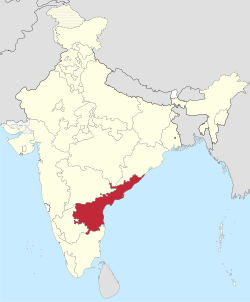
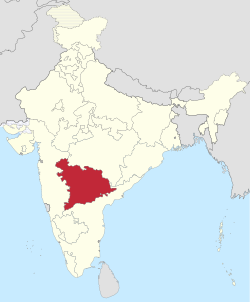
Andhra Pradesh, retrospectively referred to as United Andhra Pradesh or Undivided Andhra Pradesh, was a state in India formed by States Reorganisation Act, 1956 with Hyderabad as its capital and was reorganised by Andhra Pradesh Reorganisation Act, 2014. The state was made up of three distinct cultural regions of Telangana, Rayalaseema, and Coastal Andhra. Before the 1956 reorganisation, Telangana had been part of Hyderabad State, whereas Rayalaseema and Coastal Andhra had been part of Andhra State, formerly a part of Madras Presidency of British India.
Creation of United Andhra Pradesh


To gain an independent state based on linguistic identity, and to protect the interests of the Telugu people of Madras State, Potti Sreeramulu fasted to death in 1952. As Madras became a bone of contention, in 1949 a JVP committee report stated: "Andhra Province could be formed provided the Andhras give up their claim on the city of Madras (now Chennai)". After Potti Sreeramulu's death, the Telugu-speaking area of Andhra State was carved out of Madras State on 30 November 1953, with Kurnool as its capital city. On the basis of the gentlemen's agreement of 1 November 1956, the States Reorganisation Act formed Andhra Pradesh by merging Andhra State with the Telugu-speaking areas of the then-existing Hyderabad State. Hyderabad was made the capital of the new state. The Marathi-speaking areas of Hyderabad State merged with Bombay State which later bifurcated in Gujarat and Maharashtra and the Kannada-speaking areas were merged with Mysore State which was later renamed as Karnataka.
In February 2014, the Andhra Pradesh Reorganisation Act, 2014 bill was passed by the Parliament of India for the formation of the Telangana state comprising ten districts. Hyderabad will remain as a joint capital for not exceeding ten years. The new state of Telangana came into existence on 2 June 2014 after approval from the President of India. Number of petitions questioning the validity of Andhra Pradesh Reorganisation Act, 2014 have long been pending for the verdict since April 2014 before the supreme court constitutional bench.
The Visalandhra, Vishalandhra or Vishala Andhra was a movement in post-independence India for a united state for all Telugu speakers, a Greater Andhra (Telugu: విశాలాంధ్ర Viśālāndhra). This movement was led by the Communist Party of India under the banner of Andhra Mahasabha with a demand to merge all the Telugu-speaking areas into one state. [citation needed] (The Communist Party of India demanded the formation of similar linguistic states across India.) The movement succeeded and a separate state of Andhra Pradesh was formed by merging Telugu-speaking areas of Hyderabad State (Telangana) with Andhra State on 1 November 1956 as part of the States Reorganisation Act. (Andhra State had been previously carved out of Madras State on 1 October 1953.) However, on 2 June 2014, Telangana State separated again from Andhra Pradesh and the Vishalandhra movement came to an end. The residual Andhra Pradesh now has approximately the same borders but lost Bhadrachalam Town,Nuguru Taluk: Now known as the Venkatapuram and Wazeedu areas which are initially from East Godavari district of Andhra Pradesh
History
- Potti Sreeramulu, whose fast unto death in 1952 led to the formation of Andhra State
- Nagarjuna Sagar Dam (completed in 1967)
- Mee Seva office (initial launch of the E-Seva Project in 2001)
To gain an independent state based on linguistic identity and to protect the interests of the Telugu-speaking people of Madras State, Potti Sreeramulu fasted to death in 1952. As the city of Madras became a bone of contention, in 1949 a committee with Jawaharlal Nehru, Vallabhbhai Patel, and Pattabhi Sitaramayya was constituted. The committee recommended that Andhra State could be formed provided the Andhras gave up their claim on the city of Madras (now Chennai). After Potti Sreeramulu's death, the Telugu-speaking area of Andhra State was carved out of Madras State on 1 October 1953, with Kurnool as its capital city. Tanguturi Prakasam became the first chief minister. Based on the Gentlemen's Agreement of 1956,and as per the request of Hyderabad state leaders,the States Reorganisation Act created Andhra Pradesh by merging the neighbouring Telugu-speaking areas of the Hyderabad State with Hyderabad as the capital on 1 November 1956.
The Indian National Congress (INC) ruled the state from 1956 to 1982. Neelam Sanjiva Reddy became the first chief minister. Among other chief ministers, P. V. Narasimha Rao is known for implementing land reforms and land ceiling acts and securing a reservation for lower castes in politics. Nagarjuna Sagar Dam, completed in 1967, and Srisailam Dam, completed in 1981, are some of the irrigation projects that helped increase the production of paddy in the state.
In 1983, the Telugu Desam Party (TDP) won the state elections, and N. T. Rama Rao became the chief minister of the state for the first time after launching his party just nine months earlier. This broke the long-time single-party monopoly enjoyed by the INC. He transformed the sub-district administration by forming mandals in place of earlier taluks, removing hereditary village heads, and appointing non-hereditary village revenue assistants. The 1989 elections ended the rule of Rao, with the INC returning to power with Marri Chenna Reddy at the helm. In 1994, Andhra Pradesh gave a mandate to the Telugu Desam Party again, and Rao became the chief minister again. Nara Chandrababu Naidu, Rao's son-in-law, came to power in 1995 with the backing of a majority of the MLAs. The Telugu Desam Party won both the assembly and Lok Sabha elections in 1999 under the leadership of Chandrababu Naidu. Thus, Naidu held the record for the longest-serving chief minister (1995–2004) of the united Andhra Pradesh. He introduced e-governance by launching e-Seva centres in 2001 for paperless and speedy delivery of government services. He is credited with transforming Hyderabad into an IT hub by providing incentives for tech companies to set up centres.
In 2004, Congress returned to power with a new chief ministerial face, YS Rajashekara Reddy, better known as YSR. The main emphasis during Reddy's tenure was on social welfare schemes such as free electricity for farmers, health insurance, tuition fee reimbursement for the poor, and the national rural employment guarantee scheme. He took over the free emergency ambulance service initiated by a corporation and ran it as a government project. INC won the 2009 elections under the leadership of YSR in April. He was elected chief minister again but was killed in a helicopter crash that occurred in September 2009. He was succeeded by Congressmen Konijeti Rosaiah and Nallari Kiran Kumar Reddy; the latter resigned over the impending division of the state to form Telangana.
During its 58 years as a unified state, the state weathered separatist movements from Telangana (1969) and Andhra (1972) successfully. A new party called Telangana Rashtra Samithi, formed in April 2001 by Kalvakuntla Chandrashekar Rao (KCR), reignited the Telangana movement. A joint action committee formed with political parties, government employees, and the general public spearheaded the agitation. When KCR's health deteriorated due to his fast-unto-death undertaking, the central government decided to initiate the process of forming an independent Telangana in December 2009. This triggered the Samaikyandhra movement to keep the state united. The Srikrishna committee was formed to give recommendations on how to deal with the situation. It gave its report in December 2010. The agitations continued for nearly 5 years, with the Telangana side harping on the marginalisation of food culture, language, and unequal economic development and the Samaikyandhra movement focusing on the shared culture, language, customs, and historical unity of Telugu-speaking regions. The Andhra Pradesh Reorganisation Act bill was passed by the parliament of India for the formation of the Telangana state, comprising ten districts, despite opposition by the state legislature. The bill included the provision to retain Hyderabad as the capital for up to ten years and the provision to ensure access to educational institutions for the same period. The bill received the assent of the president and was published in the gazette on 1 March 2014. The new state of Telangana came into existence on 2 June 2014 after approval from the president of India, with the residual state continuing as Andhra Pradesh. The present form of Andhra Pradesh is the same as that of Andhra State, except for Bhadrachalam town, which continues in Telangana. A number of petitions questioning the validity of the Andhra Pradesh Reorganisation Act have been pending before the Supreme Court constitutional bench since April 2014.
In the final elections held in the unified state in 2014, the TDP got a mandate in its favour, defeating its nearest rival, the YSR Congress Party, a breakaway faction of the Congress founded by Y. S. Jagan Mohan Reddy, son of former Chief Minister Y. S. Rajasekhara Reddy. N. Chandrababu Naidu, the chief of the TDP, became the chief minister on 8 June 2014. In 2017, the government of Andhra Pradesh began operating from its new greenfield capital, Amaravati, for which 33,000 acres were acquired from farmers through an innovative land pooling scheme. Interstate issues with Telangana relating to the division of assets of public sector institutions and organisations of the united state and the division of river waters are not yet resolved.
United Andhra Pradesh demographics
| Year | Pop. | ±% |
|---|---|---|
| 1961 | 35,983,000 | — |
| 1971 | 43,503,000 | +20.9% |
| 1981 | 53,550,000 | +23.1% |
| 1991 | 66,508,000 | +24.2% |
| 2001 | 75,727,000 | +13.9% |
| 2011 | 84,665,533 | +11.8% |
| Includes Telangana. Source: Census of India |
List of governors
Data from Andhra Pradesh State Portal.
| # | Portrait | Governor (Birth–Death) | Term of the office | Home state | Previous post | Appointed by | ||
|---|---|---|---|---|---|---|---|---|
| Assumed office | Left office | Time in office | ||||||
| 1 | Chandulal Madhavlal Trivedi (1893–1980) | 1 November 1956 | 31 July 1957 | 272 days | Gujarat | Governor of Andhra state | Rajendra Prasad | |
| 2 | Bhim Sen Sachar (1894–1978) | 1 August 1957 | 7 September 1962 | 5 years, 37 days | Punjab | Governor of Odisha | ||
| 3 | S. M. Shrinagesh (1903–1977) | 8 September 1962 | 3 May 1964 | 1 year, 238 days | Maharashtra | Governor of Assam | Sarvepalli Radhakrishnan | |
| 4 | Pattom A. Thanu Pillai (1885–1970) | 4 May 1964 | 10 April 1968 | 3 years, 342 days | Kerala | Governor of Punjab | ||
| 5 | Khandubhai Kasanji Desai (1898–1975) | 11 April 1968 | 25 January 1975 | 6 years, 289 days | Gujarat | Minister of Labour | Zakir Husain | |
| 6 | – | S. Obul Reddy (1916–1996) | 25 January 1975 | 9 January 1976 | 349 days | Andhra Pradesh | Chief Justice of the Andhra Pradesh High Court | Fakhruddin Ali Ahmed |
| 7 | Mohan Lal Sukhadia (1916–1982) | 10 January 1976 | 15 June 1976 | 157 days | Rajasthan | Governor of Karnataka | ||
| 8 | Ramchandra Dhondiba Bhandare (1916–1988) | 16 June 1976 | 16 February 1977 | 245 days | Maharashtra | Governor of Bihar | ||
| 9 | – | B. J. Divan (1919–2012) | 17 February 1977 | 4 May 1977 | 76 days | Gujarat | Chief Justice of the Andhra Pradesh High Court | B. D. Jatti (acting) |
| 10 | Sharda Mukherjee (1919–2007) | 5 May 1977 | 14 August 1978 | 1 year, 101 days | Maharashtra | Member of Parliament, Lok Sabha | ||
| 11 | – | K. C. Abraham (1899–1986) | 15 August 1978 | 14 August 1983 | 4 years, 364 days | Kerala | Member of the Indian National Congress | Neelam Sanjiva Reddy |
| 12 | Thakur Ram Lal (1929–2002) | 15 August 1983 | 29 August 1984 | 1 year, 14 days | Himachal Pradesh | Chief Minister of Himachal Pradesh | Giani Zail Singh | |
| 13 | Shankar Dayal Sharma (1918–1999) | 29 August 1984 | 26 November 1985 | 1 year, 89 days | Madhya Pradesh | President of the Indian National Congress | ||
| 14 | Kumudben Joshi (1934–2022) | 26 November 1985 | 7 February 1990 | 4 years, 73 days | Gujarat | Deputy Minister of Health and Family Welfare | ||
| 15 | Krishan Kant (1927–2002) | 7 February 1990 | 21 August 1997 | 7 years, 195 days | Gujarat | Member of Parliament, Lok Sabha | R. Venkataraman | |
| Acting | – | Gopala Ramanujam (1915–2001) | 22 August 1997 | 23 November 1997 | 93 days | Tamil Nadu | Governor of Odisha | K. R. Narayanan |
| 16 | C. Rangarajan (1932–) | 24 November 1997 | 3 January 2003 | 5 years, 40 days | Tamil Nadu | Governor of the Reserve Bank of India | ||
| 17 | Surjit Singh Barnala (1925–2017) | 3 January 2003 | 3 November 2004 | 1 year, 305 days | Punjab | Governor of Uttarakhand | A. P. J. Abdul Kalam | |
| 18 | Sushilkumar Shinde (1941–) | 4 November 2004 | 29 January 2006 | 1 year, 86 days | Maharashtra | Chief Minister of Maharashtra | ||
| Acting | Rameshwar Thakur (1925–2015) | 29 January 2006 | 22 August 2007 | 1 year, 205 days | Jharkhand | Governor of Odisha | ||
| 19 | N. D. Tiwari (1925–2018) | 22 August 2007 | 27 December 2009 | 2 years, 127 days | Uttar Pradesh | Chief Minister of Uttarakhand | Pratibha Patil | |
| Acting | E. S. L. Narasimhan (1945–) | 27 December 2009 | 22 January 2010 | 9 years, 208 days | Tamil Nadu | Governor of Chhattisgarh | ||
| 20 | 23 January 2010 | 1 June 2014 |
List of chief ministers
On 1 November 1956, Hyderabad State ceased to exist; its Gulbarga and Aurangabad divisions were merged into Mysore State and Bombay State respectively. Its remaining Telugu-speaking portion, Telangana, was merged with Andhra State to form the new state of United Andhra Pradesh. Sanjiva Reddy was the first chief minister.
Neelam Sanjiva Reddy of Indian National Congress was the first chief minister of United Andhra Pradesh, N. Chandrababu Naidu of Telugu Desam Party was the longest served chief minister and Bhaskar Rao was the shortest serving both belonging to TDP. Kiran Kumar Reddy of the Indian National Congress was the last chief minister of United Andhra Pradesh.
| # | Portrait | Chief Minister (Lifespan) Constituency | Term of office | Election (Term) | Party | Government | Appointed by (Governor) | |||
|---|---|---|---|---|---|---|---|---|---|---|
| Term start | Term end | Duration | ||||||||
| 1 | Neelam Sanjiva Reddy (1913–1996) MLA for Srikalahasti | 1 November 1956 | 11 January 1960 | 3 years, 71 days | 1955 (1st) | Indian National Congress భారత జాతీయ కాంగ్రెస్సు పక్షము | Neelam I | Chandulal Madhavlal Trivedi | ||
| 1957 (2nd) | Neelam II | |||||||||
| 2 | Damodaram Sanjivayya (1921–1972) MLA for Kurnool | 11 January 1960 | 12 March 1962 | 2 years, 60 days | Sanjivayya | Bhim Sen Sachar | ||||
| (1) | Neelam Sanjiva Reddy (1913–1996) MLA for Dhone | 12 March 1962 | 21 February 1964 | 1 year, 346 days | 1962 (3rd) | Neelam III | ||||
| 3 | Kasu Brahmananda Reddy (1909–1994) MLA for Narasaraopet | 21 February 1964 | 30 September 1971 | 7 years, 221 days | Kasu I | Satyawant Mallannah Shrinagesh | ||||
| 1967 (4th) | Kasu II | Pattom A. Thanu Pillai | ||||||||
| 4 | Pamulaparthi Venkata Narasimha Rao (1921–2004) MLA for Manthani | 30 September 1971 | 10 January 1973 | 1 year, 102 days | 1972 (5th) | Indian National Congress (Requisitionists) భారత జాతీయ కాంగ్రెస్సు పక్షము (ఇందిరమ్మ) | Narasimha | Khandubhai Kasanji Desai | ||
| President's rule అధ్యక్ష పాలన imposed during the period (11 January 1973 – 10 December 1973) | ||||||||||
| 5 | Jalagam Vengala Rao (1921–1999) MLA for Vemsoor | 10 December 1973 | 6 March 1978 | 4 years, 86 days | 1972 (5th) | Indian National Congress (Requisitionists) భారత జాతీయ కాంగ్రెస్సు పక్షము (ఇందిరమ్మ) | Jalagam | Khandubhai Kasanji Desai | ||
| 6 | Marri Chenna Reddy (1919–1996) MLA for Medchal | 6 March 1978 | 11 October 1980 | 2 years, 219 days | 1978 (6th) | Indian National Congress (Indira) భారత జాతీయ కాంగ్రెస్సు పక్షము (ఇందిరమ్మ) | Marri I | Sharda Mukherjee | ||
| 7 | Tanguturi Anjaiah (1919–1986) MLC | 11 October 1980 | 24 February 1982 | 1 year, 136 days | Anjaiah | K. C. Abraham | ||||
| 8 | Bhavanam Venkata Ramireddy (1931–2002) MLC | 24 February 1982 | 20 September 1982 | 208 days | Bhavanam | |||||
| 9 | Kotla Vijaya Bhaskara Reddy (1920–2001) MLA for Kurnool | 20 September 1982 | 9 January 1983 | 111 days | Kotla I | |||||
| 10 | Nandamuri Taraka Rama Rao (1923–1996) MLA for Tirupati | 9 January 1983 | 16 August 1984 | 1 year, 220 days | 1983 (7th) | Telugu Desam Party తెలుగుదేశం పక్షము | Rao I | |||
| 11 | Nadendla Bhaskara Rao (born 1935) MLA for Vemuru | 16 August 1984 | 16 September 1984 | 31 days | Telugu Desam Party (Rebel) తెలుగుదేశం పక్షము (తిరుగుబాటుదారు) | Nadendla | Thakur Ram Lal | |||
| (10) | Nandamuri Taraka Rama Rao (1923–1996) MLA for Tirupati 1984–1985 MLA for Hindupuram 1985–1989 | 16 September 1984 | 9 March 1985 | 174 days | Telugu Desam Party తెలుగుదేశం పక్షము | Rao II | Shankar Dayal Sharma | |||
| 9 March 1985 | 3 December 1989 | 4 years, 269 days | 1985 (8th) | Rao III | ||||||
| (6) | Marri Chenna Reddy (1919–1996) MLA for Sanathnagar | 3 December 1989 | 17 December 1990 | 1 year, 14 days | 1989 (9th) | Indian National Congress (Indira) భారత జాతీయ కాంగ్రెస్సు పక్షము (ఇందిరమ్మ) | Marri II | Kumudben Joshi | ||
| 12 | Nedurumalli Janardhana Reddy (1935–2014) MLA for Venkatagiri | 17 December 1990 | 9 October 1992 | 1 year, 297 days | Janardhana | Krishan Kant | ||||
| (9) | Kotla Vijaya Bhaskara Reddy (1920–2001) MLA for Panyam | 9 October 1992 | 12 December 1994 | 2 years, 64 days | Kotla II | |||||
| (10) | Nandamuri Taraka Rama Rao (1923–1996) MLA for Hindupuram | 12 December 1994 | 1 September 1995 | 263 days | 1994 (10th) | Telugu Desam Party తెలుగుదేశం పక్షము | Rao IV | |||
| 13 | Nara Chandrababu Naidu (born 1950) MLA for Kuppam | 1 September 1995 | 11 October 1999 | 4 years, 40 days | Naidu I | |||||
| 11 October 1999 | 14 May 2004 | 4 years, 216 days | 1999 (11th) | Naidu II | C. Rangarajan | |||||
| 14 | Yeduguri Sandinti Rajasekhara Reddy (1949–2009) MLA for Pulivendla | 14 May 2004 | 20 May 2009 | 5 years, 6 days | 2004 (12th) | Indian National Congress భారత జాతీయ కాంగ్రెస్సు పక్షము | Reddy I | Surjit Singh Barnala | ||
| 20 May 2009 | 2 September 2009 | 105 days | 2009 (13th) | Reddy II | N. D. Tiwari | |||||
| 15 | Konijeti Rosaiah (1933–2021) MLC | 3 September 2009 | 25 November 2010 | 1 year, 83 days | Rosaiah | |||||
| 16 | Nallari Kiran Kumar Reddy (born 1959) MLA for Pileru | 25 November 2010 | 1 March 2014 | 3 years, 96 days | Kiran | E. S. L. Narasimhan | ||||
| President's rule అధ్యక్ష పాలన imposed during the period (1 March 2014 – 1 June 2014) |
List of Deputy chief ministers
The list of deputy chief ministers in the Indian former state of United Andhra Pradesh include:
Keys: INC
| # | Portrait | Deputy Chief Minister (Lifespan) Constituency | Term of the office | Election (Assembly) | Party | Chief Minister | Government | ||
|---|---|---|---|---|---|---|---|---|---|
| Term start | Term end | ||||||||
| 1 | Konda Venkata Ranga Reddy (1890–1970) MLA for Chevella | 1959 | 11 January 1960 | 1955 (1st) | Indian National Congress | Neelam Sanjeeva Reddy | Neelam II | ||
| 11 January 1960 | 12 March 1962 | 1957 (2nd) | Damodaram Sanjivayya | Sanjivayya | |||||
| 2 | J. V. Narsing Rao MLA for Luxettipeta | 1967 | 30 September 1971 | 1967 (4th) | Kasu Brahmananda Reddy | Kasu II | |||
| 3 | B. V. Subba Reddy (1903–1974) MLA for Koilakuntla | 30 September 1971 | 11 November 1972 | 1972 (5th) | Pamulaparthi Venkata Narasimha Rao | Narasimha | |||
| President's rule imposed during the period (11 January 1973 – 10 December 1973) | |||||||||
| (3) | B. V. Subba Reddy (1903–1974) MLA for Koilakuntla | 30 December 1973 | 7 June 1974 | 1972 (5th) | Jalagam Vengala Rao | Vengala | |||
| 4 | C. Jagannatha Rao (1924–2012) MLA for Narsapur | 24 February 1982 | 20 September 1982 | 1978 (6th) | Indian National Congress | Bhavanam Venkatarami Reddy | Bhavanam | ||
| 5 | Koneru Ranga Rao (1936–2010) MLA for Tiruvuru | 9 October 1992 | 12 December 1994 | 1989 (9th) | Kotla Vijaya Bhaskara Reddy | Kotla I | |||
| 6 | Damodar Raja Narasimha (born 1958) MLA for Andole | 10 June 2011 | 1 February 2014 | 2009 (13th) | N. Kiran Kumar Reddy | Kiran | |||
| President's rule imposed during the period (1 March 2014 – 7 June 2014) |
List of Leaders of opposition in Assembly
In fact N. Chandrababu Naidu is the longest-serving leader of the opposition. He served as leader of opposition in United Andhra Pradesh Legislative Assembly for a period of 2004 – 2014 in Andhra which includes current day Andhra Pradesh and Telangana states N. Chandrababu Naidu is the last leader of opposition of United Andhra Pradesh before its bifurcation.
Creation of Telangana
After decades of protests and agitations, the central government, under the United Progressive Alliance, decided to bifurcate the existing Andhra Pradesh state and on 2 June 2014, the Union Cabinet unilaterally cleared the bill for the creation of Telangana. Lasting for almost 5 decades, it was one of the longest lasting movements for statehood in South India. On 18 February 2014, the Lok Sabha passed the bill with a voice vote. Subsequently, the bill was passed by the Rajya Sabha two days later, on 20 February. As per the bill, Hyderabad would be the capital of Telangana, while the city would also remain the capital of the residual state of Andhra Pradesh for no more than ten years. Hyderabad was the de jure joint capital. On 2 June 2014, Telangana was created with Hyderabad as its capital
The Telangana movement refers to a movement for the creation of a state, Telangana, from the pre-existing state of Andhra Pradesh in India. The new state corresponds to the Telugu-speaking portions of the erstwhile princely state of Hyderabad.