Common symbiosis signaling pathway
In-game article clicks load inline without leaving the challenge.

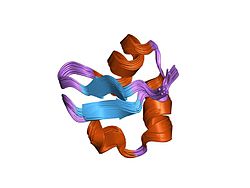
The common symbiosis signaling pathway (CSSP) is a highly conserved signaling cascade in plants that allows them to interact with symbiotic microbes. It corresponds to an ancestral pathway that plants use to interact with arbuscular mycorrhizal fungi (AMF). It is known as "common" because different evolutionary younger symbioses also use this pathway, notably the root nodule symbiosis with nitrogen-fixing rhizobia bacteria. The pathway is activated by both Nod-factor perception (for nodule forming rhizobia), as well as by Myc-factor perception that are released from AMF. The pathway is distinguished from the pathogen recognition pathways, but may have some common receptors involved in both pathogen recognition as well as CSSP. A recent work by Kevin Cope and colleagues showed that ectomycorrhizae (a different type of mycorrhizae) also uses CSSP components such as Myc-factor recognition.
The AMF colonization requires the following chain of events that can be roughly divided into the following steps:
1: Pre-Contact Signaling
2: The CSSP
2: A: Perception 2: B: Transmission 2: C: Transcription
3: The Accommodation program
Overview of the pathway
The common symbiosis signaling pathway occurs within plant root cells. It links the perception of fungal or bacterial signals to plant transcriptional responses required for accommodation of the symbiont via arbuscule or nodule formation.
Myc factors or Nod factors are perceived by LysM receptor-like kinases at the plant plasma membrane, triggering downstream signaling through additional proteins such as SYMRK. The signal is then transduced to the nucleus, where it generates nuclear calcium oscillations via ion channels and nucleoporins. These calcium signals are decoded by the calcium- and calmodulin-dependent protein kinase CCaMK, which activates transcription factors such as CYCLOPS.
CYCLOPS is generally considered the final component of the canonical CSSP. At this point in nodulation or AMF colonisation, downstream responses diverge depending on the symbiosis, with CYCLOPS regulating genes that control the formation of either arbuscules or nodules.
| A TEM section of root nodule showing symbiosome made by Rhizobia, a kind of nitrogen fixing bacteria, in this case Bradyrhizobium japonicum in soybean root. | An arbuscle formed by Arbuscular mycorrhizal fungus Rhizophagus irregularis in Maize root, stained with WGA-Alexa fluor, seen using fluorescence microscopy. |
|---|
Pre-Contact Signaling
Chemical signaling between plants and symbiotic microorganisms begins prior to physical contact. In arbuscular mycorrhizal symbiosis, host plants synthesize and secrete strigolactones into the rhizosphere, which stimulate hyphal branching and directional growth of fungi towards the root.
Strigolactones are carotenoid-derived signalling molecules that have a conserved tricyclic lactone structure also known as ABC rings. Strigolactone biosynthesis occurs mainly in plastids, through the action of enzymes including D27 (Rice DWARF 27; Arabidopsis ortholog ATD27), an iron-binding beta-carotene isomerase, and carotenoid cleavage dioxygenases (CCD7 and CCD8).
In addition to strigolactones, other signaling molecules contribute to pre-contact communication in AMF symbiosis. The transporter protein NOPE1 ('NO PERCEPTION 1') is also required for AMF colonisation in rice and maize, and appears to function as part of a parallel signaling mechanism. NOPE1 is a member of the major facilitator superfamily of transport proteins. It imports N-acetylglucosamine (GlcNAc), a fungal-derived molecule, into plant cells, allowing them to detect the presence of nearby fungi. NOPE1 is involved in the production of root exudates that induce fungal transcription, but whether it directly exports signaling molecules or acts indirectly via GlcNAc uptake and downstream signaling remains unresolved.
Internal plant signaling pathways upstream of the CSSP are also important for symbiosis. D14L/KAI2 is an α/β-hydrolase receptor which perceives endogenous karrikin-like molecules (KLs). KLs, associated with phosphate starvation responses, trigger D14L and D3-mediated degradation of SMAX1. Removal of SMAX1 derepresses genes required for the CSSP, including the LysM receptor-like kinases (RLKs) that detect the fungal/bacterial signal and initiate the CSSP.
Pre-contact signaling ultimately enables the perception of fungal or bacterial signals by plant receptor-like kinases, leading to activation of the common symbiosis signaling pathway.
Perception

There are two main type of root symbiosis; one is root nodule symbiosis by Rhizobia (RN-type) and another is Arbuscular Mycorrhiza (AM-type). There are common genes involved in between these two pathways. these key common components, form the Common Symbiosis pathway (CSP or CSSP). It has been proposed that, RN symbiosis has originated from AM symbiosis. The perception of the presence of the fungal symbiont takes place mainly through fungal chemical secretions generally termed as Myc-factors. Receptors for Myc-factors are yet to be identified. However, DMI2/SYMRK probably acts as a co-receptor of Myc factor receptor (MFR). The AM fungal secreted materials relevant to symbiosis are Myc-LCOs, Myc-COs, N-Acetylglucosamine
| Myc factor | Plant protein it mainly act on |
|---|---|
| Myc-LCOs | LYS11 in Lotus japonicus |
| Short chain chitin oligomers (COs) | OsCERK1 and OsCEBiP in rice |
| N-acetylglucosamine | NOPE-1 in maize |
Fungal Molecules that triggers CSSP
Myc -LCOs (lipochitooligosaccharides)
Like Rhizobial LCOs (Nod factors); Myc-LCOs play important role in perception stage. They are a kind of secreted compounds from AM fungi, mainly mixtures of lipo-chito-oligosaccharides (Myc-LCOs). In Lotus japonicus, LYS11, a receptor for LCOs, was expressed in root cortex cells associated with intra-radical colonizing arbuscular mycorrhizal fungi
Short chain chitin oligomers ( Myc- COs)
AM host plants show symbiotic-activated calcium waves upon exposure to short chain chitin oligomers. It has been reported that production of these molecules by the AM fungus Rhizophagus irregularis, is strongly stimulated upon exposure to strigolactones. This suggests that plants secrete strigolactones and in response, the fungus increases short chain chitin oligomers, which in turns elicits the plant response to accommodate the fungus. The lysine motif domain of OsCERK1 and OsCEBiP is thought to be involved in the perception of short chain chitin oligomers.
N-Acetylglucosamine
NOPE-1 is transporter (described above). NOPE-1 also shows a strong N-acetylglucosamine uptake activity, and is thought to be associated with recognition of presence of fungal symbiont.
Some plant proteins are suspected to recognise Myc-factors, and the rice OsCERK1 Lysin motif (LysM) receptor-like kinase, is one of them.
Cell Surface Receptors


There are multiple families of pattern recognition receptors and co-receptors involved in recognition of microbial pathogens and symbionts. Some of the relevant families involved in CSSP, are Membrane bound LysMs (LYM), Soluble LysM Receptor like Protein, LYK (LysM receptors with active Kinase domain), LYR (LysM proteins with inactive kinase domain), etc.
Seemingly, different combinations of a LYK and LYR receptors perceive and generate differential signals, such as some combinations generate a pathogen recognition signal whereas some combinations generate symbiotic signals.
Receptor-like Kinases (RLKs)
DMI2/ SYMRK is a receptor-like kinase, an important protein in endosymbiosis signal perception, reported in several plants (Mt-DMI2 or Mt-NORK in Medicago truncatula; Lj-SYMRK in Lotus japonicas; Ps-SYM19 in Pisum sativum; OsSYMRK in Rice). OsSYMRK lacks an N-terminal domain and exclusively regulate AM symbiosis (is not involved in the RN symbiosis). Notably, it has been found that a Nod-factor inducible gene, MtENOD11, is activated in the presence of AMF exudates; little is known about this phenomenon.
LysM receptor-like kinase
Lysin Motif (LysM) receptor-like kinase are a subfamily related to membrane bound Receptor-like kinase (RLKs) with an extracellular region consisting of 3 Lysine motifs. They have some important orthologs in different plants, that vary in their function. In some plant species they are involved in AM symbiosis, in others they are not. Tomato (Solanum lycopersicum), a non-legume eudicot, also have a similar LysM receptor, SlLYK10 that Promotes AM symbiosis. There are some co-receptors of Myc-factor receptor viz., OsCEBiP in Rice, a LysM membrane protein can function as a co-receptor of OsCERK1 but it participates in a different pathway.
Most of these kinases are serine/threonine kinases, some are tyrosine kinases. Also, they are type-1 transmembrane proteins, that indicates their N-terminal domain towards the outside of the cell, and the C-terminal domain is towards inside of the cell.

| Medicago truncatula | Lotus japonicus | Pisum sativum (pea) | Prunus persica | Arabidopsis thalliana | Brassica rapa | Solanum lycopersicum (Tomato) | Brachypodium distachyon | Oryza sativa (Rice) | |||||
| Lysine Motif Receptor-Like Kinase and Lysine Motif Receptor like Protein | LYM | LYMI | LYM1 | PpLYM1 | AtLYM1 AtLYM3 | SlLYM1 | BdLYM1 BdLYM3 | OsLYP6 OsLYP5, OsLYP4 | |||||
| LYMII | LYM2 | PpLYM3 PpLYM2 | AtLYM2 | SlLYM3 SlLYM2 | BdLYM2 BdLYM4 | OsCEBiP OsLYP3 | |||||||
| LYR | LYR 1 | LYRIA | MtNFP MtLYR1 | LjNFR5 LjLYS11 | PpLYR1 | SlLyk10 | Bd LYR1 | OsNFR5 | |||||
| LYRIB | MtLYR8 | PpLYR2 | SlLYK9 | Bd LYR2 | |||||||||
| LYR 2 | LIRIIA | MtLYR10 | LjLYS16 | PpLYR6 | AtLYK2 | SlLYK2 | |||||||
| LYRIIB | MtLYR9 | LjLYS15 | PpLYR7 | SlLYK15 | |||||||||
| LYR 3 | LYRIIIA | MtLYR3 | LjLYS12 | PpLYR3 | AtLYK4 | SlLYK4 | Bd LYR4 | OsLYK6 | |||||
| LYRIIIB | MtLYR2 | PpLYR4 | SlLYK7 SlLYK6 | ||||||||||
| LYRIIIC | MtLYR4 MtLYR7 | LjLYS13 LjLYS14 | AtLYK5 | Bd LYR3 | OsLYK3 OsLYK2, OsLYK4 | ||||||||
| LYR 4 | LYRIV | MtLYR5 MtLYR6 | LjLYS20 | PpLYR5 | |||||||||
| LYK | LYKI | LYK1, LYK4, LYK5, LYK6, LYK7, LYK2, LYK3, LYK9, LYK8 | LjLYS2 LjLYS1, LjNFR1, LjLYS6, LjLYS7 | PpLYK2 PpLyk1 | AtLYK1/ AtCERK1 | SlLYK13 SlLYK1/ SlBti9, SlLYK12, SlLYK11 | BdLYK1 | OsCERK1 | |||||
| LYKII | LYK10 | LjLYS3/ EPR3 | PpLYK3 PpLYK4 | ||||||||||
| LYKII | PpLYK5 | AtLYK3 | SlLYK3 | BdLYK3 | |||||||||
| Receptor like Kinase | RLK | Mt-DMI2/ Mt-NORK | Lj-SYMRK | Ps-SYM19 | OsSYMRK |
Transmission
The transmission of signal cascades into the nucleus is not well understood. However, this transmission includes carrying the message up to the nuclear membrane and generation of a calcium wave. Some elements involved in this process are:
Nucleoporins
Lotus japonicus Nucleoporins LjNUP85 and LjNUP133 has potential role in transmission of the signal. Lj-NENA is another important nucleoporin that plays role in AM symbiosis.
HMGR and Mevalonate.
It has been proposed that the enzyme 3-hydroxy-3-methylglutaryl-CoA reductase (HMG CoA reductase or HMGR) has potential role in the transmission stage. The enzyme is activated by SYMRK/DMI2, and forms mevalonate. This mevalonate acts as a second messenger, and activates a nuclear potassium channel, DMI1 or POLLUX.
| Nuclear envelope Protein | Function | Rice | Lotus japonicus | Medicago truncatula | Pisum |
| CNGC15 | Cyclic-nucleotide gated Calcium-channel | Mt-CNGC15 | |||
| Castor | Potassium cation channel | Os-Castor | Lj-Castor | ||
| POLLUX or DMI1 | Potassium cation channel | OsPOLLUX | LjPOLLUX | Mt-DMI1 | Ps-SYM8 |
Nuclear membrane cation channels.
The nuclear calcium channel CNGC15, which is cyclic nucleotide gated ion channel; mediates the symbiotic nuclear Ca2+ influx, and it is countered by K+ efflux by DMI1.
Transcription
| Protein | Function | Name of the Plant | |||
| Rice | Lotus japonicus | Medicago Truncatula | Pisum sativum | ||
| CCamK | Calcium calmodulin-dependent kinase with role in AMF symbiosis | Os-DMI3 or Os-CCaMK | Lj-CCaMK | Mt-DMI3 | Ps-SYM9 |
| CYCLOPS | Coiled coil domain containing proteins that respond to CCamK and promote AMF symbiosis | Os-CYCLOPS | Lj-CYCLOPS | Mt-IPD3 | Ps-SYM33 |
| DELLA | Promote AMF symbiosis | Os-SLR1 | Mt-DELLA1 Mt-DELLA2 | Ps-LA Ps-CRY |
Calmodulin is a widespread regulatory protein that functions along with Ca2+ in various biological processes. In AM symbiosis signalling, it modulates CCaMK. CCaMK or DMI3 is a calcium-and-calmodulin-dependent kinase (CCaMK) thought to be a key decoder of Ca2+ oscillations and an important regulatory kinase protein. Nuclear Ca2+ spiking promotes binding of Ca2+ calmodulin with CCaMK. Binding of Ca2+ calmodulin with CCaMK causes conformational change of CCaMK that stimulates a target protein, CYCLOPS, which has different orthologs. CYCLOPS is a coiled coil domain containing protein possibly form a complex with CCaMK that works along with DELLA proteins. DELLA proteins are a kind of GRAS-domain protein originally identified as repressors of the Gibberellin signalling pathway, however now it is seen that DELLA participates in many signalling pathways. There are two DELLA proteins in Medicago truncatula and Pisum sativum that play a role in symbiosis whereas in rice only one DELLA protein fulfils this task. Reduced Arbuscular Mycorrhiza or RAM1 is a GRAS protein whose gene is directly regulated by DELLA and CCaMK/ CYCLOPS. By using chromatin immunoprecipitation assays, it has been shown that RAM1 binds to RAM2 gene promoter. RAM1 also regulates many of the plant genes that participate in AMF accommodation.
Some GRAS proteins play a role in AM symbiosis but these roles are not yet fully understood. These include RAM1, RAD1 (REQUIRED FOR ARBUSCLE DEVELOPMENT 1), MIG1 (MYCORRHIZA INDUCED GRAS1), NSP1 and NSP2. WRKY transcription factor genes are thought to play very important roles in establishment of mycorrhizal symbiosis and they perhaps work through regulating plant defense genes.
The Accommodation program
Root cortex cells experience important changes in order to accommodate for the fungal endosymbiont. The pre-penetration apparatus (PPA) in outer cell layers and the peri-arbuscular membrane that surrounds arbuscules in inner cell layers need to be formed and the plant cell cytoplasm needs to rearrange, the vacuole retracts in size, the nucleus and nucleolus enlarge in size and chromatin decondense indicating heightened transcriptional activity. Plastids multiply and stay connected with "stromulus". Furthermore, it was suggested that the apoplastic longitudinal hyphal growth is probably regulated by plant genes such as taci1 and CDPK1.
Genes and proteins playing a role in the accommodation programme
Although various proteins have been identified which may play role on how this accommodation process occurs, the detailed signalling cascade is not fully understood. Some of the proteins and mechanisms involved in the deposition on peri-arbuscular membrane are EXOCYST complex, EXO70 subunit, a symbiosis-specific splice variant of SYP132, VAPYRIN, and two variants of VAMP721. Plant enzymes FatM and RAM2 and ABC transporter STR/STR2 are putatively involved in the synthesis and supplying of a lipid 16:0 β-monoacylglycerol to the AM fungi. Recently discovered kinases that regulate the AMF accommodation program include ADK1, AMK8, AMK24, ARK1 and ARK2.
The protein composition of the peri-arbuscular membrane is very different from that of the plasma membrane. It includes some special transporters such as phosphate transporters (Mt-PT4, Os-PT11, Os-PT13) and ammonium transporters (Mt-AMT2 and 3). It also includes ABC transporters such as STR/STR2 putatively involved in lipid transport.
Evolutionary significance
AM fungi and plants co-evolved and developed a very complex interaction that allow the plant accommodate the AM-fungal host. It has been proposed that the RN symbiosis has originated from the AM symbiosis.