National Party of Australia
In-game article clicks load inline without leaving the challenge.
The National Party of Australia, commonly known as the Nats, is an agrarian, conservative, and right-wing political party in Australia. Traditionally representing graziers, farmers, and rural voters generally, it was founded as the Australian Country Party in 1920 at a federal level. In 1975, it adopted the name National Country Party, before taking its current name in 1982.
The National Party is the junior partner in a conservative electoral alliance known in Australian politics as the Liberal–National Coalition, accompanied by the predominantly urban-based Liberal Party of Australia. When in government, the leader of the National Party has traditionally served as the deputy prime minister. The current leader of the party is Matt Canavan, who assumed office on 11 March 2026.
Due to the closeness and integration of the two parties, as well as the declining vote of the Nationals in recent years, it has been proposed several times that the Liberals and the Nationals formally merge. In Queensland, the Country Party (later National Party) was the senior coalition party between 1925 and 2008, after which it merged with the junior Liberal Party to form the Liberal National Party of Queensland.
The Coalition has been dissolved on various occasions following electoral defeats or policy disputes between the parties, however, it has typically re-formed each upcoming federal election in these instances. The coalition arrangement varies in each state and territory.
History
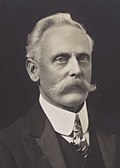
The Country Party was formally founded in 1913 in Western Australia, and nationally in 1920, from a number of state-based parties such as the Victorian Farmers' Union (VFU) and the Farmers' and Settlers' Association of New South Wales. Australia's first Country Party was founded in 1912 by Harry J. Stephens, editor of The Farmer & Settler, but, under fierce opposition from rival newspapers, failed to gain momentum.
The VFU won a seat in the House of Representatives at the Corangamite by-election held in December 1918, with the help of the newly introduced preferential voting system. At the 1919 federal election the state-based Country Parties won federal seats in New South Wales, Victoria and Western Australia. They also began to win seats in state parliaments. In 1920 the Country Party was established as a national party led by William McWilliams from Tasmania. In his first speech as leader, McWilliams laid out the principles of the new party, stating "we crave no alliance, we spurn no support but we intend drastic action to secure closer attention to the needs of primary producers" McWilliams was deposed as party leader in favour of Earle Page in April 1921, following instances where McWilliams voted against the party line. McWilliams later left the Country Party to sit as an Independent.
According to historian B. D. Graham (1959), the graziers who operated the sheep stations were politically conservative. They disliked the Labor Party, which represented their workers, and feared that Labor governments would pass unfavorable legislation and listen to foreigners and communists. The graziers were satisfied with the marketing organisation of their industry, opposed any change in land tenure and labour relations, and advocated lower tariffs, low freight rates, and low taxes. On the other hand, Graham reports, the small farmers, not the graziers, founded the Country party. The farmers advocated government intervention in the market through price support schemes and marketing pools. The graziers often politically and financially supported the Country party, which in turn made the Country party more conservative.
The Country Party's first election as a united party, in 1922, saw it in an unexpected position of power. It won enough seats to deny the Nationalists an overall majority. It soon became apparent that the price for Country support would be a full-fledged coalition with the Nationalists. However, Page let it be known that his party would not serve under Hughes, and forced his resignation. Page then entered negotiations with the Nationalists' new leader, Stanley Bruce, for a coalition government. Page wanted five seats for his Country Party in a cabinet of 11, including the Treasurer portfolio and the second rank in the ministry for himself. These terms were unusually stiff for a prospective junior coalition partner in a Westminster system, and especially so for such a new party. With no other politically realistic coalition partner available, Bruce agreed, and the "Bruce-Page Ministry" was formed. This began the tradition of the Country Party leader ranking second in Coalition cabinets. The party has never had a coalition government with Labor as of 2025[update].
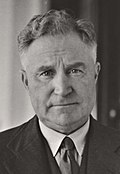
Page remained dominant in the party until 1939, and briefly served as caretaker prime minister between the death of Joseph Lyons and the election of Robert Menzies as his successor. However, Page gave up the leadership rather than serve under Menzies. The coalition was re-formed under Archie Cameron in 1940, and continued until October 1941 despite the election of Arthur Fadden as leader after the 1940 election. Fadden was well regarded within conservative circles and proved to be a loyal deputy to Menzies in the difficult circumstances of 1941. When Menzies was forced to resign as prime minister, the UAP was so bereft of leadership that Fadden briefly succeeded him (despite the Country Party being the junior partner in the governing coalition). However, the two independents who had been propping up the government rejected Fadden's budget and brought the government down. Fadden stood down in favour of Labor leader John Curtin.
The Fadden-led Coalition made almost no headway against Curtin, and was severely defeated in the 1943 election. After that loss, Fadden became deputy leader of the opposition under Menzies, a role that continued after Menzies folded the UAP into the Liberal Party of Australia in 1944. Fadden remained a loyal partner of Menzies, though he was still keen to assert the independence of his party. Indeed, in the lead up to the 1949 federal election, Fadden played a key role in the defeat of the Chifley Labor government, frequently making inflammatory claims about the "socialist" nature of the Labor Party, which Menzies could then "clarify" or repudiate as he saw fit, thus appearing more "moderate". In 1949, Fadden became Treasurer in the second Menzies government and remained so until his retirement in 1958. His successful partnership with Menzies was one of the elements that sustained the coalition, which remained in office until 1972 (Menzies himself retired in 1966).

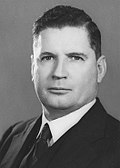
Fadden's successor, Trade Minister John McEwen, took the then unusual step of declining to serve as treasurer, believing he could better ensure that the interests of Australian primary producers were safeguarded. Accordingly, McEwen personally supervised the signing of the first post-war trade treaty with Japan, new trade agreements with New Zealand and Britain, and Australia's first trade agreement with the USSR (1965). In addition to this, he insisted on developing an all-encompassing system of tariff protection that would encourage the development of those secondary industries that would "value add" Australia's primary produce. His success in this endeavour is sometimes dubbed "McEwenism". This was the period of the Country Party's greatest power, as was demonstrated in 1962 when McEwen was able to insist that Menzies sack a Liberal minister who claimed that Britain's entry into the European Economic Community was unlikely to severely impact the Australian economy as a whole.

Menzies retired in 1966 and was succeeded by Harold Holt. McEwen thus became the longest-tenured member of the government, with the informal right to veto government policy. The most significant instance in which McEwen exercised this right came when Holt disappeared in December 1967. John Gorton became the new Liberal prime minister in January 1968. McEwen was sworn in as interim prime minister pending the election of the new Liberal leader. Logically, the Liberals' deputy leader, William McMahon, should have succeeded Holt. However, McMahon was a staunch free-trader, and there were also rumours that he was homosexual. As a result, McEwen told the Liberals that he and his party would not serve under McMahon. McMahon stood down in favour of John Gorton. It was only after McEwen announced his retirement that McMahon was able to successfully challenge Gorton for the Liberal leadership. McEwen's reputation for political toughness led to him being nicknamed "Black Jack" by his allies and enemies alike.
At the state level, from 1957 to 1989, the Country Party under Frank Nicklin and Joh Bjelke-Petersen dominated governments in Queensland—for the last six of those years ruling in its own right, without the Liberals. This was due to the bjelkemander, a malapportionment in electorates which gave rural voters twice the voting power compared to voters within the city. It also took part in governments in New South Wales, Victoria, and Western Australia.
However, successive electoral redistributions after 1964 indicated that the Country Party was losing ground electorally to the Liberals as the rural population declined, and the nature of some parliamentary seats on the urban and rural fringe changed. A proposed merger with the Democratic Labor Party (DLP) under the banner of "National Alliance" was rejected when it failed to find favour with voters at the 1974 state election.[citation needed]
Also in 1974, the Northern Territory members of the party joined with its Liberal party members to form the independent Country Liberal Party. This party continues to represent both parent parties in that territory. A separate party, the Joh-inspired NT Nationals, competed in the 1987 election with former chief minister Ian Tuxworth retaining his seat of Barkly by a small margin. However, this splinter group was not endorsed by the national executive and soon disappeared from the political scene.
National Country Party and National Party
The National Party was confronted by the impact of demographic shifts from the 1970s: between 1971 and 1996, the population of Sydney and surrounds grew by 34%, with even larger growth in coastal New South Wales, while more remote rural areas grew by a mere 13%, further diminishing the National Party's base. At the federal convention held on 2 May 1975 in Canberra, the Country Party changed its name to the National Country Party of Australia as part of a strategy to expand into urban areas. This had some success in Queensland under Joh Bjelke-Petersen, but nowhere else. The party briefly walked out of the coalition agreement in Western Australia in May 1975, returning within the month. However, the party split in two over the decision and other factors in late 1978, with a new National Party forming and becoming independent, holding three seats in the Western Australian lower house, while the National Country Party remained in coalition and also held three seats. They reconciled after the Burke Labor government came to power in 1983.[citation needed]
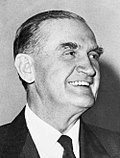
The 1980s were dominated by the feud between Bjelke-Petersen and the federal party leadership under Ian Sinclair. Bjelke-Petersen briefly triumphed in 1987, forcing the Nationals to tear up the Coalition agreement and support his bid to become prime minister. The "Joh for Canberra" campaign backfired spectacularly when a large number of three-cornered contests allowed Labor to win a third term under Bob Hawke; however, in 1987 the National Party won a bump in votes and recorded its highest vote in more than four decades, but it also recorded a new low in the proportion of seats won. The collapse of the Joh for Canberra campaign also proved to be the Queensland Nationals' last hurrah; Bjelke-Petersen was forced into retirement a few months after the federal election, and his party was heavily defeated in 1989. The federal National Party were badly defeated at the 1990 election, losing five seats including that of leader Charles Blunt, who had ousted Sinclair months earlier.
Blunt's successor as leader, Tim Fischer, recovered two seats at the 1993 election, but lost an additional 1.2% of the vote from its 1990 result. In 1996, as the Coalition won a significant victory over Paul Keating's Labor government, the National Party recovered another two seats, and Fischer became deputy prime minister under John Howard.
The Nationals experienced difficulties in the late 1990s from two fronts – firstly from the Liberal Party, who were winning seats on the basis that the Nationals were not seen to be a sufficiently separate party, and from the One Nation Party riding a swell of rural discontent with many of the policies such as multiculturalism and gun control embraced by all of the major parties. The rise of Labor in formerly safe National-held areas in rural Queensland, particularly on the coast, has been the biggest threat to the Queensland Nationals.[citation needed]
At the 1998 Federal election, the National Party recorded only 5.3% of the vote in the House of Representatives, its lowest ever, and won only 16 seats, at 10.8% its second lowest proportion of seats.
The National Party under Fischer and his successor, John Anderson, rarely engaged in public disagreements with the Liberal Party,[original research?] which weakened the party's ability to present a separate image to rural and regional Australia. In 2001 the National Party recorded its second-worst result at 5.6% winning 13 seats, and its third lowest at 5.9% at the 2004 election, winning only 12 seats.
Australian psephologist Antony Green argues that two important trends have driven the National Party's decline at a federal level: "the importance of the rural sector to the health of the nation's economy" and "the growing chasm between the values and attitudes of rural and urban Australia". Green has suggested that the result has been that "Both have resulted in rural and regional voters demanding more of the National Party, at exactly the time when its political influence has declined. While the National Party has never been the sole representative of rural Australia, it is the only party that has attempted to paint itself as representing rural voters above all else".
In June 2005, party leader John Anderson announced that he would resign from the ministry and as leader of the Nationals due to a benign prostate condition, he was succeeded by Mark Vaile. At the following 2007 election, the Nationals vote declined further, with the party winning a mere 5.4% of the vote and securing only 10 seats. Vaile announced his resignation as party leader which surprised his colleagues, as he had been expected to be re-elected unopposed following the election. He had planned the party leadership to go to Peter McGauran but the latter declined to stand. Warren Truss and Nigel Scullion were then elected unopposed as leader and deputy leader.[citation needed]
In 2010, under the leadership of Truss, the party received its lowest vote to date, at only 3.4%, however they secured a slight increase in seats from 10 to 12. At the following election in 2010 the national Party's fortunes improved slightly with a vote of 4.2% and an increase in seats from 12 to 15.
At the 2016 double dissolution election, under the leadership of Barnaby Joyce the party secured 4.6% of the vote and 16 seats. In 2018, reports emerged that the National Party leader and deputy prime minister, Barnaby Joyce was expecting a child with his former communications staffer Vikki Campion. Joyce resigned after revelations that he had been engaged in an extramarital affair. Later in the same year it was revealed that the NSW National party and its youth wing, the Young Nationals had been infiltrated by neo-Nazis with more than 30 members being investigated for alleged links to neo-Nazism. Leader Michael McCormack denounced the infiltration, and several suspected neo-Nazis were expelled from the party and its youth wing.
At the 2019 Australian federal election, despite severe drought, perceived inaction over the plight of the Murray–Darling basin, a poor performance in the New South Wales state election and sex scandals surrounding the member for Mallee, Andrew Broad and former party leader Barnaby Joyce, the National Party saw only a small decline in vote, down 0.10% to attain 4.51% of the primary vote.[citation needed]
Following the 2025 federal election, In May 2025 the Nationals decided not to sign a new Coalition agreement with the Liberals. This resulted in the two parties operating separately for the first time since the 1980s, and thus reducing the Nationals to third party status in the Australian Parliament, sitting on the crossbench. The split lasted only eight days, following agreement on several policy areas that the Nationals had advocated, and a new shadow ministry was revealed. In January 2026, The Nationals again quit the Coalition. The two parties reunified again on 8 February 2026.
State and territory parties
The official state and territorial party organisations (or equivalents) of the National Party are:
| Party | Leader | Last election | Status | Federal representatives | ||||||
|---|---|---|---|---|---|---|---|---|---|---|
| Lower House | Upper House | MPs | Senators | |||||||
| Year | Votes (%) | Seats | votes (%) | Seats | ||||||
| Queensland | David Crisafulli | 2024 | 41.5 | 52 / 93 | —N/a | Majority | 5 / 30 | 2 / 12 | ||
| Northern Territory | Lia Finocchiaro | 2024 | 48.9 | 17 / 25 | —N/a | Majority | 0 / 2 | 0 / 2 | ||
| New South Wales | Gurmesh Singh | 2023 | 8.6 | 11 / 93 | 29.8 | 5 / 42 | Liberal–National Coalition opposition | 6 / 47 | 1 / 12 | |
| Victoria | Danny O'Brien | 2022 | 4.7 | 9 / 88 | 29.4 | 3 / 40 | Liberal–National Coalition opposition | 3 / 39 | 1 / 12 | |
| Western Australia | Shane Love | 2025 | 4.1 | 6 / 59 | 2.8 | 2 / 36 | Liberal–National opposition alliance | 0 / 15 | 0 / 12 | |
| South Australia | 2022 | 0.4 | 0 / 47 | 0.7 | 0 / 22 | Extra-parliamentary | 0 / 10 | 0 / 12 | ||
| Tasmania | 2025 | 1.7 | 0 / 35 | —N/a | 0 / 15 | Extra-parliamentary | 0 / 5 | 0 / 12 |
Political role

The Nationals see their main role as giving a voice to Australians who live outside the country's metropolitan areas.
Traditionally, the leader of the National Party serves as Deputy Prime Minister when there is a coalition agreement with the Liberal Party, and the two form Government. This tradition dates back to the creation of the office in 1968.
The National Party's support base and membership are closely associated with the agricultural community. Historically anti-union, the party has vacillated between state support for primary industries ("agrarian socialism") and free agricultural trade and has opposed tariff protection for Australia's manufacturing and service industries. It is usually in favor of industrial development, opposing green politics.
"Countrymindedness" was a slogan that summed up the ideology of the Country Party from 1920 through the early 1970s. It was an ideology that was physiocratic, populist, and decentralist; it fostered rural solidarity and justified demands for government subsidies. "Countrymindedness" grew out of the failure of the country areas to participate in the rapid economic and population expansions that occurred after 1890. The growth of the ideology into urban areas came as most country people migrated to jobs in the cities. Its decline was due mainly to the reduction of real and psychological differences between country and city brought about by the postwar expansion of the Australian urban population and to the increased affluence and technological changes that accompanied it.
The Nationals vote is in decline and its traditional supporters are turning instead to prominent independents such as Bob Katter, Tony Windsor and Peter Andren in Federal Parliament and similar independents in the Parliaments of New South Wales, Queensland and Victoria, many of whom are former members of the National Party. In fact since the 2004 Federal election, National Party candidates have received fewer first preference votes than the Australian Greens.
Demographic changes are not helping, with fewer people living and employed on the land or in small towns, the continued growth of the larger provincial centres, and, in some cases, the arrival of left-leaning "city refugees" in rural areas. The Liberals have also gained support as the differences between the coalition partners on a federal level have become invisible. This was highlighted in January 2006, when Nationals Senator Julian McGauran defected to the Liberals, saying that there was "no longer any real distinguishing policy or philosophical difference".
In Queensland, Nationals leader Lawrence Springborg advocated merger of the National and Liberal parties at a state level in order to present a more effective opposition to the Labor Party. Previously this plan had been dismissed by the Queensland branch of the Liberal party, but the idea received in-principle support from the Liberals. Federal leader Mark Vaile stated the Nationals will not merge with the Liberal Party at a federal level. The plan was opposed by key Queensland Senators Ron Boswell and Barnaby Joyce, and was scuttled in 2006. After suffering defeat in the 2006 Queensland poll, Lawrence Springborg was replaced by Jeff Seeney, who indicated he was not interested in merging with the Liberal Party until the issue is seriously raised at a Federal level.
In September 2008, Joyce replaced CLP Senator and Nationals deputy leader Nigel Scullion as leader of the Nationals in the Senate, and stated that his party in the upper house would no longer necessarily vote with their Liberal counterparts in the upper house, which opened up another possible avenue for the Rudd Labor government to get legislation through. Joyce was elected leader in a party-room ballot on 11 February 2016, following the retirement of former leader and Deputy Prime Minister Warren Truss. Joyce was one of five politicians disqualified from parliament in October 2017 for holding dual citizenship, along with former deputy leader, Fiona Nash.
The 1987 Australian federal election was the last time the National party received over 10% of the vote and the 2007 Australian federal election was the last time the National party received over 5% of the vote for the House of Representatives.
Queensland Liberal/National merger
Merger plans came to a head in May 2008, when the Queensland state Liberal Party gave an announcement not to wait for a federal blueprint but instead to merge immediately. The new party, the Liberal National Party, was founded in July 2008.
Electoral performance
House of Representatives
| Election | Leader | Votes | % | Seats | +/– | Position | Status |
|---|---|---|---|---|---|---|---|
| 1919 | None | 176,884 | 8.7 | 11 / 75 | 11 | 3rd | Crossbench |
| 1922 | Earle Page | 197,513 | 12.5 | 14 / 75 | 3 | 3rd | Coalition |
| 1925 | 313,363 | 10.7 | 13 / 75 | 1 | |||
| 1928 | 271,686 | 10.4 | 13 / 75 | ||||
| 1929 | 295,640 | 10.2 | 10 / 75 | 3 | Opposition | ||
| 1931 | 388,544 | 12.2 | 16 / 75 | 6 | 2nd | Crossbench | |
| 1934 | 447,968 | 12.6 | 14 / 74 | 2 | 3rd | Coalition | |
| 1937 | 560,279 | 15.5 | 16 / 74 | 2 | 3rd | ||
| 1940 | Archie Cameron | 531,397 | 13.7 | 13 / 74 | 3 | ||
| 1943 | Arthur Fadden | 287,000 | 6.9 | 7 / 74 | 6 | Opposition | |
| 1946 | 464,737 | 10.7 | 11 / 76 | 4 | |||
| 1949 | 500,349 | 10.8 | 19 / 121 | 8 | Coalition | ||
| 1951 | 443,713 | 9.7 | 17 / 121 | 2 | |||
| 1954 | 388,171 | 8.5 | 17 / 121 | ||||
| 1955 | 347,445 | 7.9 | 18 / 122 | 1 | |||
| 1958 | John McEwen | 465,320 | 9.3 | 19 / 122 | 1 | ||
| 1961 | 446,475 | 8.5 | 17 / 122 | 2 | |||
| 1963 | 489,498 | 8.9 | 20 / 122 | 3 | |||
| 1966 | 561,926 | 9.8 | 21 / 124 | 1 | |||
| 1969 | 523,232 | 8.5 | 20 / 125 | 1 | |||
| 1972 | Doug Anthony | 622,826 | 9.4 | 20 / 125 | Opposition | ||
| 1974 | 736,252 | 9.9 | 21 / 127 | 1 | |||
| 1975 | 869,919 | 11.2 | 23 / 127 | 2 | Coalition | ||
| 1977 | 793,444 | 10.0 | 19 / 124 | 4 | |||
| 1980 | 745,037 | 8.9 | 20 / 125 | 1 | |||
| 1983 | 799,609 | 9.2 | 17 / 125 | 3 | Opposition | ||
| 1984 | Ian Sinclair | 921,151 | 10.6 | 21 / 148 | 4 | ||
| 1987 | 1,060,976 | 11.5 | 19 / 148 | 2 | |||
| 1990 | Charles Blunt | 833,557 | 8.4 | 14 / 148 | 5 | ||
| 1993 | Tim Fischer | 758,036 | 7.1 | 16 / 147 | 2 | ||
| 1996 | 893,170 | 7.1 | 18 / 148 | 2 | Coalition | ||
| 1998 | 588,088 | 5.2 | 16 / 148 | 2 | |||
| 2001 | John Anderson | 643,926 | 5.6 | 13 / 150 | 3 | ||
| 2004 | 690,275 | 5.8 | 12 / 150 | 1 | |||
| 2007 | Mark Vaile | 682,424 | 5.4 | 10 / 150 | 2 | Opposition | |
| 2010 | Warren Truss | 419,286 | 3.4 | 12 / 150 | 2 | ||
| 2013 | 554,268 | 4.2 | 15 / 150 | 3 | Coalition | ||
| 2016 | Barnaby Joyce | 624,555 | 4.6 | 16 / 150 | 1 | ||
| 2019 | Michael McCormack | 642,233 | 4.5 | 16 / 151 | |||
| 2022 | Barnaby Joyce | 528,442 | 3.6 | 16 / 151 | Opposition | ||
| 2025 | David Littleproud | 588,778 | 3.8 | 15 / 150 | 1 |
Results timeline
| Year | Australia AU | Australian Capital Territory ACT | New South Wales NSW | Northern Territory NT | Queensland Qld | South Australia SA | Tasmania Tas | Victoria (state) Vic | Western Australia WA | |
|---|---|---|---|---|---|---|---|---|---|---|
| 1914 | N/A | N/A | N/A | N/A | N/A | N/A | N/A | N/A | 14.0 | |
| 1915 | 5.1 | |||||||||
| 1916 | ||||||||||
| 1917 | 6.1 | 18.5 | ||||||||
| 1918 | N/A | 4.3 | ||||||||
| 1919 | 8.7 | |||||||||
| 1920 | 17.1 | 14.4 | ||||||||
| 1921 | 4.1 | 14.0 | 17.8 | |||||||
| 1922 | 12.5 | 14.0 | ||||||||
| 1923 | 10.8 | |||||||||
| 1924 | 8.9 | 12.0 | 24.9 | |||||||
| 1925 | 10.7 | N/A | ||||||||
| 1926 | 48.5 | |||||||||
| 1927 | 8.9 | 5.4 | 8.1 | 16.0 | ||||||
| 1928 | 10.4 | |||||||||
| 1929 | 10.2 | 54.3 | 8.8 | |||||||
| 1930 | 9.6 | 6.9 | 18.8 | |||||||
| 1931 | 12.2 | |||||||||
| 1932 | 13.2 | 45.2 | 12.3 | |||||||
| 1933 | N/A | 14.3 | ||||||||
| 1934 | 12.6 | |||||||||
| 1935 | 12.9 | 33.8 | 13.7 | |||||||
| 1936 | 14.6 | |||||||||
| 1937 | 15.5 | 11.4 | ||||||||
| 1938 | 13.9 | 24.6 | ||||||||
| 1939 | 12.0 | |||||||||
| 1940 | 13.7 | 14.1 | ||||||||
| 1941 | 11.1 | 20.2 | ||||||||
| 1942 | ||||||||||
| 1943 | 6.9 | 14.3 | 12.4 | |||||||
| 1944 | 10.4 | 17.3 | ||||||||
| 1945 | 18.7 | |||||||||
| 1946 | 10.7 | |||||||||
| 1947 | 10.2 | 20.2 | 14.9 | 16.2 | ||||||
| 1948 | ||||||||||
| 1949 | 10.8 | |||||||||
| 1950 | 9.0 | 19.3 | 10.6 | 9.3 | ||||||
| 1951 | 9.7 | |||||||||
| 1952 | 8.3 | |||||||||
| 1953 | 11.6 | 18.7 | 4.9 | |||||||
| 1954 | 8.5 | |||||||||
| 1955 | 7.9 | 9.5 | ||||||||
| 1956 | 10.2 | 19.3 | 5.2 | |||||||
| 1957 | 20.0 | |||||||||
| 1958 | 9.3 | 9.3 | ||||||||
| 1959 | 8.7 | 6.6 | ||||||||
| 1960 | 19.5 | |||||||||
| 1961 | 8.5 | 7.1 | ||||||||
| 1962 | 9.4 | 5.9 | ||||||||
| 1963 | 8.9 | 20.3 | ||||||||
| 1964 | 5.3 | 8.8 | ||||||||
| 1965 | 10.2 | 0.5 | 4.9 | |||||||
| 1966 | 9.8 | 19.3 | ||||||||
| 1967 | 8.7 | |||||||||
| 1968 | 10.6 | 0.4 | 5.3 | |||||||
| 1969 | 8.5 | 21.0 | 4.3 | |||||||
| 1970 | 1.9 | 6.4 | ||||||||
| 1971 | 8.7 | 5.6 | ||||||||
| 1972 | 9.4 | 20.0 | N/A | |||||||
| 1973 | 10.5 | 3.9 | 6.0 | |||||||
| 1974 | 9.9 | 49.0 | 27.9 | 10.8 | ||||||
| 1975 | 11.2 | 2.8 | ||||||||
| 1976 | 10.0 | 7.1 | ||||||||
| 1977 | 10.0 | 40.1 | 27.1 | 1.6 | 5.3 | |||||
| 1978 | 9.9 | |||||||||
| 1979 | 1.9 | 5.6 | ||||||||
| 1980 | 8.9 | 50.0 | 27.9 | 7.3 | ||||||
| 1981 | 11.2 | |||||||||
| 1982 | 2.3 | 5.0 | ||||||||
| 1983 | 9.2 | 58.2 | 38.9 | 5.1 | ||||||
| 1984 | 10.6 | 8.9 | ||||||||
| 1985 | 1.7 | 7.3 | ||||||||
| 1986 | 39.6 | 3.7 | ||||||||
| 1987 | 11.5 | 39.4 | ||||||||
| 1988 | 13.7 | 7.8 | ||||||||
| 1989 | 24.1 | 1.2 | 4.6 | |||||||
| 1990 | 8.4 | 48.8 | ||||||||
| 1991 | 10.5 | |||||||||
| 1992 | 23.7 | 7.8 | ||||||||
| 1993 | 7.2 | 1.1 | 5.3 | |||||||
| 1994 | 51.9 | |||||||||
| 1995 | 11.1 | 26.3 | ||||||||
| 1996 | 8.2 | 2.2 | 6.7 | 5.8 | ||||||
| 1997 | 54.7 | 1.7 | ||||||||
| 1998 | 5.3 | 15.2 | N/A | |||||||
| 1999 | 8.9 | 4.8 | ||||||||
| 2000 | ||||||||||
| 2001 | 5.6 | 45.4 | 14.2 | 3.3 | ||||||
| 2002 | 1.5 | 4.3 | ||||||||
| 2003 | 9.6 | |||||||||
| 2004 | 5.9 | 17.0 | ||||||||
| 2005 | 25.7 | 3.7 | ||||||||
| 2006 | 17.8 | 2.1 | 5.2 | |||||||
| 2007 | 5.5 | 10.1 | ||||||||
| 2008 | 45.4 | 4.9 | ||||||||
| 2009 | 41.6 | |||||||||
| 2010 | 3.4 | 1.1 | 6.8 | |||||||
| 2011 | 12.6 | |||||||||
| 2012 | 50.6 | 49.6 | ||||||||
| 2013 | 4.3 | 6.1 | ||||||||
| 2014 | 0.1 | 0.8 | 5.5 | |||||||
| 2015 | 10.6 | 41.3 | ||||||||
| 2016 | 4.6 | 31.8 | ||||||||
| 2017 | 33.7 | 5.4 | ||||||||
| 2018 | N/A | N/A | 4.8 | |||||||
| 2019 | 4.5 | 9.6 | ||||||||
| 2020 | 31.3 | 35.9 | ||||||||
| 2021 | 4.0 | |||||||||
| 2022 | 3.6 | 0.5 | 4.8 | |||||||
| 2023 | 8.6 | |||||||||
| 2024 | 49.2 | 41.6 | ||||||||
| 2025 | 3.8 | 1.6 | 5.4 | |||||||
| 2026 | 0.1 | —N/a | ||||||||
| Year | Australia AU | Australian Capital Territory ACT | New South Wales NSW | Northern Territory NT | Queensland Qld | South Australia SA | Tasmania Tas | Victoria (state) Vic | Western Australia WA | |
| Bold indicates best result to date. Present in legislature (in opposition) Junior coalition partner Senior coalition partner |
Leadership
The leader of the National Party of Australia (formerly the Australian Country Party and National Country Party) is elected by majority vote of the federal parliamentary party. A deputy leader is elected in the same fashion.
The party's longest-serving leader is Earle Page, who held the office from 1921 to 1939. It is historically rare for the incumbent leader and deputy leader to be opposed in a bid for re-election.
The party's current leader is Matt Canavan, who has held the position since 11 March 2026.
List of leaders
| # | Leader | Portrait | Electorate | Took office | Left office | Portfolio | Prime Minister (term) | |
|---|---|---|---|---|---|---|---|---|
| 1 | William McWilliams | Franklin, Tas. | 24 February 1920 | 5 April 1921 | Hughes 1917–1923 | |||
| 2 | Earle Page | Cowper, NSW | 5 April 1921 | 13 September 1939 | Treasurer 1923–1929 Minister for Commerce 1934–1939 Minister for Health 1938—1939 | Hughes 1917–1923 | ||
| Bruce 1923–1929 | ||||||||
| Scullin 1929–1932 | ||||||||
| Lyons 1932–1939 | ||||||||
| Himself 1939 | ||||||||
| Menzies 1939–1941 | ||||||||
| 3 | Archie Cameron | Barker, SA | 13 September 1939 | 16 October 1940 | Minister for Commerce 1940 Minister for the Navy 1940 | Menzies 1939–1941 | ||
| 4 | Arthur Fadden | Darling Downs, Qld. McPherson, Qld. | 16 October 1940 acting until 12 March 1941 | 12 March 1958 | Treasurer of Australia 1940–1941, 1949–1958 | Menzies 1939–1941 | ||
| Himself 1941 | ||||||||
| Curtin 1941–1945 | ||||||||
| Forde 1945 | ||||||||
| Chifley 1941–1945 | ||||||||
| Menzies 1949–1966 | ||||||||
| 5 | John McEwen | Murray, Vic. | 26 March 1958 | 1 February 1971 | Minister for Trade 1956–1963 Minister for Trade and Industry 1963–1971 | Menzies 1949–1966 | ||
| Holt 1966–1967 | ||||||||
| Himself 1968 | ||||||||
| Gorton 1968–1971 | ||||||||
| McMahon 1971–1972 | ||||||||
| 6 | Doug Anthony | Richmond, NSW | 2 February 1971 | 17 January 1984 | 1972, 1974, 1975, 1977, 1980, 1983 | McMahon 1971–1972 | ||
| Whitlam 1972–1975 | ||||||||
| Fraser 1975–1983 | ||||||||
| Hawke 1983–1991 | ||||||||
| 7 | Ian Sinclair | New England, NSW | 17 January 1984 | 9 May 1989 | 1984, 1987 | Hawke 1983–1991 | ||
| 8 | Charles Blunt | Richmond, NSW | 9 May 1989 | 6 April 1990 | 1990 | Hawke 1983–1991 | ||
| 9 | Tim Fischer | Farrer, NSW | 19 April 1990 | 1 July 1999 | 1993, 1996, 1998 | Hawke 1983–1991 | ||
| Keating 1991–1996 | ||||||||
| Howard 1996–2007 | ||||||||
| 10 | John Anderson | Gwydir, NSW | 1 July 1999 | 23 June 2005 | 2001, 2005 | Howard 1996–2007 | ||
| 11 | Mark Vaile | Lyne, NSW | 23 June 2005 | 3 December 2007 | 2007 | Howard 1996–2007 | ||
| 12 | Warren Truss | Wide Bay, Qld. | 7 December 2007 | 11 February 2016 | 2010, 2013 | Rudd 2007–2010 | ||
| Gillard 2010–2013 | ||||||||
| Rudd 2013 | ||||||||
| Abbott 2013–2015 | ||||||||
| Turnbull 2015–2018 | ||||||||
| 13 | Barnaby Joyce | New England, NSW | 11 February 2016 | 26 February 2018 | 2016 | Turnbull 2015–2018 | ||
| 14 | Michael McCormack | Riverina, NSW | 26 February 2018 | 21 June 2021 | 2019 | Turnbull 2015–2018 | ||
| Morrison 2018–2022 | ||||||||
| (13) | Barnaby Joyce | New England, NSW | 21 June 2021 | 30 May 2022 | 2022 | Morrison 2018–2022 | ||
| Albanese 2022–2025 | ||||||||
| 15 | David Littleproud | Maranoa, Qld. | 30 May 2022 | 10 March 2026 | 2025 | Albanese 2025–present | ||
| 16 | Matt Canavan | Senator for Queensland | 11 March 2026 | Incumbent | Albanese 2025–present |
List of deputy leaders
| Order | Name | State | Term start | Term end | Time in office | Leader |
|---|---|---|---|---|---|---|
| 1 | Edmund Jowett | Victoria | 24 February 1920 | 5 April 1921 | 1 year, 40 days | McWilliams |
| 2 | Henry Gregory | Western Australia | 5 April 1921 | 2 December 1921 | 241 days | Page |
| vacant | 23 February 1922 | 27 June 1922 | ||||
| 3 | William Fleming | New South Wales | 27 June 1922 | 16 January 1923 | 203 days | |
| 4 | William Gibson | Victoria | 16 January 1923 | 19 November 1929 | 6 years, 307 days | |
| 5 | Thomas Paterson | New South Wales | 19 November 1929 | 27 November 1937 | 8 years, 8 days | |
| 6 | Harold Thorby | 2 years, 262 days | ||||
| New South Wales | 27 November 1937 | 15 October 1940 | Cameron | |||
| 7 | Arthur Fadden | Queensland | 15 October 1940 | 12 March 1941 | 148 days | vacant |
| vacant | 12 March 1941 | 22 September 1943 | Fadden | |||
| 8 | John McEwen | Victoria | 22 September 1943 | 26 March 1958 | 14 years, 185 days | |
| 9 | Charles Davidson | Queensland | 26 March 1958 | 11 December 1963 | 5 years, 260 days | McEwen |
| 10 | Charles Adermann | Queensland | 11 December 1963 | 8 December 1966 | 2 years, 362 days | |
| 11 | Doug Anthony | New South Wales | 8 December 1966 | 2 February 1971 | 4 years, 56 days | |
| 12 | Ian Sinclair | New South Wales | 2 February 1971 | 17 January 1984 | 12 years, 349 days | Anthony |
| 13 | Ralph Hunt | New South Wales | 17 January 1984 | 24 July 1987 | 3 years, 188 days | Sinclair |
| 14 | Bruce Lloyd | 5 years, 242 days | ||||
| Victoria | 24 July 1987 | 23 March 1993 | Blunt | |||
| Fischer | ||||||
| 15 | John Anderson | New South Wales | 23 March 1993 | 1 July 1999 | 6 years, 100 days | |
| 16 | Mark Vaile | New South Wales | 1 July 1999 | 23 June 2005 | 5 years, 357 days | Anderson |
| 17 | Warren Truss | Queensland | 23 June 2005 | 3 December 2007 | 2 years, 163 days | Vaile |
| 18 | Nigel Scullion | Northern Territory | 3 December 2007 | 13 September 2013 | 5 years, 284 days | Truss |
| 19 | Barnaby Joyce | Queensland | 13 September 2013 | 11 February 2016 | 2 years, 151 days | |
| 20 | Fiona Nash | New South Wales | 11 February 2016 | 7 December 2017 | 1 year, 299 days | Joyce |
| 21 | Bridget McKenzie | 7 December 2017 | 2 February 2020 | |||
| Victoria | 2 years, 57 days | McCormack | ||||
| 22 | David Littleproud | 2 years, 115 days | ||||
| Queensland | 4 February 2020 | 30 May 2022 | Joyce | |||
| 23 | Perin Davey | New South Wales | 30 May 2022 | 12 May 2025 | 3 years, 325 days | Littleproud |
| 24 | Kevin Hogan | New South Wales | 12 May 2025 | 11 March 2026 | 303 days | |
| 25 | Darren Chester | Victoria | 11 March 2026 | Incumbent | 40 days | Canavan |
List of Senate leaders
The Country Party's first senators began their terms in 1926, but the party had no official leader in the upper chamber until 1935. Instead, the party nominated a "representative" or "liaison officer" where necessary – usually William Carroll. This was so that its members "were first and foremost representatives of their states, able to enjoy complete freedom of action and speech in the Senate and not beholden to the dictates of [...] a party Senate leader". On 3 October 1935, Charles Hardy was elected as Carroll's replacement and began using the title "Leader of the Country Party in the Senate". This usage was disputed by Carroll and Bertie Johnston, but a subsequent party meeting on 10 October confirmed Hardy's position. However, after Hardy's term ended in 1938 (due to his defeat at the 1937 election), the party did not elect another Senate leader until 1949 – apparently due to its small number of senators.
Unlike the leader in the House of Representatives, the Senate leader has not always been a member of the ministry or shadow ministry at all times.
| # | Name | State | Term start | Term end | Time in office | Deputy |
|---|---|---|---|---|---|---|
| 1 | Charles Hardy | New South Wales | 10 October 1935 | 30 June 1938 | 2 years, 263 days | |
| vacant | 30 June 1938 | 1949 | ||||
| 2 | Walter Cooper | Queensland | 1949 | 1960 | ||
| 3 | Harrie Wade | Victoria | 1961 | 1964 | ||
| 4 | Colin McKellar | New South Wales | 1964 | 1969 | ||
| 5 | Tom Drake-Brockman | Western Australia | 1969 | 1975 | ||
| 6 | James Webster | Victoria | 1976 | 1980 | ||
| 7 | Douglas Scott | New South Wales | February 1980 | 30 June 1985 | ||
| 8 | Stan Collard | Queensland | 1 July 1985 | 5 June 1987 | 1 year, 339 days | |
| 9 | John Stone | Queensland | 21 August 1987 | 1 March 1990 | 2 years, 192 days | |
| 10 | Ron Boswell | Queensland | 10 April 1990 | 3 December 2007 | 17 years, 237 days | Sandy Macdonald |
| 11 | Nigel Scullion | Northern Territory | 3 December 2007 | 17 September 2008 | 289 days | Ron Boswell |
| 12 | Barnaby Joyce | Queensland | 17 September 2008 | 8 August 2013 | 4 years, 325 days | Fiona Nash |
| (11) | Nigel Scullion | Northern Territory | 8 August 2013 | 28 May 2019 | 5 years, 293 days | |
| 13 | Bridget McKenzie | Victoria | 28 May 2019 | Incumbent | 6 years, 327 days | Matt Canavan Susan McDonald |
Past heads of government and opposition leaders
| Name | Role | Term |
|---|---|---|
| Federal Name Role Term Earle Page Prime Minister 7 April 1939 – 26 April 1939 Arthur Fadden Prime Minister 29 August 1941 – 7 October 1941 Leader of the Opposition 7 October 1941 – 23 September 1943 John McEwen Prime Minister 19 December 1967 – 10 January 1968 Queensland Name Role Term William Vowles Leader of the Opposition 28 July 1920 – 11 July 1923 Arthur Moore Leader of the Opposition 19 April 1924 – 12 May 1925 7 April 1936 – 15 July 1936 Ted Maher Leader of the Opposition 15 July 1936 – 21 May 1941 Frank Nicklin Leader of the Opposition 21 May 1941 – 12 August 1957 Premier 12 August 1957 – 17 January 1968 Jack Pizzey Premier 17 January 1968 – 31 July 1968 Joh Bjelke-Petersen Premier 8 August 1968 – 1 December 1987 Mike Ahern Premier 1 December 1987 – 25 September 1989 Russell Cooper Premier 25 September 1989 – 7 December 1989 Leader of the Opposition 7 December 1989 – 9 December 1991 Rob Borbidge Leader of the Opposition 10 December 1991 – 19 February 1996 Premier 19 February 1996 – 20 June 1998 Leader of the Opposition 20 June 1998 – 2 March 2001 Mike Horan Leader of the Opposition 2 March 2001 – 4 February 2003 Lawrence Springborg Leader of the Opposition 4 February 2003 – 18 September 2006 Jeff Seeney Leader of the Opposition 18 September 2006 – 29 January 2008 Lawrence Springborg Leader of the Opposition 29 January 2008 – 26 July 2008 Victoria Name Role Term John Allan Premier 18 November 1924 – 20 May 1927 Albert Dunstan Premier 2 April 1935 – 14 September 1943 Leader of the Opposition 14 September 1943 – 18 September 1943 Premier 18 September 1943 – 2 October 1945 John McDonald Leader of the Opposition 21 November 1945 – 20 November 1947 7 December 1948 – 27 June 1950 Premier 27 June 1950 – 28 October 1952 31 October 1952 – 17 December 1952 Western Australia Name Role Term Charles Latham Leader of the Opposition 24 April 1933 – 8 October 1942 Arthur Watts Leader of the Opposition 8 October 1942 – 1 April 1947 Mia Davies Leader of the Opposition 14 April 2021 – 30 January 2023 Shane Love Leader of the Opposition 30 January 2023 – 25 March 2025 | ||
| Earle Page | Prime Minister | 7 April 1939 – 26 April 1939 |
| Arthur Fadden | Prime Minister | 29 August 1941 – 7 October 1941 |
| Leader of the Opposition | 7 October 1941 – 23 September 1943 | |
| John McEwen | Prime Minister | 19 December 1967 – 10 January 1968 |
| Name | Role | Term |
| William Vowles | Leader of the Opposition | 28 July 1920 – 11 July 1923 |
| Arthur Moore | Leader of the Opposition | 19 April 1924 – 12 May 1925 |
| 7 April 1936 – 15 July 1936 | ||
| Ted Maher | Leader of the Opposition | 15 July 1936 – 21 May 1941 |
| Frank Nicklin | Leader of the Opposition | 21 May 1941 – 12 August 1957 |
| Premier | 12 August 1957 – 17 January 1968 | |
| Jack Pizzey | Premier | 17 January 1968 – 31 July 1968 |
| Joh Bjelke-Petersen | Premier | 8 August 1968 – 1 December 1987 |
| Mike Ahern | Premier | 1 December 1987 – 25 September 1989 |
| Russell Cooper | Premier | 25 September 1989 – 7 December 1989 |
| Leader of the Opposition | 7 December 1989 – 9 December 1991 | |
| Rob Borbidge | Leader of the Opposition | 10 December 1991 – 19 February 1996 |
| Premier | 19 February 1996 – 20 June 1998 | |
| Leader of the Opposition | 20 June 1998 – 2 March 2001 | |
| Mike Horan | Leader of the Opposition | 2 March 2001 – 4 February 2003 |
| Lawrence Springborg | Leader of the Opposition | 4 February 2003 – 18 September 2006 |
| Jeff Seeney | Leader of the Opposition | 18 September 2006 – 29 January 2008 |
| Lawrence Springborg | Leader of the Opposition | 29 January 2008 – 26 July 2008 |
| Name | Role | Term |
| John Allan | Premier | 18 November 1924 – 20 May 1927 |
| Albert Dunstan | Premier | 2 April 1935 – 14 September 1943 |
| Leader of the Opposition | 14 September 1943 – 18 September 1943 | |
| Premier | 18 September 1943 – 2 October 1945 | |
| John McDonald | Leader of the Opposition | 21 November 1945 – 20 November 1947 |
| 7 December 1948 – 27 June 1950 | ||
| Premier | 27 June 1950 – 28 October 1952 | |
| 31 October 1952 – 17 December 1952 | ||
| Name | Role | Term |
| Charles Latham | Leader of the Opposition | 24 April 1933 – 8 October 1942 |
| Arthur Watts | Leader of the Opposition | 8 October 1942 – 1 April 1947 |
| Mia Davies | Leader of the Opposition | 14 April 2021 – 30 January 2023 |
| Shane Love | Leader of the Opposition | 30 January 2023 – 25 March 2025 |
Donors
For the 2015–2016 financial year, the top ten disclosed donors to the National Party were: Manildra Group ($182,000), Ognis Pty Ltd ($100,000), Trepang Services ($70,000), Northwake Pty Ltd ($65,000), Hancock Prospecting ($58,000), Bindaree Beef ($50,000), Mowburn Nominees ($50,000), Retail Guild of Australia ($48,000), CropLife International ($43,000) and Macquarie Group ($38,000).
The National Party also receives undisclosed funding through several methods, such as "associated entities". John McEwen House, Pilliwinks and Doogary are entities which have been used to funnel donations to the National Party without disclosing the source.
See also
- Young Nationals (Australia)
- Leader of the New South Wales National Party
- Katter's Australian Party
- National Party of Australia leadership spill, 2007
Further reading
- Aitkin, Don. The country party in New South Wales (1972)
- Aitkin, Don. "'Countrymindedness': The Spread of an Idea", ACH: The Journal of the History of Culture in Australia, April 1985, Vol. 4, pp 34–41
- Barbalet, J. M. "Tri‐partism in Australia: The role of the Australian country party." Politics 10.1 (1975): 1–14.
- Cockfield, Geoff. "The Formation of the Queensland Liberal National Party: Origins, Prospects and Implications for Australian Political Systems." Australian Journal of Politics & History 66.1 (2020): 78–93.
- Davey, Paul. The Nationals: the Progressive, Country, and National Party in New South Wales 1919–2006 (2006)
- Davey, Paul. "Politics in the Blood – The Anthonys of Richmond" (2008)
- Davey, Paul. "Ninety Not Out – The Nationals 1920–2010" (2010)
- Davey, Paul. "The Country Party Prime Ministers – Their Trials and Tribulations" (2011)
- Duncan, C.J. "The demise of 'countrymindedness': New players or changing values in Australian rural politics?" Political Geography, Sep 1992, Vol. 11 Issue 5, pp 430–448
- Epstein, Leon D. "A comparative study of Australian parties." British Journal of Political Science 7.1 (1977): 1–21.
- Graham, B. D. "Graziers in Politics, 1917 To 1929", Historical Studies: Australia and New Zealand, 1959, Vol. 8 Issue 32, pp 383–391
- Graham, B. D. "The country party and the formation of the Bruce‐Page ministry." Australian Historical Studies 10.37 (1961): 71–85.
- Graham, Bruce D. "The Present Standing of the Australian Country Parties." Political Science 16.1 (1964): 46–60.
- Leithner, Christian. "Rational Behaviour, Economic Conditions and the Australian Country Party, 1922–1937", Australian Journal of Political Science, July 1991, Vol. 26 Issue 2, pp 240–259
- Phillimore, John, and Lance McMahon. "Moving beyond 100 years: The "WA approach" to National Party survival." Australian Journal of Politics & History 61.1 (2015): 37–52.
- Williams, John R. "The Organization of the Australian National Party", Australian Quarterly, 1969, Vol. 41 Issue 2, pp 41–51,
- Manning, Paddy (1 April 2020). . The Monthly.
- Williams, John R. "The emergence of the Liberal Party of Australia." Australian Quarterly 39.1 (1967): 7–27.