Doctor of the Church
In-game article clicks load inline without leaving the challenge.
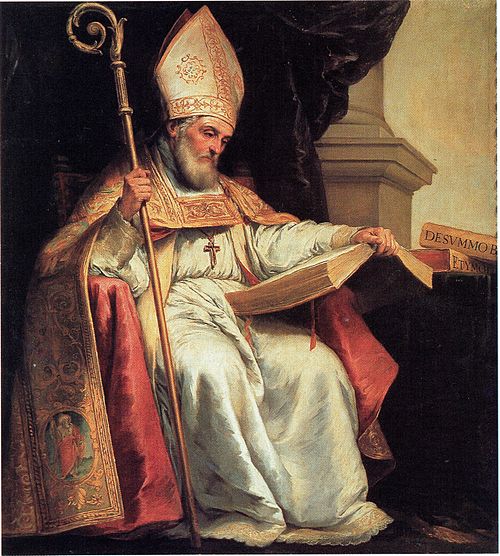

Doctor of the Church (Latin: doctor "teacher"), also referred to as Doctor of the Universal Church (Latin: Doctor Ecclesiae Universalis), is a title given by the Catholic Church to saints recognized as having made a significant contribution to theology or doctrine through their research, study, or writing.
As of 2025[update], the Catholic Church has named 38 Doctors of the Church. Of these, the 18 who died before the Great Schism of 1054 are also held in high esteem by the Eastern Orthodox Church, although it does not use the formal title Doctor of the Church.
Among the 38 recognised Doctors, 29 are from the West and nine from the East; four are women and 34 are men; one is an abbess, three are nuns, and one is a tertiary associated with a religious order; two are popes, 19 are bishops, 13 are priests, and one is a deacon; and 28 are from Europe, three are from Africa, and seven are from Asia. More Doctors (twelve) lived in the fourth century than any other; eminent Christian writers of the first, second, and third centuries are usually referred to as the Ante-Nicene Fathers. The shortest period between death and nomination was that of Alphonsus Liguori, who died in 1787 and was named a Doctor in 1871 – a period of 84 years; the longest was that of Irenaeus, which took more than 18 centuries.
Some other churches have similar categories with various names.
Before the 16th century
In the Western church four outstanding "Fathers of the Church" attained this honour in the early Middle Ages: Gregory the Great, Ambrose, Augustine of Hippo, and Jerome. The "four Doctors" became a commonplace notion among scholastic theologians, and a decree of Boniface VIII (1298) ordering their feasts to be kept as doubles throughout the Latin Church is contained in his sixth book of Decretals (cap. "Gloriosus", de relique. et vener. sanctorum, in Sexto, III, 22).
In the Byzantine Church, three Doctors were pre-eminent: John Chrysostom, Basil the Great, and Gregory of Nazianzus. The feasts of these three saints were made obligatory throughout the Eastern Empire by Leo VI the Wise. A common feast was later instituted in their honour on 30 January, called "the feast of the three Hierarchs". In the Menaea for that day it is related that the three Doctors appeared in a dream to John Mauropous, Bishop of Euchaita, and commanded him to institute a festival in their honour, in order to put a stop to the rivalries of their votaries and panegyrists.
This was under Alexius Comnenus (1081–1118; see "Acta SS.", 14 June, under St. Basil, c. xxxviii). But sermons for the feast are attributed in manuscripts to Cosmas Vestitor, who flourished in the tenth century. The three are as common in Eastern art as the four are in Western. Durandus (i, 3) remarks that Doctors should be represented with books in their hands. In the West analogy led to the veneration of four Eastern Doctors, Athanasius of Alexandria being added to the three hierarchs.
Catholic Church

The details of the title Doctor of the Church vary from one autonomous ritual church to another.
Latin Church
In the Latin Church, the four Latin Doctors (Ambrose, Augustine, Jerome, and Gregory) had been given a special pre-eminence since the eighth century, but in 1298 Pope Boniface VIII declared them Doctors of the Church. Pope Pius V recognized the four Great Doctors of the Eastern Church (John Chrysostom, Basil the Great, Gregory of Nazianzus, and Athanasius of Alexandria) in 1568.
To these names others have subsequently been added. The requisite conditions are enumerated as three: eminens doctrina, insignis vitae sanctitas, Ecclesiae declaratio (i.e. eminent learning, a high degree of sanctity, and proclamation by the church). Benedict XIV explains the third as a declaration by the supreme pontiff or by a general council.
The decree is issued by the Dicastery for the Causes of Saints and approved by the pope, after a careful examination, if necessary, of the saint's writings. It is not an ex cathedra decision, nor does it amount to a declaration that no error is to be found in the teaching of the Doctor. Doctors of the Church are not considered wholly immune from error. Previously, no martyrs were on the list, since the Office and the Mass had been for Confessors. Hence, as Benedict XIV pointed out during his pontificate, Ignatius of Antioch, Irenaeus of Lyons, and Cyprian of Carthage were not called Doctors of the Church. This changed in 2022 when Pope Francis declared Irenaeus of Lyons the first martyred Doctor.
The Doctors' works vary greatly in subject and form. Augustine of Hippo was one of the most prolific writers in Christian antiquity and wrote in almost every genre. Some, such as Pope Gregory the Great and Ambrose of Milan, were prominent writers of letters. Pope Leo the Great, Pope Gregory the Great, Peter Chrysologus, Bernard of Clairvaux, Anthony of Padua and Lawrence of Brindisi left many homilies. Catherine of Siena, Teresa of Ávila, John of the Cross and Therese of Lisieux wrote works of mystical theology. Athanasius of Alexandria and Robert Bellarmine defended the church against heresy. Bede the Venerable wrote biblical commentaries and theological treatises. Systematic theologians include the Scholastic philosophers Anselm of Canterbury, Albertus Magnus, and Thomas Aquinas.
In the 1920 encyclical Spiritus Paraclitus, Pope Benedict XV refers to Jerome as the church's "Greatest Doctor".
Until 1970, no woman had been named a Doctor of the Church. Since then four additions to the list have been women: Teresa of Ávila (also known as Saint Teresa of Jesus) and Catherine of Siena by Pope Paul VI; Therese of Lisieux by Pope John Paul II; and Hildegard of Bingen by Benedict XVI. Teresa and Thérèse were both Discalced Carmelites, Catherine was a Dominican tertiary, and Hildegard was a Benedictine.
Traditionally, in the Liturgy, the Office of Doctors was distinguished from that of Confessors by two changes: the Gospel reading Vos estis sal terrae ("You are the salt of the earth"), Matthew 5:13–19, and the eighth Respond at Matins, from Sirach 15:5, In medio Ecclesiae aperuit os ejus, * Et implevit eum Deus spiritu sapientiae et intellectus. * Jucunditatem et exsultationem thesaurizavit super eum. ("In the midst of the Church he opened his mouth, * And God filled him with the spirit of wisdom and understanding. * He heaped upon him a treasure of joy and gladness.") The Nicene Creed was also recited at Mass, which is normally not said except on Sundays and the highest-ranking feast days. The 1962 revisions to the Missal dropped the Creed from feasts of Doctors and abolished the title and the Common of Confessors, instituting a distinct Common of Doctors.[citation needed]
On 20 August 2011, Pope Benedict XVI announced that he would soon declare John of Ávila a Doctor of the Church. It was also reported in December 2011 that Pope Benedict intended to declare Hildegard of Bingen as a Doctor of the Church, though she had not yet been canonized. Pope Benedict XVI declared Hildegard of Bingen a saint on 10 May 2012, clearing the way for her to be named a Doctor of the Church, then declared both John of Ávila and Hildegard of Bingen Doctors of the Church on 7 October 2012.
Pope Francis declared the 10th-century Armenian monk Gregory of Narek the 36th Doctor of the Church on 21 February 2015. The decision was somewhat controversial, as Gregory was a monk of the Armenian Apostolic Church, a non-Chalcedonian church that was not in communion with the Catholic Church during Gregory's life and has sometimes been described as monophysite. However, the Armenian Apostolic Church does not accept monophysitism, and in 1996, Pope John Paul II and Catholicos Karekin I, patriarch of the Armenian Apostolic Church, signed a joint declaration which said that the division between the two churches was due to historical misunderstandings, not a real difference in Christology. Further, Gregory had been recognized as a saint by the Catholic Church since it received the Armenian Catholic Church into full communion.
Saint Cardinal John Henry Newman was proclaimed a doctor of the Church on All Saints Day, Saturday, November 1, 2025 by Pope Leo XIV at Saint Peter's Square at Vatican City. He was named co-patron of Catholic education joining Saint Thomas Aquinas. On 31 July 2025, a statement from the Holy See Press Office reported that during an audience granted to Cardinal Marcello Semeraro, Prefect of the Dicastery for the Causes of Saints, Pope Leo XIV had "confirmed the affirmative opinion of the Plenary Session of Cardinals and Bishops, Members of the Dicastery for the Causes of Saints, regarding the title of Doctor of the Universal Church, would be conferred on Saint John Henry Newman." In November 2023, the United States Conference of Catholic Bishops had voted to support a petition by the Catholic Bishops' Conference of England and Wales for the Vatican to name John Henry Newman a Doctor of the Church.
List of Doctors
(For earlier authorities on Christian doctrine, see Church Fathers and Ante-Nicene Fathers)
* indicates a saint who is also held in high esteem by the Eastern Orthodox Church.
| No. | Image | Name | Titles | Born | Died | Promoted | Activity | Notable writings | Pope |
|---|---|---|---|---|---|---|---|---|---|
| 1 | Gregory the Great* | One of the four Great Latin Fathers | 540 (c.) | 604 | 1298 | Pope, OSB | Dialogues Libellus responsionum Pastoral Care Moralia in Job | Pope Boniface VIII | |
| 2 | Ambrose* | One of the four Great Latin Fathers | 340 (c.) | 397 | 1298 | Bishop of Milan | Ambrosian hymns Exameron De obitu Theodosii | ||
| 3 | Augustine of Hippo* | One of the four Great Latin Fathers Doctor gratiae (Doctor of Grace) | 354 | 430 | 1298 | Bishop of Hippo (now Annaba) | De doctrina Christiana Confessions The City of God On the Trinity | ||
| 4 | Jerome* | One of the four Great Latin Fathers | 347 (c.) | 420 | 1298 | Priest, monk | Vulgate De Viris Illustribus | ||
| 5 | Thomas Aquinas | Doctor angelicus (Angelic Doctor) Doctor communis (Common Doctor) Doctor Humanitatis (Doctor of Humanity/Humaneness) | 1225 | 1274 | 1567 | Priest, Theologian, OP | Summa Theologiae Summa contra Gentiles | Pope Pius V | |
| 6 | John Chrysostom* | One of the four Great Greek Fathers | 347 | 407 | 1568 | Archbishop of Constantinople | Paschal Homily Adversus Judaeos | ||
| 7 | Basil the Great* | One of the four Great Greek Fathers | 330 | 379 | 1568 | Bishop of Caesarea | Address to Young Men on Greek Literature On the Holy Spirit | ||
| 8 | Gregory of Nazianzus* | One of the four Great Greek Fathers | 329 | 389 | 1568 | Archbishop of Constantinople | On God and Christ: The Five Theological Orations and Two Letters to Cledonius | ||
| 9 | Athanasius* | One of the four Great Greek Fathers | 298 | 373 | 1568 | Archbishop of Alexandria | On the Incarnation The Life of Antony Letters to Serapion | ||
| 10 | Bonaventure | Doctor seraphicus (Seraphic Doctor) | 1221 | 1274 | 1588 | Cardinal Bishop of Albano, Theologian, Minister General, OFM | Commentary on the Sentences of Lombard The Mind's Road to God Collationes in Hexaemeron | Pope Sixtus V | |
| 11 | Anselm of Canterbury | Doctor magnificus (Magnificent Doctor) Doctor Marianus (Marian Doctor) | 1033 or 1034 | 1109 | 1720 | Archbishop of Canterbury, OSB | Proslogion Cur Deus Homo | Pope Clement XI | |
| 12 | Isidore of Seville* | 560 | 636 | 1722 | Archbishop of Seville | Etymologiae On the Catholic Faith against the Jews | Pope Innocent XIII | ||
| 13 | Peter Chrysologus* | 406 | 450 | 1729 | Bishop of Ravenna | Homilies | Pope Benedict XIII | ||
| 14 | Leo the Great* | Doctor unitatis Ecclesiae (Doctor of the Church's Unity) | 400 | 461 | 1754 | Pope | Leo's Tome | Pope Benedict XIV | |
| 15 | Peter Damian | 1007 | 1072 | 1828 | Cardinal Bishop of Ostia, monk, OSB | De Divina Omnipotentia Liber Gomorrhianus | Pope Leo XII | ||
| 16 | Bernard of Clairvaux | Doctor mellifluus (Mellifluous Doctor) | 1090 | 1153 | 1830 | Priest, OCist | Sermones super Cantica Canticorum Apologia ad Guillelmum Liber ad milites templi de laude novae militiae | Pope Pius VIII | |
| 17 | Hilary of Poitiers* | 300 | 367 | 1851 | Bishop of Poitiers | Commentarius in Evangelium Matthaei | Pope Pius IX | ||
| 18 | Alphonsus Liguori | Doctor zelantissimus (Most Zealous Doctor) | 1696 | 1787 | 1871 | Bishop of Sant'Agata de' Goti, CSsR (Founder) | The Glories of Mary Dogmatic Works: Moral Theology The Council of Trent The Histories of Heresies and their Refutation Truth of the Faith | ||
| 19 | Francis de Sales | Doctor caritatis (Doctor of Charity) | 1567 | 1622 | 1877 | Bishop of Geneva, CO | Introduction to the Devout Life Letters of Spiritual Direction | ||
| 20 | Cyril of Alexandria* | Doctor Incarnationis (Doctor of the Incarnation) | 376 | 444 | 1883 | Archbishop of Alexandria | Commentaries on the Old Testament Thesaurus Discourse Against Arians Dialogues on the Trinity | Pope Leo XIII | |
| 21 | Cyril of Jerusalem* | 315 | 386 | 1883 | Archbishop of Jerusalem | Catechetical Lectures Summa doctrinae christianae | |||
| 22 | John Damascene* | 676 | 749 | 1890 | Priest, monk | Fountain of Knowledge Octoechos | |||
| 23 | Bede the Venerable* | Anglorum doctor (Doctor of the English) | 672 | 735 | 1899 | Priest, monk, OSB | Ecclesiastical History of the English People The Reckoning of Time Liber epigrammatum Paenitentiale Bedae | ||
| 24 | Ephrem* | 306 | 373 | 1920 | Deacon | Commentary on the Diatessaron Prayer of Saint Ephrem Hymns Against Heresies | Pope Benedict XV | ||
| 25 | Peter Canisius | 1521 | 1597 | 1925 | Priest, SJ | A Summary of Christian Teachings | Pope Pius XI | ||
| 26 | John of the Cross | Doctor mysticus (Mystical Doctor) | 1542 | 1591 | 1926 | Priest, Mystic, OCD (Reformer) | Spiritual Canticle Dark Night of the Soul Ascent of Mount Carmel | ||
| 27 | Robert Bellarmine | 1542 | 1621 | 1931 | Archbishop of Capua, Cardinal, Theologian, SJ | Disputationes de Controversiis | |||
| 28 | Albertus Magnus | Doctor universalis (Universal Doctor) | 1193 | 1280 | 1931 | Bishop of Regensburg, Theologian, OP | On Cleaving to God On Fate | ||
| 29 | Anthony of Padua | Doctor evangelicus (Evangelical Doctor) | 1195 | 1231 | 1946 | Priest, OFM | Sermons for Feast Days | Pope Pius XII | |
| 30 | Lawrence of Brindisi | Doctor apostolicus (Apostolic Doctor) | 1559 | 1619 | 1959 | Priest, Diplomat, OFMCap | Mariale | Pope John XXIII | |
| 31 | Teresa of Ávila | Doctor orationis (Doctor of Prayer) | 1515 | 1582 | 1970 | Mystic, OCD (Reformer) | La Vida de la Santa Madre Teresa de Jesús The Way of Perfection The Interior Castle | Pope Paul VI | |
| 32 | Catherine of Siena | 1347 | 1380 | 1970 | Mystic, TOSD | The Dialogue of Divine Providence | |||
| 33 | Thérèse of Lisieux | Doctor amoris (Doctor of love) Doctor synthesis (Doctor of synthesis) | 1873 | 1897 | 1997 | OCD | The Story of a Soul Letters of Saint Therese | Pope John Paul II | |
| 34 | John of Ávila | 1500 | 1569 | 2012 | Priest, Mystic | Audi, filia Spiritual Letters | Pope Benedict XVI | ||
| 35 | Hildegard of Bingen | 1098 | 1179 | 2012 | Visionary, theologian, polymath, composer, abbess OSB, physician, philosopher | Scivias Liber vitae meritorum Liber divinorum operum Ordo virtutum, | |||
| 36 | Gregory of Narek | 951 | 1003 | 2015 | Monk, poet, mystic, theologian | Book of Lamentations | Pope Francis | ||
| 37 | Irenaeus of Lyon* | Doctor unitatis (Doctor of Unity) | 130 | 202 | 2022 | Bishop, theologian, Martyr | Against Heresies | ||
| 38 | John Henry Newman | 1801 | 1890 | 2025 | Cardinal, theologian, Catholic convert, CO | Apologia Pro Vita Sua Tract 90 An Essay on the Development of Christian Doctrine Grammar of Assent | Pope Leo XIV |
Proposed Doctors
In October 2018, on the occasion of the canonization of Oscar Romero, martyred Archbishop of San Salvador, José Luis Escobar Alas, the current Archbishop of San Salvador, petitioned Pope Francis to name Romero a Doctor of the Church.
In October 2019, the Polish Catholic Bishops Conference formally petitioned Pope Francis to consider making Pope John Paul II a Doctor of the Church in an official proclamation, in recognition of his contributions to theology, philosophy, and Catholic literature, as well as the formal documents of his papacy.
In January 2023, Cardinal Angelo Bagnasco proposed that Pope Benedict XVI be declared a doctor of the Church "as soon as possible", in view of his theological intelligence and contribution to the formation of current doctrine of the Catholic Church, such as the new catechism. In January 2024, Archbishop Georg Gänswein also spoke in favor of the pontiff's canonization and his elevation to the status of doctor of the church.
In April 2024, during a private audience Pope Francis received a formal request from the superior general of the Discalced Carmelites, Miguel Márquez Calle, to declare Teresa Benedicta of the Cross a Doctor of the Church. The Discalced Carmelites first launched an international commission to gather the necessary documentation required for the declaration in 2022, in commemoration of the 100th anniversary of her conversion to Catholicism and the 80th anniversary of her martyrdom.
List of proposed Doctors
| Image | Name | Born | Died | Church status | Notable writings | Refs. |
|---|---|---|---|---|---|---|
| Gregory Thaumaturgus | c. 213 | c. 270 | Bishop of Neocaesarea | Oratio Panegyrica Epistola Canonica Epistola ad Philagrium | ||
| Epiphanius of Salamis | c. 310 | 403 | Bishop of Salamis | Ancoratus Panarion De mensuris et ponderibus | ||
| John Cassian | c. 360 | c. 435 | Founder, Abbey of St. Victor | De institutis coenobiorum Collationes | ||
| Flavius Aurelius Magnus Cassiodorus | c. 490 | c. 583 | Married Layperson; Founder, Vivarium Monastery | Expositio psalmorum De anima Codex Grandior Historiae ecclesiasticae tripartitae epitome | ||
| John Climacus | c. 579 | 649 | Monk, Monastery of Mount Sinai | Scala Paradisi | ||
| Maximus the Confessor | c. 580 | 662 | Abbot, Philippicus Monastery | Epistulae I–XLV Liber Asceticus Mystagogia Opuscula theologica et polemica | ||
| Theodore the Studite | 759 | 826 | Abbot, Stoudios Monastery | Refutatio Theodori Studitae Epistulae Testamente | ||
| Mechthild of Hackeborn | c. 1241 | 1298 | Benedictine | Liber specialis gratiae | ||
| Gertrude the Great | 1256 | 1302 | Benedictine | Legatus divinae pietatis Exercitia spiritualia Preces Gertrudianae | ||
| John Duns Scotus | c. 1265 | 1308 | Religious priest Order of Friars Minor | Parva logicalia Lectura Ordinatio Collationes parisienses | ||
| Angela of Foligno | c. 1248 | 1309 | Married Layperson; Member, Secular Franciscans | Memoriale Instruzioni | ||
| Ramon Llull | c. 1233 | 1316 | Layperson; Member, Secular Franciscans | Blanquerna Tree of Science Ars Magna The Book of One Thousand Proverbs | ||
| Heinrich Seuse | 1295 | 1366 | Religious priest, Dominicans | Little Book of Truth Horologium Sapientiae Great Book of Letters Little Book of Eternal Wisdom | ||
| Bridget of Sweden [Birgitta Birgersdotter Gudmarsson] | c. 1304 | 1374 | Widow, founder of the Order of the Most Holy Saviour | Revelationes caelestes Liber caelestis Sermo angelicus | ||
| Julian of Norwich | c. 1342 | c. 1416 | Laywoman, mystic, anchorite | Revelations of Divine Love | ||
| Bernardino of Siena | 1380 | 1444 | Religious priest, Order of Friars Minor | Quadragesimale Seraphim Sermones extraordinarii De contractibus et usura | ||
| Thomas à Kempis | c. 1380 | 1471 | Professed Priest, Canons Regular of Saint Augustine | De Imitatione Christ | ||
| Thomas More | 1478 | 1535 | Layman, member of the Third Order of Saint Francis, martyr | Utopia Responsio ad Lutherum A Dialogue of Comfort Against Tribulation Treatise Upon the Passion | ||
| Thomas of Villanova [Tomás García Martínez] | 1488 | 1555 | Religious priest, Augustinians; Archbishop of Valencia | Tracts Opera omnia | ||
| Carlo Borromeo | 1538 | 1584 | Archbishop of Milan; Cardinal | Noctes Vaticanae Orations, Homilies and Writings | ||
| Marguerite-Marie Alacoque | 1647 | 1690 | Visitandine | La Devotion au Sacré-Coeur de Jesus | ||
| María de Jesus of Ágreda [María Coronel de Arana] | 1602 | 1665 | Conceptionist nun | Mística Ciudad de Dios | ||
| Louis de Montfort [Louis-Marie Grignion de Montfort] | 1673 | 1716 | Priest, founder of the Company of Mary, member of the Third Order of Saint Dominic | Preparation for Total Consecration Secret of the Rosary True Devotion to Mary | ||
| Veronica Giuliani [Ursula Giuliani] | 1660 | 1727 | Capuchin Poor Clare | Diaria Lettere | ||
| Columba Marmion [Joseph Aloysius Marmion] | 1858 | 1923 | Religious priest, Congregation of the Annunciation | Christ, the Life of the Soul Christ in His Mysteries Christ the Ideal of the Monk Christ the Ideal of the Priest | ||
| Maria Faustyna of the Blessed Sacrament [Helena Kowalska] | 1905 | 1938 | Religious sister, Sisters of Our Lady of Mercy | Diary: Divine Mercy in My Soul | ||
| Teresa Benedicta of the Cross [Edith Stein] | 1891 | 1942 | Discalced Carmelite; Martyr | On the Problem of Empathy Finite and Eternal Being The Science of the Cross | ||
| Josemaría Escrivá | 1902 | 1975 | Priest, founder of the Opus Dei | The Way Furrow The Forge Friends of God | ||
| Dietrich von Hildebrand | 1889 | 1977 | Layman | The Nature of Love Transformation in Christ Liturgy and Personality | ||
| Óscar Romero | 1917 | 1980 | Archbishop of San Salvador, martyr | Cese la represión! Homilías Voice of the Voiceless The Violence of Love | ||
| Teresa of Calcutta [Agnes Gonxha Bojaxhiu] | 1910 | 1997 | Religious sister, founder of the Missionaries of Charity | Come Be My Light | ||
| John Paul II [Karol Józef Wojtyła] | 1920 | 2005 | Pope | Evangelium vitae Fides et ratio Veritatis splendor Theology of the Body | ||
| Benedict XVI [Joseph Alois Ratzinger] | 1927 | 2022 | Pope | Caritas in veritate Spe salvi Deus caritas est The Spirit of the Liturgy Jesus of Nazareth |
Other recognised Doctors
In addition, parts of the Catholic Church have recognised other individuals with this title. In Spain, Fulgentius of Cartagena, Ildephonsus of Toledo and Leander of Seville have been recognized with this title. In 2007 Pope Benedict XVI, in his encyclical Spe Salvi, called Maximus the Confessor "the great Greek Doctor of the Church", though the Dicastery for the Causes of Saints considers this declaration an informal one.
Scholastic epithets
Though not named Doctors of the Church or even canonized, many of the more celebrated doctors of theology and law of the Middle Ages were given an epithet which expressed the nature of their expertise. Among these are Bl. John Duns Scotus, Doctor subtilis ("subtle doctor"); Alexander of Hales, Doctor irrefragabilis ("unanswerable doctor"); Roger Bacon, Doctor mirabilis ("wondrous doctor"); William of Ockham, Doctor singularis et invincibilis ("valuable and invincible doctor"); Jean Gerson, Doctor christianissimus ("most Christian doctor"); and Francisco Suárez, Doctor eximius ("exceptional doctor").
Syro-Malabar Catholic Church
The Syro-Malabar Catholic Church recognises Ambrose, Jerome, Gregory, Augustine, Athanasius, Basil, Gregory of Nazianzus and John Chrysostom, as well as Ephrem the Syrian, Pope Leo I, John of Damascus, Cyril of Alexandria, Cyril of Jerusalem, Epiphanius of Salamis and Gregory of Nyssa.
Chaldean Catholic Church
The Chaldean Catholic Church honours as doctor Polycarp, Eustathius of Antioch, Meletius, Alexander of Jerusalem, Athanasius, Basil, Cyril of Alexandria, Gregory Nazianzus, Gregory of Nyssa, John Chrysostom, Fravitta of Constantinople, Ephrem the Syrian, Jacob of Nisibis, Jacob of Serugh, Isaac of Armenia, Isaac of Nineveh, and Maruthas of Martyropolis.
Eastern Orthodox Church
The Eastern Orthodox Church honors many of the pre-schism saints as well, but the term Doctor of the Church is not applied in the same way. One consistent use of the category is the trio of Basil the Great, Gregory of Nazianzus and John Chrysostom, recognized as universal teachers and known as the Three Holy Hierarchs. The church also recognizes three saints with the title Theologos (Theologian): John the Evangelist, Gregory of Nazianzus and Symeon the New Theologian.
Russian Orthodox Church
The Russian Orthodox Church commemorates on 19 July the feast of Three Holy Russian Hierarchs: Demetrius of Rostov, Mitrophan of Voronezh and Tikhon of Zadonsk.
Armenian Church
The Armenian Apostolic Church recognizes the Twelve Holy Teachers (Vardapets) of the Church
- Hierotheus the Thesmothete
- Dionysius the Areopagite
- Pope Sylvester I
- Athanasius of Alexandria
- Cyril of Alexandria
- Ephrem the Syrian
- Basil the Great
- Gregory Nazianzus
- Gregory of Nyssa
- Epiphanius of Salamis
- John Chrysostom
- Cyril of Jerusalem.
They also recognize their own saints Mesrob, Yeghishe, Movses Khorenatsi, David the Invincible, Gregory of Narek, Nerses III the Builder, and Nerses of Lambron as "Doctors of the Armenian Church" or the "Armenian Doctors".
Assyrian Church of the East
The Assyrian Church of the East recognizes Yeghishe, Diodorus of Tarsus, Theodore of Mopsuestia, and Nestorius as Doctors of the Church.
Anglicanism
The churches of the Anglican Communion tend not to use the term Doctor of the Church in their calendars of saints, preferring expressions such as "Teacher of the Faith". Those thus recognized include figures from before and after the Reformation, most of whom are chosen among those already recognized as in the Catholic Church and Eastern Orthodox Church. Those designated as Teachers of the Faith in the Church of England's calendar of saints are as follows:
- Basil the Great
- Gregory of Nazianzus
- Hilary of Poitiers
- Francis de Sales
- Thomas Aquinas
- Cyril of Jerusalem
- Frederick Denison Maurice
- William of Ockham
- Anselm
- Catherine of Siena
- Athanasius
- Ephrem of Syria
- Sundar Singh of India
- Cyril of Alexandria
- Irenæus
- Bonaventure
- Gregory of Nyssa and his sister Macrina
- Brooke Foss Westcott
- Jeremy Taylor
- Bernard of Clairvaux
- Augustine of Hippo
- Gregory the Great
- John Chrysostom
- Sergius of Radonezh
- Jerome
- Teresa of Ávila
- Therese of Lisieux
- Richard Hooker
- William Temple
- Leo the Great
- John of Damascus
- Ambrose
- John of the Cross
Since all of the above appear in the calendar at the level of Lesser Festival or Commemoration, their celebration is optional. Similarly, because "In the Calendar of the Saints, diocesan and other local provision may be made to supplement the national Calendar", those Doctors of the Church recognized by the Catholic Church may also be celebrated in the Church of England.
Lutheranism
The Lutheran calendar of saints generally does not use the term Doctor of the Church. Instead, it uses the term Confessor to commemorate individuals who made important theological contributions to the faith through their writing or teaching, as well as those who publicly defended and promoted the faith. The calendar of the Lutheran Church–Missouri Synod lists the following figures as Confessors:
- Basil the Great
- Gregory of Nazianzus
- Gregory of Nyssa
- Philipp Melanchthon
- Martin Luther
- Athanasius of Alexandria
- Cyril of Alexandria
- Robert Barnes
- Martin Chemnitz
The LCMS calendar of saints also commemorates the following individuals as Theologians:
- Anselm of Canterbury
- C.F.W. Walther
- Bede the Venerable
- Johann Gerhard
- Bernard of Clairvaux
- Augustine of Hippo
- John of Damascus
See also
Further reading
- Frederick George Holweck, A Biographical Dictionary of the Saints. St. Louis, MO: B. Herder Book Co., 1924.
External links
- . Archived from on 18 May 2005.
- . from the original on 2 February 2000.
- Connor, Ft. Charles P. (ed.). . EWTN. Archived from on 15 September 2008.
- (in English, German, Italian, and Spanish). from the original on 1 July 2018.