Iwerks Studio
In-game article clicks load inline without leaving the challenge.
Animated Pictures Corp., Ltd. (informally coined as the Iwerks Studio) was an American animation studio based in Beverly Hills, California, headed by animator Ub Iwerks. The studio was best known for producing cartoon series such as Flip the Frog and Willie Whopper, as well as its ComiColor cartoon series, and was in operation between 1930 and 1937.
History
Background and financing
Ub Iwerks was the director and head animator of the increasingly successful Mickey Mouse and Silly Symphony cartoons for Walt Disney, serving at Disney's right hand man with production. In early 1930, Iwerks accepted a contract with Disney's distributor, Pat Powers, to resign from the studio and produce cartoons under his own name. Iwerks brought along other Disney talent, like musical composer Carl Stalling and animators Merle Gilson and Ben Clopton.
Financial backers, led by Powers, suspected Iwerks was responsible for much of Disney's early success, and Powers' New York-based film company, Celebrity Productions, Inc., cut ties with Disney to support Iwerks' production venture. The studio was formally incorporated as Animated Pictures Corp., Ltd, with its original location based in Los Angeles, California.
Flip the Frog series and MGM contract (1930–1933)
Iwerks' first cartoon character, Flip the Frog, was announced as early as February 1930. Flip's first few cartoons, starting with Fiddlesticks in May, were released both in black-and-white and in Harriscolor, making them arguably the first sound cartoons released in color. Animated Pictures made a sales record in May after their first press announcement, even before the cartoons' release, as the European rights to the films were sold out before ten days. By early July, the studio signed a contract from Metro-Goldwyn-Mayer to handle distribution of the series. As the Flip cartoons progressed, the studio saw moderate success and expanded operations, hiring new staff and moving their production facility to Beverly Hills.
Several key creative personnel and trainee artists employed by Iwerks were later prominent figures in animation history. Grim Natwick, already a seasoned animator and creative force at Max Fleischer's cartoon studio for designing Betty Boop, was hired in 1931 to lead Animated Pictures' creative output, a position he held until late 1934. Natwick also hired animators Shamus Culhane, Al Eugster, and Berny Wolf, as well as musical composer Art Turkisher, all formerly with the Fleischer studio. One of Iwerks' first hires, an animator named Fred Kopietz, recommended Iwerks employ a friend from the Chouinard Art Institute. This friend, Chuck Jones, was hired and put to work as a cel washer in one of his first jobs before becoming a prominent cartoon director at Warner Bros. Despite the influx of talent from both Disney and Fleischer, Iwerks failed to rival either studio in terms of commercial success.
Flip the Frog, much like his cartoon contemporaries, bore various resemblances to Mickey Mouse in both his visual design, personality, and mannerisms. As the series progressed and with the new hired animators, the appearance of Flip gradually became less frog-like. Flip evolved into more of a down-and-out, Chaplin-esque character who always found himself in everyday conflicts surrounding the poverty-stricken atmosphere of the Great Depression.
Expansion, Willie Whopper and ComiColor series (1933–1934)
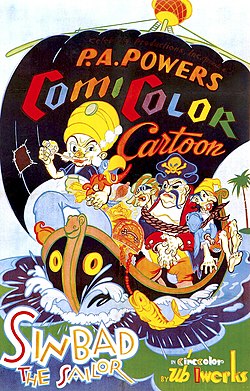
In 1933, Flip the Frog was phased out and replaced with two new cartoon series, one featuring Willie Whopper, and the other a series of color cartoons called ComiColors. The character Willie Whopper was a young boy who told of his many outlandish adventures. His fantastic accounts were as depicted on-screen as outright lies or "whoppers", and were usually preceded by his memorable catchphrase, "Say, did I ever tell ya this one?" The ComiColor cartoons mostly focused on fairy tales with one-off characters. Both series were started in 1933, with Willie featured in 14 cartoons through 1934, and the ComiColors produced until 1936.
The staff was doubled to meet the demand, and the studio was reorganized into different animation units so both series could be produced in tandem. The ComiColors were initially co-directed by Shamus Culhane and Al Eugster, and the Willie Whopper cartoons handled by two units: one with co-directors Grim Natwick and Berny Wolf, and another led by ex-Harman-Ising animators Robert Stokes and Norman Blackburn. Only the Willie Whopper cartoons were picked up by MGM for a distribution deal through 1933 and 1934, while each ComiColor cartoon was individually sold by Celebrity Productions to a wide variety of distributors who were interested. The ComiColor cartoons enjoyed some success overseas, with eleven countries closed for foreign distribution rights of cartoons in 1934 and as many as 17 foreign versions of individual films completed for distribution.
Walt Disney had exclusive rights to use the full-color Technicolor process for his studio's cartoons, so Iwerks opted for the cheaper two-color Cinecolor process for all ComiColor cartoons and two Willie Whopper cartoons, Davy Jones' Locker and Hell's Fire. In some instances, Iwerks also opted to cut costs for music production by utilizing cheaper canned music from commercial records in place of more expensive custom orchestrated scores by Carl Stalling or Art Turkisher. Examples of such could be heard throughout the Willie Whopper and ComiColor series.
Decline (1934–1937)
In 1934, financiers and staff of Iwerks' cartoons were starting to see the lackluster output of Iwerks' Animated Pictures studio in comparison to Disney, and were dropping support. MGM did not renew their contract with Iwerks for 1934-35 season, instead favoring the production of Happy Harmonies cartoons for Harman-Ising Productions, thus leaving Iwerks with only the independently-distributed ComiColor shorts in the studio's roster. The same year, Grim Natwick resigned from his supervisory role to work for Walt Disney on his first feature-length animated film, Snow White and the Seven Dwarfs, and many other key animators followed suit soon after.
Despite these dropouts, Animated Pictures, under Celebrity Productions, continued to find opportunities for additional work. They collaborated with English companies Revelation Films and Boots, Ltd. on a short educational film titled See How They Won, a film depicting the battle of a character named "John Careless" who falls victim to the "Bad Health Brigade." The concept and story were done in England, with Animated Pictures working on the film's production. After release, Revelation Films signed a deal with Celebrity Productions to produce a series of cartoons for a promotional campaign.
In addition, as early as June 19, 1935, Iwerks and Celebrity Productions discussed a deal of producing a cartoon series for the 1936-37 season based on the Reg'lar Fellers comic strip, by arrangement with comic creator Gene Byrnes. Meetings between Iwerks and Celebrity Productions took place to discuss the prospects of expanding or entirely moving Iwerks' animation studio to New York to start the series. These plans all ultimately fell through; the only cartoon to come out of the deal was Happy Days in 1936, which became the final cartoon to be produced by Iwerks for Pat Powers. Despite the deals with Byrnes and Revelation, and another season of ComiColors proposed by Pat Powers for the 1936-37 season, Powers and Celebrity Productions, Inc. withdrew all financial support from Iwerks' studio following the demise of the Reg'lar Fellas deal.
Aftermath
Freelance
After losing the support and deals from Pat Powers, Iwerks managed to keep Animated Pictures afloat by finding freelance work, utilizing his own Beverly Hills studio and animation staff. Iwerks began producing and directing Technicolor Color Rhapsodies cartoons for Columbia Pictures' Screen Gems animation studio to help fill out their schedule on a subcontract basis. At the beginning of 1937, Iwerks signed a contract with Caravel Distributing Co. to produce animation for a promotional film sponsored by various advertisers, featuring cartoon characters like Otto Soglow's Little King.
Later in 1937, producer Leon Schlesinger enlisted Iwerks as a subcontractor to help increase his turnout of black-and-white Looney Tunes cartoons for release through Warner Bros. Pictures. When production fell behind on the first of these shorts, Porky and Gabby, three animators from Leon Schlesinger Productions - Robert Cannon, Bob Clampett, and Chuck Jones - an Iwerks Studio alumnus - were sent to work at Animated Pictures and collaborate with the Iwerks staff.
Iwerks ultimately completed two Looney Tunes shorts: Porky and Gabby and Porky's Super Service. Both shorts featured Porky Pig, with the former also featuring Gabby Goat, a new character created by Schlesinger storyman (and Iwerks alumnus) Cal Howard, who sometimes also did the voice. While working on layout drawings for a third short, Porky's Badtime Story, a frustrated Iwerks - he reportedly hated the Porky Pig character - stopped reporting to work, and Clampett, a Harman-Ising alumnus who had long harbored directing aspirations, took over direction. After completing one more Looney Tunes short at the Iwerks studio, Get Rich Quick Porky, the Schlesinger staffers returned to their home studio on the Warner Bros. Sunset Boulevard lot and Clampett was given his own directorial unit.
Reorganization as Cartoon Films, Ltd.
Around December 1937, Iwerks struck a deal with UK-owned British Independent Exhibitors Association, a merger between distributors British Independent Exhibitors Co, Ltd. and Sound City, to produce a series of color cartoons. These cartoons featured a character of British cartoonist Lawson Wood's, a monkey named Gran'pop. To accommodate work on these cartoons, Iwerks' Animated Pictures was reorganized into a new venture under the same studio address, named Cartoon Films, Ltd., with producer Lawson Harris serving as president of the new establishment. In a deal with another representative of Iwerks' studio, David Biedermann, Educational Pictures signed distribution rights for the series to replace their contract with Paul Terry's Terrytoons. A deal for 24 Gran'pop cartoons was initially projected for the series, reportedly moved up to 50 cartoons a couple days later, and distribution deals with Grand National were discussed, but only three cartoons were completed in 1938 under Iwerks' supervision. All three shorts would eventually be released by Monogram Pictures in the 1940-1941 season. In the interim, the studio produced advertising shorts for businesses like Shell Oil Company, W. K. Kellogg Co., Lever Brothers, and Kraft Cheese, which were released around 1940 and sometimes promoted as "Minitoons".
As early as July 1939, Cartoon Films made a deal with a color film company, Dunningcolor, to introduce their newest three-strip color process of the same name in a series of animated shorts to be released by Columbia Pictures. However, on September 9, 1940, Ub Iwerks resigned from his studio to rejoin Walt Disney Productions as a technical developer, so the studio was turned over to Lawson Harris and animator Paul Fennell, including production of the Dunningcolor shorts. Two historical cartoons came out of the Dunningcolor contract, titled How War Came and Broken Treaties, which were completed and released in 1941. They were both narrated by Raymond Gram Swing, and the former of them was nominated an Academy Award for Best Cartoon Subject.
The same year, Cartoon Films completed Ub Iwerks' initial contract with Columbia's Screen Gems, with a final cartoon titled The Carpenters. In 1942, the studio opened up facilities in Chicago, IL and New York, NY. The studio moved to animating for war propaganda films for a time, as they contributed animation to a 1943 short for the United States Department of Agriculture, titled Six Legged Saboteurs. Information on Cartoon Films, Ltd. after this point is not conclusive, but in 1944, the studio's Beverly Hills address was occupied by animation studio Hugh Harman Productions.
Technical innovations
Throughout most of the studio's existence, Iwerks' cartoons produced under Celebrity Productions' auspices utilized Pat Powers' own Cinephone system for sound recording, which was formerly used for Walt Disney's early sound cartoons, and the animation studio was supplied with its own sound equipment to utilize the technology.
Iwerks also experimented with stop-motion animation in combination with the multiplane camera. Although first developed in the 1920's by Lotte Reiniger, Iwerks made many substantial improvements in multiplane animation. This technology allowed for a three-dimensional look, separating layers of the background, resulting in a greater feeling of depth. He made a short called "The Toy Parade", which was never released in public. The 1934 animated short "The Headless Horseman" was the first time Iwerks used the multiplane effect, and it was utilized in both the ComiColor and Willie Whopper cartoons.
Labor unrest
According to the recollections of various former Iwerks employees, management at Animated Pictures under Powers was harsh. Particularly, Iwerks' general manager and one of Pat Powers' right-hand men, Emil Offeman, demanded harsh work environments and footage quotas for the employed artists. Offeman's often misinformed work expectations caused Jim Pabian, a neophyte animator at the studio, to quit the studio and cancel his contract with Iwerks.
According to animator Shamus Culhane's autobiography, the last straw was when Offeman constantly harassed an ailing animator, Godfrey Bjork, about work quotas to the point of his hospitalization and death in 1933. Afterwards, meetings calling for unionization of animation studios were allegedly held by Grim Natwick, with dozens of animation workers in attendance and considered some of the first union meetings in the business.
Filmography
Theatrical Cartoons
1930
| Title | Release date | Series | Credits | Distributor | Color Process | Notes |
|---|---|---|---|---|---|---|
| Fiddlesticks | August 16, 1930 | Flip the Frog | Produced and Drawn by Ub Iwerks | Celebrity Productions/MGM | Harriscolor and Black & White | Widely released in Black & White |
| Flying Fists | September 6, 1930 | Widely released in Black & White and currently only survives in B&W prints | ||||
| Little Orphan Willie | 1930 | Celebrity Productions | Rejected by MGM and was never copyrighted. Widely released in Black & White and currently only survives in B&W prints. Was released by Celebrity in 1935 when the rights reverted to Powers | |||
| Puddle Pranks | 1930 | Was produced with MGM titles but was rejected by MGM and was never copyrighted. Widely released in Black & White and currently only survives in B&W prints. Was released by Celebrity in 1935 when the rights reverted to Powers | ||||
| The Village Barber | September 27, 1930 | MGM | Black & White | |||
| The Cuckoo Murder Case | October 18, 1930 | Produced and Drawn by Ub Iwerks, Musical Score by Carl W. Stalling |
1931
| Title | Release date | Series | Credits | Distributor | Color Process | Notes |
|---|---|---|---|---|---|---|
| The Soup Song | January 10, 1931 | Flip the Frog | Produced and Drawn by Ub Iwerks, Musical Score by Carl W. Stalling | MGM | Black & White | |
| The Village Smitty | January 31, 1931 | |||||
| Laughing Gas | March 14, 1931 | Produced and Drawn by Ub Iwerks | ||||
| Ragtime Romeo | May 2, 1931 | |||||
| The New Car | July 25, 1931 | |||||
| Movie Mad | August 29, 1931 | |||||
| The Village Specialist | September 12, 1931 | |||||
| Jail Birds | September 26, 1931 | |||||
| Africa Squeaks | October 17, 1931 | |||||
| Spooks | November 21, 1931 |
1932
| Title | Release date | Series | Credits | Distributor | Color Process | Notes |
|---|---|---|---|---|---|---|
| Fire! Fire! | January 23, 1932 | Flip the Frog | Produced and Drawn by Ub Iwerks | MGM | Black & White | |
| The Milkman | February 20, 1932 | |||||
| What a Life | March 26, 1932 | |||||
| Puppy Love | April 30, 1932 | |||||
| School Days | May 14, 1932 | |||||
| The Bully | June 18, 1932 | |||||
| The Office Boy | July 16, 1932 | |||||
| Room Runners | August 13, 1932 | |||||
| Stormy Seas | August 22, 1932 | |||||
| Circus | August 27, 1932 | |||||
| The Goal Rush | September 3, 1932 | |||||
| The Pony Express | October 1, 1932 | Retitled as The Phoney Express when reissued by Pat Powers | ||||
| The Music Lesson | October 29, 1932 | |||||
| The Nurse Maid | November 26, 1932 | |||||
| Funny Face | December 24, 1932 |
1933
| Title | Release date | Series | Credits | Distributor | Color Process | Notes |
|---|---|---|---|---|---|---|
| Coo Coo, the Magician | January 21, 1933 | Flip the Frog | Produced and Drawn by Ub Iwerks | MGM | Black & White | |
| Flip's Lunchroom | March 25, 1933 | |||||
| Technocracked | April 29, 1933 | |||||
| Bulloney | May 27, 1933 | |||||
| A Chinaman's Chance | June 24, 1933 | |||||
| Paleface | August 12, 1933 | |||||
| Soda Squirt | September 9, 1933 | Features “By Heck” by Nat Shilkret and the Victor Orchestra and “Mama Inez” by the Havana Novelty Orchestra. | ||||
| The Air Race | never released | Willie Whopper | an Ub Iwerks cartoon | None | Features “Zampa” Overture by Herold, by the Victor Symphony Orchestra. The first Willie Whopper cartoon produced, though it was never released after being rejected by MGM. It was remade into Spite Flight. | |
| Play Ball | September 16, 1933 | MGM | The first released Willie Whopper cartoon | |||
| Spite Flight | October 14, 1933 | A remake of the unreleased Willie Whopper cartoon, The Air Race | ||||
| Stratos Fear | November 11, 1933 | P. A. Powers Presents, Produced By Ub Iwerks | First short with Willie’s redesign. First credit for Pat Powers as P. A. Powers | |||
| Jack and the Beanstalk | December 23, 1933 | ComiColor | P. A. Powers presents, Produced by Ub Iwerks | Celebrity Productions | Processed By Cine-Color | First ComiColor cartoon |
1934
| Title | Release date | Series | Credits | Distributor | Color Process | Notes |
|---|---|---|---|---|---|---|
| Davy Jones Locker | January 13, 1934 | Willie Whopper | P. A. Powers Presents, Produced By Ub Iwerks | MGM | Processed By CineColor | |
| The Little Red Hen | February 16, 1934 | ComiColor | P. A. Powers presents, Produced By Ub Iwerks, Animation By Jimmie Culhane & Al Eugster, Musical Score By Carl Stalling | Celebrity Productions | ||
| Hell's Fire | February 17, 1934 | Willie Whopper | P. A. Powers Presents, Produced By Ub Iwerks | MGM | ||
| Robin Hood Jr. | March 10, 1934 | P. A. Powers Presents, by Ub Iwerks, Animation By Grim Natwick, Musical Score By Carl Stalling | Black & White | |||
| The Brave Tin Soldier | April 7, 1934 | ComiColor | P. A. Powers presents, Produced By Ub Iwerks, Animation By Jimmie Culhane & Al Eugster, Musical Score By Art Turkisher | Celebrity Productions | Processed By CineColor | |
| Insultin' the Sultan | April 14, 1934 | Willie Whopper | P. A. Powers Presents, An Ub Iwerks Cartoon, Animation By Grim Natwick & Berny Wolf, Musical Score by Art Turkisher | MGM | Black & White | |
| Puss in Boots | May 17, 1934 | ComiColor | P. A. Powers presents, Produced by Ub Iwerks, Animation by Jimmie Culhane & Al Eugster, Musical Score By Carl Stalling | Celebrity Productions | Processed by CineColor | |
| Reducing Créme | May 19, 1934 | Willie Whopper | P. A. Powers Presents, An Ub Iwerks Cartoon, Animation By Grim Natwick & Berny Wolf, Musical Score by Art Turkisher | MGM | Black & White | |
| Rasslin' Round | June 1, 1934 | P. A. Powers Presents, An Ub Iwerks Cartoon, Animation By Robt. G. Stokes, Norm Blackburn, Musical Score by Carl Stallings | ||||
| The Queen of Hearts | June 25, 1934 | ComiColor | P. A. Powers presents, Produced by Ub Iwerks, Animation by Jimmie Culhane & Al Eugster, Musical Score by Art Turkisher, Directed by Ub Iwerks | Celebrity Productions | Processed by CineColor | |
| Cave Man | July 6, 1934 | Willie Whopper | P. A. Powers Presents, An Ub Iwerks Cartoon, Animation By Grim Natwick, Berny Wolf | MGM | Black & White | Features “Somebody Stole My Gal” and “Lafayette” by Bennie Moten |
| Jungle Jitters | July 24, 1934 | P. A. Powers Presents, An Ub Iwerks Cartoon, Animation By Robt. G. Stokes, Norm Blackburn, Musical Score by Carl Stallings | ||||
| Aladdin and the Wonderful Lamp | August 10, 1934 | ComiColor | P. A. Powers presents, Produced by Ub Iwerks, Animation By Grim Natwick, Berny Wolf, Musical Score By Art Turkisher | Celebrity Productions | Processed by CineColor | |
| The Good Scout | September 1, 1934 | Willie Whopper | P. A. Powers Presents, An Ub Iwerks Cartoon, Animation By Robt. G. Stokes, Norm Blackburn | MGM | Black & White | Features “Smiles” by Boyd Senter and “Milenberg Joys” by McKinney’s Cotton Pickers |
| Viva Willie | September 20, 1934 | P. A. Powers Presents, An Ub Iwerks Cartoon, Animation By Grim Natwick, Berny Wolf, Musical Score by Carl Stallings | Final Willie Whopper cartoon and final Iwerks cartoon distributed by MGM. | |||
| The “Headless Horseman” Adapted from The Legend Of Sleepy Hollow | October 1, 1934 | ComiColor | P. A. Powers presents, Produced by Ub Iwerks, Directed by Ub. Iwerks, Musical Score by Carl Stalling | Celebrity Productions | Processed by CineColor | |
| The Valiant Tailor | October 29, 1934 | P. A. Powers presents, Produced by Ub Iwerks, Animation Grim Natwick, Berny Wolf, Musical Score Art Turkisher | Retitled “The King’s Tailor” by Castle Films | |||
| Don Quixote | November 26, 1934 | P. A. Powers presents, Produced by Ub Iwerks, Musical Score By Carl Stalling | ||||
| Jack Frost | December 24, 1934 |
1935
| Title | Release date | Series | Credits | Distributor | Color Process | Notes |
|---|---|---|---|---|---|---|
| Little Black Sambo | February 6, 1935 | ComiColor | P. A. Powers presents, Produced by Ub Iwerks, Musical Score By Carl Stalling | Celebrity Productions | Processed by CineColor | |
| The Brementown Musicians | March 6, 1935 | |||||
| Old Mother Hubbard | April 3, 1935 | |||||
| Mary's Little Lamb | May 1, 1935 | |||||
| Summertime | June 15, 1935 | |||||
| Sinbad the Sailor | July 30, 1935 | |||||
| The Three Bears | August 30, 1935 | |||||
| Balloon Land | September 30, 1935 | Features “Buffoon” by the Victor Concert Orchestra and “Parade of the Wooden Soldiers” by the International Novelty Orchestra | ||||
| Simple Simon | November 15, 1935 | |||||
| Humpty Dumpty | December 30, 1935 | P. A. Powers presents, Produced by Ub Iwerks, Musical Score by Carl Stalling |
1936
| Title | Release date | Series | Credits | Distributor | Color Process | Notes |
|---|---|---|---|---|---|---|
| Ali Baba | January 30, 1936 | ComiColor | P. A. Powers presents, Produced by Ub Iwerks, Musical Score by Carl Stalling | Celebrity Productions | Processed by CineColor | |
| Tom Thumb | March 30, 1936 | |||||
| Dick Whittington's Cat | May 30, 1936 | |||||
| Little Boy Blue | July 30, 1936 | |||||
| Happy Days | September 30, 1936 | Last ComiColor cartoon, features characters from the comic strip Reg'lar Fellers. The last cartoon made before Celebrity Productions pulled its funding. | ||||
| Two Lazy Crows | November 26, 1936 | Color Rhapsody | Direction Ub Iwerks, Music Eddie Kilfeather, Musical Direction Joe De Nat | Columbia Pictures Corporation | Technicolor | First Color Rhapsody directed by Iwerks |
1937
| Title | Release date | Series | Credits | Distributor | Color Process | Notes |
|---|---|---|---|---|---|---|
| Skeleton Frolic | January 29, 1937 | Color Rhapsody | Direction Ub Iwerks, Music Eddie Kilfeather, Musical Direction Joe De Nat | Columbia Pictures Corporation | Technicolor | Remake of The Skeleton Dance (1929), which Iwerks animated. |
| Merry Mannequins | March 19, 1937 | |||||
| Porky and Gabby | May 15, 1937 | Looney Tunes | Produced By Leon Schlesinger, Supervision Ub Iwerks, Animation Charles Jones ••• Bob Clampett, Musical Direction Carl W. Stalling | Warner Bros. Productions | Black & White | First Looney Tune by Iwerks and debut of Gabby Goat |
| The Foxy Pup | May 21, 1937 | Color Rhapsody | Direction Ub Iwerks, Music Eddie Kilfeather, Musical Direction Joe De Nat | Columbia Pictures Corporation | Technicolor | |
| Porky's Super Service | July 3, 1937 | Looney Tunes | Produced By Leon Schlesinger, Supervision Ub Iwerks, Animation Charles Jones ••• Robert Clampett, Musical Direction Carl W. Stalling | Warner Bros. Productions | Black & White | Last Looney Tune by Iwerks; Bob Clampett would complete Porky’s Bad Time Story which Iwerks had begun. |
1938
| Title | Release date | Series | Credits | Distributor | Color Process | Notes |
|---|---|---|---|---|---|---|
| The Horse on the Merry-Go-Round | February 17, 1938 | Color Rhapsody | Direction Ub Iwerks, Music Eddie Kilfeather, Musical Direction Joe De Nat | Columbia Pictures Corporation | Technicolor | |
| Snow Time | April 14, 1938 | |||||
| The Frog Pond | August 12, 1938 | |||||
| Midnight Frolics | November 24, 1938 |
1939
| Title | Release date | Series | Credits | Distributor | Color Process | Notes |
|---|---|---|---|---|---|---|
| The Gorilla Hunt | February 24, 1939 | Color Rhapsody | Direction Ub Iwerks, Music Eddie Kilfeather, Musical Direction Joe De Nat | Columbia Pictures Corporation | Technicolor | |
| Nell’s Yells | June 30, 1939 | |||||
| Crop Chasers | September 22, 1939 |
1940
| Title | Release date | Series | Credits | Distributor | Color Process | Notes |
|---|---|---|---|---|---|---|
| Blackboard Revue | March 15, 1940 | Color Rhapsody | Direction Ub Iwerks, Music Eddie Kilfeather, Musical Direction Joe De Nat | Columbia Pictures Corporation | Technicolor | |
| The Egg Hunt | May 31, 1940 | |||||
| Ye Olde Swap Shoppe | June 28, 1940 | |||||
| A Busy Day | July 22, 1940 | Gran’ Pop Monkey | Dave Biedermann presents | Monogram Pictures | Cinecolor | |
| Wise Owl | December 5, 1940 | Color Rhapsody | Direction Ub Iwerks, Music Eddie Kilfeather, Musical Direction Joe De Nat | Columbia Pictures Corporation | Technicolor | Last Color Rhapsody directed by Iwerks, Last cartoon Iwerks directed at the studio before returning to Disney |
1941
| Title | Release date | Series | Credits | Distributor | Color Process | Notes |
|---|---|---|---|---|---|---|
| Beauty Shoppe | January 19, 1941 | Gran’ Pop Monkey | Dave Biedermann presents | Monogram Pictures | Cinecolor | |
| Baby Checkers | February 2, 1941 | |||||
| The Carpenters | March 14, 1941 | Color Rhapsody | a Lawson Haris Production, Directed by Paul Fennell, Music Clarence Wheeler | Columbia Pictures Corporation | Technicolor | |
| Broken Treaties | August 1, 1941 | This Changing World | A Lawson Haris Dunningcolor Production, Directed by Paul Fennell, Music Clarence Wheeler, Illustrated by Animated Drawings | Dunningcolor | Volume 1, Chapter 2 | |
| How War Came | November 7, 1941 | A Lawson Haris Production in Dunningcolor, Directed by Paul Fennell, Music Clarence Wheeler | Volume 1, Chapter 1 |
Advertisments and Government Work
| Title | Release date | Company | Product | Color Process | Notes |
|---|---|---|---|---|---|
| See How They Won | 1935 | Revelation Films Limited | Boots Chemists | Cinecolor | |
| Leave it to John | 1936 | ||||
| A Date With Kate | 1940 | Swift & Company | Brookfield Butter | Technicolor | |
| Pebble Punch | The Coca-Cola Company | Coca-Cola | Minitoons presents | ||
| A Squirt in Time | Shell Oil Company, Inc. | Golden Shell Motor Oil | |||
| Cops and Robbers | |||||
| Piston Rodeo | |||||
| Time Counts | |||||
| Cross Country Run | |||||
| The Oilympic Games, Endurance Relay | |||||
| The Pantry Purge | W. K. Kellogg Company | Rice Krispies | |||
| Breakfast Pals | |||||
| Breakfast Harmony | |||||
| Singing, Sinking, Sunk | |||||
| Let’s Come Clean | Lever Brothers | Rinso | |||
| Grime Does Not Pay | |||||
| Foiled Again | |||||
| Meet the Champ | |||||
| Week-End Par | Kraft Cheese Company | Malted Milk | |||
| Does The Shoe Fit? | |||||
| Energy Up-Batter Up | |||||
| Milk With Oomph | |||||
| He’s Champion | Miller’s Mutual Flour Association | Flour | ? | ||
| (Animated Portions) | Westinghouse Electric & Mfg. Co. | Westinghouse Minute Movies | ? | ||
| Keep This Under Your Hood | Ford Motor Co. | Parts | Technicolor | Non-Theatrical | |
| Six Legged Sabotuers | 1943 | United States Department of Agriculture | Educational | Black & White | Animated Portions |
Image gallery
- "Jack Frost" (1934)
- "Little Black Sambo" (1935)
- "Balloon Land" (1935)