Lublin Voivodeship
In-game article clicks load inline without leaving the challenge.
Lublin Voivodeship (Polish: województwo lubelskie [vɔjɛˈvut͡stfɔluˈbɛlskʲɛ] ⓘ) is a voivodeship (province) of Poland, located in the southeastern part of the country, with its capital being the city of Lublin.
The region is named after its largest city and regional capital, Lublin, and its territory is made of four historical lands: the western and central part of the voivodeship, with Lublin itself, belongs to Lesser Poland, the eastern part of Lublin Area belongs to Cherven Cities/Red Ruthenia, and the northeast belongs to Polesie and Podlasie. Lublin Voivodeship borders Subcarpathian Voivodeship to the south, Świętokrzyskie Voivodeship to the south-west, Masovian Voivodeship to the west and north, Podlaskie Voivodeship along a short boundary to the north, Belarus (Brest Region) and Ukraine (Lviv and Volyn Regions) to the east. The region's population as of 2024 was 1,996,440. It covers an area of 25,155 square kilometres (9,712 sq mi).
History

The Polish historical region that encompasses Lublin, and approximates Lublin Voivodeship as it was before the Partitions of Poland, is known as Lubelszczyzna. Provinces centred on Lublin have existed throughout much of Poland's history; for details see the section below on Previous Lublin Voivodeships. Cities and towns of greatest historic importance are Lublin, Chełm, Kazimierz Dolny and Zamość. Lublin hosted several sessions of the Polish Parliament, including the session which established the Polish–Lithuanian Commonwealth (see Union of Lublin), and was the seat of the Crown Tribunal for the Lesser Poland Province, the highest appeal court in the Kingdom of Poland, and Parczew also hosted one session of the Polish Parliament. Horodło was the place of signing of the Polish–Lithuanian Union of Horodło, predating the Union of Lublin.
In the 17th century, there were sizeable Scottish communities in Lublin and Zamość, and also a smaller one in Opole Lubelskie. Lublin and Zamość also hosted Armenian minorities.
The industry of the region was greatly expanded as part of the Central Industrial Region of Poland.

The region was, before World War II, one of the world's leading centres of Judaism. Before the middle of the 16th century, there were few Jews in the area, concentrated in Lublin, Kazimierz Dolny, and perhaps Chełm; but the founding of new private towns led to a large movement of Jews into the region to develop trade and services. Since these new towns competed with the existing towns for business, there followed a low-intensity, long-lasting feeling of resentment, with failed attempts to limit the Jewish immigration. The Jews tended to settle mostly in the cities and towns, with only individual families setting up businesses in the rural regions; this urban/rural division became another factor feeding resentment of the newly arrived economic competitors. By the middle of the 18th century, Jews were a significant part of the population in Kraśnik, Lubartów and Łęczna.
By the 20th century, Jews represented greater than 70% of the population in eleven towns and close to 100% of the population of Łaszczów and Izbica. From this region came both religious figures such as Mordechai Josef Leiner of Izbica, Chaim Israel Morgenstern of Puławy, and Motele Rokeach of Biłgoraj, as well as famous secular author Israel Joshua Singer. Israel's brother, the Nobel prize winner Isaac Bashevis Singer, was not born in Biłgoraj but lived part of his life in the city. The "Old Town" of the city of Lublin contained a famous yeshiva, Jewish hospital, synagogue, cemetery, and kahal, as well as the Grodzka Gate (known as the Jewish Gate).
Before the war, there were 300,000 Jews living in the region, which became the site of the Majdanek concentration camp, Bełżec extermination camp and Sobibór extermination camp as well as several labour camps (Trawniki, Poniatowa, Budzyn, Puławy, Zamość, Biała Podlaska, and the Lublin work camps Lipowa 7 camp, Flugplatz, and Sportplatz) which produced military supplies for the Wehrmacht and Luftwaffe. This was once one of the biggest forced labour centres in German-occupied Europe, with approximately 45,000 Jewish prisoners. After the war, the few surviving Jews largely left the area; today there is some restoration of areas of Jewish historical interest, and a surge of tourism by Jews seeking to view their families' historical roots.
Polish people were also victims of German persecution and crimes, including the AB-Aktion, Aktion T4 and Operation Zamość with deportations to Nazi concentration camps, forced labour, kidnapping of children and massacres in the region. It witnessed the Polish Zamość uprising against German occupation. There were also German prisoner-of-war camps for Polish, French, Italian, Dutch, Belgian, Senegalese and Soviet prisoners of war in Chełm, Dęblin, Biała Podlaska, Zamość, Kaliłów with several forced labour subcamps, where many died from starvation, epidemics or were massacred.
Lublin Voivodeship was created on January 1, 1999, out of the former Lublin, Chełm, Zamość, Biała Podlaska and (partially) Tarnobrzeg and Siedlce Voivodeships, pursuant to Polish local government reforms adopted in 1998.
Cities and towns

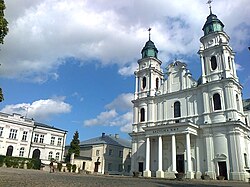
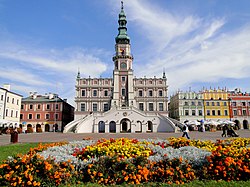

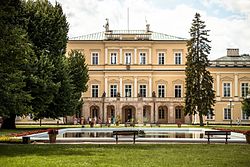


The voivodeship contains 5 cities and 43 towns. These are listed below in descending order of population (according to official figures for 2019:
- Lublin (339,770)
- Zamość (63,511)
- Chełm (62,331)
- Biała Podlaska (57,264)
- Puławy (47,634)
Towns:
- Świdnik (39,217)
- Kraśnik (34,355)
- Łuków (29,885)
- Biłgoraj (26,309)
- Lubartów (21,948)
- Tomaszów Lubelski (19,050)
- Łęczna (18,884)
- Krasnystaw (18,675)
- Hrubieszów (17,634)
- Międzyrzec Podlaski (16,736)
- Dęblin (16,026)
- Radzyń Podlaski (15,709)
- Włodawa (13,167)
- Janów Lubelski (11,901)
- Parczew (10,602)
- Ryki (9,625)
- Poniatowa (9,144)
- Opole Lubelskie (8,421)
- Bełżyce (6,504)
- Terespol (5,537)
- Szczebrzeszyn (4,991)
- Bychawa (4,893)
- Rejowiec Fabryczny (4,406)
- Nałęczów (3,749)
- Tarnogród (3,333)
- Kock (3,293)
- Zwierzyniec (3,175)
- Krasnobród (3,091)
- Kazimierz Dolny (2,563)
- Piaski (2,553)
- Stoczek Łukowski (2,520)
- Annopol (2,515)
- Józefów (2,486)
- Lubycza Królewska (2,447)
- Łaszczów (2,139)
- Tyszowce (2,112)
- Ostrów Lubelski (2,078)
- Rejowiec (2,066)
- Urzędów (1,699)
- Modliborzyce (1,462)
- Frampol (1,428)
- Siedliszcze (1,413)
- Józefów nad Wisłą (915)
- Piszczac
- Izbica
- Kamionka
- Czemierniki
- Goraj
- Turobin
- Końskowola
- Kurów
- Wąwolnica
- Janów Podlaski
Administrative division
Lublin Voivodeship is divided into 24 counties (powiats): 4 city counties and 20 land counties. These are further divided into 213 gminas.
The counties are listed in the following table (ordering within categories is by decreasing population).
Protected areas
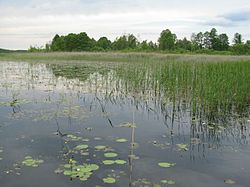

Protected areas in Lublin Voivodeship include two National Parks and 17 Landscape Parks. These are listed below.
- Polesie National Park (this and surrounding areas form the West Polesie biosphere reserve designated by UNESCO in 2002)
- Roztocze National Park
- Chełm Landscape Park
- Janów Forests Landscape Park (partly in Subcarpathian Voivodeship)
- Kazimierz Landscape Park
- Kozłówka Landscape Park
- Krasnobród Landscape Park
- Krzczonów Landscape Park
- Łęczna Lake District Landscape Park
- Podlaskie Bug Gorge Landscape Park (partly in Masovian Voivodeship)
- Polesie Landscape Park
- Puszcza Solska Landscape Park (partly in Subcarpathian Voivodeship)
- Skierbieszów Landscape Park
- Sobibór Landscape Park
- South Roztocze Landscape Park (partly in Subcarpathian Voivodeship)
- Strzelce Landscape Park
- Szczebrzeszyn Landscape Park
- Wieprz Landscape Park
- Wrzelowiec Landscape Park
Economy
The Gross domestic product (GDP) of the province was 18.5 billion euros in 2018, accounting for 3.7% of Polish economic output. GDP per capita adjusted for purchasing power was 14,400 euros or 48% of the EU27 average in the same year. The GDP per employee was 54% of the EU average. Lublin Voivodship is the province with the lowest GDP per capita in Poland.
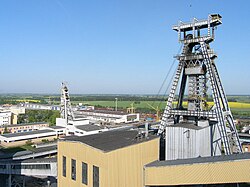
The Lublin Coal Basin is located in the voivodeship, centered at the Bogdanka Coal Mine in Bogdanka near Łęczna.
Transportation

The Lublin Airport is the region's sole airport. The S12, S17 and S19 highways pass through the voivodeship.
Sights and tourism
There are seven Historic Monuments of Poland and one World Heritage Site in the voivodeship:
- Zamość Old Town (listed as both)
- Kazimierz Dolny Old Town
- Lublin Old Town
- Kozłówka Palace
- Czartoryski Palace in Puławy
- Janów Podlaski Stud Farm
- St. Onuphrius Monastery in Jabłeczna
There are also many more castles and palaces in the region, including in Adampol, Biała Podlaska, Janowiec, Kock, Lubartów, Łabunie, Łabuńki Pierwsze, Radzyń Podlaski. The Chapel of the Holy Trinity at the Lublin Royal Castle contains some of the oldest and best preserved medieval frescoes in Poland. The region is rich in architecture, especially churches, built in the regional Lublin Renaissance style, and there is a dedicated Lublin Renaissance Trail.
Nałęczów and Krasnobród are spa towns. Krasnystaw is famous for its annual Chmielaki beer festival. Chełm contains the Chełm Chalk Tunnels, a system of tunnels dug into the chalk under the city, a unique structure in Europe, whereas Lublin offers an underground tourist route in historic cellars under the Old Town Market Square.
There are several museums, including the National Museum in Lublin, the Polish Air Force Museum in Dęblin, and museums dedicated to popular Polish writers in the towns of their birth or their former homes, i.e. to Józef Ignacy Kraszewski in Romanów, to Henryk Sienkiewicz in Wola Okrzejska, to Bolesław Prus and Stefan Żeromski in Nałęczów and to Wincenty Pol in Lublin. The Majdanek State Museum and Sobibór Museum are museums located at the sites of the former Nazi German concentration camps at Majdanek and Sobibór. There are also numerous World War II memorials scattered across the voivodeship, including Holocaust memorials and memorials at the sites of German massacres of Poles, including the largest massacres in Rury, Lublin, Borów, Aleksandrów, Sochy, Smoligów, Jamy, Kumowa Dolina and Olszanka. The Great Synagogue of Włodawa, one of the best preserved historic synagogues in Poland, and one of the few not destroyed by Nazi Germany, houses a museum.
- Former Crown Tribunal in the Lublin Old Town
- Mannerist tenements in Kazimierz Dolny
- Zamość Cathedral
- Kozłówka Palace
- Lubartów Palace
- Radzyń Podlaski Palace
- Sanatorium Książę Jóżef in Nałęczów
- Old townhouses in Krasnystaw
- Henryk Sienkiewicz Museum in Wola Okrzejska
- Chełm Chalk Tunnels
- Polish Air Force Museum in Dęblin
Cuisine
In addition to traditional nationwide Polish cuisine, Lublin Voivodeship is known for its variety of regional and local traditional foods and drinks, which include especially various honeys, meat products (incl. various types of kiełbasa, bacon and kaszanka), beverages and various dishes and meals, officially protected by the Ministry of Agriculture and Rural Development of Poland.
There are local types of pierogi, cakes, pastries (incl. pączki and poppy seed rolls) and racuchy. Local specialities include the meringue of Ostrów Lubelski, cake puffs of Lublin, and chocolate pralines of Lublin.
Traditional beverages include nalewki from Janów Lubelski, Kraśnik, Opole Lubelskie and Gmina Końskowola, mead, raspberry vodka from Kraśnik and cider from Mikołajówka. Traditional non-alcoholic drinks include various types of juices, tea, syrups, and hot chocolate from Lublin.
Sports

Football, motorcycle speedway, basketball and handball are the most popular sports in the province.
| Club | Sport | League | Trophies |
|---|---|---|---|
| Speed Car Motor Lublin | Speedway | Ekstraliga | 3 Polish Championships (2022, 2023, 2024) |
| MKS Lublin | Handball (women's) | Polish Superliga | 22 Polish Championships 11 Polish Cups 1 Women's EHF Cup (2001) |
| KS Azoty-Puławy | Handball (men's) | Polish Superliga | 0 |
| Padwa Zamość | Handball (men's) | Liga Centralna | 0 |
| Start Lublin | Basketball (men's) | Polish Basketball League | 0 |
| AZS UMCS Lublin | Basketball (women's) | Basket Liga Kobiet | 1 Polish Championship (2023) 1 Polish Cup (2016) |
| Budowlani Lublin | Rugby union | Ekstraliga | 1 Polish Cup (2002) |
| LUK Lublin | Volleyball (men's) | PlusLiga | 1 Polish Championship (2025) 1 CEV Challenge Cup (2025) 1 Polish Cup (2026) |
| ChKS Chełm | Volleyball (men's) | PlusLiga | 0 |
| Avia Świdnik | Volleyball (men's) | I liga | 0 |
| Motor Lublin | Football (men's) | Ekstraklasa | 0 |
| Górnik Łęczna | Football (men's) | I liga | 0 |
| Górnik Łęczna | Football (women's) | Ekstraliga | 3 Polish Championships (2018, 2019, 2020) 2 Polish Cups (2018, 2020) |
| AZS UMCS Lublin | Futsal (men's) | I liga | 0 |
Additionally, AZS UMCS Lublin is one of the top athletics clubs in the country.
Demographics
| Year | Pop. | ±% |
|---|---|---|
| 1988 | 2,209,221 | — |
| 2002 | 2,199,054 | −0.5% |
| 2011 | 2,175,700 | −1.1% |
| 2021 | 2,052,340 | −5.7% |
| Source: |
Population according to 2002 census:
- Poles - 2,171,415
- Ukrainians - 694
Most common surnames in the region
Previous Lublin Voivodeships
Lublin Voivodeship 1474–1795

Lublin Voivodeship (Latin: Palatinatus Lublinensis; Polish: Województwo Lubelskie) was an administrative region of the Kingdom of Poland created in 1474 out of parts of Sandomierz Voivodeship and lasting until the Partitions of Poland in 1795. It was part of the prowincja of Lesser Poland.
Lublin Voivodeship 1816–1837
Lublin Voivodeship was one of the voivodeships of Congress Poland. It was formed in 1816 from Lublin Department, and in 1837 was transformed into Lublin Governorate.
Lublin Voivodeship 1919–1939
Lublin Voivodeship (Województwo Lubelskie) was one of the administrative regions of the interwar Second Polish Republic. In early 1939 its area was 26,555 square kilometres (10,253 sq mi) and its population was 2,116,200. According to the 1931 census, 85.1% of its population was Polish, 10.5% Jewish, and 3% Ukrainian.
Lublin Voivodeship 1945–1975
Lublin Voivodeship (województwo lubelskie) was an administrative region of Poland between 1945 and 1975. In 1975 it was transformed into Chełm, Zamość, Biała Podlaska, Tarnobrzeg and Siedlce Voivodeships and a smaller Lublin Voivodeship.
Lublin Voivodeship 1975–1998

Lublin Voivodeship (województwo lubelskie) existed as one of Poland's 49 voivodeships from 1975 until 1998, when it was incorporated into the current (larger) Lublin Voivodeship.
External links
51°13′22″N 22°54′10″E/51.22278°N 22.90278°E/ 51.22278; 22.90278