meta-Chlorophenylpiperazine
In-game article clicks load inline without leaving the challenge.
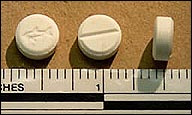
meta-Chlorophenylpiperazine (mCPP) is a psychoactive drug of the phenylpiperazine family. It was initially developed in the late-1970s and used in scientific research before being sold as a designer drug in the mid-2000s. It has been detected in pills touted as legal alternatives to illicit stimulants in New Zealand and pills sold as "ecstasy" in Europe and the United States.
Despite its advertisement as a recreational substance, mCPP is actually generally considered to be an unpleasant experience and is not desired by drug users. It lacks any reinforcing effects, but has "psychostimulant, anxiety-provoking, and hallucinogenic effects." It is also known to produce dysphoric, depressive, and anxiogenic effects in rodents and humans, and can induce panic attacks in individuals susceptible to them. It also worsens obsessive–compulsive symptoms in people with the disorder.
mCPP is known to induce headaches in humans and has been used for testing potential antimigraine medications. It has potent anorectic effects and has encouraged the development of selective 5-HT2C receptor agonists for the treatment of obesity as well.
Use and effects
mCPP has been extensively studied in humans as a probe of serotonin system function. It produces effects in humans including "feeling high", anxiety, panic, dysphoria, depression, depersonalization, stimulation, euphoria, sedation, mild hallucinogenic effects, exacerbation of obsessive–compulsive symptoms, sympathetic arousal, migraine headaches, and appetite suppression, among others. The drug consistently induces anxiety and panic at sufficiently high doses, especially when given intravenously. In addition, it consistently induces migraine-like headaches in around half of individuals.
mCPP appears to have some MDMA-like effects in humans. However, in contrast to MDMA and dextroamphetamine, mCPP did not produce reinforcing effects in humans. mCPP's hallucinogenic effects, measured by the Hallucinogen Rating Scale (HRS), are considerably less intense than those of conventional serotonergic psychedelics like psilocybin and dimethyltryptamine (DMT), and are more akin to the subtle psychedelic-like effects of MDMA. Many previous studies have not reported any hallucinogenic effects of mCPP at all and some modern publications have concluded that mCPP is non-hallucinogenic, whilst noting that hallucinations have sometimes been reported when high doses are used. mCPP does not seem to affect aggression in humans, albeit based on limited data.
Continuous daily administration of mCPP results in rapid development of tolerance to many of its effects in humans that occurs within a few days.
Pharmacology
Pharmacodynamics
| Site | Ki (nM) | Species | Refs |
|---|---|---|---|
| SERTTooltip Serotonin transporter | 202–432 | Human | |
| NETTooltip Norepinephrine transporter | 1,940–4,360 | Human | |
| DATTooltip Dopamine transporter | ND | ND | ND |
| 5-HT1A | 44–400 | Human | |
| 5-HT1B | 89–501 | Human | |
| 5-HT1D | 210–1,300 | Human | |
| 5-HT1E | ND | ND | ND |
| 5-HT1F | ND | ND | ND |
| 5-HT2A | 32–398 | Human | |
| 5-HT2B | 3.2–63 | Human | |
| 5-HT2C | 3.4–251 | Human | |
| 5-HT3 | 427 | Human | |
| 5-HT4 | ND | ND | ND |
| 5-HT5A | 1,354 | Human | |
| 5-HT6 | 1,748 | Human | |
| 5-HT7 | 163 | Human | |
| α1 | 97–2,900 | Human | |
| α1A | 1,386 | Human | |
| α1B | 915 | Human | |
| α1D | ND | ND | ND |
| α2 | 112–570 | Human | |
| α2A | 145 | Human | |
| α2B | 106 | Human | |
| α2C | 124 | Human | |
| β | 2,500 | Human | |
| β1 | 2,359 | Human | |
| β2 | 3,474 | Human | |
| D1 | 7,000 | Human | |
| D2 | >10,000 | Human | |
| D3 | >10,000 | Rat | |
| D4 | ND | ND | ND |
| D5 | >10,000 | Human | |
| H1 | 326 | Human | |
| mAChRs | >10,000 | Human | |
| nAChRsTooltip Nicotinic acetylcholine receptors | >10,000 | Human | |
| σ1 | ND | ND | ND |
| σ2 | 8,350 | Rat | |
| I1 | 759 | Rat | |
| VDCCTooltip Voltage-dependent calcium channel | 6,043 | Rat | |
| Values are Ki (nM). The smaller the value, the more strongly the drug binds to the site. |
mCPP possesses significant affinity for the 5-HT1A, 5-HT1B, 5-HT1D, 5-HT2A, 5-HT2B, 5-HT2C, 5-HT3, and 5-HT7 receptors, as well as the SERT. It also has some affinity for α1-adrenergic, α2-adrenergic, H1, I1, and NET. It behaves as an agonist at most serotonin receptors. mCPP has been shown to act not only as a serotonin reuptake inhibitor but as a serotonin releasing agent as well.
mCPP's strongest actions are at the 5-HT2B and 5-HT2C receptors and its discriminative cue is mediated primarily by 5-HT2C. Its negative effects such as anxiety, headaches, and appetite loss are likely mediated by its actions on the 5-HT2C receptor. Other effects of mCPP include nausea, hypoactivity, and penile erection, the latter two the result of increased 5-HT2C activity and the former likely via 5-HT3 stimulation. mCPP is known to induce migraines and this may be mediated by serotonin 5-HT2B receptor agonism.
In comparison studies, mCPP has approximately 10-fold selectivity for the human 5-HT2C receptor over the human 5-HT2A and 5-HT2B receptors (Ki = 3.4 nM vs. 32.1 and 28.8 nM). It acts as a partial agonist of the human 5-HT2A and 5-HT2C receptors but as an antagonist of the human 5-HT2B receptors.
mCPP does not produce the head-twitch response, a behavioral proxy of psychedelic effects, in rodents. Instead, it has been found to dose-dependently antagonize the head-twitch response induced by the serotonergic psychedelic DOI. However, when mCPP is combined with the selective serotonin 5-HT2C receptor antagonist SB-242084, it is able to dose-dependently induce head twitches. These findings suggest that serotonin 5-HT2C receptor activation inhibits and can mask the head-twitch response induced by serotonin 5-HT2A receptor agonists.
The anxiety- and panic-inducing effects of mCPP in humans can be blocked or reduced by non-selective serotonin receptor antagonists such as metergoline and to a lesser extent methysergide as well as by the serotonin 5-HT2A and 5-HT2C receptor antagonist ritanserin. Chronic pre-treatment with serotonin reuptake inhibitors like fluoxetine and clomipramine can also reverse the anxiogenic effects of mCPP. Relatedly, serotonin reuptake inhibitors also reduce many other effects of mCPP and this is thought to be related to desensitization of serotonin 5-HT2C and 5-HT2A receptors. The benzodiazepine alprazolam can block mCPP-induced anxiety as well.
Pharmacokinetics
The oral bioavailability of mCPP ranges from 12 to 108% in different individuals. Peak levels of mCPP vary 8-fold after oral administration and 2.3-fold after intravenous administration. Relatedly, mCPP shows marked interindividual variability in its pharmacokinetics, which has limited its usefulness for various applications. mCPP is metabolized via the CYP2D6 isoenzyme by hydroxylation to para-hydroxy-mCPP (p-OH-mCPP) and this plays a major role in its metabolism. Its elimination half-life ranges from 2.4 to 6.8hours and is similar after oral and intravenous administration. In other research, a half-life range of 4 to 14hours has been given.
mCPP is a metabolite of a variety of other piperazine drugs including trazodone, nefazodone, etoperidone, mepiprazole, cloperidone, peraclopone, and BRL-15,572.[additional citation(s) needed] It is formed by dealkylation via CYP3A4. Caution should be exercised in concomitant administration of CYP2D6 inhibitors such as bupropion, fluoxetine, paroxetine, and thioridazine with drugs that produce mCPP as a metabolite as these drugs are known to increase concentrations of the parent molecule (e.g., trazodone) and of mCPP. It has been argued that clinical use of trazodone should be limited or abandoned due to mCPP being a metabolite of trazodone and mCPP's various well-known adverse effects.
Chemistry
Synthesis
The chemical synthesis of mCPP has been described.
Analogues
Analogues of mCPP include:
- 1-Benzylpiperazine (BZP)
- 1-Methyl-4-benzylpiperazine (MBZP)
- 1,4-Dibenzylpiperazine (DBZP)
- 3-Trifluoromethylphenylpiperazine (TFMPP)
- 3,4-Methylenedioxy-1-benzylpiperazine (MDBZP)
- 4-Bromo-2,5-dimethoxy-1-benzylpiperazine (2C-B-BZP)
- 4-Fluorophenylpiperazine (pFPP)
- 4-Methoxyphenylpiperazine (MeOPP)
Some additional analogues include quipazine, ORG-12962, and 3C-PEP.
History
mCPP was first described in the scientific literature by at least 1976, specifically as a metabolite of trazodone. Subsequently, it was characterized in greater detail in 1979 and thereafter. The drug emerged as a novel designer drug by 2003 or 2004.
Society and culture

Legal status
Belgium
mCPP is illegal in Belgium.
Brazil
mCPP is illegal in Brazil.
Canada
mCPP is not a controlled drug in Canada.
China
As of October 2015 mCPP is a controlled substance in China.
Czech Republic
mCPP is legal in the Czech Republic.
Denmark
mCPP is illegal in Denmark.[unreliable source?]
Finland
mCPP is illegal in Finland.
Germany
mCPP is illegal in Germany.
Hungary
mCPP is illegal in Hungary since 2012.
Japan
mCPP is illegal in Japan since 2006.
Netherlands
mCPP is legal in the Netherlands.
New Zealand
Based on the recommendation of the EACD, the New Zealand government has passed legislation which placed BZP, along with the other piperazine derivatives TFMPP, mCPP, pFPP, MeOPP and MBZP, into Class C of the New Zealand Misuse of Drugs Act 1975. A ban was intended to come into effect in New Zealand on December 18, 2007, but the law change did not go through until the following year, and the sale of BZP and the other listed piperazines became illegal in New Zealand as of 1 April 2008. An amnesty for possession and usage of these drugs remained until October 2008, at which point they became completely illegal. However, mCPP is legally used for scientific research.
Norway
mCPP is illegal in Norway.
Russia
mCPP is illegal in Russia.
Sweden
mCPP is illegal in Sweden.
Poland
mCPP is illegal in Poland.
United States
mCPP is not scheduled at the federal level in the United States, but it is possible that it could be considered a controlled substance analog of BZP, in which case purchase, sale, or possession could be prosecuted under the Federal Analog Act.
However, "chlorophenylpiperazine" is a Schedule I controlled substance in the state of Florida making it illegal to buy, sell, or possess in this state.
United Arab Emirates
mCPP is illegal in the UAE, the country has strict drug laws, and many psychoactive substances are classified as controlled or prohibited.
Turkey
mCPP is illegal in Turkey since 20/05/2009.
See also
External links
- Media related to Meta-Chlorophenylpiperazine at Wikimedia Commons