Pat O'Keeffe
In-game article clicks load inline without leaving the challenge.
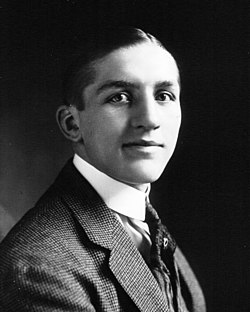
Pat O'Keeffe (17 March 1883 – 16 August 1960) was a British professional boxer who twice held the British middleweight title. His professional career spanned sixteen years, from 1902 to 1918, and took him to the United States and Australia between 1907 and 1910. In 1914, he challenged Georges Carpentier in a contest billed as the European heavyweight championship but was knocked out in two rounds.
During World War I, he joined the British Army and served with the 1st Surrey Rifles, combining recruiting duties with physical training. In 1918, he won the Lonsdale Belt outright by defeating Bandsman Blake at the National Sporting Club (NSC) during a German air raid on London, becoming British middleweight champion and the first boxer to hold the middleweight Lonsdale Belt outright.
Boxing historian John Harding described O'Keeffe as one of the notable characters of his era, while Arthur Frederick Bettinson, the NSC's manager, wrote that he deserved "pride of place" among the middleweights of his time, if only for his force of personality. After retiring from the ring, he worked as a publican and boxing trainer, and served as a founding member of the British Boxing Board of Control.
Early life
O'Keeffe was born on 17 March 1883 in Bromley-by-Bow. The 1891 census recorded him in the West Ham area with his parents, Patrick and Catherine O'Keeffe, both of whom had been born in Ireland; his father was a general labourer. By the 1901 census, the eighteen-year-old O'Keeffe was himself working as a labourer at the gas works, as was his older brother John. Twenty years later, the 1911 census found him still living in West Ham, recorded as single, with his occupation given as professional boxer.
Although born and raised in England, O'Keeffe identified as Irish; both his parents had been born in Ireland. In a 1907 interview with the Washington Herald during his American tour, he said of himself and fellow British-based fighters Owen Moran and Johnny Summers: "We were raised in England, but we have no English blood in us." The paper noted that all three spoke with English accents but maintained that they were Irish, "Englishmen only by the fact that their parents lived in England".
He took up boxing as an amateur with the Canning Town Athletic Club in 1901. A contemporary profile described him as 5 ft 10 in (1.78 m) and 10 st 6 lb (66 kg; 146 lb) at the time. After winning an open competition at the Columbia Boxing Club at the 9 st 6 lb (60 kg; 132 lb) weight class, he turned professional in 1902.
Canning Town and the surrounding districts of West Ham had a strong connection to professional boxing; the area produced a succession of fighters who progressed from neighbourhood clubs to the national stage. Boxing had established itself as a widely practised sport in London's inner-city working-class districts by the turn of the century, with clubs, drill halls and public baths providing accessible venues for participation.
Professional boxing
Early career: 1902–1907

O'Keeffe's earliest recorded professional bout took place at the Drill Hall, Beresford Street, Woolwich, in September 1902, where he defeated Fred Lewis over six rounds. In November 1902 he faced Jack Palmer twice, winning both six-round contests. The following year, O'Keeffe won a welterweight competition at the Olympia, establishing himself at the lighter weights before moving up. In early 1904, he competed in a 10 st 7 lb (67 kg; 147 lb) tournament at the same venue. Contemporary reporting described his opening bout against Ted Percy as hard-fought, noting O'Keeffe's effective use of both hands to secure victory. He progressed to the next round but was eliminated before reaching the final.
By 1906, having fought many of the leading contenders for the middleweight title of England, O'Keeffe was selected to contest the championship. He defeated Mike Crawley over fifteen rounds, a victory that the boxing historian John Harding identifies as the start of his first reign as champion.
One month later, O'Keeffe defended the title against Charlie Allum, knocking him out in the sixth round. He lost the belt in his next bout to Tom Thomas at the National Sporting Club (NSC) on a narrow points decision. Harding summarised O'Keeffe's 1906 reign as a rapid sequence in which he won, defended and then lost the middleweight title of England within six months. A year later in Paris, O'Keeffe again defeated Allum by knockout, winning £200. The bout was billed as the French middleweight championship.
International career: 1907–1910
After losing the middleweight championship, O'Keeffe fought across the United States and Australia. Managed in America by Charley Harvey, he was previewed in the Buffalo Enquirer as "a tall slim lad of six feet" whose erect stance gave him "the appearance of a giraffe" and whose long arms "resemble telegraph poles". The paper noted his endurance, observing that he was one of those boxers who could fight all day and was as fresh at the finish as at the start, and that he possessed a telling right hand. In late 1907, he met Billy Papke, widely regarded as world middleweight champion, and Harry Lewis, recognised in the United States as world welterweight champion. The bout with Papke in Philadelphia was hard-fought and ended in a draw. He lost to Harry Lewis in Chelsea, Massachusetts, by decision. A profile in the Illustrated Police Budget in December 1907 reported that American audiences "think very highly of his abilities", noting that he had come through his six-round bout with Papke "with flying colours".
His next fight, against Willie Lewis, was originally scheduled for 19 December 1907, but police obtained an injunction against the venue in New York. The bout went ahead on 23 December 1907. Eugene Corri, a prominent referee, later recalled that Willie Lewis entered O'Keeffe's dressing room before the contest and mocked his apparent bulk, warning that a blow to the stomach might kill him. Corri wrote that Lewis's bluff unsettled O'Keeffe, who was subsequently "outed by bluff". In February 1908, he returned to England and placed a notice in the Sporting Life declaring that he was "here for business"; the accompanying article noted that he had contracted malaria in the United States.
Following the notice, fellow Canning Town boxer Steve Smith agreed to fight him at the Wonderland Français in Paris; the contest ended in a draw. Less than two weeks later at the same venue, O'Keeffe was disqualified for a low blow in the fourth round against Geoff Thorne.

Later in 1908, O'Keeffe toured Australia with Tommy Burns, the reigning world heavyweight champion, who at 5 ft 7 in (1.70 m) was often described as one of the shortest men to hold the title. Burns had won the title in 1906 and defended it eleven times before losing to Jack Johnson on Boxing Day 1908; O'Keeffe acted as his second for the contest. Burns continued to act as O'Keeffe's cornerman for his Australian bouts into late 1909. A preview of O'Keeffe's contest against Bill Turner, billed as the Tasmanian heavyweight champion, noted that Burns would second him at the Stadium.
While in Australia, O'Keeffe and Burns trained together and invited the public to watch their sparring sessions. O'Keeffe fought six contests in Australia, often against heavier opponents, winning two, drawing one and losing three. One of his Australian contests, against Ed Williams in Melbourne, drew an exceptionally large and disorderly crowd at the Cyclorama. According to The Age, spectators forced entry and filled every available space, with some encroaching on the ring area and police intervening to restore order. The fifteen-round contest itself was rough and at times "unscientific"; Williams repeatedly targeted O'Keeffe's head, while O'Keeffe worked to the body and displayed notable endurance under sustained punishment. After the final gong, O'Keeffe landed a blow on Williams, apparently not having heard the bell. Williams reacted angrily and police intervened to prevent further disturbance. The referee awarded Williams the decision.
O'Keeffe's tour extended well beyond the eastern capitals. In February 1909, he was matched against Sam Keenan in a twenty-round contest at the Goldfields Athletic Club in Kalgoorlie, Western Australia. A preview in the Kalgoorlie Sun noted his American record, including the draw with Papke, and summarised his Australian form to that point as a single loss on points to Williams, with one draw.
In March 1910, O'Keeffe and Williams met again at the Stadium in Rushcutters Bay, Sydney. The Sydney Morning Herald reported that both men tired at an early stage and that from the eighth round the contest became a matter of stamina and resolve. The advantage shifted repeatedly; at times O'Keeffe pressed his opponent hard, only for Williams to rally. In the eighteenth round, O'Keeffe's corner threw in the towel.
Interviewed at Fremantle as he boarded his ship for London, O'Keeffe offered a candid assessment of his time in Australia. He said he had not fought to his proper form, attributing this to the demands of training Burns simultaneously: "While training Tommy Burns for his fights I have not been able to do myself justice. I have felt that I have had a tendency to go stale." Despite this, he spoke warmly of his reception, saying the sporting public in the eastern states could not have done more for him. He described Australia as "the grandest and finest country in the world" and said he hoped to return within a few years and settle there permanently.
Before sailing, a committee of Sydney boxing figures had organised a farewell testimonial at the Royal Edward Hotel in Redfern, where some seventy or eighty of his friends gathered to wish him well. He was presented with a framed illuminated address and a medal. When he sailed for London on the R.M.S. Mooltan, a large crowd of sporting people gathered at the wharf to see him off.
A retrospective account published in 1915 revealed that O'Keeffe had been in financial difficulty towards the end of his stay. Alderman Lidbury of Rookwood (later Lidcombe), who had befriended him, lent him money towards his passage home. O'Keeffe repaid the debt in full, with interest, from his first winnings after returning to England.
Late career: 1911–1918
After an absence of nearly three years, O'Keeffe returned to competitive boxing in England in 1911, losing on points to Eddie McGoorty over fifteen rounds. McGoorty went on to claim the world middleweight title in 1915. O'Keeffe then won his next five contests between 1911 and 1913, including two victories over Frank Mantell in the space of seven days. His next loss came on points to Private Jim Harris, a result he avenged with a twenty-round victory two months later.
O'Keeffe frequently fought above his natural weight. Ahead of his 1913 challenge for the British heavyweight title, Sporting Life wrote that he was completing his preparation at Upper Warlingham with other boxers and noted his previous experience as a sparring partner to Tommy Burns. On 4 August 1913, O'Keeffe challenged Bombardier Billy Wells for the British heavyweight championship. Wells outweighed him significantly and knocked him out in the fifteenth round.
On 19 January 1914, O'Keeffe fought Georges Carpentier, the rising French champion, in a contest billed as the heavyweight championship of Europe. O'Keeffe was knocked out in two rounds. Reflecting on the defeat in the Sheffield Daily Telegraph, he offered a frank assessment: "He was too big and strong for me."
On 23 February 1914, he faced Harry Reeve for the British middleweight championship, winning on points over twenty rounds. Reeve later moved up to light heavyweight and won the British title in 1916 against Dick Smith. In March 1914, O'Keeffe and Bombardier Wells boxed in a three-round sparring exhibition before King George V at the Regent's Park Barracks. The King, who was Colonel-in-Chief of the 2nd Life Guards, had dined with the regiment's officers before entering the Riding School to witness the display. The exhibition formed part of a decorated military boxing, fencing and wrestling tournament attended by nearly 1,500 officers and men. Contemporary reporting described Wells and O'Keeffe as the reigning heavyweight and middleweight champions of England, and noted that the King's applause led the reception for their exhibition.
O'Keeffe defended his middleweight title two months later against Nicol Simpson. In May, he defended the title again by defeating Jim Sullivan, earning £650 for the contest. Writing in 1922, the manager of the NSC, Arthur Frederick Bettinson, recalled that the contest fell on the eve of the Epsom Derby and served as the principal attraction on the bill, with O'Keeffe retaining the championship at the club.

In March 1915, O'Keeffe knocked out heavyweight Joe Beckett in eight rounds. In May 1915, he met Bandsman Blake and stopped him in the thirteenth round. At that stage, Blake's only previous defeat had been to Bombardier Billy Wells. Writing in Lloyd's Weekly Newspaper, 'Corinthian' described O'Keeffe as a methodical boxer who used a straight left and a high guard to control distance early, before increasing his pace once he had assessed an opponent.
O'Keeffe then faced Sullivan in a return bout, but although it was billed as a British middleweight title fight, the NSC did not endorse the contest and the Lonsdale Belt was not at stake. As the historian Kasia Boddy has observed, the National Sporting Club (NSC) held such authority in recognising championships that contests held outside its jurisdiction were often regarded as unofficial, even when promoted as title fights.
O'Keeffe and Sullivan met again on 21 February 1916, in a contest that fellow boxer Jimmy Wilde described as the most punishing he had ever witnessed. O'Keeffe won on points over twenty rounds. Harding later noted that the scale of some wartime purses attracted concern in the Army and that General Haig issued a ban on big-money fights involving serving soldiers.
On 22 May 1916, O'Keeffe fought Blake again at the NSC in a £500 match that went the full twenty rounds. The Sheffield Independent described the contest as "not a good one", reporting that Blake's clinching and holding drew warnings from the referee and that the verdict surprised many in the audience. A more technical ringside account in The People credited O'Keeffe with superior ring generalship despite the scarcity of clean exchanges, noting that he refused to match Blake's early pace and instead waited in the centre of the ring to counter with his "never-failing left hand". In the fourteenth round he landed a well-judged right cross that left Blake in serious trouble, though he lacked the strength to press home the advantage, and an old wound over his left eye was reopened in the nineteenth round as the bout drew to its close. O'Keeffe lost both the championship and his Lonsdale Belt.
On 28 January 1918, O'Keeffe fought his final professional bout, defeating Blake at the NSC to win the Lonsdale Belt outright and secure an NSC pension. The contest took place during a heavy German air raid on London. Writing in 1922, Bettinson recalled that bombs were "falling thick and fast" while the bout was in progress and suggested that Blake's nerves were "sorely affected" by the raid overhead. Harding records that before entering the ring that night, O'Keeffe told his corner: "If I get home safely tonight I don't think I will fight again."
Two days later, Bettinson paid tribute to O'Keeffe at the NSC, congratulating him as both a sportsman and a man. O'Keeffe replied that winning the Lonsdale Belt outright had been one of his ambitions and that he would now devote himself to charity and family life.
Reflecting on O'Keeffe's career, Bettinson wrote that among the middleweights of the era he "must be given pride of place", if only for his force of personality. Though "never brilliant", Bettinson judged that O'Keeffe possessed a thorough knowledge of ringcraft and a generous temperament, qualities that had long endeared him to the club's members.
Military service during World War I

During the First World War, the British Army formally integrated sport into military life as a means of maintaining fitness, morale and recruitment. Boxing held particular value; it was compared to bayonet training for its capacity to develop controlled aggression. Championship belt holders were used as recruiting symbols, their celebrity lending weight to enlistment campaigns.
O'Keeffe enlisted in the British Army and joined the 1st Surrey Rifles, part of the 21st County of London Regiment. Contemporary reports noted that he was among a number of prominent professional boxers who had joined the colours within weeks of the declaration of war, reflecting the early mobilisation of leading sporting figures. He rose through the ranks from lance corporal to corporal and finished his wartime service as a sergeant. Rather than being sent overseas, he was retained on home duties, combining recruiting with the physical training of new soldiers, and also served as a military policeman. His role in developing regimental boxing was recalled decades later in an Imperial War Museums oral history interview recorded in 1985, in which a former soldier recalled training under Sergeant "Pat O'Keeffe" for the Eastern Command and Army middleweight championships and noted that O'Keeffe excused him from duties and supervised a strict diet during preparation. His popularity and effectiveness as a recruiter were valued by the authorities; his manager Fred Dartnell later recalled O'Keeffe's standard cry to crowds: "Join the army and you'll be a champion like me!"
As the writer Guy Deghy noted, wartime bills at the NSC commonly used service ranks, and O'Keeffe was typically announced as "Sergeant O'Keeffe".
In addition to his regimental duties, O'Keeffe took part in public patriotic events. In May 1915, he appeared at a Grand Patriotic Rally at the Imperial Hall in East Dulwich, organised by the exhibitor H. Langley Merritt. The programme combined war films with live appearances, and O'Keeffe, identified as a lance corporal of the 1st Surrey Rifles, featured both on screen and in person, accompanied by the regimental band.
O'Keeffe also supported large-scale fundraising events. In September 1915, he appeared in a Volunteer Training Corps athletic and boxing display at Villa Park in Birmingham. The event was organised in aid of wounded soldiers, the Red Cross and Volunteer Training Corps equipment funds, and featured leading professionals including Jimmy Wilde and Johnny Basham.
On another occasion at Ilford, O'Keeffe sparred with Billy Wells on behalf of the Belgian Fund. The NSC referee Eugene Corri recalled that the bout came close to a genuine fight, prompting O'Keeffe to shout: "Stop it, Billy — I'm not the Kaiser!" A detailed 1915 profile in the Daily News described O'Keeffe training in a Surrey village ahead of his bout with Bandsman Blake. The report noted that he had become a well-known local figure, with children regularly gathering to watch him spar and use gym equipment, and that he credited Army routine with maintaining his fitness. He explained that when training recruits he demonstrated the exercises himself rather than merely giving orders, which had "done me a world of good".
O'Keeffe also featured in a wartime boxing film. Cinema listings promoted The Khaki Contest (also referred to as The Great Fight Film), billed as showing him boxing Lance Corporal Jim Sullivan.
O'Keeffe's recruiting activities occasionally provided lighter material for the sporting press, as in an encounter on London Bridge that became widely quoted:
... He was recently crossing London Bridge in company with his Sergeant-Major when from the other direction came a husky, healthy youth pushing a milk cart. Said the Sergeant-Major to the Corporal, "There's a likely-looking recruit for you, Pat; try him." O'Keeffe approached the youth, prodded him in the chest with his little stick, and said: "Say, don't you want to serve your King?" "Yus," answered the youth. "How many quarts will he want?" ...
— He wanted to serve, Star Green 'un, 17 July 1915
A separate report described O'Keeffe serving as a military policeman while stationed around St Albans, noting that he wore the initials "M.P." on his sleeve and remained willing to meet boxing challengers if terms could be agreed.

Army life at the regiment's base in Camberwell reportedly suited him well. With regular meals, strict routine, access to sparring partners and space to train, he was described as thriving and popular with the men.
O'Keeffe helped organise morale-boosting activities for wounded soldiers, including an excursion boat trip on the Thames. He also continued to promote boxing during the war, arranging an entertainment at Chatham that featured both service and civilian bouts. He viewed the sport as essential for national morale and for preventing social unrest, reportedly declaring: "Give the public plenty of boxing and you'll have no Bolshevism!"
Personal life
O'Keeffe married Isabella O'Neill in the West Ham registration district on 21 March 1917. The couple had two children: Eileen Isabel O'Keeffe (23 October 1917), registered in the Edmonton district in the October–December quarter of 1917 (vol. 3a, p. 605), and Patrick Alfred Leon O'Keeffe (13 December 1918), registered in the Uckfield district in the January–March quarter of 1919 (vol. 2b, p. 148).
During World War II, O'Keeffe's son Patrick served in the Royal Navy and was aboard HMS Ark Royal (91) when she was sunk off Gibraltar in November 1941. Patrick survived and continued his naval career.
Later life and post-boxing career

O'Keeffe's retirement from the ring did not mark a withdrawal from public life. A 1919 profile reported that he had left the army in February of that year and was living with his wife and two children. The same account noted that he had entered the licensed trade, owning or holding interests in several public houses including premises in East Road, Hoxton, and that he was considering establishing a gymnasium. He also contributed a regular boxing column to the Daily Herald. Although he publicly stated that his fighting career had ended, reports occasionally suggested a possible return, including a 1920 claim that he had received an offer for a bout in Paris; no comeback followed. A newspaper sketch later that year described him joking with spectators at an exhibition about modern purse demands compared with his own career earnings; the report remarked that he had put on weight and would have struggled to make his former fighting limit.
O'Keeffe's transition from the ring to the licensed trade followed a common pattern among retired boxers of his generation. The historian Matthew Taylor has noted that professional boxing in London afforded little opportunity for lasting social advancement; most former champions remained connected to the working-class communities that had produced them, and the figure of the retired fighter facing financial difficulty was a familiar one.
O'Keeffe remained a prominent figure in British boxing during the interwar years. He was elected by a voting college of Lonsdale Belt holders to the inaugural board of the British Boxing Board of Control (BBBofC) and served alongside fellow champions Billy Wells and Jim Driscoll in administering the Board's Benevolent Fund. He attended major championship contests, officiated at amateur tournaments, and took part in charity and exhibition bouts, including contests with Wells. In February 1921, he took part in a relief effort for unemployed residents in Canning Town; the East End News and London Shipping Chronicle reported that the Mayor of West Ham attended and congratulated the organisers, including O'Keeffe. In March 1922, while acting as timekeeper at a professional contest in Hoxton, he was struck by the gong and cut on the nose; he received treatment but declined to officiate for the rest of the evening. In June 1923, he was among a group of prominent boxers presented to King George V during a royal visit to the Canning Town dock district. The Sunday Mirror reported that the King and Queen visited the Malvern Mission Dockland Settlement, where they watched boxing bouts and met O'Keeffe alongside Johnny Summers and Mike Honeyman.
O'Keeffe's hospitality extended to fighters visiting from abroad. In a 1929 reminiscence for the Sydney Referee, the Australian boxer Dave Smith, who had beaten O'Keeffe in both their Melbourne and Sydney contests, recalled arriving in London on the ship Osterley in 1912 during the dock strike. O'Keeffe met him at Tilbury, helped him through customs, installed him at the Imperial Hotel in Russell Square, and took him round the newspaper offices to secure press coverage. Smith wrote that O'Keeffe showed him the sights of London, from Petticoat Lane to the National Sporting Club, and that the two boxed together at a benefit at the Ring in Blackfriars; the press reported their bout as the best item on the bill.
Alongside his continued involvement in boxing, O'Keeffe worked as a publican. Court reports from the early 1920s record him prosecuting cases arising from thefts and disturbances at licensed premises under his control in East Road, Hoxton. His business ventures were not always successful; by the mid-1920s he faced financial difficulties connected with the licensed trade, which led to court proceedings. Despite these difficulties, he continued to work as a trainer. In October 1925, reports from Paris stated that he had been engaged as a boxing instructor to both British and French military units. By late 1926, he was managing the Olympia in Shoreditch, where boxing was shortly to be staged. Writing to the Australian boxer Jim Barron, he said that he was anxious to return and settle down in Sydney. In 1928, he trained Lieutenant C. F. Capper, a leading amateur heavyweight, ahead of the Amateur Boxing Association championships at the Royal Albert Hall. His training work extended beyond boxing; in 1929 he led fitness sessions for cinema usherettes at the Regal Cinema near Marble Arch.
In 1936, O'Keeffe and fellow Lonsdale Belt holder Tancy Lee went public with a complaint that the NSC had stopped paying their pensions. O'Keeffe said he was not in urgent need of the money himself, but that Lee was in severe financial difficulty. Harding noted that the later NSC organisation treated pension arrangements as separate from the former Covent Garden club's obligations, a position that left some retired belt holders disputing responsibility for payments. O'Keeffe continued to attend public boxing events into the late 1930s. In 1938, he was among a group of former champions who paraded before the audience on the opening night of the NSC's new headquarters at the Hotel Splendide in Piccadilly. The 1939 Register recorded him at 3 Bartholomew Close in the City of London, with his occupation given as publican. The address corresponded to the Admiral Carter public house in Bartholomew Close, where the nearby Butchers' Hall had sustained bomb damage from a Zeppelin in 1915 and was struck by a V-1 flying bomb in July 1944.
In May 1960, the Croydon Times reported that O'Keeffe and his wife, who had been living at the Licensed Victuallers' Homes in Denham, Buckinghamshire, were admitted to Mount Vernon Hospital for operations. O'Keeffe died there on 16 August 1960, aged 77. An obituary published three days later in The Times (No. 54,854, Royal Edition) described him as a former British middleweight champion who had retired in 1918 and noted that he was the oldest surviving British boxing champion at the time of his death.
Selected professional boxing record
O'Keeffe's professional boxing record can be summarised as follows:
| 131 fights | 88 wins | 25 losses |
|---|---|---|
| By knockout | 36 | 9 |
| By decision | 52 | 16 |
| Draws | 7 | |
| No contests | 11 |
| Res. | Opponent | Type | Round | Date | Location | Notes |
|---|---|---|---|---|---|---|
| Win | United Kingdom Bandsman Jack Blake | KO | 2 (20) | 28 January 1918 | United Kingdom NSC, Covent Garden, London | Regains British middleweight title |
| Loss | United Kingdom Bandsman Jack Blake | PTS | 20 | 22 May 1916 | United Kingdom NSC, Covent Garden, London | Loses British middleweight title |
| Win | United Kingdom Joe Beckett | KO | 8 | 5 March 1915 | United Kingdom NSC, Covent Garden, London | |
| Win | United Kingdom Jim Sullivan | PTS | 20 | 25 May 1914 | United Kingdom NSC, Covent Garden, London | Defends British middleweight title |
| Win | United Kingdom Harry Reeve | PTS | 20 | 23 February 1914 | United Kingdom NSC, Covent Garden, London | Wins British middleweight title |
| Loss | France Georges Carpentier | KO | 2 (20) | 19 January 1914 | France Eldorado-Casino, Nice | European heavyweight title attempt |
| Loss | United Kingdom Bombardier Billy Wells | KO | 15 (20) | 4 August 1913 | United Kingdom The Ring, Blackfriars Road, Southwark, London | British heavyweight title attempt |
| Loss | United States Eddie McGoorty | PTS | 15 | 10 April 1911 | United Kingdom NSC, Covent Garden, London | |
| Loss | Australia Ed Williams | PTS | 15 (20) | 26 October 1908 | Australia Cyclorama, Melbourne | Australian middleweight title attempt |
| Draw | United States Billy Papke | PTS | 6 | 9 November 1907 | United States National A.C., Philadelphia | World middleweight title bout |
| Loss | United Kingdom Tom Thomas | PTS | 15 | 28 May 1906 | United Kingdom NSC, Covent Garden, London | Loses middleweight championship of England |
| Win | United Kingdom Charlie Allum | KO | 6 (15) | 23 April 1906 | United Kingdom NSC, Covent Garden, London | Defends middleweight championship of England |
| Win | United Kingdom Mike Crawley | PTS | 15 | 19 March 1906 | United Kingdom NSC, Covent Garden, London | Wins middleweight championship of England |
Boxing terminology
The following boxing terms are used in this article:
| Term | Definition |
|---|---|
| Belt | A Lonsdale Belt, awarded by the NSC to British boxing champions; a boxer who won three title fights in one weight class earned the belt outright and kept it permanently. |
| Card or bill | The programme of bouts at a boxing event. |
| Clinch | The act of holding an opponent at close range to prevent him from punching freely; persistent clinching could draw a warning or disqualification from the referee. |
| Cornerman | A member of a boxer's support team who works from the corner during a bout, providing assistance, advice and first aid between rounds; used interchangeably with "second". |
| Decision or points | The outcome when a bout goes the full distance and is decided by the referee or judges rather than by knockout. |
| Gong | The bell or signal used to mark the start and end of each round. |
| Guard | A boxer's defensive hand and arm position; a "high guard" keeps both hands raised to protect the head. |
| Purse | The prize money paid to a boxer for competing in a bout. |
| Ringcraft | A boxer's tactical skill and ring awareness. |
| Second | A member of a boxer's corner team who provides assistance and advice between rounds. |
| Stone (st) | A unit of weight equal to 14 lb (6.4 kg); used in British boxing to express a fighter's weight. |
| Stopped | A bout ended by the referee before the scheduled distance, typically because one boxer is unable to defend himself. |
| Straight left | A direct punch thrown with the lead hand along a straight line; a fundamental technique in orthodox boxing, used to control distance and set up other punches. |
| Throwing in the towel | Conceding defeat during a bout; a boxer's corner throws a towel into the ring to signal to the referee that their fighter should not continue. |
See also
Notes
Further reading
- Bettinson, A. F.; Bennison, B. (1922). The Home of Boxing. London: Odhams Press.
- Bettinson, A. F.; Tristram, W. Outram (1902). The National Sporting Club: Past and Present. London: Sands & Co.
- Corri, Eugene (2008) [1915]. Refereeing 1,000 Fights: Reminiscences of Boxing. Read Books. ISBN 978-1443736435.
- Dartnell, Fred (1924). "Seconds Out!": Chats about Boxers, Their Trainers and Patrons. London: T. W. Laurie, Limited.
- Deghy, Guy (1956). Noble and Manly: The History of the National Sporting Club. London: Hutchinson.
- Harding, John (2016). Lonsdale's Belt: Boxing's Most Coveted Prize. Pitch Publishing. ISBN 978-1785312540.
- Horrall, Andrew (2001). Popular Culture in London C.1890-1918: The Transformation of Entertainment. Manchester University Press. ISBN 0719057833.
- Strieble, Dan (2008). Fight Pictures: A History of Boxing and Early Cinema. University of California Press. ISBN 978-0520940581.
External links
- from BoxRec (registration required)
| Achievements | ||
|---|---|---|
| Earns Lonsdale Belt outright | British middleweight champion 28 January 1918 – retires | VacantTitle next held byTed "Kid" Lewis |