List of rabbit breeds
In-game article clicks load inline without leaving the challenge.

As of 2017, there were at least 305 breeds of the domestic rabbit in 70 countries around the world raised for in the agricultural practice of breeding and raising domestic rabbits as livestock for their value in meat, fur, wool, education, scientific research, entertainment and companionship in cuniculture. A rabbit breed is a distinct strain created through selective breeding (or occasionally natural selection) for specific characteristics, including size, fur, body type, color, feed conversion ratio, et cetera. Organizations such as the American Rabbit Breeders Association (ARBA) and the British Rabbit Council (BRC) have standards for the desired qualities of their respective recognized breeds. Each rabbit breed is considered to benefit when a reputable breeder strives to emulate the perfect example for the breed, defined by the individual breed standard by which it may be judged. The global diversity of breeds reflects the breadth of the rabbit's unique qualities. Listed below are 191 of the world's modern-day rabbit breeds.
- Modern-day rabbit breeds
- Extinct rabbit breeds
- Scope
- Terminology
- Explanatory footnotes
- Citation footnotes
- References
- See also
- Further reading
- External links
Modern-day rabbit breeds
- A
- B
- C
- D
- E
- F
- G
- H
- I
- J
- K
- L
- M
- N
- O
- P
- Q
- R
- S
- T
- U
- V
- W
- X
- Y
- Z
* indicates "Rabbits in COUNTRY or TERRITORY" links.
| Breed name | Image | Size | Fur type | Ear type | Colors & markings | ARBA recognized? | BRC recognized? | Origin |
|---|---|---|---|---|---|---|---|---|
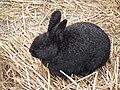
| Alaskan | 7–9 lb (3.2–4.1 kg) | Short | Erect | Black | No | Yes | European Union Germany | |
| Altex | 13 lb (5.9 kg) | Short | Erect | Pointed White | No | No | United States Alabama Texas | |
| American | 9–12 lb (4.1–5.4 kg) | Short | Erect | Blue, White | Yes | No | United States California | |
| American Chinchilla [US] See also: Chinchilla | 9–12 lb (4.1–5.4 kg) | Short | Erect | Chinchilla | Yes | No | United States | |
| American Fuzzy Lop | 3.5–4 lb (1.6–1.8 kg) | Long | Lop | [All solid or broken colors/patterns] | Yes | No | United States | |
| American Sable | 7–10 lb (3.2–4.5 kg) | Short | Erect | Sable | Yes | No | United States California | |
| Angora | 4.4–12.1 lb (2.0–5.5 kg) | Long | Erect | Albino or Colored | Yes | Yes | Turkey | |
| Argente Bleu | 4 October 2018 at the Wayback Machine | 6 lb (2.7 kg) | Short | Erect | [Argente Bleu markings] | No | Yes | European Union France |
| Argente Brun [UK] | 2 May 2013 at the Wayback Machine | 6 lb (2.7 kg) | Short | Erect | [Argente Brun [UK] markings] | No | Yes | United Kingdom England |
| Argente Brun [US] | 2 May 2013 at the Wayback Machine | 8–10.5 lb (3.6–4.8 kg) | Medium | Erect | [Argente Brun [US] markings] | Yes | No | Canada |
| Argente Clair | 6 lb (2.7 kg) | Short | Erect | [Blue base heavily silvered] | No | No | European Union France | |
| Argente Crème [UK] See also: Creme d'Argent [US] | 2 May 2013 at the Wayback Machine | 5 lb (2.3 kg) | Short | Erect | [Argente Crème markings] | No | Yes | European Union France |
| Argente de Champagne [UK] See also: Champagne d'Argent [US] | 9–12 lb (4.1–5.4 kg) | Short | Erect | [Argente de Champagne markings] | No | Yes | European Union France | |
| Argente Noir | 20 January 2019 at the Wayback Machine | 6 lb (2.7 kg) | Short | Erect | [Argente Noir markings] | No | Yes | European Union France |
| Argente St Hubert | 6 lb (2.7 kg) | Short | Erect | [Argente St Hubert markings] | No | Yes | European Union France | |
| Armenian Marder | 8.8–9.9 lb (4.0–4.5 kg) | Short | Erect | [Dark Brown or Light Brown (either having light to heavy chinchillation)] | No | No | Armenia | |
| Astrex See also: Rex [US] | 1 May 2013 at the Wayback Machine | 6–8 lb (2.7–3.6 kg) | Rex Curly Short | Erect | "Any [BRC-]recognised Rex Colour." | No | Yes | United Kingdom England |
| Aurora Negro | —N/a | —N/a | —N/a | —N/a | No | No | Guatemala | |
| Baladi Black | 6.0 lb (2.7 kg) | Short | Erect | Black | No | No | Egypt | |
| Baladi Red | 6.2 lb (2.8 kg) | Short | Erect | Red | No | No | Egypt | |
| Baladi White | 4.3 lb (1.95 kg) | Short | Erect | White | No | No | Egypt | |
| Bauscat | 8 lb (3.6 kg) | Short | Erect | Albino | No | No | Egypt | |
| Beige [UK] See also: Czech Solver [CZ] Separator [DE] | 5–6.5 lb (2.3–2.9 kg) | Short | Erect | "Dark Chamois or light sandy colour, down to the skin, faintly ticked with blue." | No | Yes | United Kingdom | |
| Belgian Hare [UK] | 8–9 lb (3.6–4.1 kg) | Short | Erect | "Rich, deep chestnut red, well extended down the sides. Black ticking of a wavy or blotchy appearance, plentiful on body; chest and face free." | No | Yes | European Union Belgium | |
| Belgian Hare [US] | 8–9.5 lb (3.6–4.3 kg) | Short | Erect | "Deep red 'rufous' coat with black, wavy ticking." | Yes | No | European Union Belgium | |
| Beveren [UK] See also: Pointed Beveren | 2 May 2013 at the Wayback Machine | 8 lb (3.6 kg) | Medium | Erect | Black, Blue, Brown, Lilac, White [with blue eyes] | No | Yes | European Union Belgium |
| Beveren [US] | 2 May 2013 at the Wayback Machine | 8–12 lb (3.6–5.4 kg) | Medium | Erect | Black, Blue, White [with blue eyes] | Yes | No | European Union Belgium |
| Big Silver Marten Also called: Große Weißgrannen [de] Veliki Bijeloopaljeni Kunić [hr] See also: Silver Marten | 8–12 lb (3.6–5.4 kg) | Short | Erect | [Black, Blue, or Havana with white and/or tan markings, plus white ticking on the lower body] | No | No | European Union Croatia | |
| Blanc de Bouscat | 11–15.5 lb (5.0–7.0 kg) | Short | Erect | "Completely snow white [...]. Guard hairs sprinkled regularly all over the coat give it a brilliant frosty look." | No | Yes | European Union France | |
| Blanc de Hotot | 8–11 lb (3.6–5.0 kg) | Short | Erect | White with dark rings around the eyes | Yes | Yes | European Union France | |
| Blanc de Popielno Also called: Popielański Biały [pl] Popielno White | 8.8–11.0 lb (4–5 kg) | Short | Erect | Albino | No | No | European Union Poland | |
| Blanc de Termonde | 19 November 2018 at the Wayback Machine | 9–12 lb (4.1–5.4 kg) | Short | Erect | "Immaculately white. Eyes are ruby red" | No | Yes | European Union Belgium |
| Blue of Ham | 22 May 2022 at the Wayback Machine | 9.9–13.2 lb (4.5–6 kg) | Long | Erect | "Slate blue with a blue sub-color" but "not as dark as the blue Vienna" | No | No | European Union Belgium |
| Blue of Sint-Niklaas | 5–12 lb (2.3–5.4 kg) | Short | Erect | Blue | No | No | European Union Belgium | |
| Bourbonnais Grey Also called: Gris du Bourbonnais [fr] | 7–11 lb (3.2–5.0 kg) | Short | Erect | "Overall color is slate blue with longer gray guard hairs tipped black." | No | No | European Union France | |
| Brazilian | 7–11 lb (3.2–5.0 kg) | Short | Erect | —N/a | No | No | Brazil | |
| Britannia Petite [US] See also: Polish [UK] | 1.5–2.5 lb (0.68–1.13 kg) | Short | Erect | Black, Black Otter, Blue-Eyed White, Chestnut, Red-Eyed White, Sable Marten | Yes | No | ||
| British Giant | 12.5–25 lb (5.7–11.3 kg) | Short | Erect | Black, Blue, Brown Grey, Dark Steel Grey, Opal, White | No | Yes | United Kingdom England | |
| Brown Chestnut of Lorraine Also called: Brun Marron de Lorraine [fr] | 4.4–5.3 lb (2.0–2.4 kg) | Short | Erect | "Chestnut brown uniform color with a well-defined orange-brown outer-color. Under-color bluish including the belly. Ears bluish on their inner side and edged with a black border." | No | No | European Union France | |
| Caldes | 9.5–9.9 lb (4.3–4.5 kg) | Short | Erect | Red-Eyed White | No | No | European Union Spain | |
| Californian [UK] | 7.5–9.5 lb (3.4–4.3 kg) | Short | Erect | Four varieties, all being white (with red eyes) with dark points: Normal ("dark sepia" points), Chocolate ("milk chocolate" points), Blue ("slate blue" points), or Lilac ("pink shade of dove" points) | No | Yes | United States California | |
| Californian [US] | 9–10.5 lb (4.1–4.8 kg) | Short | Erect | One variety, being white (with red eyes) with dark points: Standard (black points) | Yes | No | United States California | |
| Canadian Plush Lop See also: Rex [US] | 3.5–6.5 lb (1.6–2.9 kg) | Rex Curly Medium | Lop | [Includes at least 19 stated colors/patterns] | No | No | Canada | |
| Carmagnola Grey | 7.7–9.9 lb (3.5–4.5 kg) | Short | Erect | [Chinchilla] | No | No | European Union Italy | |
| Cashmere Lop See also: Miniature Cashmere Lop | 4.25–5.25 lb (1.93–2.38 kg) | Long | Lop | [Includes >35 different colors/patterns] | No | Yes | United Kingdom England | |
| Champagne d'Argent [US] See also: Argente de Champagne [UK] | 9–12 lb (4.1–5.4 kg) | Short | Erect | [Champagne d'Argent markings] | Yes | No | European Union France | |
| Chaudry | 8–9 lb (3.6–4.1 kg) | Short | Erect | Red-Eyed White | No | No | European Union France | |
| Checkered Giant [US] See also: Giant Papillon [UK] | 11–25 lb (5.0–11.3 kg) | Short | Erect | Black (i.e, white with black markings), Blue (i.e., white with gray markings) | Yes | No | European Union Germany | |
| Chinchilla See main entries: American Chinchilla [US] Chinchilla [UK] Chinchilla Giganta [UK] Giant Chinchilla [US] Standard Chinchilla [US] | —N/a | —N/a | —N/a | —N/a | —N/a | —N/a | —N/a | —N/a |
| Chinchilla [UK] | 7 lb (3.2 kg) | Short | Erect | "To resemble real Chinchilla." | No | Yes | European Union France | |
| Chinchilla Giganta [UK] | 8.5–12 lb (3.9–5.4 kg) | Short | Erect | [Chinchilla, but with] "Desired top colour considerably darker grey than the Chinchilla [i.e., Chinchilla [UK]] rabbit." | No | Yes | European Union France | |
| Cinnamon | 10–11 lb (4.5–5.0 kg) | Short | Erect | Cinnamon | Yes | No | United States Montana | |
| Continental Giant Coloured | 2 May 2013 at the Wayback Machine | 12.4–25 lb (5.6–11.3 kg) | Short | Erect | Agouti, Black, Chinchilla, Dark Steel, Light Steel, Opal, Red Agouti, Yellow | No | Yes | European Union |
| Continental Giant White | 1 May 2013 at the Wayback Machine | 11–25 lb (5.0–11.3 kg) | Short | Erect | "Immaculate white, eyes pink or blue." | No | Yes | European Union |
| Creme d'Argent [US] See also: Argente Crème [UK] | 18 June 2021 at the Wayback Machine | 8–11 lb (3.6–5.0 kg) | Short | Erect | "Creamy white with an orange cast" | Yes | No | European Union France |
| Criollo | 3–4 lb (1.4–1.8 kg) | Short | Erect | "Many colors and patterns." | No | No | Mexico | |
| Cuban Brown | 9.9–11.0 lb (4.5–5 kg) | Short | Erect | Glossy brown | No | No | Cuba | |
| Czech Red | 4–5 lb (1.8–2.3 kg) | Short | Erect | Chestnut | No | No | ||
| Czech Solver [CZ] Also called: Český Luštič See also: Beige [UK] Separator [DE] | 7.9–8.6 lb (3.6–3.9 kg) | Short | Erect | [sandy colored] | No | No | European Union Czech Republic | |
| Czech Spot | 6–8 lb (2.7–3.6 kg) | Short | Erect | Agouti, Black, Blue, Isabella (Beige), Tortoise, Tri-color | No | No | European Union Czech Republic | |
| Czech White Also called: Český Albín | 8.8–11.0 lb (4.0–5.0 kg) | Short | Erect | White | No | No | European Union Czech Republic | |
| Dalmatian | 6–8 lb (2.7–3.6 kg) | Rex Straight Short | Erect | White with "numerous little coloured patches" of "black, blue, brown, orange, or fawn". | No | Yes | European Union France | |
| Deilenaar | 5–8 lb (2.3–3.6 kg) | Short | Erect | Red Agouti | No | Yes | European Union Netherlands | |
| Dutch [UK] | 4.5–5 lb (2.0–2.3 kg) | Short | Erect | ["Dutch" markings on] Black, Blue, Brown Grey, Chocolate, Pale Grey, Steel Grey, Tortoiseshell, Yellow | No | Yes | United Kingdom England | |
| Dutch [US] | 3.5–5.5 lb (1.6–2.5 kg) | Short | Erect | Black Dutch, Blue Dutch, Chinchilla Dutch, Chocolate Dutch, Gray Dutch, Steel Dutch, Tortoise Dutch | Yes | No | United Kingdom England | |
| Dutch (Tri-Colour) See main entry: Tri-Colour Dutch | —N/a | —N/a | —N/a | —N/a | —N/a | —N/a | —N/a | —N/a |
| Dwarf Hotot | 2–3 lb (0.91–1.36 kg) | Short | Erect | White with black around the eyes | Yes | No | European Union Germany | |
| Dwarf Lop [UK] See also: Mini Lop [US] | 4.25–5.25 lb (1.93–2.38 kg) | Short | Lop | [Many] | No | Yes | European Union Germany | |
| Elfin See main entry: Swedish Hare | —N/a | —N/a | —N/a | —N/a | —N/a | —N/a | —N/a | —N/a |
| Enderby Island | 3–4 lb (1.4–1.8 kg) | Short | Erect | "Silver-grey" (with chinchillation) or "Cream or beige" | No | No | Australia * | |
| English Angora | 5–8 lb (2.3–3.6 kg) | Long | Erect | [Many] | Yes | Yes | European Union France | |
| English Lop | 10–11 lb (4.5–5.0 kg) | Short | Lop | [Many] | Yes | Yes | United Kingdom England | |
| English Spot | 5–8 lb (2.3–3.6 kg) | Short | Erect | White with colored butterfly pattern | Yes | Yes | United Kingdom England | |
| Fauve de Bourgogne | 7–11 lb (3.2–5.0 kg) | Short | Erect | Orange/Red | No | Yes | European Union France | |
| Fee de Marbourg See main entry: Marburger Feh [UK] | —N/a | —N/a | —N/a | —N/a | —N/a | —N/a | —N/a | —N/a |
| Feh de Marbourg [FR] See main entry: Marburger Feh [UK] | —N/a | —N/a | —N/a | —N/a | —N/a | —N/a | —N/a | —N/a |
| Feu Noir [FR] See main entry: Tan | —N/a | —N/a | —N/a | —N/a | —N/a | —N/a | —N/a | —N/a |
| Flemish Giant [UK] | 11–25 lb (5.0–11.3 kg) | Short | Erect | "Dark steel grey, with even or wavy ticking [...] except belly & under tail which shall be white [...]." | No | Yes | European Union Belgium | |
| Flemish Giant [US] | 14–25 lb (6.4–11.3 kg) | Short | Erect | Black, Blue, Fawn, Light Grey, Sandy, Steel, White | Yes | No | European Union Belgium | |
| Florida White | 4–6 lb (1.8–2.7 kg) | Short | Erect | White | Yes | No | United States Florida | |
| Fox[de] | 28 May 2022 at the Wayback Machine | 6.6–11.0 lb (3–5 kg) | Long | Erect | "It is most common in the color white." | No | No | Switzerland |
| Fox–Silver [UK] See also: Silver Fox [US] | 5.5–7 lb (2.5–3.2 kg) | Short | Erect | Black, Blue, Chocolate, Lilac | No | Yes | United Kingdom England | |
| French Angora | 7.5–10.5 lb (3.4–4.8 kg) | Long | Erect | [Many] | Yes | No | European Union France | |
| French Lop | 10 lb (4.5 kg) | Short | Lop | [Many] | Yes | Yes | European Union France | |
| Gabali | 6–7 lb (2.7–3.2 kg) | Short | Erect | Agouti | No | No | Egypt | |
| German Angora | 5.5–12.1 lb (2.5–5.5 kg) | Long | Erect | [Albino or colored (but not bi-colored)] | No | No | European Union Germany | |
| German Lop | 6–8 lb (2.7–3.6 kg) | Short | Lop | [Many] | No | Yes | European Union Germany | |
| Giant Angora | 10 lb (4.5 kg) | Long | Erect | — | Yes | No | United States Massachusetts | |
| Giant Chinchilla [US] See also: Chinchilla | 10–16 lb (4.5–7.3 kg) | Short | Erect | Chinchilla | Yes | No | United States Missouri | |
| Giant Havana Also called: Stor Havana [da] Stora Havana [se] See also: Havana [UK] Havana [US] | 28 May 2022 at the Wayback Machine | 10–11 lb (4.6–5 kg) | Short | Erect | "Dark brown and glossy color. The eyes are brown, but from certain points of view they are ruby red." | No | No | European Union Sweden |
| Giant Marburger Also called: Stor Marburger Egern [da] See also: Marburger Feh [UK] | 28 May 2022 at the Wayback Machine | 10–11 lb (4.6–5 kg) | Medium | Erect | "A grey-blue outer color with a brownish undertone." | No | No | European Union Denmark |
| Giant Papillon [UK] See also: Checkered Giant [US] Miniature Papillon | 11–25 lb (5.0–11.3 kg) | Short | Erect | [Colored butterfly, eye circles, cheek spots, ear base, saddle, and rump spots; all on a base of white.] "All [BRC] recognised colours are admissible." | No | Yes | European Union Germany | |
| Giant Silver Also called: Stor Sølv [da] Stora Sølv [se] See also: Silver [UK] Silver [US] | 28 May 2022 at the Wayback Machine | 10–11 lb (4.6–5 kg) | Short | Erect | "The entire body has a black base color mixed with hair with white tips that gives the rabbit a silver sheen." | No | No | European Union France |
| Giant Smoke Pearl Also called: Stor Zobel [da] Stora Zobel [se] See also: Smoke Pearl | 28 May 2022 at the Wayback Machine | 8.8–11.0 lb (4–5 kg) | Short | Erect | "A mixture of brown, so-called sepia-colored and beige tones" [with darker points]. | No | No | European Union Germany |
| Giza White | 5.6–7.6 lb (2.53–3.45 kg) | Short | Erect | Albino | No | No | Egypt | |
| Golden Glavcot | 2 May 2013 at the Wayback Machine | 5–6 lb (2.3–2.7 kg) | Short | Erect | — | No | Yes | United Kingdom England |
| Gotland | 6.6–9 lb (3.0–4.1 kg) | Short | Erect | — | No | No | European Union Sweden | |
| Gouwenaar | 7 September 2022 at the Wayback Machine | 5.5–7.1 lb (2.5–3.2 kg) | Short | Erect | "The body color has a light grey-blue tone throughout the body." | No | No | European Union Netherlands |
| Grey Pearl of Halle Also called: Gris Perle de Hal Lille Egern Parelgrijze van Halle | 28 May 2022 at the Wayback Machine | 5.5–7.1 lb (2.5–3.2 kg) | Short | Erect | "The body color is a light grey-blue tone throughout the body." | No | No | European Union Belgium |
| Güzelçamlı | 5–8 lb (2.3–3.6 kg) | Short | Erect | White with chocolate markings | No | No | Turkey | |
| Harlequin [UK] | 6–8 lb (2.7–3.6 kg) | Short | Erect | Harlequin (includes: Black, Blue, Brown, Lilac) Magpie (includes: Black, Blue, Brown, Lilac) | No | Yes | European Union France | |
| Harlequin [US] | 6–9 lb (2.7–4.1 kg) | Short | Erect | Japanese (includes: Black, Blue, Chocolate, Lilac) Magpie (includes: Black, Blue, Chocolate, Lilac) | Yes | No | European Union France | |
| Harlequin Dutch See main entry: Tri-Colour Dutch | —N/a | —N/a | —N/a | —N/a | —N/a | —N/a | —N/a | —N/a |
| Harlequin Rex Also called: Magpie Rex Japanese Rex | 6–8 lb (2.7–3.6 kg) | Rex Straight Short | Erect | [ Same as for Harlequin [UK] ] | No | Yes | European Union France | |
| Havana [UK] See also: Giant Havana | 3 October 2019 at the Wayback Machine | 5.5–6.5 lb (2.5–2.9 kg) | Short | Erect | "A rich, dark chocolate with a purplish sheen, [...] pearl-grey undercolour." | No | Yes | European Union Netherlands |
| Havana [US] See also: Giant Havana | 4.5–6.5 lb (2.0–2.9 kg) | Short | Erect | Black, Blue, Broken, Chocolate, Lilac | Yes | No | European Union Netherlands | |
| Himalayan Also called: Russian | 6–8 lb (2.7–3.6 kg) | Short | Erect | White with points of either black, blue, chocolate, or lilac | Yes | Yes | China | |
| Holland Lop [US] See also: Miniature Lop [UK/NL] | 4–6.5 lb (1.8–2.9 kg) | Short | Lop | Agouti, Broken, Pointed White, Self Colors, Shaded Colors, Tan Pattern, Ticked, Wide Band | Yes | No | European Union Netherlands | |
| Hulstlander | 31 August 2013 at the Wayback Machine | 4–6 lb (1.8–2.7 kg) | Short | Erect | White with blue eyes | No | Yes | European Union Netherlands |
| Hungarian Giant | 11–15 lb (5–7 kg) | Short | Erect | [Many] | No | No | European Union Hungary | |
| Isabella | 28 May 2022 at the Wayback Machine | 6.6–8.8 lb (3–4 kg) | Short | Erect | "The yellowish brown color is 'coated' with a blue veil, caused by blue hair tips. In front of the head there is the 'mask', which when seen from the front, is oval." | No | No | European Union Sweden |
| Jamora[de] | 28 May 2022 at the Wayback Machine | 4.2–5.3 lb (1.9–2.4 kg) | Long | Erect | "[L]ike [Harlequin or] Japanese. The most common color is black / yellow, but black and white may occur." | No | No | European Union Germany |
| Japanese Dutch See main entry: Tri-Colour Dutch | —N/a | —N/a | —N/a | —N/a | —N/a | —N/a | —N/a | —N/a |
| Japanese White Also called: 日本白色種 [ja] Includes: ジャンボうさぎ [ja] Jumbo Usagi | 6.6–22.0 lb (3–10 kg) | Short | Erect | Albino | No | No | Japan | |
| Jersey Wooly | 2.5–3.5 lb (1.1–1.6 kg) | Long | Erect | [Many] | Yes | No | United States New Jersey | |
| Kabyle | 4.4–6.6 lb (2.0–3.0 kg) | Short | Erect | [Many] | No | No | Algeria | |
| Lilac [UK] | 18 October 2018 at the Wayback Machine | 5.5–7 lb (2.5–3.2 kg) | Short | Erect | "An even pink shade of dove colour" | No | Yes | United Kingdom England |
| Lilac [US] | 18 October 2018 at the Wayback Machine | 5–8 lb (2.3–3.6 kg) | Short | Erect | "Pinkish dove-gray" | Yes | No | United Kingdom England |
| Lionhead [UK] | 3.0–3.7 lb (1.36–1.7 kg) | Long | Erect | "All [BRC] recognised colour[s] and pattern[s]" | No | Yes | European Union France Belgium | |
| Lionhead [US] | 3.25–3.75 lb (1.47–1.70 kg) | Long | Erect | Chocolate, Ruby-Eyed White, Seal, Siamese Sable, Tortoise (includes Black, Blue, Chocolate, Lilac) | Yes | No | European Union France Belgium | |
| Liptov Baldspotted Rabbit Also called: Liptovský lysko | 8.8–9.4 lb (4–4.25 kg) | Short | Erect | Agouti, Blue-Agouti, or Black | No | No | European Union Slovakia | |
| Lynx Also called: Luchskaninchen Lux | 28 May 2022 at the Wayback Machine | 5.5–7.1 lb (2.5–3.2 kg) | Short | Erect | "Lux has a wild factor and the outermost part of the hair is light grey. Under this color, the middle color is reddish-brown. The middle color is so high that it shines through the entire color. The entire color therefore appears as a reddish-brown tone 'coated' with a light grey-blue cut." | No | No | European Union Germany |
| Marburger Feh [UK] Originally named: Fee de Marbourg Renamed: Feh de Marbourg [FR] See also: Giant Marburger | 4.15–7.2 lb (1.88–3.27 kg) | Short | Erect | [Lilac:] "The top colour is a delicately toned light blue which appears to be covered with a brownish veil." | No | Yes | European Union France | |
| Mecklenburger Piebald Also called: Mecklenburger Schecke | 9.9–12.1 lb (4.5–5.5 kg) | Medium | Erect | "[Broken pattern: mostly solid color with neck, chest, belly, legs. Includes Agouti, Black, Blue, Red, Steel]" | No | No | European Union Germany | |
| Meissner Lop | 10–12 lb (4.5–5.4 kg) | Short | Lop | [Many] | No | Yes | European Union Germany | |
| Mellerud rabbit | 6.6–7.7 lb (3.0–3.5 kg) | Short | Erect | Albino, Black with inexact "Dutch" markings | No | No | European Union Sweden | |
| Mini Cashmere Lop See main entry: Miniature Cashmere Lop | —N/a | —N/a | —N/a | —N/a | —N/a | —N/a | —N/a | —N/a |
| Mini Lion Lop See main entry: Miniature Lion Lop | —N/a | —N/a | —N/a | —N/a | —N/a | —N/a | —N/a | —N/a |
| Mini Lop [US] Not to be confused with: Miniature Lop [UK/NL] | 5–6 lb (2.3–2.7 kg) | Short | Lop | [To be supplied] | Yes | No | European Union Netherlands | |
| Mini Rex See also: Rex [US] | 3–4.5 lb (1.4–2.0 kg) | Rex Straight Short | Erect | Black, Blue, Castor, Chinchilla, Chocolate, Himalayan, Lilac, Lynx, Marten, Opal, Otter, Red, Sable, Sable Point, Seal, Tortoise, Red-Eyed White, Blue-Eyed White, Broken (white with any accepted color), Tri-Color (white with one of the following four pairs: Black & Orange, Lilac & Fawn, Chocolate & Orange, Blue & Fawn), Pattern | Yes | Yes | United States Texas | |
| Mini Satin [US] Not to be confused with: Miniature Satin [UK] | 4 lb (1.8 kg) | Short | Erect | Black, Blue, Broken, Chinchilla, Chocolate, Chocolate Agouti, Copper, Himalayan (includes Black, Blue, Chocolate, Lilac), Opal, Red, Siamese (includes Blue, Chocolate, Lilac), Silver Marten (includes Black, Blue, Chocolate, Lilac), Squirrel, Tortoise, White | Yes | No | United States Michigan | |
| Miniature Cashmere Lop See also: Cashmere Lop | 3.5 lb (1.6 kg) | Long | Lop | [same as Cashmere Lop] | No | Yes | United Kingdom England | |
| Miniature Lion Lop | 3.3–3.5 lb (1.5–1.6 kg) | Long | Lop | Chocolate Point Also: "Any [BRC] colour or pattern [...] apart from the broken pattern." | No | Yes | United Kingdom England | |
| Miniature Lop [UK/NL] Not to be confused with: Mini Lop [US] See also: Holland Lop [US] | 3.4–3.8 lb (1.5–1.7 kg) | Short | Lop | "Any [BRC] colour or pattern [...] apart from the broken pattern." | No | Yes | European Union Netherlands | |
| Miniature Papillon Also called: Dværgschecke [da] See also: Giant Papillon [UK] | 28 May 2022 at the Wayback Machine | 2.6–4.2 lb (1.2–1.9 kg) | Short | Erect | Black/White, Blue/White, Tri-colour (Black & Gold) [Colored butterfly, eye circles, cheek spots, ear base, saddle, side-body patches, and top of tail; all on a base of white] | No | Yes | United Kingdom England |
| Miniature Satin [UK] Not to be confused with: Mini Satin [US] | 4–5 lb (1.8–2.3 kg) | Short | Erect | Ivory | No | Yes | United States Michigan | |
| Moshtohor Also called: Line M | 5.3–8.6 lb (2.40–3.91 kg) | Short | Erect | Yellowish-Brown, White, or Grey | No | No | Egypt | |
| Netherland Dwarf | 1.1–2.5 lb (0.50–1.13 kg) | Short | Erect | [Many] | Yes | Yes | European Union Netherlands | |
| New Zealand [US] | 9–12 lb (4.1–5.4 kg) | Short | Erect | Black, Blue, Broken, Red, White | Yes | No | United States California | |
| New Zealand red [UK] | 8 lb (3.6 kg) | Short | Erect | "Bright golden red or reddish gold with sheen" | No | Yes | United States California | |
| New Zealand white [UK] | 9–12 lb (4.1–5.4 kg) | Short | Erect | Black, Blue, White | No | Yes | United States California | |
| Nitransky | 7.7–12.1 lb (3.5–5.5 kg) | Short | Erect | [White with diluted "Californian" markings] | No | No | European Union Slovenia | |
| Opossum See also: Rex [US] | 15 May 2019 at the Wayback Machine | 6–8 lb (2.7–3.6 kg) | Rex Curly Long | Erect | "Any [BRC-]recognised colour." | No | Yes | Switzerland |
| Orange | 5.5–7.1 lb (2.5–3.2 kg) | Short | Erect | " A strong and warm yellow-red outer color." | No | No | European Union Sweden | |
| Orylag[fr] Also called: Rex du Poitou | [permanent dead link] | 5.5 lb (2.5 kg) | Rex Straight Short | Erect | [Many] | No | No | European Union France |
| Ørestad | 28 May 2022 at the Wayback Machine | 5.5–7.1 lb (2.5–3.2 kg) | Short | Erect | Ruby-Eyed White | No | No | European Union Sweden |
| Palomino | 10–11 lb (4.5–5.0 kg) | Short | Erect | Golden, Lynx | Yes | No | United States Washington | |
| Pannon White | 5–10 lb (2.3–4.5 kg) | Short | Erect | White | No | No | European Union Hungary | |
| Perlfee | 31 July 2013 at the Wayback Machine | 5–8 lb (2.3–3.6 kg) | Short | Erect | "Blue Agouti" | No | Yes | United Kingdom England |
| Plush Lop (Miniature) See also: Rex [US] | 3.7–4.0 lb (1.7–1.8 kg) | Rex Straight Short | Lop | "Any colour and pattern accepted by the [BRC] apart from the broken pattern." | No | No | Australia * | |
| Plush Lop (Standard) See also: Rex [US] | 5.1–5.7 lb (2.3–2.6 kg) | Rex Straight Short | Lop | "Any colour and pattern accepted by the [BRC] apart from the broken pattern." | No | No | Australia * | |
| Pointed Beveren See also: Beveren | 7 lb (3.2 kg) | Short | Erect | Black, Blue, Brown, Lilac | No | Yes | European Union Belgium | |
| Polish [UK] See also: Britannia Petite [US] | 2.5 lb (1.1 kg) | Short | Erect | [Includes >25 different colors/patterns] | No | Yes | United Kingdom England | |
| Polish [US] | 2.5–3.5 lb (1.1–1.6 kg) | Short | Erect | Black, Blue, Blue-Eyed White, Broken, Chocolate, Red-Eyed White | Yes | No | United Kingdom England | |
| Rex [US] Originally called: Castorrex Sometimes called: Standard Rex NOTE: To see all breeds with rex fur, sort on the "Fur Type" column. | 6–10.5 lb (2.7–4.8 kg) | Rex Straight Short | Erect | [Over 19 stated colors/patterns] | Yes | No | European Union France | |
| Rex du Poitou See main entry: Orylag | —N/a | —N/a | —N/a | —N/a | —N/a | —N/a | —N/a | —N/a |
| Rhinelander See also: Rhinsk Schecke [da] | 9–10 lb (4.1–4.5 kg) | Short | Erect | White with coloured butterfly patterns | Yes | Yes | European Union Germany | |
| Rhone[de] Also called: Rhön | 29 March 2022 at the Wayback Machine | 5.5–7.1 lb (2.5–3.2 kg) | Short | Erect | "A white/black rabbit whose color/pattern is intended to resemble the surface of a birch tree." | No | No | European Union Germany |
| Russian See main entry: Himalayan | —N/a | —N/a | —N/a | —N/a | —N/a | —N/a | —N/a | —N/a |
| SA Phendula | 8.8–11.5 lb (4.0–5.2 kg) | Short | Erect | Chestnut Agouti, Gold or Silver Tipped Steel, Black | No | No | South Africa | |
| Sachsengold[de] Also called: Saxon Gold | 6.1–7.2 lb (2.75–3.25 kg) | Short | Erect | Chestnut | No | No | European Union Germany | |
| Sallander[uk] | 5–9 lb (2.3–4.1 kg) | Short | Erect | — | No | Yes | European Union Netherlands | |
| San Juan | 3–5 lb (1.4–2.3 kg) | Short | Erect | Agouti | No | No | United States Washington | |
| Satin [UK] See also: Miniature Satin [UK] | 6–8 lb (2.7–3.6 kg) | Medium | Erect | [Includes >33 different colors/patterns] | No | Yes | United States Indiana | |
| Satin [US] See also: Mini Satin [US] | 9.5–10 lb (4.3–4.5 kg) | Short | Erect | Black, Blue, Broken, Californian, Chinchilla, Chocolate, Copper, Lilac(under development), Otter, Red, Siamese, White | Yes | No | United States Indiana | |
| Satin Angora | 6.5–9.5 lb (2.9–4.3 kg) | Long | Erect | [White or Colored] | Yes | No | Canada | |
| Schwarzgrannen [UK][de] | 28 May 2022 at the Wayback Machine | 4.41–7.17 lb (2.00–3.25 kg) | Short | Erect | "[P]ure white [with] black ticking" | No | Yes | European Union Germany |
| Separator [DE] See also: Beige [UK] Czech Solver [CZ] | 6.6–8.3 lb (3–3.75 kg) | Short | Erect | [sandy colored] | No | No | United Kingdom | |
| Siamese Sable | 5–7 lb (2.3–3.2 kg) | Short | Erect | Light Siamese Sable, Medium Siamese Sable, Dark Siamese Sable | No | Yes | European Union France | |
| Siberian | 2 May 2013 at the Wayback Machine | 5–7 lb (2.3–3.2 kg) | Short | Erect | Black, Blue, Brown, Lilac | No | Yes | United Kingdom England |
| Silver [UK] See also: Giant Silver | 5–6 lb (2.3–2.7 kg) | Short | Erect | Blue, Brown, Fawn, Grey | No | Yes | United Kingdom England | |
| Silver [US] See also: Giant Silver | 4–7 lb (1.8–3.2 kg) | Short | Erect | Black, Brown, Fawn | Yes | No | United Kingdom England | |
| Silver Fox [UK] See main entry: Fox–Silver [UK] | —N/a | —N/a | —N/a | —N/a | —N/a | —N/a | —N/a | —N/a |
| Silver Fox [US] | 9–12 lb (4.1–5.4 kg) | Long | Erect | Black, Blue(under development), Chocolate(under development) | Yes | No | United States Ohio | |
| Silver Marten Also called: Beloresavec [sl] Weißgrannen [de] See also: Big Silver Marten | 9.5 lb (4.3 kg) | Short | Erect | Black, Blue, Chocolate, Sable | Yes | No | European Union France | |
| Simenwar | 2.95 lb (1.337 kg) | —N/a | —N/a | —N/a | No | No | Egypt | |
| Slovenian Rabbit Also called: Slovenski kunec [si] | 6.6–11.0 lb (3–5 kg) | Short | Erect | "Blue velvet" with "yellowish-brown" substrate and flecking. [Similar to the "St Hubert" hairshaft?] "The tail and belly are white, and the eyes are brown." | No | No | European Union Slovenia | |
| Smoke Pearl Also called: Sinisoopeli [fi] Zobel blå [sv] Zobel blue [da] See also: Giant Smoke Pearl | 3 October 2019 at the Wayback Machine | 5–7 lb (2.3–3.2 kg) | Short | Erect | Marten type ["smoke in colour, shading to pearl grey beige" with certain white touches, including eye circles] or Siamese type [same but with no white touches] | No | Yes | United Kingdom Scotland |
| Spanish Giant | 12.5–15 lb (5.7–6.8 kg) | Short | Erect | — | No | No | European Union Spain | |
| Squirrel | 2 May 2013 at the Wayback Machine | 5–7 lb (2.3–3.2 kg) | Short | Erect | — | No | Yes | United Kingdom Scotland |
| Standard Chinchilla [US] See also: Chinchilla | 5–7.5 lb (2.3–3.4 kg) | Short | Erect | Chinchilla | Yes | No | European Union France | |
| Standard Rex See main entry: Rex [US] | —N/a | —N/a | —N/a | —N/a | —N/a | —N/a | —N/a | —N/a |
| Stone rabbit Also called: Steenkonijn [nl] | 22 March 2018 at the Wayback Machine | 6.1 lb (2.75 kg) | Short | Erect | Haaskleur ("hare" = red agouti), Konijngrijs ("rabbit grey" = grey agouti), Ijzergrauw ("iron grey" = steel agouti) | No | No | European Union Belgium |
| Sussex | 12 March 2016 at the Wayback Machine | 7–8 lb (3.2–3.6 kg) | Short | Erect | [Shaded] Cream, [Shaded] Gold | No | Yes | United Kingdom England |
| Swedish Fur Also called: Svensk Pels | 21 September 2021 at the Wayback Machine | 6.6–8.2 lb (3–3.7 kg) | Short | Erect | "Glossy black with evenly spaced white hair." | No | No | European Union Sweden |
| Swedish Hare Includes the breed prev. named: Elfin | 5 lb (2.3 kg) | Short | Erect | All colors and markings are acceptable | No | No | European Union Sweden | |
| Swiss Fox | 5–8 lb (2.3–3.6 kg) | Long | Erect | — | No | Yes | Switzerland | |
| Tadla | 4–5 lb (1.8–2.3 kg) | Short | Erect | Agouti | No | No | Morocco | |
| Tan Also called: Feu Noir [FR] | 4–6 lb (1.8–2.7 kg) | Short | Erect | Black & Tan, Blue & Tan, Chocolate & Tan, Lilac & Tan | Yes | Yes | United Kingdom England | |
| Tax-Xiber | Malta | |||||||
| Teddy Dwarf Also called: Teddyzwerg [DE] | 1.8–3.7 lb (0.8–1.7 kg) | Long | Erect | [Many] | No | No | European Union Germany | |
| Teddy Lop Also called: Teddywidder [DE] | 2.9–4.4 lb (1.3–2.0 kg) | Long | Lop | [Many] | No | No | European Union Germany | |
| Thrianta | 6 lb (2.7 kg) | Short | Erect | Chestnut | Yes | Yes | European Union Netherlands | |
| Thuringer Also called: Thüringer | 9 lb (4.1 kg) | Short | Erect | [Sable with dark points] | No | Yes | European Union Germany | |
| Tri-Colour Dutch Also called: Harlequin Dutch Japanese Dutch | 4–5 lb (1.8–2.3 kg) | Short | Erect | [Tri-Colour Dutch markings] | No | Yes | United Kingdom England | |
| Tri-Colour English | 6–8 lb (2.7–3.6 kg) | Short | Erect | [Tri-Colour English markings] | No | Yes | United Kingdom England | |
| Trønder | 28 May 2022 at the Wayback Machine | 8.8–13.2 lb (4–6 kg) | Short | Erect | "The color is shiny black with evenly distributed white hair. The white hairs are white in their full length" | No | No | Norway |
| V-line Also called: Line V | 7.3 lb (3.32 kg) | —N/a | —N/a | —N/a | No | No | Egypt | |
| Velveteen Lop See also: Rex [US] | 5–6.5 lb (2.3–2.9 kg) | Rex Straight Short | Lop | [Includes "all patterns and colors of the English Lop breed"] | No | No | United States | |
| Vienna Coloured | 7.7–11.6 lb (3.5–5.25 kg) | Medium | Erect | Agouti, Black, Blue | No | Yes | European Union Austria | |
| Vienna White | 7.7–11.6 lb (3.5–5.25 kg) | Short | Erect | "[P]ure white [...] very lustrous" | No | Yes | European Union Austria | |
| Wheaten | 24 June 2013 at the Wayback Machine | 5.5–7 lb (2.5–3.2 kg) | Short | Erect | "Wheaten (the fawn or pale yellow colour of wheat)" | No | Yes | United Kingdom |
| Wheaten Lynx | 12 July 2013 at the Wayback Machine | 5.5–7 lb (2.5–3.2 kg) | Short | Erect | "Orange-shot-silver" | No | Yes | United Kingdom |
| White Country Also called: Hvid Land [da] Hvit Land [no] Vit Lant [se] | 8.4–10.1 lb (3.8–4.6 kg) | Short | Erect | Albino | No | No | European Union Denmark | |
| Zemmouri | 4.0–6.4 lb (1.8–2.9 kg) | Short | Erect | [Black with "Dutch" markings] | No | No | Morocco | |
| Zika | 7.1 lb (3.2 kg) | Short | Erect | Albino | No | No | European Union Germany |
- A
- B
- C
- D
- E
- F
- G
- H
- I
- J
- K
- L
- M
- N
- O
- P
- Q
- R
- S
- T
- U
- V
- W
- X
- Y
- Z
Scope
The table of modern-day rabbit breeds includes those that are:
- recognized as a distinct breed by ARBA, the BRC, or another country's established organization for the national promotion of rabbit breeds,
- recognized as "in development" for potential formal recognition (as judged by multiple authoritative sources), or
- recognized as a distinct breed that resulted from natural selection (as judged by pertinent authoritative sources).
Rare breeds are denoted with pink highlighting.
Terminology
Confusion sometimes arises regarding the name of a rabbit breed versus the name of a rabbit's color/pattern (or fur type). For example, Harlequin is the name of a breed whose color/pattern is known as harlequin. (This arose from the traditional Harlequin character, who, like this rabbit, always wears a motley-colored check-patterned coat and is also native to France.) The harlequin color/pattern is found now in a different breed of rabbit: the Tri-Colour Dutch, also known as the Harlequin Dutch. Such evolutions in terminology pertain also to some fur types, where (for example) the Rex breed has rex fur. There are now other rabbit breeds that also have rex fur. For example, the unusually "rexed" Astrex rabbit breed.
It is sometimes difficult to ascertain which came first, the breed name or the color/pattern name (or fur-type name). What is certain is that, in such situations, the two at some point were synonymous but subsequent developments in other breeds (likely hinging on similar genetic changes) have caused the terms to diverge.
The definition of a distinct breed relies on clusters of complex individual gene-sets—clusters that may include the gene-set for a body type, the gene-set for an ear type, the gene-set for a color/pattern, and/or the gene-set for a fur type. The determination of when a group of rabbits is considered to have become a new breed (as a result of overarching genetic distinction) is left, in the following table, to the authority of ARBA, the BRC, or other reputable source.
Extinct rabbit breeds
Many rabbit breeds that are now extinct contributed to the development of a modern-day breed or breeds. An example of this was the Blue Imperial which contributed to the American and Lilac. Many rabbit breeds went extinct following the collapse of the American fur industry, though some breeds mainly raised for fur were preserved. In some cases, little is known of these nearly forgotten breeds. For some, the only records are descriptions in old breed books. At least sixty rabbit breeds have gone extinct.
| Breed name | Image | Size | Fur type | Ear type | Colors & markings | Origin | Ancestor of the modern |
|---|---|---|---|---|---|---|---|
| Beaver | — | — | — | — | Silky & luxurious coat | — | — |
| Blanc de Chauny | — | — | — | — | Snow white | — | — |
| Blanc de L'Oural | — | 8–10 lb (3.6–4.5 kg) | — | — | Albino | European Union France | — |
| Blue Imperial | 7 lbs | Normal | Erect | Self-Blue | England | American, Lilac | |
| Golden Fawn | — | — | — | — | — | — | New Zealand red |
| Old English Red | — | — | — | — | — | United Kingdom England | — |
| Patagonian | — | — | — | — | — | European Union | Flemish Giant |
| Petite Brabancon | — | — | — | — | — | European Union Belgium | Dutch |
| Rouennais | — | 8–10 lb (3.6–4.5 kg) | Short | Erect | — | European Union France | French Lop |
| Sitka | — | — | Long | — | — | United Kingdom England | — |
| Swan | — | 16–20 lb (7.3–9.1 kg) | — | — | Brown, Grey | United Kingdom Isle of Man | — |
Explanatory footnotes
Citation footnotes
See also
- "Alba", a genetically modified "glowing" rabbit
- Animal coloration, reasons and mechanisms
- Brachycephalic, mesaticephalic, and dolichocephalic rabbit breeds
- Disruptive selection, a form of natural selection (with a rabbit example)
- Dwarf rabbit, regarding the smallest rabbit breeds
- Fur attributes in rabbits
- Genetics–Linkage maps in the domestic rabbit
- Genetics–Color genes in the domestic rabbit
- Lop rabbit, regarding ear carriage in rabbits
- Point coloration in rabbit breeds
Further reading
- The Official Guide Book Raising Better Rabbits and Cavies, from the American Rabbit Breeders Association, Inc.
- Rabbitlopaedia - A complete guide to Rabbit Care, by Meg Brown & Virginia Richardson, Ringpress
External links
- (Includes links to national rabbit breed clubs in the US)
- (Includes links to national rabbit breed clubs in the UK)
- (Lists over 150 rabbit varieties)
- (Information about 60+ Pet Rabbit Breeds from A to Z)
- (Information about Domestic Rabbit Animal Breeds)
- - List of rabbit breeds approved by American Rabbit Breeders Association
- (Includes body-type and fur-type classifications for over 45 ARBA-recognized rabbit breeds)
- (Lists over 170—and provides information on over 50—"global domestic" rabbit breeds)