5-HT receptor
In-game article clicks load inline without leaving the challenge.
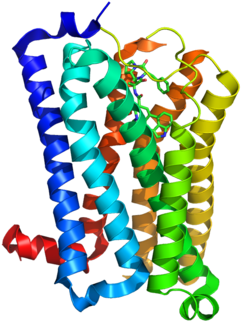
5-HT receptors, 5-hydroxytryptamine receptors, or serotonin receptors, are a group of G protein-coupled receptor and ligand-gated ion channels found in multiple tissues including the central and peripheral nervous systems. They mediate both excitatory and inhibitory neurotransmission. The serotonin (i.e., 5-hydroxytryptamine, hence "5-HT") receptors are activated by the neurotransmitter serotonin, which acts as their natural ligand.
The serotonin receptors modulate the release of many neurotransmitters, including glutamate, GABA, dopamine, epinephrine / norepinephrine, and acetylcholine, as well as many hormones, including oxytocin, prolactin, vasopressin, cortisol, corticotropin, and substance P, among others. Serotonin receptors influence various biological and neurological processes such as aggression, anxiety, appetite, cognition, learning, memory, mood, nausea, sleep, and thermoregulation. The serotonin receptors also affect sexual behaviors and increases in serotonin can cause increases of sexual stimulation. They are the target of a variety of pharmaceutical and recreational drugs, including many antidepressants, antipsychotics, anorectics, antiemetics, gastroprokinetic agents, antimigraine agents, psychedelics (hallucinogens), and entactogens. In cases of certain recreational drugs, such as crack cocaine, their use has been shown to negatively impact the response of 5HT receptors in the brain.
Serotonin receptors are found in almost all animals and are even known to regulate longevity and behavioural aging in the primitive nematode, Caenorhabditis elegans.
Classification
5-hydroxytryptamine receptors or 5-HT receptors, or serotonin receptors are found in the central and peripheral nervous systems. They can be divided into 7 families of G protein-coupled receptors which activate an intracellular second messenger cascade to produce an excitatory or inhibitory response. The exception to this is the 5-HT3 receptor which is a ligand-gated ion channel. In 2014, a novel 5-HT receptor was isolated from the small white butterfly, Pieris rapae, and named pr5-HT8. It does not occur in mammals and shares relatively low similarity to the known 5-HT receptor classes.
Families
| Family | Type | Mechanism | Potential |
|---|---|---|---|
| 5-HT1 | Gi/Go-protein coupled. | Decreasing cellular levels of cAMP. | Inhibitory |
| 5-HT2 | Gq/G11-protein coupled. | Increasing cellular levels of IP3 and DAG. | Excitatory |
| 5-HT3 | Ligand-gated Na+ and K+ cation channel. | Depolarizing plasma membrane. | Excitatory |
| 5-HT4 | Gs-protein coupled. | Increasing cellular levels of cAMP. | Excitatory |
| 5-HT5 | Gi/Go-protein coupled. | Decreasing cellular levels of cAMP. | Inhibitory |
| 5-HT6 | Gs-protein coupled. | Increasing cellular levels of cAMP. | Excitatory |
| 5-HT7 | Gs-protein coupled. | Increasing cellular levels of cAMP. | Excitatory |
Subtypes
The 7 general serotonin receptor classes include a total of 14 known serotonin receptors. The 15th receptor 5-HT1P has been distinguished on the basis of functional and radioligand binding studies, its existence has never been definitely affirmed or refuted. The specific types have been characterized as follows:
| Information on serotonin receptors (human isoforms if nothing else is stated) | ||||||||||||
|---|---|---|---|---|---|---|---|---|---|---|---|---|
| Receptor | First cloned – PDB entries | Gene(s) | Distribution | Function | Agonists | Antagonists | Uses of drugs that act on this receptor | |||||
| Blood vessels | CNS | GI Tract | Platelets | PNS | Smooth Muscle | |||||||
| 5-HT1A | 1987 – 7e2x 7e2y 7e2z | Yes | Yes | No | No | No | No | Addiction Aggression Anxiety Appetite Autoreceptor Blood Pressure Cardiovascular Function Emesis Heart Rate Impulsivity Memory Mood Nausea Nociception Penile Erection Pupil Dilation Respiration Sexual Behavior Sleep Sociability Thermoregulation Vasoconstriction | Selective (for 5-HT1A over other 5-HT receptors) Vilazodone (Viibryd) F-15,599 (research compound, highly potent and selective for 5-HT1A) Flesinoxan (potent, EC50 = 24 nM) Gepirone (partial agonist, Ki = 70 nM) Haloperidol Ipsapirone (partial agonist, Ki = 12.1 nM) Quetiapine Trazodone (SARI, selective in the sense that on all other 5-HT receptors it acts as either an antagonist or has no action. Kd = 78 nM) Yohimbine (unselective partial agonist) Tandospirone (potent and selective partial agonist) Nonselective 5-CT (potent – Ki = 250 ± 50 pM) 8-OH-DPAT (potent) Aripiprazole (atypical antipsychotic) Asenapine (atypical antipsychotic) Buspirone (partial agonist) Vortioxetine (high-efficacy partial agonist) Ziprasidone (partial agonist, Ki = 3.4 nM) Methylphenidate (weak agonist) | BMY 7378 Cyanopindolol Iodocyanopindolol Lecozotan Methiothepin Methysergide NAN-190 Nebivolol Nefazodone WAY-100,135 WAY-100,635 Mefway | Analgesics (agonists) Antidepressants (post-synaptic receptor agonists and pre-synaptic autoreceptor antagonists serve as antidepressants) Anxiolytics (agonist and antagonist) | |
| 5-HT1B | 1992 – 6g79 | Yes | Yes | No | No | No | No | Addiction Aggression Anxiety Autoreceptor Learning Locomotion Memory Mood Penile Erection Sexual Behavior Vasoconstriction | 5-CT CGS-12066A CP-93,129 CP-94,253 Dihydroergotamine Eltoprazine Ergotamine Methysergide RU 24969 TFMPP Triptans (antimigraine) Zolmitriptan Eletriptan Sumatriptan Vortioxetine (partial agonist, Ki = 33 nM) | Alprenolol AR-A000002 Asenapine Cyanopindolol GR-127,935 Iodocyanopindolol Isamoltane Metergoline Methiothepin Oxprenolol Pindolol Propranolol SB-216,641 Yohimbine | Migraines (e.g., triptans) | |
| 5-HT1D | 1991 – 7e32 | Yes | Yes | No | No | No | No | Anxiety Autoreceptor Locomotion Vasoconstriction | 5-CT CP-135,807 Dihydroergotamine Ergotamine Methysergide Triptans (antimigraine) Almotriptan Eletriptan Frovatriptan Naratriptan Rizatriptan Sumatriptan Zolmitriptan Yohimbine | BRL-15572 GR-127,935 Ketanserin Metergoline Methiothepin Rauwolscine Ritanserin Vortioxetine (Ki = 54 nM) Ziprasidone | Migraines (e.g., triptans) | |
| 5-HT1E | 1992 – 7e33 | Yes | Yes | No | No | No | No | BRL-54443 | None known | |||
| 5-HT1F | 1993 – 7exd | No | Yes | No | No | No | No | Migraine | BRL-54443 Lasmiditan LY-334,370 Naratriptan Eletriptan | None known | ||
| 5-HT1P | Not cloned | No | No | Yes | No | No | No | Peristalsis | 5-OHIP 2-Methyl-5-HT 5-BOHIP | 5-HTP-DP | None known | |
| 5-HT2A | 1988 | Yes | Yes | Yes | Yes | Yes | Yes | Addiction (potentially modulating) Anxiety Appetite Cognition Imagination Learning Memory Mood Perception Sexual Behavior Sleep Thermoregulation Vasoconstriction | 25I-NBOMe (Full agonist) 2C-B 2C-I 5-MeO-DMT Aripiprazole (very weak partial agonist or antagonist) BZP Bufotenin DMT DOM Ergonovine Lisuride LSD Mescaline PNU-22394 (partial agonist) Psilocin Psilocybin TFMPP (partial agonist or antagonist) | Atypical antipsychotics Clozapine Olanzapine Quetiapine Risperidone Ziprasidone Asenapine Amitriptyline Clomipramine Cyproheptadine Doxepin Eplivanserin Etoperidone Haloperidol Hydroxyzine Iloperidone Ketanserin (antihypertensive) Methysergide Mianserin Mirtazapine Nefazodone Pimavanserin Pizotifen Ritanserin Trazodone Yohimbine | Atypical antipsychotics (antagonist) Psychedelics (agonists) NaSSAs (antidepressants and anxiolytics; they serve as antagonists at this site) Treating serotonin syndrome (antagonists; e.g., cyproheptadine) Sleeping aid (antagonists; e.g., trazodone) | |
| 5-HT2B | 1992 | Yes | Yes | Yes | Yes | Yes | Yes | Anxiety Appetite Cardiovascular Function GI Motility Sleep Vasoconstriction | 6-APB (full agonist) BW-723C86 Fenfluramine MDMA Norfenfluramine PNU-22394 (partial agonist) Ro60-0175 Methylphenidate (weak agonist) | Agomelatine Asenapine BZP Ketanserin Methysergide Ritanserin RS-127,445 Tegaserod Yohimbine | Migraines (antagonists) | |
| 5-HT2C | 1988 | Yes | Yes | Yes | Yes | Yes | Yes | Addiction (potentially modulating) Anxiety Appetite GI Motility Heteroreceptor for norepinephrine and dopamine Locomotion Mood Penile Erection Sexual Behavior Sleep Thermoregulation Vasoconstriction | 2C-B (partial agonist) A-372,159 AL-38022A Aripiprazole Ergonovine Lorcaserin PNU-22394 (full agonist) Ro60-0175 TFMPP Trazodone (hypnotic) YM-348 | Agomelatine (antidepressant) Amitriptyline Asenapine Clomipramine Clozapine (antipsychotic) Cyproheptadine Dimebolin Eltoprazine Etoperidone Fluoxetine Haloperidol Iloperidone Ketanserin (antihypertensive) Lisuride Methysergide Mianserin Mirtazapine Nefazodone Olanzapine Paroxetine Quetiapine Risperidone Ritanserin SB-242084 Tramadol Trazodone Ziprasidone | Antidepressant (antagonists; e.g., agomelatine, fluoxetine, mirtazapine) Orexigenic (e.g., mirtazapine, clozapine and olanzapine; antagonists) Anorectic (Lorcaserin; agonist) Antipsychotic (Vabicaserin; agonists) | |
| 5-HT3 | 1993 | No | Yes | Yes | No | Yes | No | Addiction Anxiety Emesis GI Motility Learning Memory Nausea | 2-Methyl-5-HT BZP Quipazine RS-56812 | Alosetron Several antiemetics Dolasetron Ondansetron Granisetron Tropisetron Clozapine Memantine Metoclopramide Mianserin Mirtazapine Olanzapine Quetiapine Vortioxetine (Ki = 3.7 nM) | Antiemetic Antidepressant (e.g., mirtazpine) antipsychotic (e.g., olanzapine, quetiapine) | |
| 5-HT4 | 1995 | No | Yes | Yes | No | Yes | No | Anxiety Appetite GI Motility Learning Memory Mood Respiration | 5-MT BIMU-8 Cinitapride Cisapride (gastroprokinetic) Dazopride Metoclopramide Mosapride Prucalopride RS-67333 Renzapride Tegaserod Zacopride | L-Lysine Piboserod | Gastroprokinetics (e.g., Tegaserod) | |
| 5-HT5A | 1994 | No | Yes | No | No | No | No | Autoreceptor Locomotion Sleep | 5-CT Ergotamine Lisuride (partial) Methylergometrine (full) Valerenic Acid (partial agonist) | Asenapine Dimebolin Methiothepin Ritanserin SB-699,551 SB-699,551-A MS112 | None thus far | |
| 5-HT5B | 1993 | No | No | No | No | No | No | Functions in rodents, pseudogene in humans | None thus far | |||
| 5-HT6 | 1993 | No | Yes | No | No | No | No | Anxiety Cognition Learning Memory Mood | EMD-386,088 EMDT WAY-181,187 WAY-208,466 E-6837 N-(inden-5-yl)imidazothiazole-5-sulfonamide (43) | Amitriptyline Aripiprazole Asenapine Clomipramine Clozapine Dimebolin EGIS-12233 Haloperidol Iloperidone MS-245 Olanzapine Ro04-6790 SB-258,585 SB-271,046 SB-357,134 SB-399,885 | Antidepressant (antagonists and agonists) Anxiolytic (antagonists and agonist) Nootropic (antagonists) Anorectic (antagonists) | |
| 5-HT7 | 1993 | Yes | Yes | Yes | No | No | No | Anxiety Autoreceptor Memory Mood Respiration Sleep Thermoregulation Vasoconstriction Immunostimulation | 5-CT 8-OH-DPAT Aripiprazole (partial agonist) AS-19 E-55888 | Amitriptyline Asenapine Clomipramine Clozapine EGIS-12233 Haloperidol Iloperidone Imipramine Ketanserin Mirtazapine Olanzapine RA-7 Ritanserin Risperidone SB-269,970 Vortioxetine (Ki = 19 nM) | Antidepressant (antagonists) Anxiolytics (antagonists) Nootropic (antagonists) |
Note that there is no 5-HT1C receptor since, after the receptor was cloned and further characterized, it was found to have more in common with the 5-HT2 family of receptors and was redesignated as the 5-HT2C receptor.
Very nonselective agonists of 5-HT receptor subtypes include ergotamine (an antimigraine), which activates 5-HT1A, 5-HT1D, 5-HT1B, D2 and norepinephrine receptors. LSD (a psychedelic) is a 5-HT1A, 5-HT2A, 5-HT2C, 5-HT5A and 5-HT6 agonist.
Expression patterns
The genes coding for serotonin receptors are expressed across the mammalian brain. Genes coding for different receptors types follow different developmental curves. Specifically, there is a developmental increase of HTR5A expression in several subregions of the human cortex, paralleled by a decreased expression of HTR1A from the embryonic period to the post-natal one.
5-HT 1 -like
A number of receptors were classed as "5-HT1-like" - by 1998 it was being argued that, since these receptors were "a heterogeneous population of 5-HT1B, 5-HT1D and 5-HT7" receptors the classification was redundant.
External links
- at the U.S. National Library of Medicine Medical Subject Headings (MeSH)
- . IUPHAR Database of Receptors and Ion Channels. International Union of Basic and Clinical Pharmacology.
- Rubenstein LA, Lanzara RG (2005-02-16). . Cogprints.
- Paterson LM, Kornum BR, Nutt DJ, Pike VW, Knudsen GM (January 2013). . Medicinal Research Reviews. 33 (1): 54–111. doi:. PMC . PMID .