Struga
In-game article clicks load inline without leaving the challenge.
Struga (Macedonian: Струга [ˈstruɡa] ⓘ; Albanian: Strugë, Albanian definite form: Struga) is a town and popular tourist destination situated in the south-western region of North Macedonia, lying on the shore of Lake Ohrid. The town of Struga is the seat of Struga Municipality.
Name
The name Struga was first mentioned in the 11th century. It is of Slavic origin. and means a "river bed".

The ancient name of the city is Enchalon (Εγχαλών), the ancient Greek word for eel, which may be related to the Illyrian Enchele tribe that was known to live in the region. According to E. Hamp, a connection with Albanian ’ngjalë’ makes it possible that the name Enchele was derived from the Illyrian term for eels, which may have been anciently related to Greek and simply adjusted to the Greek pronunciation. In Polybius the word 'Enchele' is written with a voiceless aspirate kh, Enchelanes, while in Mnaseas it was replaced with a voiced ng, Engelanes, the latter being a typical feature of the Ancient Macedonian and northern Paleo-Balkan languages.
History
In ancient times, the Lake Ohrid region, including Enchalon (ancient name of modern Struga) was inhabited by the Illyrian Enchele and Dassareti tribes. The Via Egnatia ran through the Lake Ohrid region, and is believed to have passed west of Enchalon.
Etymologist Qemal Murati believes that the name Strugë-a was first used as the name of a village; this name was used in a document of Tsar Dusan in the 14th century in the form of Struga. Later, in the 16th-17th centuries, the Codex of Slepçan, the name 'Strugi' was used.
In the 16th century the city was visited by the Venetian Ambassador Lorenzo Bernardo who described it as a city in Bulgaria which was more akin to a small village. He describes the town as an important destination for wheat shipments and a town with fertile plains and valleys, and he speaks highly of the local eel and trout.
Struga was visited by Henry Fanshawe Tozer in his travels in the Ottoman Empire, who spoke highly of the region and the Ohrid Lake which he compared to Italian lakes and to Biblical sites such as the Sea of Galilee, he considered Struga to be a head-quarters of fishery in European Turkey and that the fishery in Struga was property of the Ottoman Sultan who sublet it to locals for a large sum, he spoke highly of the endemic Ohrid trout. According to him the marshes in the region were turned into a habitable region by tzar Samuel of Bulgaria at the time when he made the city of Ohrid Bulgarian capital. He visited a large local Bulgarian school and mentioned the admiration that the Byzantine princess Anna Comnena had for the hundred of channels, embankments and watercourses in the city.
In the late 19th and early 20th century, Struga was part of the Manastir Vilayet of the Ottoman Empire.
Struga is the home-city of the Miladinov brothers poets who played a crucial part in the Bulgarian national revival and in whose honor the Struga Poetry Evenings are held in the city. Struga was also the birthplace for a number of IMARO revolutionaries such as Hristo Matov.
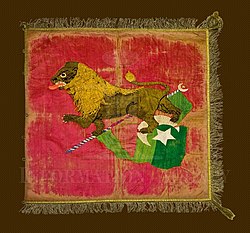
Struga was the birthplace in 1865 Ibrahim Temo, who would go on to be a doctor and one of the founders of the Ottoman reform movement known as the Committee of Union and Progress.
Struga was part of the Socialist Federative Republic of Yugoslavia since 1945 as part of the Socialist Republic of Macedonia until the 1991 Macedonian independence referendum when Macedonia peacefully seceded from the federation. After the independence of North Macedonia in 1991, Struga remained the administrative centre of Struga Municipality and an important urban settlement on the north-western shore of Lake Ohrid. In the post-independence period, the town continued to function as a local administrative, cultural and tourist centre for the surrounding lakeside area.
Geography
Struga is situated on the northern shore of Lake Ohrid, in the south-western part of North Macedonia. The Black Drin river flows out of the lake at Struga and divides the town into two parts. The town lies in an open valley and is part of the Southwestern Statistical Region.
Demographics
During the 16th century, Struga was located in the Sanjak of Ohrid of the Ottoman Empire. It was registered as a Christian village in the Nahiya of Ohrid with 184 Christian families, 20 unmarried men and 36 widows, as well as 8 Muslim families.
In statistics gathered by Vasil Kanchov in 1900, Struga was inhabited by 4,570 people, consisting of 3,000 Christian Bulgarians, 1,000 Turks, 350 Muslim Albanians and 220 Romanis. The Bulgarian researcher Vasil Kanchov wrote in 1900 that many Albanians declared themselves as Turks. Jordan Ivanov, professor at the University of Sofia, wrote in 1915 that Albanians, due to a lack of consolidated national consciousness and influenced by religion and foreign propaganda, often declared themselves as Turks, Greeks or Bulgarians.
According to the 2021 census, the settlement of Struga had 15,009 inhabitants, compared with 16,559 in the 2002 census. For municipal-level demographic data, see Struga Municipality.
| Ethnic group | Population | % |
|---|---|---|
| Macedonians | 6,517 | 43.4 |
| Albanians | 4,903 | 32.7 |
| Turks | 810 | 5.4 |
| Roma | 141 | 0.9 |
| Vlachs/Aromanians | 431 | 2.9 |
| Serbs | 49 | 0.3 |
| Bosniaks | 23 | 0.2 |
| Others | 574 | 3.8 |
| Persons for whom data are taken from administrative sources | 1,561 | 10.4 |
| Total | 15,009 | 100.0 |
| Ethnic group | census 1948 | census 1953 | census 1961 | census 1971 | census 1981 | census 1994 | census 2002 | census 2021 | ||||||||
|---|---|---|---|---|---|---|---|---|---|---|---|---|---|---|---|---|
| Number | % | Number | % | Number | % | Number | % | Number | % | Number | % | Number | % | Number | % | |
| Macedonians | .. | .. | 2,194 | 43.9 | 3,423 | 49.9 | 6,215 | 54.2 | 8,002 | 55.9 | 9,433 | 58.9 | 8,901 | 53.8 | 6,517 | 43.4 |
| Albanians | .. | .. | 1,109 | 22.2 | 1,649 | 24.1 | 3,508 | 30.6 | 4,149 | 29.0 | 4,330 | 27.0 | 5,293 | 32.0 | 4,903 | 32.7 |
| Turks | .. | .. | 927 | 18.6 | 994 | 14.5 | 730 | 6.4 | 832 | 5.8 | 887 | 5.5 | 927 | 5.6 | 810 | 5.4 |
| Roma | .. | .. | 141 | 2.8 | 0 | 0.0 | 12 | 0.1 | 421 | 2.9 | 114 | 0.7 | 97 | 0.6 | 141 | 0.9 |
| Vlachs/Aromanians | .. | .. | 536 | 10.7 | 0 | 0.0 | 0 | 0.0 | 337 | 2.4 | 462 | 2.9 | 550 | 3.3 | 431 | 2.9 |
| Serbs | .. | .. | 42 | 0.9 | 54 | 0.8 | 106 | 0.9 | 84 | 0.6 | 91 | 0.6 | 72 | 0.4 | 49 | 0.3 |
| Bosniaks | .. | .. | 0 | 0.0 | 0 | 0.0 | 0 | 0.0 | 0 | 0.0 | 0 | 0.0 | 16 | 0.1 | 23 | 0.2 |
| Others/undeclared | .. | .. | 47 | 1.0 | 737 | 10.8 | 904 | 7.9 | 500 | 3.5 | 720 | 4.5 | 723 | 4.4 | 574 | 3.8 |
| Persons for whom data are taken from administrative sources | 1,561 | 10.4 | ||||||||||||||
| Total | 4,923 | 4,996 | 6,857 | 11,475 | 14,325 | 16,037 | 16,559 | 15,009 |
According to the 2002 census, the religious composition of the city was:
- Orthodox Christians, 9,197 (55.5%)
- Muslims, 7,075 (42.7%)
- others, 287 (1.7%)
The Gheg and Tosk dialects of Albanian are both spoken by Albanians in Struga, with speakers historically divided in the settlement by the Black Drin. The Albanian spoken in Struga has been described as transitional between Central Gheg and Northern Tosk, with differences mainly in phonetics and morphology. Until the last few decades of the 20th century, Albanian Tosk, in particular the geographically central variety of the dialect, dominated among speakers of Albanian in Struga. The local Romani and Turkish populations of Struga have also been described as speaking and singing in the southern Tosk Albanian dialect.
People
Notable people from Struga include the Miladinov brothers, poets associated with the Macedonian and Bulgarian literary revival, and Ibrahim Temo, one of the founders of the Committee of Union and Progress.
Culture

Struga is also a place of important cultural significance in North Macedonia, as it is the birthplace of the poets Konstantin and Dimitar Miladinov.
The main event of the cultural life in Struga is the world's largest poetry gathering, Struga Poetry Evenings, whose laureates have included several Nobel Prize for Literature winners such as
and many others since 1966.
There are several cultural monuments in Struga and in its vicinity such as
- the Monastery of Kališta, a few kilometers away from the town center, lying on the shore of Lake Ohrid. It is believed that it dates from the 16th century, with frescoes from the 14th and the 15th centuries.
- Another rock church is present in the neighbouring village of Radožda with frescoes from the 13th and 14th centuries.
- The Church of Sveta Bogorodica (St Mary) in Vraništa, is believed to be where Tsar Samuel was crowned. [citation needed]
- The church of St. George is also located in the town; built on top of Samuel's church, it has many icons from the 14th, 15th, and 16th centuries.
- Near the village of Radolishta, a basilica from the 4th century was discovered, [when?] with a mosaic.
Struga's old architecture dates from the 18th and 19th centuries. [citation needed]
Sports
Football is one of the main sports in Struga. FC Struga, also known as Struga Trim-Lum, has competed in the Macedonian First Football League and won back-to-back national league titles in the 2022–23 and 2023–24 seasons. FK Karaorman is another football club from the town and has also played in the Macedonian First Football League. Vllaznimi competes in the Macedonian Third League.
Economy
The local economy is closely connected with tourism due to Struga's location on Lake Ohrid. Other economic activities in and around the town include services, small businesses, trade and tourism-related activities.
Tourism

Much of the town's income is through internal tourism. Struga's location on Lake Ohrid makes it a slightly quieter and more peaceful experience than the more bustling Ohrid.
When visiting this quiet town of North Macedonia, there are a few other places that show the beauty and culture, like the clay chamber pots at the house of the Miladinovci Brothers, [who?] the old bazaar, the century-old churches and mosques.
Before the evenings you can enjoy on 3 kinds of beaches called "Male beach" (maška plaža), "Female beach" (Ženska plaža) and Galeb ("Gull Beach"), located just before the estuary of the river Crn Drim (Black Drim) in its own flow, and between the two previous beaches.
Just in front of the "Male beach", at the estuary of the river Crn Drim it is located the biggest 5 star Hotel Drim in Struga.
Out of the town there is another tourist place near the lake called Biser (Pearl), also a hotel.
Every August the Struga Poetry Evenings (SPE) are held at the "Poetry Bridge" (Macedonian: Струшки Вечери на Поезијата) and are attended by poets, writers and artists from across the world. [citation needed]
Churches
- St. George Church – from the 13th century;
- St. Nicholas Church
- Church of the Myrrhbearing Women
International relations
Twin towns – Sister cities
Struga is twinned with:
- Turkey Büyükçekmece, Turkey
- Romania Mangalia, Romania
- United States Waterbury, Connecticut, United States
- Cyprus Famagusta, Northern Cyprus
External links
- Struga travel guide from Wikivoyage
41°10′39″N 20°40′44″E/41.17750°N 20.67889°E/ 41.17750; 20.67889