Twenty20
In-game article clicks load inline without leaving the challenge.

Twenty20 (abbreviated T20) is a shortened format of cricket. At the professional level, it was introduced by the England and Wales Cricket Board (ECB) in 2003 for the inter-county competition. In a Twenty20 game, the two teams have a single innings each, which is restricted to a maximum of twenty overs (which is equivalent to 120 legal deliveries per team). Together with first-class and List A cricket, Twenty20 is one of the three forms of cricket recognised by the International Cricket Council (ICC) as being played at the highest level, both internationally and domestically.
A typical Twenty20 match lasts just over 3 hours, with each innings lasting around 90 minutes and an official 10-minute break between the innings. This is much shorter than previous forms of the game, and is closer to the timespan of other popular team sports. It was introduced to create a fast-paced game that would be attractive to spectators at the ground and viewers on television.
The game has succeeded in spreading around the cricket world. On most international tours there is at least one Twenty20 match and all Test-playing nations have a domestic cup competition.
History
Origins

A few years prior to the introduction of the current T20 match format, a different form of 20 overs per side cricket known as Cricket Max was played both domestically and on an unofficial home international basis in New Zealand from 1996 to 2002. The format differed from current Twenty20 cricket as each team had two separate innings of 10 overs each, and a number of other rules innovations. The only one that would be utilised in Twenty20 cricket (as well as other limited-overs cricket) was a free-hit for no-balls.
When the Benson & Hedges Cup ended in 2002 owing, in response to dwindling attendances at longer format matches such as those in the County Championship, the ECB sought another one-day competition to appeal to a younger demographic. The Board wanted to deliver fast-paced, exciting cricket accessible to fans who were put off by the longer versions of the game. Stuart Robertson, (Marketing Manager of the ECB), Kevin Allton (ECB New Media Marketing Manager), Joe Bruce (Sponsorship Manager) and Richard Kaye (Sales Manager) proposed a 20-over-per-innings game, invented by New Zealand cricketer Martin Crowe, to county chairmen in 2001, and they voted 11–7 in favour of adopting the new format.
The first official Twenty20 matches were played on 13 June 2003 between the English counties in the Twenty20 Cup. The first season of Twenty20 in England was a relative success, with the Surrey Lions defeating the Warwickshire Bears by nine wickets in the final to claim the title. The first Twenty20 match held at Lord's, on 15 July 2004 between Middlesex and Surrey, attracted a crowd of 27,509, the highest attendance for any county cricket game at the ground – other than a one-day final – since 1953.
Worldwide spread
Thirteen teams from different parts of the country participated in Pakistan's inaugural competition in 2004, with the Faisalabad Wolves the first winners. On 12 January 2005 Australia's first Twenty20 game was played at the WACA Ground between the Western Warriors and the Victorian Bushrangers. It drew a sell-out crowd of 20,000, which was the first one in nearly 25 years.
Starting on 11 July 2006, 19 West Indies regional teams competed in what was named the Stanford 20/20 tournament. The event was financially backed by billionaire Allen Stanford, who gave at least US$28 million in funding money. It was intended that the tournament would be an annual event. Guyana won the inaugural event, defeating Trinidad and Tobago by five wickets, securing US$1 million in prize money.
On 5 January 2007 the Queensland Bulls played the New South Wales Blues at The Gabba, Brisbane. An unexpected 16,000 fans turned up on the day to buy tickets, causing Gabba staff to throw open gates and grant many fans free entry. Attendance reached 27,653. For the February 2008 Twenty20 match between Australia and India, 85,824 people attended the match at the Melbourne Cricket Ground, involving the Twenty20 World Champions against the ODI World Champions.
The Stanford Super Series was held in October 2008 between the three teams. The respective winners of the English and Caribbean Twenty20 competitions, Middlesex and Trinidad and Tobago, and a Stanford Superstars team formed from West Indies domestic players. Trinidad and Tobago won the competition, securing US$280,000 prize money. On 1 November, the Stanford Superstars played England in what was expected to be the first of five fixtures in as many years with the winner claiming US$20 million in each match. The Stanford Superstars won the first match, but no further fixtures were held as Allen Stanford was charged with fraud in 2009.
T20 leagues
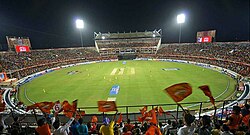
Several T20 leagues started after the popularity of the 2007 ICC World Twenty20. The Board of Control for Cricket in India started the Indian Premier League popularly known as IPL, which is now the largest cricket league, in 2008, which utilizes the North American sports franchise system with ten teams in major Indian cities. In September 2017, the broadcasting and digital rights for the next five years (2018–2022) of the IPL were sold to Star India for US$2.55 billion, making it one of the world's most lucrative sports league per match. The IPL has seen a spike in its brand valuation to US$5.3 billion after the 10th edition, according to global valuation and corporate finance advisor Duff & Phelps.
The Big Bash League, Bangladesh Premier League, Pakistan Super League, Caribbean Premier League, and Afghanistan Premier League started thereafter, following similar formulae, and remained popular with the fans. The Women's Big Bash League was started in 2015 by Cricket Australia, while the Kia Super League was started in England and Wales in 2016. The Mzansi Super League in South Africa was started in 2018. Global Cricket League was started in 2026 by USA cricket to promote cricket nationwide.
Several T20 leagues follow the general format of having a group stage followed by a Page playoff system among the top four teams where:
- The first- and second-highest placed teams in the group stage face off, with the winner going to the final.
- The third- and fourth-place teams face off, with the loser being eliminated.
- The two teams who have not yet made it to the final after the above two matches have been played face off to fill the second berth in the final.
In the Big Bash League, there was an additional match to determine which of the fourth- or fifth-placed teams will qualify to be in the top four, Until the 2022/23 season.
Twenty20 Internationals
The first Twenty20 International match was held on 5 August 2004 between the England and New Zealand women's teams, with New Zealand winning by nine runs.
On 17 February 2005 Australia defeated New Zealand in the first men's international Twenty20 match, played at Eden Park in Auckland. The game was played in a light-hearted manner – both sides turned out in kit similar to that worn in the 1980s, the New Zealand team's a direct copy of that worn by the Beige Brigade. Some of the players also sported moustaches or beards and hairstyles popular in the 1980s, taking part in a competition amongst themselves for "best retro look", at the request of the Beige Brigade. Australia won the game comprehensively, and as the result became obvious towards the end of the NZ innings, the players and umpires took things less seriously: Glenn McGrath jokingly replayed the Trevor Chappell underarm incident from a 1981 ODI between the two sides, and Billy Bowden showed him a mock red card (red cards are not normally used in cricket) in response.[citation needed]
On 16 February 2006 New Zealand defeated West Indies in a tie-breaking bowl-out 3–0; 126 runs were scored apiece in the game proper.[citation needed]
The ICC has declared that it sees T20 as the optimal format for globalizing the game, and in 2018, announced that it will give international status to all T20 cricket matches played between its member nations. This resulted in a significant leap in the number of T20I matches played across the world.
Twenty20 World Cup
Every two years an ICC World Twenty20 tournament is to take place, except in the event of an ICC Cricket World Cup being scheduled in the same year, in which case it will be held the year before. The first tournament was in 2007 in South Africa where India defeated Pakistan in the final. Two Associate teams had played in the first tournament, selected through the 2007 ICC World Cricket League Division One, a 50-over competition. In December 2007 it was decided to hold a qualifying tournament with a 20-over format to better prepare the teams. With six participants, two would qualify for the 2009 World Twenty20 and would each receive $250,000 in prize money. The second tournament was won by Pakistan, who beat Sri Lanka by eight wickets in England on 21 June 2009. The 2010 ICC World Twenty20 tournament was held in the West Indies in May 2010, where England defeated Australia by seven wickets. The 2012 ICC World Twenty20 was won by the West Indies, by defeating Sri Lanka at the finals. It was the first time in cricket history when a T20 World Cup tournament took place in an Asian country. The 2014 ICC World Twenty20 was won by Sri Lanka, by defeating India at the finals, where the tournament was held in Bangladesh. The 2016 ICC World Twenty20 was won by West Indies. In July 2020, the ICC announced that both the 2020 and 2021 editions had been postponed by one year due to the COVID-19 pandemic.
In June 2021, the ICC expanded the Twenty20 World Cup from 16 to 20 teams starting from the 2024 edition onwards.
India won the 2024 T20 WC, which marked the last T20 campaign for Virat Kohli and Rohit Sharma. In the 2026 Men's T20 World Cup, India defeated New Zealand in the final, thus becoming the only team to win back-to-back T20 World Cups (2024 and 2026), and a record three titles in the T20 World Cup.
Impact on the game

Twenty20 cricket is claimed to have resulted in a more athletic and explosive form of cricket. Indian fitness coach Ramji Srinivasan declared in an interview with the Indian fitness website Takath.com that Twenty20 had "raised the bar" in terms of fitness levels for all players, demanding higher levels of strength, speed, agility and reaction time from all players regardless of role in the team. Matthew Hayden credited retirement from international cricket with aiding his performance in general and fitness in particular in the Indian Premier League.
Several commentators have noted that the T20 format has been embraced by many Associate Members of the ICC partly because it is more financially viable to play. T20's success has also inspired the invention of even shorter formats, such as T10 cricket and 100-ball cricket, and its impact on cricket has been compared to or served as inspiration for innovations in other sports, such as with the 3x3 variant of basketball or the Indian Pro Kabaddi League.
Former Australian captain Ricky Ponting, on the other hand, has criticised Twenty20 as being detrimental to Test cricket and for hampering batsmen's scoring skills and concentration. Former Australian captain Greg Chappell made similar complaints, fearing that young players would play too much T20 and not develop their batting skills fully, while former England player Alex Tudor feared the same for bowling skills.
Former West Indies captains Clive Lloyd, Michael Holding and Garfield Sobers criticised Twenty20 for its role in discouraging players from representing their national Test team, with many West Indies players like Chris Gayle, Sunil Narine, Jason Holder and Dwayne Bravo preferring to play in Twenty20 franchises elsewhere in the world and earn more money. Similar, New Zealand players Trent Boult and Jimmy Neesham turned down central contracts enabling them to play cricket for New Zealand, instead preferring to concentrate on Twenty20 franchise cricket. English commentators Geoffrey Boycott and Jonathan Agnew have both expressed dissatisfaction with the format and its effects on longer-form cricket.
Under-17s and Under-19s are playing T20 games in national championships, and at the detriment of two-day games. Good state players these days are averaging 35; if you were averaging 35 when I was playing your dad would go and buy you a basketball or a footy and tell you to play that.
Inclusion in multi-sport events
In June 2009, speaking at the annual Cowdrey Lecture at Lord's, former Australian wicketkeeper Adam Gilchrist pushed for Twenty20 to be made an Olympic sport. "It would," he said, "be difficult to see a better, quicker or cheaper way of spreading the game throughout the world." This became a reality starting with the 2028 Summer Olympics. T20 cricket has also been accepted into the Asian Games and Commonwealth Games.
Match format and rules
Format
Twenty20 match format is a form of limited overs cricket in that it involves two teams, each with a single innings. The key feature is that each team bats for a maximum of 20 overs (120 legal balls). The batting team members do not arrive from and depart to traditional dressing rooms, but come and go from a bench (typically a row of chairs) visible in the playing arena, analogous to association football's technical area or a baseball dugout.

General rules
The Laws of Cricket apply to Twenty20, with some variations depending on the exact competition rules. The most common include:[better source needed]
- Each bowler may bowl a maximum of only one-fifth of the total overs per innings. For a full, uninterrupted match, this is four overs.
- If a bowler delivers a no-ball by overstepping the crease, it costs one or two runs (depending on the competition) and their next delivery is designated a "free hit". In this circumstance the batter can only be dismissed through a run out, hitting the ball twice or obstructing the field.
- The following fielding restrictions apply: No more than five fielders can be on the leg side at any time. During the first six overs, a maximum of two fielders can be outside the 30-yard circle (this is known as the powerplay). After the first six overs, a maximum of five fielders can be outside the fielding circle. However, in Australia's Big Bash League the Powerplay is only the first 4 overs, with the batters choosing when the same restrictions apply for 2 overs in the second half of the innings, in a period called a Powersurge.
Tie deciders
Currently, if the match ends with the scores tied and there must be a winner, the tie is broken with a one-over-per-side Eliminator or Super Over: Each team nominates three batsmen and one bowler to play a one-over-per-side "mini-match". The team which bats second in the match bats first in the Super Over. In turn, each side bats one over bowled by the one nominated opposition bowler, with their innings over if they lose two wickets before the over is completed. The side with the higher score from their Super Over wins. If the Super Over also ends up in a tie, it is repeated until the tie is broken.
In the Australian domestic competition the Big Bash League, the Super Over is played slightly differently, with no two-wicket limit, and if the Super Over is also tied then a "countback" is used, with scores after the fifth ball for each team being used to determine the result. If it is still tied, then the countback goes to four balls, and so on. The latest Super Over to decide a match was between the United States and Pakistan on 6 June 2024, in the 2024 ICC Men's T20 World Cup at Grand Prairie Stadium in Dallas, Texas, with the United States winning 18/1 to 13/1 in the Super Over after tying on 159.
Tied Twenty20 matches were previously decided by a bowl-out until 2008.
International
Women's and men's Twenty20 Internationals have been played since 2004 and 2005 respectively. To date, 76 nations have played the format, including all Test-playing nations.
| Nation | Date of men's T20I debut | Date of women's T20I debut |
|---|---|---|
| Australia | 17 February 2005 | 2 September 2005 |
| New Zealand | 17 February 2005 | 5 August 2004 |
| England | 13 June 2005 | 5 August 2004 |
| South Africa | 21 October 2005 | 10 August 2007 |
| West Indies | 16 February 2006 | 27 June 2008 |
| Sri Lanka | 15 June 2006 | 12 June 2009 |
| Pakistan | 28 August 2006 | 25 May 2009 |
| Bangladesh | 28 November 2006 | 27 August 2012 |
| Zimbabwe | 28 November 2006 | 5 January 2019 |
| India | 1 December 2006 | 5 August 2006 |
| Kenya | 1 September 2007 | 6 April 2019 |
| Scotland | 12 September 2007 | 7 July 2018 |
| Netherlands | 2 August 2008 | 27 June 2008 |
| Ireland | 2 August 2008 | 27 June 2008 |
| Canada | 2 August 2008 | 17 May 2019 |
| Bermuda | 3 August 2008 | |
| Afghanistan | 2 February 2010 | |
| Nepal | 16 March 2014 | 12 January 2019 |
| Hong Kong | 16 March 2014 | 12 January 2019 |
| United Arab Emirates | 17 March 2014 | 7 July 2018 |
| Papua New Guinea | 15 July 2015 | 7 July 2018 |
| Oman | 25 July 2015 | 17 January 2020 |
| Sierra Leone | 19 October 2021 | 20 August 2018 |
| Lesotho | 16 October 2021 | 20 August 2018 |
| South Korea | 9 October 2022 | 3 November 2018 |
| China | 26 July 2023 | 3 November 2018 |
| Indonesia | 9 October 2022 | 12 January 2019 |
| Myanmar | 26 July 2023 | 12 January 2019 |
| Bhutan | 5 December 2019 | 13 January 2019 |
| Bahrain | 20 January 2019 | 20 March 2022 |
| Saudi Arabia | 20 January 2019 | 20 March 2022 |
| Kuwait | 20 January 2019 | 18 February 2019 |
| Maldives | 20 January 2019 | 2 December 2019 |
| Qatar | 21 January 2019 | 17 January 2020 |
| Rwanda | 18 August 2021 | 26 January 2019 |
| United States | 15 March 2019 | 17 May 2019 |
| Philippines | 22 March 2019 | 21 December 2019 |
| Vanuatu | 22 March 2019 | 6 May 2019 |
| Spain | 29 March 2019 | 5 May 2022 |
| Malta | 29 March 2019 | 27 August 2022 |
| Mexico | 25 April 2019 | 23 August 2018 |
| Belize | 25 April 2019 | 13 December 2019 |
| Costa Rica | 25 April 2019 | 26 April 2019 |
| Panama | 25 April 2019 | |
| Japan | 9 October 2022 | 6 May 2019 |
| Fiji | 9 September 2022 | 6 May 2019 |
| Tanzania | 2 November 2021 | 6 May 2019 |
| Belgium | 11 May 2019 | 25 September 2021 |
| Germany | 11 May 2019 | 26 June 2019 |
| Uganda | 20 May 2019 | 7 July 2018 |
| Nigeria | 20 May 2019 | 26 January 2019 |
| Ghana | 20 May 2019 | 28 March 2022 |
| Namibia | 20 May 2019 | 20 August 2018 |
| Botswana | 20 May 2019 | 20 August 2018 |
| Italy | 25 May 2019 | 9 August 2021 |
| Guernsey | 31 May 2019 | 31 May 2019 |
| Jersey | 31 May 2019 | 31 May 2019 |
| Norway | 15 June 2019 | 31 July 2019 |
| Denmark | 16 June 2019 | 28 May 2022 |
| Mali | 17 November 2021 | 18 June 2019 |
| Malaysia | 24 June 2019 | 3 June 2018 |
| Thailand | 24 June 2019 | 3 June 2018 |
| Samoa | 8 July 2019 | 6 May 2019 |
| Finland | 13 July 2019 | |
| Singapore | 22 July 2019 | 9 August 2018 |
| France | 5 August 2021 | 31 July 2019 |
| Cayman Islands | 18 August 2019 | 26 September 2024 |
| Austria | 29 August 2019 | 31 July 2019 |
| Romania | 29 August 2019 | 27 August 2022 |
| Luxembourg | 29 August 2019 | |
| Turkey | 29 August 2019 | 29 May 2023 |
| Czech Republic | 30 August 2019 | |
| Argentina | 3 October 2019 | 3 October 2019 |
| Brazil | 3 October 2019 | 23 August 2018 |
| Chile | 3 October 2019 | 23 August 2018 |
| Peru | 3 October 2019 | 3 October 2019 |
| Bulgaria | 14 October 2019 | |
| Serbia | 14 October 2019 | 10 September 2022 |
| Greece | 15 October 2019 | 9 September 2022 |
| Portugal | 25 October 2019 | |
| Gibraltar | 26 October 2019 | |
| Malawi | 6 November 2019 | 20 August 2018 |
| Mozambique | 6 November 2019 | 20 August 2018 |
| Timor-Leste | 6 November 2025 |
T20 International rankings
In November 2011, the ICC released the first Twenty20 International rankings for the men's game, based on the same system as the Test and ODI rankings. The rankings cover a two- to three-year period, with matches since the most recent 1 August weighted fully, matches in the preceding 12 months weighted two-thirds, and matches in the 12 months preceding that weighted one-third. To qualify for the rankings, teams must have played at least eight Twenty20 Internationals in the ranking period.
The ICC Women's Rankings were launched in October 2015, which aggregated performance over all three forms of the game. In October 2018, the ICC announced that the women's ranking would be split between ODIs and T20Is, and released both tables shortly thereafter.
| Team | Matches | Points | Rating |
|---|---|---|---|
| India | 85 | 23,224 | 273 |
| England | 56 | 14,522 | 259 |
| Australia | 49 | 12,645 | 258 |
| New Zealand | 71 | 17,692 | 249 |
| South Africa | 69 | 16,932 | 245 |
| Pakistan | 84 | 20,002 | 238 |
| West Indies | 74 | 17,424 | 235 |
| Sri Lanka | 60 | 13,593 | 227 |
| Bangladesh | 67 | 14,925 | 223 |
| Afghanistan | 52 | 11,504 | 221 |
| Zimbabwe | 72 | 14,539 | 202 |
| Ireland | 45 | 9,001 | 200 |
| Netherlands | 39 | 7,064 | 181 |
| Scotland | 28 | 5,064 | 181 |
| United States | 37 | 6,562 | 177 |
| Namibia | 40 | 7,069 | 177 |
| United Arab Emirates | 66 | 11,584 | 176 |
| Nepal | 46 | 8,031 | 175 |
| Canada | 39 | 5,928 | 152 |
| Oman | 51 | 7,707 | 151 |
| Uganda | 56 | 7,952 | 142 |
| Papua New Guinea | 20 | 2,718 | 136 |
| Kuwait | 45 | 5,775 | 128 |
| Hong Kong | 55 | 7,037 | 128 |
| Malaysia | 62 | 7,685 | 124 |
| Italy | 22 | 2,680 | 122 |
| Qatar | 46 | 5,407 | 118 |
| Jersey | 24 | 2,819 | 117 |
| Bahrain | 84 | 9,856 | 117 |
| Spain | 22 | 2,478 | 113 |
| Bermuda | 27 | 3,040 | 113 |
| Saudi Arabia | 39 | 4,245 | 109 |
| Kenya | 48 | 5,074 | 106 |
| Tanzania | 45 | 4,522 | 100 |
| Germany | 22 | 1,924 | 87 |
| Nigeria | 53 | 4,166 | 79 |
| Cayman Islands | 32 | 2,464 | 77 |
| Guernsey | 27 | 2,071 | 77 |
| Singapore | 41 | 3,075 | 75 |
| Portugal | 26 | 1,857 | 71 |
| Denmark | 18 | 1,262 | 70 |
| Austria | 59 | 4,123 | 70 |
| Japan | 42 | 2,905 | 69 |
| Norway | 35 | 2,218 | 63 |
| Belgium | 36 | 2,059 | 57 |
| Sweden | 30 | 1,646 | 55 |
| Argentina | 21 | 1,049 | 50 |
| France | 31 | 1,541 | 50 |
| Switzerland | 22 | 1,086 | 49 |
| Finland | 23 | 1,130 | 49 |
| Botswana | 38 | 1,834 | 48 |
| Isle of Man | 13 | 604 | 46 |
| Malawi | 47 | 2,170 | 46 |
| Romania | 34 | 1,544 | 45 |
| Philippines | 26 | 1,158 | 45 |
| Bahamas | 23 | 972 | 42 |
| Czech Republic | 22 | 911 | 41 |
| Thailand | 45 | 1,811 | 40 |
| Cook Islands | 14 | 552 | 39 |
| Cambodia | 32 | 1,246 | 39 |
| Rwanda | 74 | 2,874 | 39 |
| Ghana | 23 | 842 | 37 |
| Indonesia | 87 | 3,164 | 36 |
| Cyprus | 26 | 930 | 36 |
| Fiji | 11 | 387 | 35 |
| Vanuatu | 16 | 561 | 35 |
| Hungary | 33 | 971 | 29 |
| Samoa | 23 | 672 | 29 |
| Zambia | 10 | 290 | 29 |
| Estonia | 24 | 665 | 28 |
| Malta | 41 | 1,085 | 26 |
| Mozambique | 20 | 518 | 26 |
| Israel | 7 | 178 | 25 |
| Eswatini | 23 | 544 | 24 |
| Panama | 15 | 318 | 21 |
| Bhutan | 35 | 728 | 21 |
| Belize | 8 | 164 | 21 |
| Gibraltar | 26 | 494 | 19 |
| Luxembourg | 24 | 432 | 18 |
| Mexico | 29 | 521 | 18 |
| Sierra Leone | 27 | 477 | 18 |
| Brazil | 17 | 212 | 12 |
| Serbia | 30 | 315 | 11 |
| Maldives | 21 | 214 | 10 |
| Suriname | 14 | 141 | 10 |
| Cameroon | 11 | 86 | 8 |
| Bulgaria | 29 | 191 | 7 |
| South Korea | 16 | 94 | 6 |
| China | 6 | 29 | 5 |
| Seychelles | 11 | 43 | 4 |
| Costa Rica | 17 | 62 | 4 |
| Turkey | 12 | 26 | 2 |
| Gambia | 8 | 6 | 1 |
| Timor-Leste | 8 | 0 | 0 |
| Mongolia | 13 | 0 | 0 |
| Saint Helena | 12 | 0 | 0 |
| Slovenia | 18 | 0 | 0 |
| Myanmar | 29 | 0 | 0 |
| Mali | 9 | 0 | 0 |
| Lesotho | 16 | 0 | 0 |
| Greece | 6 | 0 | 0 |
| Croatia | 26 | 0 | 0 |
| Source: , 13 April 2026 See points calculations for more details. |
| Team | Matches | Points | Rating |
|---|---|---|---|
| Australia | 37 | 10,921 | 295 |
| England | 46 | 13,751 | 277 |
| India | 52 | 13,910 | 268 |
| New Zealand | 42 | 10,744 | 256 |
| South Africa | 43 | 10,274 | 239 |
| West Indies | 40 | 9,470 | 237 |
| Sri Lanka | 45 | 10,321 | 229 |
| Pakistan | 39 | 8,467 | 217 |
| Ireland | 48 | 9,494 | 198 |
| Bangladesh | 41 | 8,014 | 195 |
| Scotland | 37 | 5,909 | 160 |
| Thailand | 65 | 9,954 | 153 |
| Papua New Guinea | 38 | 5,484 | 144 |
| Netherlands | 51 | 6,947 | 136 |
| United Arab Emirates | 57 | 7,440 | 131 |
| Zimbabwe | 42 | 5,270 | 125 |
| Uganda | 70 | 7,877 | 113 |
| Namibia | 59 | 6,378 | 108 |
| Tanzania | 40 | 4,138 | 103 |
| Indonesia | 33 | 3,155 | 96 |
| Nepal | 45 | 4,214 | 94 |
| Hong Kong | 59 | 5,327 | 90 |
| Italy | 33 | 2,891 | 88 |
| United States | 29 | 2,520 | 87 |
| Rwanda | 62 | 5,143 | 83 |
| Nigeria | 39 | 2,946 | 76 |
| Switzerland | 12 | 863 | 72 |
| Malaysia | 45 | 3,119 | 69 |
| Kenya | 41 | 2,832 | 69 |
| Vanuatu | 26 | 1,688 | 65 |
| Canada | 17 | 1,067 | 63 |
| Jersey | 30 | 1,870 | 62 |
| Spain | 17 | 1,049 | 62 |
| Brazil | 40 | 2,273 | 57 |
| Germany | 33 | 1,850 | 56 |
| Oman | 24 | 1,214 | 51 |
| Myanmar | 34 | 1,577 | 46 |
| Sweden | 24 | 1,093 | 46 |
| Isle of Man | 30 | 1,312 | 44 |
| Cyprus | 23 | 977 | 42 |
| Japan | 33 | 1,377 | 42 |
| Sierra Leone | 32 | 1,322 | 41 |
| Gibraltar | 15 | 535 | 36 |
| Guernsey | 13 | 442 | 34 |
| China | 27 | 914 | 34 |
| Denmark | 27 | 895 | 33 |
| Kuwait | 27 | 848 | 31 |
| Samoa | 23 | 709 | 31 |
| Bhutan | 26 | 792 | 30 |
| Botswana | 43 | 1,289 | 30 |
| Turkey | 11 | 322 | 29 |
| France | 14 | 352 | 25 |
| Romania | 12 | 290 | 24 |
| Croatia | 10 | 237 | 24 |
| Greece | 31 | 726 | 23 |
| Austria | 32 | 639 | 20 |
| Malawi | 29 | 550 | 19 |
| Argentina | 19 | 322 | 17 |
| Qatar | 29 | 480 | 17 |
| Estonia | 23 | 376 | 16 |
| Fiji | 22 | 358 | 16 |
| Serbia | 17 | 246 | 14 |
| Mozambique | 28 | 404 | 14 |
| Norway | 24 | 342 | 14 |
| Malta | 17 | 200 | 12 |
| Luxembourg | 15 | 149 | 10 |
| Cameroon | 24 | 160 | 7 |
| Singapore | 45 | 166 | 4 |
| Lesotho | 17 | 50 | 3 |
| Philippines | 23 | 39 | 2 |
| Cook Islands | 14 | 6 | 0 |
| Eswatini | 17 | 0 | 0 |
| Finland | 9 | 0 | 0 |
| Czech Republic | 19 | 0 | 0 |
| Bulgaria | 19 | 0 | 0 |
| Belgium | 8 | 0 | 0 |
| Bahrain | 22 | 0 | 0 |
| Cambodia | 10 | 0 | 0 |
| Mongolia | 20 | 0 | 0 |
| Source: , 11 April 2026 |
Domestic professional T20 leagues
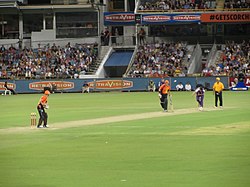

This is a list of the current Twenty20 domestic competitions in several of the leading cricket countries.
Championships are correct to 26 January 2026.

See also
- List of Twenty20 cricket records
- List of Twenty20 International records
- 100-ball cricket The Hundred (cricket)
- T10 cricket, the 10-over format of cricket