Body of water
In-game article clicks load inline without leaving the challenge.
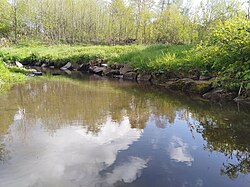
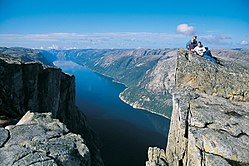
A body of water is a significant accumulation of water on the surface of the earth. The term most often refers to oceans, seas, and lakes, but it includes smaller pools of water such as ponds, wetlands, or more rarely, puddles. A body of water does not have to be still or contained; rivers, streams, canals, and other geographical features where water moves from one place to another are also considered bodies of water.
Most are naturally occurring and massive geographical features, but some are artificial. There are types that can be either. For example, most reservoirs are created by engineering dams, but some natural lakes are used as reservoirs. Similarly, most harbors are naturally occurring bays, but some harbors have been created through construction.
Bodies of water that are navigable are known as waterways. Some bodies of water collect and move water, such as rivers and streams, and others primarily hold water, such as lakes and oceans.
Bodies of water are affected by gravity, which is what creates the tidal effects. The impact of climate change on water is likely to intensify as observed through the rising sea levels, water acidification and flooding. This means that climate change has pressure on water bodies.
Climate change significantly affects bodies of water through rising temperatures, altered precipitation patterns, and sea-level rise. Warmer temperatures lead to the melting of glaciers and polar ice, contributing to rising sea levels and affecting coastal ecosystems. Freshwater bodies, such as rivers and lakes, are experiencing more frequent droughts, affecting water availability for communities and biodiversity. Moreover, ocean acidification, caused by increased carbon dioxide absorption, threatens marine ecosystems like coral reefs. Collaborative global efforts are needed to mitigate these impacts through sustainable water management practices.
Types
This is a list of some common types of bodies of water. Some common geographical features involving water are not bodies of water in their own right, such as geysers, rapids, and waterfalls, and are therefore not included on this list. Some terms, particularly relating to wetlands, refer in part to one or more bodies of water and in part to the land surrounding them, and these have been included on this list.
| Name | Description | Categorization | Regional association | Examples | |||
|---|---|---|---|---|---|---|---|
| Running | Inland | Ephemeral | Wetland | ||||
| Anabranch | A distributary that re-joins the branch it separated from further downstream. | Yes | Yes | No | No | the Great Darling Anabranch | |
| Arm | An inlet; a narrow extension of a larger body of water. | Varies | Varies | No | No | Indian Arm | |
| Arroyo | A bed of a steep-sided gully that temporarily fills with water after heavy rain. | Yes | Yes | Yes | No | the Southwestern United States | |
| Artificial lake | An artificially created lake. | No | Yes | No | No | Lake Burley Griffin | |
| Backwater | A stagnant section of a river. | Varies | Yes | No | Varies | the Kerala backwaters | |
| Barachois | A lagoon separated from the ocean by a sand bar. | No | No | No | No | Atlantic Canada, St. Pierre and Miquelon | Grand Barachois |
| Bay | A wide indentation of the coast of a larger body of water. | No | No | No | No | Bridgwater Bay | |
| Bayou | A slow-moving marshy body of water. | Yes | Yes | No | Varies | the Gulf South of the United States, especially Louisiana | Bayou Teche |
| Bight | A large and wide indentation in the shoreline of a sea or ocean; a large bay or gulf. | No | No | No | No | the Bight of Benin | |
| Billabong | An oxbow lake; a distributary leading to a dead-end or backwater; an ephemeral body of water formed after a dry creek bed floods. | No | Yes | Varies | No | Australia | Anbangbang Billabong |
| Bog | A wetland that accumulates peat. | No | Yes | No | Yes | Chat Moss | |
| Bourne | An ephemeral chalk stream. | Yes | Yes | Yes | No | Southern England | |
| Broad | A river spreading out across lowlands; a shallow lake. | No | Yes | No | No | England, especially in the Broads region of Norfolk and Suffolk | Hickling Broad |
| Brook | A watercourse that is bigger than a stream but smaller than a river. | Yes | Yes | No | No | Moston Brook | |
| Burn | A watercourse that is bigger than a stream but smaller than a river. | Yes | Yes | No | No | Scotland and North East England | the Usway Burn |
| Canal | An artificial waterway; a channel. | Varies | Varies | No | No | Stamford Canal | |
| Cenote | A sinkhole with exposed groundwater at the bottom, formed as a result of the collapse of surface limestone. | No | Yes | No | No | Central America, especially the Yucatán Peninsula of Mexico | Sacred Cenote |
| Chalk stream | A watercourse fed by water emerging from an aquifer through bedrock made of chalk. | Yes | Yes | No | No | England | the River Pang |
| Channel | A navigable waterway between two bodies of water; a wide strait. | No | No | No | No | the Beagle Channel | |
| Cove | A small indentation of the shoreline of a larger body of water; a small bay. | No | No | No | No | ANZAC Cove | |
| Creek | A watercourse, usually smaller than or a distributary to a river. | Yes | Yes | No | No | Australia, Canada, New Zealand, the United States | Aliso Creek |
| Distributary | A stream or river that branches off from a larger watercourse. | Yes | Varies | No | No | the Waal | |
| Ditch or dyke | An artificially created narrow trench used for irrigation and/or drainage. | Varies | Yes | No | No | the Grand Ditch | |
| Endorheic lake | A lake that instead of having an outflow has its water level balanced entirely by evaporation and the inflow of water from its endorheic basin. | No | Yes | Varies | No | Lake Chad | |
| Estuary | A partially enclosed area at the outflow of one or more rivers where river currents meet and mix with the tide. | No | No | No | No | Río de la Plata | |
| Fen | A peat-forming wetland that relies on groundwater for inundation. | No | Yes | No | Yes | Wicken Fen | |
| Firth | A narrow inlet on the coast of a sea. | No | No | No | No | Scotland | the Firth of Forth |
| Fjard or fiard | A broad and shallow inlet formed by withdrawing glaciers. | No | No | No | No | Sweden and Finland, mainly on the Baltic coast | Vårbyfjärden |
| Fjord or fiord | A narrow and deep inlet formed by withdrawing glaciers. | No | No | No | No | The Nordic countries, especially Norway | Lysefjorden |
| Flood meadow or floodplain meadow | A seasonally flooded area of treeless grassland. | No | Yes | Yes | No | the Mottey Meadows | |
| Gulf | A large extension of sea or ocean that stretches deep into the bordering landmass. | No | No | No | No | the Persian Gulf | |
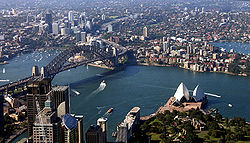
| Harbour | A coastal body of water that is partially enclosed, naturally or artificially, and where ships can be safely left. | No | No | No | No | Wellington Harbour | |
| Hot spring | A naturally heated spring. | No | Yes | No | No | Sembawang Hot Spring Park | |
| Inlet | A narrow indentation into the coastline of a larger body of water. | No | No | No | No | Bute Inlet | |
| Kettle lake | A lake inside of a large rounded hole formed by glacial melt, a so-called kettle or pothole. | No | Yes | No | No | Kettle Mucubají | |
| Kill | A stream, creek, river, or channel. | Varies | Varies | No | No | the United States, in New York, Pennsylvania and Delaware | the West Kill |
| Lagoon or laguna | A shallow body of water that is partially or entirely separated from the sea by sandbanks, coral reef or similar features. | No | No | No | No | the Laguna Madre | |
| Lake | A large inland body of water. | No | Yes | No | No | Ganoga Lake | |
| Liman | A muddy lagoon. | No | No | No | No | the Black Sea | Tylihul Estuary |
| Loch or lough | A lake, inlet, arm of the sea or a bay that is almost enclosed by land. | No | No | No | No | Scotland, Ireland | Loch Ness |
| Mangrove forest or mangrove swamp | Saline or brackish coastal waters with mangroves growing in them. | No | Varies | No | Yes | the Tropics and the Subtropics | the Sundarbans |
| Marsh | A peat-forming wetland dominated by herbaceous plants. | No | Yes | No | Yes | Brandon Marsh | |
| Mere | A lake or pond. | No | Yes | No | No | Great Britain | Cop Mere |
| Mire or peatland | A wetland where dead plant matter, known as peat, accumulates faster than it decays. | No | Yes | No | Yes | the Subarctic | |
| Moat | A deep, wide channel, dug around a point of interest and filled with water in order to protect it from attack. | No | Yes | No | No | Matsumoto Castle | |
| Nullah | A river or stream, often intermittent, in a ravine; an inlet; a drain. | Yes | Yes | Yes | No | India, Pakistan, Hong Kong | Buddha Nullah |
| Oasis | An area in a desert where groundwater reaches the surface, creating a small fertile patch of land. | No | Yes | No | No | the Middle East and North Africa | Kharga Oasis |
| Ocean | One of the major bodies of salty water that together cover approximately 71% of the Earth's surface or all of them as one single body of water. | No | No | No | No | the Atlantic Ocean | |
| Oxbow lake | A body of water formed by a bend in a river that is bypassed by a cutoff being wholly separated from the river as a result of sediment deposition. | No | Yes | Varies | No | the Kanwar Taal | |
| Pool | A small body of water. | No | Yes | Varies | No | ||
| Pond | A body of water, often artificial, that is smaller than a lake. | No | Yes | No | No | Brittas Pond | |
| Puddle | A small, shallow pool of water. | No | Yes | Yes | No | ||
| Reach | An open stretch of water. | Varies | Yes | No | No | Hanford Reach | |
| Reservoir | A lake or pond, often artificially created by a dam or other impoundment, that is used as a water storage. | No | Yes | No | No | Abberton Reservoir | |
| Ria | An inlet formed by a rise in sea levels submerging a valley carved by a river. | No | No | No | No | China, Spain, especially in Galicia, Asturias, and the Basque Country China | Ria de Pontevedra |
| Rill or rivulet | A very small watercourse. | Yes | Yes | Varies | No | ||
| River | A large, natural stream of freshwater. | Yes | Yes | No | No | the Colorado River | |
| Roadstead or roads | A sheltered area of water near a shore that is less enclosed by land than a harbour and where ships may anchor. | No | No | No | No | Hampton Roads | |
| Run | A small stream, especially a swift one. | Yes | Yes | No | No | Scotch Run | |
| Salt marsh | A wetland near the coast that gets flooded and drained by the tides of a nearby body of saltwater. | No | Yes | No | Yes | the Rann of Kutch | |
| Sea | A large body of water, usually saline and connected to the oceans. | No | No | No | No | the Adriatic Sea | |
| Seep | A small spring. | No | Yes | No | No | ||
| Slough | A wetland, often near an inlet or backwater. | No | Yes | No | Yes | the Columbia Slough | |
| Sound | A long inlet; a channel connecting two large bodies of water or separating an island from the mainland. | No | No | No | No | Nootka Sound | |
| Spring | A place where water emerges from the ground. | No | Yes | No | No | Eye of Kuruman | |
| Strait | A narrow passage of water connecting two large bodies of water. | No | No | No | No | Foveaux Strait | |
| Stream | A watercourse that is usually smaller than a river; a running body of water. | Yes | Yes | No | No | the Waiwhetū Stream | |
| Subglacial lake | A lake that is permanently covered by ice and whose water remains liquid by the pressure of the ice sheet and geothermal heating. | No | Yes | No | No | Antarctica | Lake Vostok |
| Subterranean river | A river that runs underground. | Yes | Yes | No | No | the Puerto Princesa Subterranean River | |
| Swamp | A wetland with many trees and shrubs. | No | Yes | No | Yes | Zapata Swamp | |
| Tarn | A mountain lake formed in a cirque. | No | Yes | No | No | Malham Tarn | |
| Tidal creek or tidal channel | A long, narrow and shallow inlet or estuary whose water level is noticeably affected by the tides. | No | No | Varies | No | Te Wai-o-Pareira / Henderson Creek | |
| Tide pool | A pool of seawater trapped in a rocky depression as the tide recedes from an area that is submerged at high tide. | No | No | No | No | the Flat Point Tide Pools | |
| Tributary or affluent | A watercourse that flows into a larger stream or river. | Yes | Yes | No | No | the Willamette River | |
| Vernal pool | An ephemeral wetland that forms seasonally by precipitation filling natural depressions in level ground, that flood seasonally to form wetland environments. | No | Yes | Yes | Yes | the Phoenix Vernal Pools | |
| Wadi | A stream or river that only runs after heavy rain, usually only occurring during the rainy season. | Yes | Yes | Yes | No | North Africa and Arabia | Wadi Doan |
| Washland or washes | A area that is periodically flooded by a nearby stream or river, especially one that is allowed to do so for flood management or water storage purposes. | No | Yes | No | Varies | Ouse Washes | |
| Watercourse | A running body of water. | Yes | Yes | Varies | No | ||
| Watering hole or waterhole | A natural depression where animals can drink accumulated water. | No | Yes | Varies | No | ||
| Well | A hole, usually man-made, with exposed groundwater at the bottom. | No | Yes | Varies | No | the Etruscan Well | |
| Wetland | An area of land that is inundated by water. | No | Yes | No | Yes | the Bangweulu Wetlands | |
| Winterbourne | An ephemeral stream that mostly, or only, flows during winter. | Yes | Yes | Yes | No | Southern England | the River Lavant |
Gallery
See also
- Bank (geography)– Land alongside a body of water
- Bog– Type of wetland with peat-rich soil
- Fluvial processes– Sediment processes associated with rivers and streamsPages displaying short descriptions of redirect targets
- Glossary of landforms
- Lists of bodies of water– Overview of various waterbodies
- Port– Maritime facility where ships may dock to load and discharge passengers and cargo
- Water mass– Body of water with common formation history
- Water pollution– Contamination of water bodies
Notes
External links
- (archived 12 November 2011)