Chūō Main Line
In-game article clicks load inline without leaving the challenge.
The Chūō Main Line(Japanese: 中央本線, Hepburn: Chūō-honsen), commonly called the Chūō Line, is one of the major trunk railway lines in Japan. It connects Tokyo and Nagoya, although it is the slowest direct railway connection between the two cities; the coastal Tōkaidō Main Line is slightly faster, and the Tōkaidō Shinkansen is currently the fastest rail link between the cities.
The eastern portion, the Chūō East Line(中央東線, Chūō-tōsen), is operated by the East Japan Railway Company (JR East), while the western portion, the Chūō West Line(中央西線, Chūō-saisen), is operated by the Central Japan Railway Company (JR Central). The dividing point between the two companies is Shiojiri, where express trains from both operators continue north onto the Shinonoi Line towards the cities of Matsumoto and Nagano. Compared to the huge urban areas at either end of the Chūō Line, its central portion is lightly traveled; the Shiojiri-Nakatsugawa corridor is only served by one limited express and one local service per hour.
The Chūō Main Line passes through the mountainous center of Honshu. Its highest point (near Fujimi) is about 900 meters (3,000 ft) above sea level and much of the line has a gradient of 25 per mil (2.5% or 1 in 40). Along the Chūō East Line section, peaks of the Akaishi and Kiso as well as Mount Yatsugatake can be seen from trains. The Chūō West Line parallels the old Nakasendō highway (famous for the preserved post towns of Tsumago-juku and Magome-juku) and the steep Kiso Valley.
Routes
- Entire Route (Tokyo - Nagoya including branch): 424.6 km (263.8 mi)
- East Line (Tokyo - Shiojiri): 222.1 km (138.0 mi) Tokyo - Kanda: 1.3 km (0.81 mi) (officially part of the Tōhoku Main Line) Kanda - Yoyogi: 8.3 km (5.2 mi) Yoyogi - Shinjuku: 0.7 km (0.43 mi) (officially part of the Yamanote Line) Shinjuku - Shiojiri: 211.8 km (131.6 mi)
- East Line - Tatsuno branch line (Okaya - Tatsuno - Shiojiri): 27.7 km (17.2 mi)
- West Line (Shiojiri - Nagoya): 174.8 km (108.6 mi) Shiojiri - Kanayama: 171.5 km (106.6 mi) Kanayama - Nagoya: 3.3 km (2.1 mi) (alongside Tōkaidō Main Line)
Stations and services
| Chūō Main Line (East Line) | ||||||
|---|---|---|---|---|---|---|
| Tōkaidō Shinkansen Tōkaidō Main Line Yamanote Line, Keihin-Tōhoku Line Yokosuka Line Keiyō Line 0.0 Tokyo Marunouchi Line Sōbu Line (Rapid) Nihonbashi-gawa Tohoku Shinkansen 1.3 Kanda Ginza Line Ueno-Tokyo Line 1.9 Manseibashi 2.1 Shōheibashi Until 1912 Chūō-Sōbu Line 2.6 Ochanomizu Marunouchi Line Chiyoda Line 3.4 Suidōbashi Iidamachi Until 1999 4.3 Iidabashi 4.6 Ushigome 5.8 Ichigaya Chūō Line (Rapid) Chūō-Sōbu Line 6.6 Yotsuya Namboku Line (Tokyo Metro) Tokyo Metro Marunouchi Line 7.9 Shinanomachi Aoyama (temporary) 8.6 Sendagaya Shinjuku Gyoen (temporary) Yamanote Line (Freight) Yamanote Line 9.6 Yoyogi Odakyū Odawara Line 10.3 Shinjuku Marunouchi Line Toei Shinjuku Line Toei Ōedo Line Keio Line Seibu-Shinjuku Seibu Shinjuku Line Yamanote Line (Freight) Yamanote Line 11.7 Ōkubo 12.8 Higashi-Nakano Tokyo Metro Tozai Line 14.7 Nakano 16.1 Kōenji 17.3 Asagaya 18.7 Ogikubo Marunouchi Line 20.6 Nishi-Ogikubo Keio Inokashira Line 22.5 Kichijōji 24.10.0* Mitaka Mitaka Rail Yard 3.2* Musashino Stadium Until 1959 25.7 Musashi-Sakai Seibu Tamagawa Line 27.0 Sakai (Signal Box) Until 1937 27.4 Higashi-Koganei 29.1 Musashi-Koganei ←Seibu Tamako Line 31.4 Kokubunji Seibu Kokubunji Line Shimogawara Line 32.8 Nishi-Kokubunji Musashino Line 34.5 Kunitachi Railway Technical Research Institute Nambu Line 37.5 Tachikawa ←Tachikawa-Kita/Tachikawa-Minami→ ←Tama Toshi Monorail Line→ Ōme Line 39.2 Tamagawa (Signal Box) Until 1946 Tamagawahara (Freight) Tama River 40.8 Hino 43.1 Toyoda Toyoda Rail Yard Hachikō Line Keio Line Yokohama Line Keiō-Hachiōji Hachiōji Until 1901 47.4 Hachiōji Since 1901 49.8 Nishi-Hachiōji Keio Goryō Line Musashi Yokoyama 52.0 Higashi-Asakawa (Temporary) Until 1960 Keiō Takao Line 53.1 Takao 57.2 Kobotoke (Signal Box) Until 1964 Kobotoke Tunnel ↑Tokyo/Kanagawa↓ 62.6 Sagamiko 66.3 Fujino ↑Kanagawa/Yamanashi↓ 69.8 Uenohara 74.0 Shiotsu Arakura Tunnel 77.6 Yanagawa Gozenyama Tunnel 81.2 Torisawa Katsuragawa Saruhashi Tunnel 85.3 Saruhashi 87.8 Ōtsuki Fujikyuko Line Katsuragawa 93.9 Hatsukari 98.9 Hirogawara (Signal Box) Until 1908 100.4 Sasago Sasago Tunnel 106.5 Kai-Yamato 112.5 Katsunuma-budōkyō 116.9 Enzan 120.1 Higashi-Yamanashi 122.2 Yamanashishi Fuefukigawa 125.0 Kasugaichō 127.8 Isawaonsen 131.2 Sakaori 131.8 Kai-Zenkōji (Temporary) 1917 Minobu Line Kanente 134.1 Kōfu Kōfu Depot 138.6 Ryūō 142.7 Shiozaki Shiokawa 147.0 Nirasaki 151.2 Shimpu 154.7 Anayama 160.1 Hinoharu 166.3 Nagasaka 172.0 Takinomae (Signal Box) Until 1966 173.7 Kobuchizawa Koumi Line ↑Yamanashi/Nagano↓ 178.2 Shinano-Sakai Tatsubagawa 182.9 Fujimi 186.1 Suzurannosato 188.0 Aoyagi 192.1 Kifune (Signal Box) Until 1967 195.2 Chino 198.9 Fumonji Junction 201.9 Kami-Suwa 206.3 Shimo-Suwa 210.4 Okaya Tenryū River Tenryū River Enrei Tunnel 218.2 Midoriko Shiojiri Until 1982 Main Line Shiojiri Depot Main Line 222.1 Shiojiri Since 1982 Shinonoi Line | ||||||
| Tōkaidō Shinkansen | ||||||
| Tōkaidō Main Line | ||||||
| Yamanote Line, Keihin-Tōhoku Line | ||||||
| Yokosuka Line | ||||||
| Keiyō Line | ||||||
| 0.0 | Tokyo Marunouchi Line | |||||
| Sōbu Line (Rapid) | ||||||
| Nihonbashi-gawa | ||||||
| Tohoku Shinkansen | ||||||
| 1.3 | Kanda Ginza Line | |||||
| Ueno-Tokyo Line | ||||||
| 1.9 | Manseibashi | |||||
| 2.1 | Shōheibashi | Until 1912 | ||||
| Chūō-Sōbu Line | ||||||
| 2.6 | Ochanomizu Marunouchi Line Chiyoda Line | |||||
| 3.4 | Suidōbashi | |||||
| Iidamachi | Until 1999 | |||||
| 4.3 | Iidabashi | |||||
| 4.6 | Ushigome | |||||
| 5.8 | Ichigaya | |||||
| Chūō Line (Rapid) | ||||||
| Chūō-Sōbu Line | ||||||
| 6.6 | Yotsuya Namboku Line (Tokyo Metro) | |||||
| Tokyo Metro Marunouchi Line | ||||||
| 7.9 | Shinanomachi | |||||
| Aoyama (temporary) | ||||||
| 8.6 | Sendagaya | |||||
| Shinjuku Gyoen (temporary) | ||||||
| Yamanote Line (Freight) | ||||||
| Yamanote Line | ||||||
| 9.6 | Yoyogi | |||||
| Odakyū Odawara Line | ||||||
| 10.3 | Shinjuku Marunouchi Line Toei Shinjuku Line Toei Ōedo Line | |||||
| Keio Line | ||||||
| Seibu-Shinjuku | ||||||
| Seibu Shinjuku Line | ||||||
| Yamanote Line (Freight) | ||||||
| Yamanote Line | ||||||
| 11.7 | Ōkubo | |||||
| 12.8 | Higashi-Nakano | |||||
| Tokyo Metro Tozai Line | ||||||
| 14.7 | Nakano | |||||
| 16.1 | Kōenji | |||||
| 17.3 | Asagaya | |||||
| 18.7 | Ogikubo Marunouchi Line | |||||
| 20.6 | Nishi-Ogikubo | |||||
| Keio Inokashira Line | ||||||
| 22.5 | Kichijōji | |||||
| 24.10.0* | Mitaka | |||||
| 24.1 | ||||||
| 0.0* | ||||||
| Mitaka Rail Yard | ||||||
| 3.2* | Musashino Stadium | Until 1959 | ||||
| 25.7 | Musashi-Sakai | |||||
| Seibu Tamagawa Line | ||||||
| 27.0 | Sakai (Signal Box) | Until 1937 | ||||
| 27.4 | Higashi-Koganei | |||||
| 29.1 | Musashi-Koganei | |||||
| ←Seibu Tamako Line | ||||||
| 31.4 | Kokubunji | |||||
| Seibu Kokubunji Line | ||||||
| Shimogawara Line | ||||||
| 32.8 | Nishi-Kokubunji | |||||
| Musashino Line | ||||||
| 34.5 | Kunitachi | |||||
| Railway Technical Research Institute | ||||||
| Nambu Line | ||||||
| 37.5 | Tachikawa | |||||
| ←Tachikawa-Kita/Tachikawa-Minami→ | ||||||
| ←Tama Toshi Monorail Line→ | ||||||
| Ōme Line | ||||||
| 39.2 | Tamagawa (Signal Box) | Until 1946 | ||||
| Tamagawahara (Freight) | ||||||
| Tama River | ||||||
| 40.8 | Hino | |||||
| 43.1 | Toyoda | |||||
| Toyoda Rail Yard | ||||||
| Hachikō Line | ||||||
| Keio Line | ||||||
| Yokohama Line | ||||||
| Keiō-Hachiōji | ||||||
| Hachiōji | Until 1901 | |||||
| 47.4 | Hachiōji | Since 1901 | ||||
| 49.8 | Nishi-Hachiōji | |||||
| Keio Goryō Line | ||||||
| Musashi Yokoyama | ||||||
| 52.0 | Higashi-Asakawa (Temporary) | Until 1960 | ||||
| Keiō Takao Line | ||||||
| 53.1 | Takao | |||||
| 57.2 | Kobotoke (Signal Box) | Until 1964 | ||||
| Kobotoke Tunnel | ||||||
| ↑Tokyo/Kanagawa↓ | ||||||
| 62.6 | Sagamiko | |||||
| 66.3 | Fujino | |||||
| ↑Kanagawa/Yamanashi↓ | ||||||
| 69.8 | Uenohara | |||||
| 74.0 | Shiotsu | |||||
| Arakura Tunnel | ||||||
| 77.6 | Yanagawa | |||||
| Gozenyama Tunnel | ||||||
| 81.2 | Torisawa | |||||
| Katsuragawa | ||||||
| Saruhashi Tunnel | ||||||
| 85.3 | Saruhashi | |||||
| 87.8 | Ōtsuki | |||||
| Fujikyuko Line | ||||||
| Katsuragawa | ||||||
| 93.9 | Hatsukari | |||||
| 98.9 | Hirogawara (Signal Box) | Until 1908 | ||||
| 100.4 | Sasago | |||||
| Sasago Tunnel | ||||||
| 106.5 | Kai-Yamato | |||||
| 112.5 | Katsunuma-budōkyō | |||||
| 116.9 | Enzan | |||||
| 120.1 | Higashi-Yamanashi | |||||
| 122.2 | Yamanashishi | |||||
| Fuefukigawa | ||||||
| 125.0 | Kasugaichō | |||||
| 127.8 | Isawaonsen | |||||
| 131.2 | Sakaori | |||||
| 131.8 | Kai-Zenkōji (Temporary) | 1917 | ||||
| Minobu Line | ||||||
| Kanente | ||||||
| 134.1 | Kōfu | |||||
| Kōfu Depot | ||||||
| 138.6 | Ryūō | |||||
| 142.7 | Shiozaki | |||||
| Shiokawa | ||||||
| 147.0 | Nirasaki | |||||
| 151.2 | Shimpu | |||||
| 154.7 | Anayama | |||||
| 160.1 | Hinoharu | |||||
| 166.3 | Nagasaka | |||||
| 172.0 | Takinomae (Signal Box) | Until 1966 | ||||
| 173.7 | Kobuchizawa | |||||
| Koumi Line | ||||||
| ↑Yamanashi/Nagano↓ | ||||||
| 178.2 | Shinano-Sakai | |||||
| Tatsubagawa | ||||||
| 182.9 | Fujimi | |||||
| 186.1 | Suzurannosato | |||||
| 188.0 | Aoyagi | |||||
| 192.1 | Kifune (Signal Box) | Until 1967 | ||||
| 195.2 | Chino | |||||
| 198.9 | Fumonji Junction | |||||
| 201.9 | Kami-Suwa | |||||
| 206.3 | Shimo-Suwa | |||||
| 210.4 | Okaya | |||||
| Tenryū River | ||||||
| Tenryū River | ||||||
| Enrei Tunnel | ||||||
| 218.2 | Midoriko | |||||
| Shiojiri | Until 1982 | |||||
| Main Line | ||||||
| Shiojiri Depot | ||||||
| Main Line | ||||||
| 222.1 | Shiojiri | Since 1982 | ||||
| Shinonoi Line | ||||||
This section lists all stations on the Chūō Main Line and generally explains regional services on the line. In addition, there are limited express services connecting major cities along the line, namely Azusa, Super Azusa, Kaiji, Hamakaiji, Narita Express and Shinano. For details of the limited express trains, see the relevant articles.[citation needed]
Tokyo - Mitaka

The section between Tokyo and Mitaka is grade-separated, with no level crossings. Between Ochanomizu and Mitaka, the Chūō Main Line has four tracks; two of them are local tracks(緩行線, kankō-sen) with platforms at every station; the other two are rapid tracks(快速線, kaisoku-sen)[citation needed] with some stations without platforms. The local tracks are used by the Chūō-Sōbu Line local trains, while the rapid tracks carry rapid service and limited express trains. The Tokyo-Mitaka portion is a vital cross-city rail link.[citation needed]
The commuter services on the rapid tracks are collectively called the Chūō Line (Rapid) in comparison with the Chūō Line (Local)(中央線各駅停車, Chūō-sen-kakuekiteisha) or the Chūō-Sōbu Line on the local tracks. The former is usually referred to simply as the Chūō Line and the latter the Sōbu Line. Separate groups of trainsets are used for these two groups of services: cars with an orange belt for the rapid service trains and cars with a yellow belt for the local service trains. Signs at stations also use these colors to indicate the services.[citation needed]
This section is located entirely within Tokyo.[citation needed]
Mitaka - Takao
The four-track section ends at Mitaka. Most of the section between Mitaka and Tachikawa had been elevated between 2008 and 2011 to eliminate level crossings. Plans have been proposed to add another two tracks as far as Tachikawa, but were not included in the track elevation.[citation needed]
Takao - Shiojiri
Most of the rapid service trains from Tokyo terminate at Takao, where the line exits the large urban area of Tokyo. The section between Takao and Ōtsuki still carries some commuter trains as well as long distance local trains and Limited Express trains. The Kaiji limited express terminates at Kōfu, the capital of Yamanashi Prefecture, while the Azusa continue beyond Shiojiri to Matsumoto via the Shinonoi Line.[citation needed]
All stations from Takao to Shiojiri are served by the Chūō Main Line Local. Local trains from Takao run as far as Matsumoto or even Nagano.[citation needed]
Legends:
- ●: All trains stop
- ▲: Stop, eastbound services only
- ▼: Stop, westbound services only
| Station No. | Name | Japanese | Distance (km) | Chūō Main Line Local | Rapid | Comm. Rapid | Chūō Special Rapid | Comm. Special Rapid | Transfers | Location | ||
|---|---|---|---|---|---|---|---|---|---|---|---|---|
| Between stations | Total | |||||||||||
| Through service to Chūō Line (Rapid) for: | Tachikawa | Tachikawa, Shinjuku and Tokyo | ||||||||||
| JC24 | Takao | 高尾 | 3.3 | 53.1 | ● | ● | ▼ | ● | ▲ | Chūō Line (Rapid) Chūō Line (Rapid) Keiō Takao Line | Hachiōji | Tokyo |
| JC25 | Sagamiko | 相模湖 | 9.5 | 62.6 | ● | ● | ▼ | ● | ▲ | Sagamihara | Kanagawa | |
| JC26 | Fujino | 藤野 | 3.7 | 66.3 | ● | ● | ▼ | ● | ▲ | |||
| JC27 | Uenohara | 上野原 | 3.5 | 69.8 | ● | ● | ▼ | ● | ▲ | Uenohara | Yamanashi | |
| JC28 | Shiotsu | 四方津 | 4.2 | 74.0 | ● | ● | ▼ | ● | ▲ | |||
| JC29 | Yanagawa | 梁川 | 3.6 | 77.6 | ● | ● | ▼ | ● | ▲ | Ōtsuki | ||
| JC30 | Torisawa | 鳥沢 | 3.6 | 81.2 | ● | ● | ▼ | ● | ▲ | |||
| JC31 | Saruhashi | 猿橋 | 4.1 | 85.3 | ● | ● | ▼ | ● | ▲ | |||
| JC32 | Ōtsuki | 大月 | 2.5 | 87.8 | ● | ● | ▼ | ● | ▲ | Fujikyuko Line (some through trains to/from Kawaguchiko) | ||
| Through service to: | Chūō Main Line for Kōfu (see below) | Some to Fujikyuko Line for Kawaguchiko | / |
Station numbers were introduced through Shiojiri in February 2025.
| Station No. | Station | Japanese | Distance (km) | Transfers | Location | |
|---|---|---|---|---|---|---|
| JC32 | Ōtsuki | 大月 | 87.8 | Fujikyuko Line | Ōtsuki | Yamanashi |
| CO33 | Hatsukari | 初狩 | 93.9 | |||
| CO34 | Sasago | 笹子 | 100.4 | |||
| CO35 | Kai-Yamato | 甲斐大和 | 106.5 | Kōshū | ||
| CO36 | Katsunuma-budōkyō | 勝沼ぶどう郷 | 112.5 | |||
| CO37 | Enzan | 塩山 | 116.9 | |||
| CO38 | Higashi-Yamanashi | 東山梨 | 120.1 | Yamanashi | ||
| CO39 | Yamanashishi | 山梨市 | 122.2 | |||
| CO40 | Kasugaichō | 春日居町 | 125.0 | Fuefuki | ||
| CO41 | Isawa-onsen | 石和温泉 | 127.8 | |||
| CO42 | Sakaori | 酒折 | 131.2 | Kōfu | ||
| CO43 | Kōfu | 甲府 | 134.1 | Minobu Line | ||
| CO44 | Ryūō | 竜王 | 138.6 | Kai | ||
| CO45 | Shiozaki | 塩崎 | 142.7 | |||
| CO46 | Nirasaki | 韮崎 | 147.0 | Nirasaki | ||
| CO47 | Shimpu | 新府 | 151.2 | |||
| CO48 | Anayama | 穴山 | 154.7 | |||
| CO49 | Hinoharu | 日野春 | 160.1 | Hokuto | ||
| CO50 | Nagasaka | 長坂 | 166.3 | |||
| CO51 | Kobuchizawa | 小淵沢 | 173.7 | Koumi Line | ||
| CO52 | Shinano-Sakai | 信濃境 | 178.2 | Fujimi | Nagano | |
| CO53 | Fujimi | 富士見 | 182.9 | |||
| CO54 | Suzurannosato | すずらんの里 | 186.1 | |||
| CO55 | Aoyagi | 青柳 | 188.0 | Chino | ||
| CO56 | Chino | 茅野 | 195.2 | |||
| Fumonji Junction | 普門寺信号場 | (198.9) | Suwa | |||
| CO57 | Kami-Suwa | 上諏訪 | 201.9 | |||
| CO58 | Shimo-Suwa | 下諏訪 | 206.3 | Shimosuwa | ||
| CO59 | Okaya | 岡谷 | 210.4 | Chūō Line (For Tatsuno) | Okaya | |
| CO60 | Midoriko | みどり湖 | 218.2 | Shiojiri | ||
| CO61 | Shiojiri | 塩尻 | 222.1 | Chūō Line (for Tatsuno) Shinonoi Line Shinonoi Line Chūō Line (for Kiso-Fukushima and Nagoya) |
Okaya – Shiojiri
| Okaya – Shiojiri Branch | ||||||
|---|---|---|---|---|---|---|
| Main Line 0.0 Okaya Tenryū River 3.5 Kawagishi 6.5 Hirade (Signal Box) Until 1983 Tenryū River 9.5 Tatsuno Iida Line 13.8 Shinano-Kawashima 17.8 Ono 22.7 Higashi-Shiojiri (Signal Box) Until 1983 Shiojiri Until 1982 Main Line Shiojiri Depot Main Line 27.7 Shiojiri Since 1982 Shinonoi Line | ||||||
| Main Line | ||||||
| 0.0 | Okaya | |||||
| Tenryū River | ||||||
| 3.5 | Kawagishi | |||||
| 6.5 | Hirade (Signal Box) | Until 1983 | ||||
| Tenryū River | ||||||
| 9.5 | Tatsuno | |||||
| Iida Line | ||||||
| 13.8 | Shinano-Kawashima | |||||
| 17.8 | Ono | |||||
| 22.7 | Higashi-Shiojiri (Signal Box) | Until 1983 | ||||
| Shiojiri | Until 1982 | |||||
| Main Line | ||||||
| Shiojiri Depot | ||||||
| Main Line | ||||||
| 27.7 | Shiojiri | Since 1982 | ||||
| Shinonoi Line | ||||||
The Okaya-Shiojiri branch is an old route of the Chūō Main Line. It carries a small number of shuttle trains and trains from/to the Iida Line, which branches off at Tatsuno.
| Station | Japanese | Distance (km) | Transfers | Location | |
|---|---|---|---|---|---|
| Okaya | 岡谷 | 210.4 | Chūō Line (for Kami-Suwa, Midoriko) | Okaya | Nagano |
| Kawagishi | 川岸 | 213.9 | |||
| Tatsuno | 辰野 | 219.9 | Iida Line | Tatsuno | |
| Shinano-Kawashima | 信濃川島 | 224.2 | |||
| Ono | 小野 | 228.2 | |||
| Shiojiri | 塩尻 | 238.1 | Chūō Line (for Midoriko) Shinonoi Line Shinonoi Line Chūō Line (for Kiso-Fukushima) | Shiojiri |
Prior to the opening of the new route between Okaya and Shiojiri, there was a junction (Higashi-Shiojiri Junction(東塩尻信号場)) between Ono and Shiojiri stations. It had a reversing layout. The signal station was closed on 12 October 1983.
Shiojiri - Nakatsugawa
| Chūō Main Line (West Line) | ||||||
|---|---|---|---|---|---|---|
| Shinonoi Line 222.1 Shiojiri Main Line for Okaya Okaya - Shiojiri Railway JR East - JR Central 226.3 Seba 231.0 Hideshio Hideshio Tunnel 大岨T 中の沢T Katahira Tunnel 236.2 Niekawa 権現T 241.4 Kiso-Hirasawa Takami Tunnel 243.2 Narai Torii Tunnel 249.8 Yabuhara 新鷲鳥T / 鷲鳥T 253.1 Yamabukiyama (Signal Box) Until 1968 新鷲鳥T / 鷲鳥T 255.5 Miyanokoshi 258.3 Harano Ueno Tunnel 合沢T 矢崎T 263.8 Kiso-Fukushima Kiso Tunnel Nakahira (Signal Box) Until 1982 棧T 271.1 Agematsu 寝覚T 274.9 小野ノ滝 (SIgnal Box) Until 1969 277.7 Kuramoto 282.5 Suhara Nakayama Tunnel 285.8 Ōkuwa 関山T 288.8 Nojiri 292.5 Jūnikane 十二河原T / 新十二河原T 第三羅天T 第二羅天T 花巻T / 第一羅天T 298.0 Nagiso Tokusho (Signal Box) Until 1923 兜T 1,015m Kiso River Shimada Tunnel Tadachi Until 1973 304.3 Tadachi Since 1973 ↑Nagano/Gifu↓ Kiso River 上鐘山T Sakagawa Railway Line 新上鐘山T 307.1 Sakashita Shinsakashita The second Takamineyama Tunnel The first Takamineyama Tunnel Mt Seto Tunnel Kiso rIver 313.2 Ochiaigawa The second Ochiaigawa Tunnel The first Ochiaigawa Tunnel Nakatsugawa Tunnel Kitaena Railway Line 317.0 Nakatsugawa 323.4 Minosakamoto Akechi Railway Akechi Line 328.6 Ena 334.0 Takenami 339.4 Kamado 346.8 Mizunami 353.7 Tokishi Tōnō Railway Dachi Line Kokeizan Tunnel 360.7 Tajimi →Tounou Railway Kasahara Line Shintajimi ←Taita Line Ikedamachi Tunnel Suwa Tunnel 365.3 Kokokei ↑Gifu Prefecture ↓Aichi Prefecture 368.8 Jōkōji The 2nd Tamano Tunnel The 1st Tamano Tunnel Aichi Loop Line 372.9 Kōzōji 376.1 Jinryō Jinryō Locomotive Depot 378.8 Kasugai 381.9 Kachigawa TKJ Jōhoku Line Shōnai River 384.6 Shin-Moriyama Yadagawa Meitetsu Seto Line 387.1 Ōzone 389.8 Chikusa 391.2 Tsurumai Park (Temporary Stop) 391.3 Tsurumai 392.6 Furuwatari (Signal Box) Tōkaidō Main Line (Freight) Meitetsu Nagoya Main Line Tōkaidō Main Line 393.6 Kanayama Otobashi JR Freight Nagoyaminato Branch Nagoya Stadium Entrance Until 1994 395.1 Sannō Junction Sannō Tōkaidō Shinkansen Kansai Main Line Narin-Express Aonami Line Kintetsu Nagoya Line Kintetsu Nagoya/Meitetsu Nagoya 396.9 Nagoya | ||||||
| Shinonoi Line | ||||||
| 222.1 | Shiojiri | |||||
| Main Line for Okaya | ||||||
| Okaya - Shiojiri Railway | ||||||
| JR East - JR Central | ||||||
| 226.3 | Seba | |||||
| 231.0 | Hideshio | |||||
| Hideshio Tunnel | ||||||
| 大岨T | ||||||
| 中の沢T | ||||||
| Katahira Tunnel | ||||||
| 236.2 | Niekawa | |||||
| 権現T | ||||||
| 241.4 | Kiso-Hirasawa | |||||
| Takami Tunnel | ||||||
| 243.2 | Narai | |||||
| Torii Tunnel | ||||||
| 249.8 | Yabuhara | |||||
| 新鷲鳥T / 鷲鳥T | ||||||
| 253.1 | Yamabukiyama (Signal Box) | Until 1968 | ||||
| 新鷲鳥T / 鷲鳥T | ||||||
| 255.5 | Miyanokoshi | |||||
| 258.3 | Harano | |||||
| Ueno Tunnel | ||||||
| 合沢T | ||||||
| 矢崎T | ||||||
| 263.8 | Kiso-Fukushima | |||||
| Kiso Tunnel | ||||||
| Nakahira (Signal Box) | Until 1982 | |||||
| 棧T | ||||||
| 271.1 | Agematsu | |||||
| 寝覚T | ||||||
| 274.9 | 小野ノ滝 (SIgnal Box) | Until 1969 | ||||
| 277.7 | Kuramoto | |||||
| 282.5 | Suhara | |||||
| Nakayama Tunnel | ||||||
| 285.8 | Ōkuwa | |||||
| 関山T | ||||||
| 288.8 | Nojiri | |||||
| 292.5 | Jūnikane | |||||
| 十二河原T / 新十二河原T | ||||||
| 第三羅天T | ||||||
| 第二羅天T | ||||||
| 花巻T / 第一羅天T | ||||||
| 298.0 | Nagiso | |||||
| Tokusho (Signal Box) | Until 1923 | |||||
| 兜T 1,015m | ||||||
| Kiso River | ||||||
| Shimada Tunnel | ||||||
| Tadachi | Until 1973 | |||||
| 304.3 | Tadachi | Since 1973 | ||||
| ↑Nagano/Gifu↓ | ||||||
| Kiso River | ||||||
| 上鐘山T | ||||||
| Sakagawa Railway Line | ||||||
| 新上鐘山T | ||||||
| 307.1 | Sakashita | Shinsakashita | ||||
| The second Takamineyama Tunnel | ||||||
| The first Takamineyama Tunnel | ||||||
| Mt Seto Tunnel | ||||||
| Kiso rIver | ||||||
| 313.2 | Ochiaigawa | |||||
| The second Ochiaigawa Tunnel | ||||||
| The first Ochiaigawa Tunnel | ||||||
| Nakatsugawa Tunnel | ||||||
| Kitaena Railway Line | ||||||
| 317.0 | Nakatsugawa | |||||
| 323.4 | Minosakamoto | |||||
| Akechi Railway Akechi Line | ||||||
| 328.6 | Ena | |||||
| 334.0 | Takenami | |||||
| 339.4 | Kamado | |||||
| 346.8 | Mizunami | |||||
| 353.7 | Tokishi | |||||
| Tōnō Railway Dachi Line | ||||||
| Kokeizan Tunnel | ||||||
| 360.7 | Tajimi | |||||
| →Tounou Railway Kasahara Line Shintajimi | ||||||
| ←Taita Line | ||||||
| Ikedamachi Tunnel | ||||||
| Suwa Tunnel | ||||||
| 365.3 | Kokokei | |||||
| ↑Gifu Prefecture | ||||||
| ↓Aichi Prefecture | ||||||
| 368.8 | Jōkōji | |||||
| The 2nd Tamano Tunnel | ||||||
| The 1st Tamano Tunnel | ||||||
| Aichi Loop Line | ||||||
| 372.9 | Kōzōji | |||||
| 376.1 | Jinryō | |||||
| Jinryō Locomotive Depot | ||||||
| 378.8 | Kasugai | |||||
| 381.9 | Kachigawa | |||||
| TKJ Jōhoku Line | ||||||
| Shōnai River | ||||||
| 384.6 | Shin-Moriyama | |||||
| Yadagawa | ||||||
| Meitetsu Seto Line | ||||||
| 387.1 | Ōzone | |||||
| 389.8 | Chikusa | |||||
| 391.2 | Tsurumai Park (Temporary Stop) | |||||
| 391.3 | Tsurumai | |||||
| 392.6 | Furuwatari (Signal Box) | |||||
| Tōkaidō Main Line (Freight) | ||||||
| Meitetsu Nagoya Main Line | ||||||
| Tōkaidō Main Line | ||||||
| 393.6 | Kanayama | |||||
| Otobashi | ||||||
| JR Freight Nagoyaminato Branch | ||||||
| Nagoya Stadium Entrance | Until 1994 | |||||
| 395.1 | Sannō Junction | |||||
| Sannō | ||||||
| Tōkaidō Shinkansen | ||||||
| Kansai Main Line | ||||||
| Narin-Express Aonami Line | ||||||
| Kintetsu Nagoya Line | ||||||
| Kintetsu Nagoya/Meitetsu Nagoya | ||||||
| 396.9 | Nagoya | |||||
Shiojiri is the dividing point of the East Line and the West Line; no train continues from one to the other. The Shinano limited express is the main service for the rural Shiojiri-Nakatsugawa section.
| No. | Station | Japanese | Distance | Transfers | Location | |
|---|---|---|---|---|---|---|
| Shiojiri | 塩尻 | 222.1 | Chūō Line (for Midoriko) Chūō Line (for Tatsuno) Shinonoi Line Shinonoi Line | Shiojiri | Nagano | |
| Seba | 洗馬 | 226.3 | ||||
| Hideshio | 日出塩 | 231.0 | ||||
| Niekawa | 贄川 | 236.2 | ||||
| Kiso-Hirasawa | 木曽平沢 | 241.4 | ||||
| Narai | 奈良井 | 243.2 | ||||
| Yabuhara | 藪原 | 249.8 | Kiso (village) | |||
| Miyanokoshi | 宮ノ越 | 255.5 | Kiso (town) | |||
| Harano | 原野 | 258.3 | ||||
| CF30 | Kiso-Fukushima | 木曽福島 | 263.8 | |||
| CF29 | Agematsu | 上松 | 271.1 | Agematsu | ||
| Kuramoto | 倉本 | 277.7 | ||||
| Suhara | 須原 | 282.5 | Ōkuwa | |||
| Ōkuwa | 大桑 | 285.8 | ||||
| Nojiri | 野尻 | 288.8 | ||||
| Jūnikane | 十二兼 | 292.5 | Nagiso | |||
| CF23 | Nagiso | 南木曽 | 298.0 | |||
| Tadachi | 田立 | 304.3 | ||||
| Sakashita | 坂下 | 307.1 | Nakatsugawa | Gifu | ||
| Ochiaigawa | 落合川 | 313.2 | ||||
| CF19 | Nakatsugawa | 中津川 | 317.0 | Chūō Line (for Tajimi, Nagoya) |
Nakatsugawa - Nagoya
Local and rapid service trains run on the line from Nakatsugawa to Nagoya. This section carries urban traffic for the Greater Nagoya Area.
Local trains stop at all stations (except Sannō Junction).
Legends:
- ● : All trains stop
- | ↓ ↑ : All trains pass (Arrows indicate the passing direction)
- ▼ : Only southbound trains stop
- ▲ : Only northbound trains stop
Junctions

- Fumonji Junction(普門寺信号場, Fumonji Shingōjō) is a junction between Chino and Kami-Suwa stations in Suwa, Nagano. It entered into use on 2 September 1970.
- Sannō Junction(山王信号場, Sannō Shingōjō) is a junction that diverts freight traffic from the Chūō Main Line to the Tōkaidō Line freight branch between Kanayama and Nagoya stations in Nagoya. It entered into use on 10 October 1962.
Rolling stock
Chūō East Line (JR East)
New E233 series trains entered service on Tokyo-area commuter services from 26 December 2006. These trains are a development of the E231 series used on other commuter lines in the Tokyo area, and replaced the aging 201 series rolling stock introduced on the line in 1981.
From 2017, new E353 series EMUs were introduced on Azusa and Super Azusa limited express services, replacing the E351 and E257 series trains.
From 2021, E259 series EMUs on Narita Express services to and from Takao ceased operations.
- Chūō Rapid Line E233 series 209-1000 series
- Chūō-Sōbu Line E231 series E231-500 series
- Tokyo Metro Tōzai Line E231-800 series 05 series 07 series 15000 series
- Chūō Main Line Local trains 211 series E127 series
- Limited Express E353 series (Azusa, Kaiji, Fuji Excursion, Hachiōji, Ōme)
- Seasonal services 185 series (Hamakaiji) 215 series (Holiday Rapid View Yamanashi)
- E233 series
- 211 series
- E353 series on a Azusa service
Chūō West Line (JR Central)
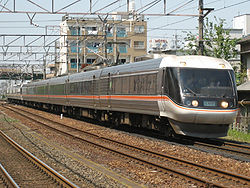
- Local Trains 211 series 213 series 311 series 313 series 315 series
- Limited Express 383 series (Shinano)
Freight train
History
The Kobu Railway(甲武鉄道) opened the initial section of the Chūō Line from Shinjuku Station to Tachikawa Station in 1889. The company then extended the line both westward and eastward (towards Tokyo) until it was nationalised in 1906. The Japanese Government Railways (JGR) then continued to extend the line, reaching Shiojiri the same year, and Tokyo (at Shōheibashi Station(昌平橋駅)) in 1908.[citation needed] The JGR also built the line from Nagoya, the first section opening in 1900, with the lines connecting in 1911. The Table below gives the section opening dates.
In 1904, the section between Iidamachi Station (formerly located between Suidōbashi Station and Iidabashi Station) and Nakano Station was the first urban electric railway in Japan using 600 V DC. Electrification was extended in 1919 and 1922, was increased to 1,200 V DC when extended to Tokyo in 1927, boosted again to 1,500 V DC in 1929, and reached Kofu in 1931. Electrification from the Nagano end was commissioned in sections from 1966, and the entire line was electrified by 1973.[citation needed]
| Section | Opening date | Builder | |
|---|---|---|---|
| East Line | Tokyo | 1 March 1919 | JGR |
| Manseibashi † | |||
| 1 April 1912 | |||
| Shōheibashi † | |||
| 19 April 1908 | |||
| Ochanomizu | |||
| 31 December 1904 | Kōbu | ||
| Iidamachi † | |||
| 3 April 1895 | |||
| Ushigome † | |||
| 9 October 1894 | |||
| Shinjuku | |||
| 11 April 1889 | |||
| Tachikawa | |||
| 11 August 1889 | |||
| Hachiōji | |||
| 1 August 1901 | JGR | ||
| Uenohara | |||
| 1 June 1902 | |||
| Torisawa | |||
| 1 October 1902 | |||
| Ōtsuki | |||
| 1 February 1903 | |||
| Kai-Yamato (Hajikano) | |||
| 11 June 1903 | |||
| Kōfu | |||
| 15 December 1903 | |||
| Nirasaki | |||
| 21 December 1904 | |||
| Fujimi | |||
| 25 November 1905 | |||
| Okaya | |||
| 5 July 1983 (See note below) | JNR | ||
| Shiojiri | |||
| West Line | 1 December 1909 | JGR | |
| Yabuhara | |||
| 5 October 1910 | |||
| Miyanokoshi | |||
| 1 May 1911 | |||
| Kiso-Fukushima | |||
| 25 November 1910 | |||
| Agematsu | |||
| 5 October 1910 | |||
| Suhara | |||
| 1 December 1909 | |||
| Nojiri | |||
| 1 September 1909 | |||
| Nagiso (Midono) | |||
| 15 July 1909 | |||
| Sakashita | |||
| 1 August 1908 | |||
| Nakatsugawa (Nakatsu) | |||
| 21 December 1902 | |||
| Tajimi | |||
| 25 July 1900 | |||
| Nagoya |
Notes:
- The section between Okaya Station and Shiojiri Station is the new route that replaced the old route opened on June 11, 1906, by JGR.
- Station names in parentheses are original names.
- Stations marked † are now closed.
- Prior to the connection of the East Line and the West Line in 1911, the section between Shiojiri Station and Miyanokoshi Station belonged to the East Line.
Former connecting lines

- Mitaka Station: A 3 km (1.9 mi) line to a Nakajima Aircraft factory opened in 1942, and was closed in 1945.[citation needed] In 1950, the factory site was used to build a sports stadium. The line from Mitaka to Musashino Stadium(武蔵野競技場前) reopened on 14 April 1951, but was closed again on 1 November 1959.
- Kokubunji Station: A 7 km (4.3 mi) line was opened in 1910 to haul gravel from the Tamagawa. It closed in 1914 due to flood damage, but was reopened in 1916 after being rebuilt by the Japanese Army.[citation needed] On 26 May 1920, the line was absorbed into JNR, but operations were suspended from 1 December 1921. A 6 km (3.7 mi)[citation needed] extension to the Tokyo Racecourse opened on 1934. Services on the line were suspended from 1 October 1944, resuming from 24 April 1947. On 1 April 1973, the line to Tokyo Racecourse closed and the line was absorbed into the Musashino Line.
- Kofu Station: The Yamanashi Horse-drawn tramway opened its first 660 mm (2 ft 2 in) gauge section in 1898, and by 1904 had opened two lines (to Katsunuma and Fujikawa) totaling 34 km (21 mi). In 1930, the Katsunuma Line was closed, and the other line was closed beyond Kai-Aoyagi, 20 km (12 mi) from Kofu. The company renamed itself the Yamanashi Electric Railway, regauged (to 1,067 mm) and electrified the line at 600 V DC, and operated it until 1962.
- Sakashita Station: The 11 km (6.8 mi) 762 mm (2 ft 6 in) gauge Sakagawa Line was opened to Maruno by the Hisaka River Railway in 1926. A passenger service was operated 8 km (5.0 mi) to Okuya. The Forest Service opened a 9 km (5.6 mi) line connecting at Maruno the same year, and a 2 km (1.2 mi) branch from Okuya that operated from 1933 until 1958. In 1944, the Forest Service took over the Sakagawa line, operating it until 1961, when the entire 20 km (12 mi) line closed.[citation needed]
- Nakatsugawa Station: The Kitaena Railway operated the 23 km (14 mi) Enaden Line to Tsukechi, electrified at 600 V DC, from 1924 until 1978. At Tsukechi, it transshipped timber from a 762 mm (2 ft 6 in) gauge forest railway with an 18 km (11 mi) "main line" and a 14 km (8.7 mi) and two 5 km (3.1 mi) branch lines operated from 1932 until 1959.
- Ena Station: The Iwamura Electric Railway operated a 13 km (8.1 mi) line electrified at 600 V DC to its namesake town between 1906 and 1935. A 4 km (2.5 mi) line to the site of Oi dam was opened in 1922 to transport construction materials. Upon the dam's completion, the line was sold to the Kita-Ena Railway. but it closed in 1934.
- Tokishi Station: The Ogawa Railway opened a 10 km (6.2 mi) line to its namesake town between 1922 and 1924. The line was electrified at 1,500 V DC in 1950, and closed as a result of flood damage in 1972.
- Yabuhara Station: The operated for an unknown period.
- Agematsu Station: The operated between 1911 and 1975.
- Nojiri Station: The operated for an unknown period.
- Tajima Station: The Kasahara Railway opened a 5 km (3.1 mi) line to its namesake town in 1928. Passenger services ceased in 1971, and the line closed in 1978.
Proposed connecting lines
- Chino Station: The Saku Railway, which had built the line from Komoro on the Shinetsu Line to Koumi, proposed to build a line from Tanaka on the Shinetsu Line to this station. The company was nationalised before construction started, and JGR connected the Koumi line to the Chuo Main Line in 1935, making this proposal redundant.
Accidents
On September 12, 1997, a Super Azusa limited express bound for Matsumoto collided with a 201 series local train that failed to stop at a red signal while passing through Ōtsuki Station.