Como 1907
In-game article clicks load inline without leaving the challenge.
Como 1907 (Italian pronunciation: [ˈkɔːmo]) is an Italian professional football club based in Como, Lombardy. The club competes in the Serie A, the first tier of Italian football, after achieving promotion in the 2023–24 Serie B season.
Founded in 1907 as Como Foot-Ball Club, the club adopted royal blue as its colours, and has played its home matches in 13,602-capacity Stadio Giuseppe Sinigaglia since 1928. The club currently has the richest club owners in Italian football after the club was bought by the Hartono brothers (Robert Budi Hartono and Michael Bambang Hartono) through Djarum Group on 2019. The club's minority shareholders include its current head coach, Cesc Fàbregas, and former footballer Thierry Henry.
Como's first season in the top flight of Italian football was in the 1913–14 Prima Categoria, and remained there until relegation in 1922. Como secured their illustrious history in the 1930–31 season, as Gedeon Lukács[it] led a triumphant promotion to Serie B, where Como finished unbeaten in both regular season and the play-offs of the Prima Divisione, scoring 90 goals in 32 matches and conceded only 24 goals.
Consecutive relegations in 2000s have caused financial difficulties to Como. In 2004, the club were declared bankrupt and excluded from participation in Italian professional football. They were immediately admitted to Serie D, the top level of non-professional football in Italy, where they spent three seasons before earning promotion back to Serie C2 in 2007. After a further bankruptcy in 2016, a new company re-founded the club in 2017 and was admitted to Serie D.
Since being bought by the Hartono brothers, who were ranked the 64th and 66th richest men by Forbes in 2022 and the richest football club owners in Italy in 2024, the club returned to Serie B, and in 2024, for the first time in 21 years, was promoted to Serie A. They finished 10th in their first season back in the top flight.
History
Foundation and early years

The club was founded on 25 May 1907 as Como Foot-Ball Club, by a committee of members gathered at the Taroni bar, located in the central Via Cinque Giornate, the first headquarters of the club. In the first years after its foundation, Como played friendly matches and local tournaments, competing against teams from Milan and Switzerland. On 1 October 1911, the club took part in the inauguration of the Campo via dei Mille by playing in a friendly match, defeating Bellinzona 3–1. Como then used the ground to host their home matches for the next few years.
In 1912, after merging with the student club "Minerva", the club participated in the qualification for entry into the Prima Categoria. On 20 October, in the first round, the club was defeated 3–1 by Savona in Turin. Como was therefore registered in the Lombardy Promozione group, and played its first match on 17 November 1912 with a 5–0 win over Brescia at Campo via dei Mille. The club's first appearance in top-flight competition was in the 1913–14 Prima Categoria, after the team was invited to join, and remained there until 1922.
In 1927, Como merged with Esperia and was renamed Associazione Calcio Comense, which won the Coppa Volta in the same year, eliminating Inter 3–0 in the semi-final and beating Genoa 1–0 in the final. In the following year, the club moved their home ground to Stadio Giuseppe Sinigaglia, after stadium was inaugurated on 30 July 1927. Como secured their illustrious history in the 1930–31 Prima Divisione, as Gedeon Lukács[it] led a triumphant promotion to Serie B, where Como finished unbeaten in both regular season and the play-offs of the Prima Divisione, scoring 90 goals in 32 matches and conceded only 24 goals. The following year, in their first experience of Serie B, the Como side comfortably avoided relegation, finishing in ninth place with a young Marco Romano as their top scorer.
World War II dramatically affected the entire Italian football movement, but Como managed to bounce back. In 1945 when there was no national championship, the club won the Torneo Benefico Lombardo (Tournament for Lombard clubs) which included Milan, Ambrosiana-Inter, Novara and other Lombard clubs. After the war, Como competed in Serie B and spent three years battling for the top spot before finally being promoted to Serie A for the first time in 1949 with Mario Varglien as their coach. Como's first experience in the top division lasted four years, where in their first year, they finished in sixth position with the same points as Torino in fifth. In the following seasons, Como aroused sympathy throughout the peninsula for their choice to field only Italian players in their third year in Serie A. The club also became the sole leader of Serie A for the first time in its history when on 23 September 1951 after the third day of the 1951–52 Serie A season, one point ahead of Inter, Juventus, Milan and Napoli.
Mixed times

In the early 1960s, Como's campaign in the second division had to be stopped following the "Bessi case", a case that began at the start of the 1962–63 Serie B season when the club fielded defender Paolo Bessi for five matches, who had just been bought from Tau Altopascio without knowing that the player was not yet finished serving the disqualification sentence imposed on him by the Tuscany Regional Committee of the Lega Nazionale Dilettanti. After saving themselves on the pitch, Como were punished with five default defeats which saw them relegated to Serie C. In their first year of relegation to Serie C, the club finished third in Group A after a squad completely rejuvenated and renewed by coach Vinicio Viani, with Bruno Ballarini and Giovanni Invernizzi remaining the club's mainstays. After four years in Serie C, promotion finally came in the 1967–68 season when the team finished top of Group A under coach Franco Viviani and still led by historic captain Bruno Ballarini, Como's record appearance holder in the competitive matches.

In the 1973–74 season, following the arrival of Giuseppe Marchioro as coach, Como again fought for promotion with a solid defense of Antonio Rigamonti and Vito Callioni, but the team could only finish in a fourth place. The following season, still managed by Marchioro and with the contribution of rising star Marco Tardelli, a second promotion to Serie A arrived, but the team lasted only a season before being relegated back to Serie B. After being relegated to Serie C1 in 1978, Como were once again coached by Marchioro supported by sporting director Lamberti, immediately gaining two consecutive promotions by winning Serie C1 in 1978–79 season and Serie B in 1979–80 season with Adriano Lombardi as their best player. They then remained in Serie A for two seasons.
Como managed another promotion to the top flight in 1984, with a five-year stint in Serie A proving the club's most successful period. The strikeforce of Dan Corneliusson and Stefano Borgonovo oversaw a 9th-place finish in 1986, which was repeated the following year with far fewer goals scored. The club's defence, led by hard man Pasquale Bruno, proved more than up to the task. Two consecutive relegations to C1 in the 1990s led to a poor decade for Como, who found themselves floating for most of the 1990s in Serie C1. The only exception to those poor years was when they managed to gain promotion to Serie B in the 1994–95 season. Como also won the 1996–97 Coppa Italia Serie C, beating Nocerina in the two-legged final with an aggregate score of 4–2.
Bankruptcy and brief promotion to Serie B
The 21st century saw Como experience a brief revival. Promotion to Serie B in 2001 was marred by an appallingly violent incident in a game against Modena, resulting in captain Massimiliano Ferrigno being handed a three-year ban. They nonetheless managed promotion to Serie A in the 2002–03 season; however, the return to Serie A proved a major disappointment with the side in the bottom two all season, and a ban on games at the Sinigaglia after crowd violence. Consecutive relegations have caused financial difficulties; in December 2004 the club was declared bankrupted. No investor was successful to take over the club as the bid from Enrico Preziosi was denied, and thus the company Calcio Como S.p.A. was liquidated. Due to FIGC regulation, a new entity, which was named Calcio Como S.r.l., was allowed to admit into 2005–06 Serie D. The liquidator also found former chairman Preziosi had transferred some assets such as the contracts of the players to his new club Genoa, causing the financial failure in Como. In the 2007–08 season, Como won the Girone B of Serie D by finishing top of the group, and earned promotion to the fourth-tier, Lega Pro Seconda Divisione the following season. In this season, the club also won the Coppa Italia Serie D after beating Colligiana with an aggregate score of 3–1 in the two-legged final. In 2009, Como finally returned to the third-tier Lega Pro Prima Divisione, by winning the promotion play-off after defeating Rodengo Saiano with 1–1 aggregate and Alessandria with 4–1 aggregate. In 2015, Como finished fourth in the third-tier. They qualified for the promotion play-offs and earned promotion to Serie B after beating Bassano Virtus with an aggregate score of 2–0 in the two-legged final. They were relegated back down to Lega Pro the following season.
New economic problems arose in the 2016–17 season, forcing the club to be declared out of business and put on auction. At the fourth auction, the assets of the club were acquired by Akosua Puni Essien, wife of the Ghanaian footballer Michael Essien and which is also the first foreign businesswoman in Italian football (through her company F.C. Como S.r.l.). The Italian Football Federation (FIGC) rejected the application of F.C. Como as Como's successor in 2017–18 Serie C, as the club did not fulfill all the criteria in the Article 52 of N.O.I.F. At the start of season, another company, which was named Como 1907 S.r.l., was admitted to 2017–18 Serie D instead, excising another sub-clause of the Article 52.
New ownership and return to Serie A

In 2019, the club was acquired by Indonesian tobacco company Djarum Group, led by Robert Budi Hartono and Michael Bambang Hartono, after the club won the Girone B of 2018–19 Serie D despite tobacco advertising ban in football since 1987. Como returned to professional football that year under the ownership of the brothers, who as of 2022, earns €4 million per hour according to Forbes. From 2021 to 2024, the club is sponsored by Djarum's streaming service subsidiary, Mola. In 2021, former Chelsea player Dennis Wise was appointed CEO of the club after previously playing an advisory role since 2019. In the 2021–22 season, former club player Giacomo Gattuso was appointed as coach and managed to survive the Serie B relegation zone by finishing in thirteenth position, the club's best result in the last twenty years in the second division. That result was repeated in the 2022–23 season, with the club finishing the season in thirteenth place once again under Moreno Longo, who replaced Gattuso who had to leave the club due to personal reasons midway through the season. In August 2022, former Arsenal, Chelsea and Barcelona player, Cesc Fàbregas arrived as a minority stakeholder, while also playing for the club as a player. Another minority stakeholder is a French football legend, Thierry Henry who also joined later in the month.
In the 2023–24 season, the club had a good start in Serie B under Longo and rose to the top of the table, but on 13 November the club decided to sack head coach Moreno Longo and appoint Cesc Fàbregas as caretaker manager, who did not yet have the UEFA Pro License. After the exemption granted to him expired, on 20 December Como appointed Welshman Osian Roberts as head coach, with Fàbregas being demoted as his assistant. They finished the season in second place, earning them a return to Serie A for the following season after a 21-year absence from the top flight of Italian football. Promotion was secured on the final matchday of the season on 10 May 2024, against Cosenza which ended 1–1, making the club finish as runners-up above Venezia with a three-point lead and just below Parma, the Serie B champion. It was originally unclear whether Como, which became the richest club in Serie A, would be able to play their home matches at Stadio Giuseppe Sinigaglia in the 2024–25 season as the venue did not meet Serie A stadium requirements. However, the stadium is now used.
Colours and badge
Badge

The element that has characterized almost all the badges that Como has used over the decades is the city's coat of arms in red with a silver cross in the center. In some cases, such as in their 1949–50 season, this cross was adopted in every way as a social symbol and was sewn onto the players' shirts. Another element that recurs in the club's badge are the various references to Lake Como.
Among the first known club badges was the one adopted in 1919 which included a brown ball, surrounded by a white band with the name of the city and the coat of arms of the city. In 1927, a change of crest occurred when Como merged with Esperia and was renamed Associazione Calcio Comense. The badge took the form of a circle with the name of the club on top in blue, accompanied by a white five-pointed star, and at the bottom appeared a white cross on a red field borrowed from the city's coat arms. Since the early 1950s, a new badge was introduced, a blue modern French shield with the club name – Calcio Como in canary letters, and the city's coat of arms emblazoned in the top left corner. In 1991, a change to the badge occurred when a white ancile was introduced, containing the city's coat of arms in the center flanked by blue waves. Above this design appeared the name of the city, while below it was the year the team was founded in blue letters. The badge has occasionally been modified in subtle ways, by changing the intensity of the colors and using different typographic letters.
In 2019, the change of ownership of Como brought with it a new logo, the choice of which was once again left to a popular vote among fans. The shield bears the club's name and a lake wave design, superimposed on a Greek cross. The design is presented monochromatically in blue or white depending on the surface of the application, while the red component is completely absent.
- Logo of the Associazione Calcio Comense, used from 1927 to 1936
- Como logo used between 1950 and 1970
- Como logo used between 1991 and 2017
- Como logo used since 2019
Colours
Historically, Como's identity colours have been light blue, traditionally used on plain shirts, accompanied by white as the colour reserved for shorts and details. In the first decades of the club, this colour was used more on Como's shirts, with the use of cross, striped or palati patterns. In the third millennium, the club colours tended to decline to royal blue, which also gave rise to the nickname Biancoblù. As for the away kit, it is usually the reverse of the home kit, with occasional exceptions due to the colourful fashion of the time.
In 1926, when the club merged with Esperia as Associazione Calcio Comense, garnet red was chosen as a sporadic condiment on the shirts. Similarly, green was adopted in 1938 after the club's merger with AS Ardita.
Kit suppliers and shirt sponsors
| Period | Kit manufacturer | Shirt sponsor (chest) | Shirt sponsor (back) | Shirt sponsor (sleeve) | Shorts sponsor |
|---|---|---|---|---|---|
| 1980–81 | Superga | None | None | None | None |
| 1981–82 | Fantic Motor | ||||
| 1982–83 | Adidas | None | |||
| 1983–89 | Mita | ||||
| 1989–91 | FISAC | ||||
| 1991–93 | Umbro | Ambrosoli | |||
| 1993–94 | Palizzi Le Nazioni Due | ||||
| 1994–95 | Devis | CS Elvisim | |||
| 1995–96 | Mercedes-Benz | ||||
| 1996–98 | Erreà | Seven Salotti | |||
| 1998–99 | Polti | ||||
| 1999–00 | SAP | ||||
| 2000–01 | None | ||||
| 2001–02 | Magiste | ||||
| 2002–03 | Temporary Agenzia per il lavoro | ||||
| 2003–04 | Integra Sport Integratori | ||||
| 2004–05 | None | ||||
| 2005–06 | Lotto | Amici di Como | |||
| 2006–09 | Hawk | Union Café | |||
| 2009–10 | Legea | ||||
| 2010–11 | Fondazione Stefano Borgonovo Onlus | ||||
| 2011–12 | Amici di Como / Enerxenia / J-Teck3 (secondary) | ||||
| 2012–13 | Acsm Agam / FoxTown (secondary) | FoxTown | |||
| 2013–15 | Volvo Autopremier4 / FoxTown (secondary) | Generali INA Assitalia Agenzia di Como | |||
| 2015–16 | Verga Promozionali / FoxTown (secondary) | None | |||
| 2016–17 | Verga Promozionali / Qicasa (secondary) / FoxTown (secondary) | Genius Lab | None | ||
| 2017–18 | HS Football | Verga Promozionali / FoxTown (secondary) | Acqua S.Bernardo | ||
| 2018–19 | Verga Promozionali / T.P. Tecnologie pneumatiche (secondary) | Nuova Colombo | |||
| 2019–20 | Legea | None | Acqua S.Bernardo | ||
| 2020–21 | Randstad | ||||
| 2021–22 | Mola | Randstad | |||
| 2022–24 | Erreà | None | |||
| 2024– | Adidas | Uber | Neuberger Berman | Polytron |
Stadiums

Como played their first matches at the Campo di via dei Mille, located in the Municipality of Como. The ground was inaugurated on 1 October 1911, with two friendly matches as Internazionale beat Milanese 8–0, and Como managed to beat Bellinzona 3–1. The club then used the stadium to play their home matches in various competition until 1928.
In the 1928–29 season, Como moved to the stadium where they still play nowadays: Stadio Giuseppe Sinigaglia, to play their home matches in the Prima Divisione. The stadium was built on the orders of Benito Mussolini, and was named after the Italian rower and war hero Giuseppe Sinigaglia, who died in the World War I. It was inaugurated on 30 July 1927, in an international match between Austria and Lombardy, which ended with 3–1 for the Austrian side.
The stadium is owned by the Municipality of Como and has a capacity of 13,602 spectators. Its construction, curated by Giovanni Greppi, is one of the first examples of rationalist architecture in Italy. Although the club secured promotion to Serie A in May 2024, it remains unclear whether they will play their home games at Sinigaglia during the 2024–25 season, as the stadium currently does not meet the minimum capacity requirements set by the league. Therefore, urgent work is needed before the start of the season to increase the capacity of the stadium.
Supporters and rivalries
Como ultras movement was born with the Fossa Lariana group, one of the biggest and most important ultras group of the period, which had various sections spread throughout Italy, especially in Lazio in the mid-1970s.
In short, Como ultras rose to prominence, rejecting the classic Italian style that was popular among the Larian ultras, characterized by drums, banners and various colors, in favor of the English style with the Blue Fans Como (BfC) group. After their disbandment in 2002, in town were born many groups that led the Curva Como such as Lariani, Estrema Fazione, WBH (White & Blue Hooligans) and Blacklist Como all united by a far-right ideological matrix.
After the supporters suffered from the relegation and failure of the club, they rose again after the new ownership by the Indonesian company Djarum Group in 2019.
Como ultras were then reorganized under the banner of Como 1907, which brought together the collectives of Maledetta Gioventù (the leading group) and Solo Cylom 1995. Other groups in the Curva Como are: Panthers 1975 (one of the oldest group still existing in Como), Distinzione Lariana, Brusà, Madness - Tugurio, Away 1907, Quelli del Lago, Old Fans and Veterani .
One of the main motto's of the Como's supporters is "there aren't friends of Como" (Italian: Non ci sono amici di Como), which briefly summarizes the reason for many rivalries. Como's main rivalries are with its neighbouring clubs, such as the Derby del Lario against Lecco, the Derby Insubria against Varese, and the Derby between Como and Monza which is defined as "the hottest derby in Serie B".
The two clubs first played each other in Como on 19 November 1922, with the match ending in a goalless draw. The rivalry began on 4 June 1967, when Monza beat Como 1–0 in the decisive promotion play-off match of the Serie B. It became more intense on 13 April 1980; with Monza leading 3–1, Como equalised in the last minute with a penalty. The 3–3 draw ended Monza's chances of promotion to the Serie A.
Another famous rivalry is between Como and Inter ultras, twinned with Varese, which led to very violent clashes especially in the 80s. Other rivalries are with the supporters of Modena, Livorno, Atalanta, Venezia, Palermo, Cremonese, Brescia, Verona, Sampdoria, Ternana, Piacenza and others.
Popular culture
In April 2021, a documentary series Como 1907: The True Story was released. The series not only features club matches, but also explores the dynamics of the club behind the scenes in an effort to lift the Italian third-tier club from its slump, since its ownership was taken over by the Djarum Group. The documentary series was released worldwide through the Indonesian streaming service, Mola, which is also a subsidiary of the Djarum Group. The production process from the beginning of filming to post-production took one and a half years and cost around IDR3 billion. The making of this series was quite long since the filming process took a full club's season.
In July 2025, Como 1907 announced a formalwear partnership with Italian luxury brand Brioni for the 2025–26 season.
In January 2026, Como 1907, via their Como Gaming Club offshoot, announced a partnership with FC Zeta Milano that saw their team in Kings League Italy renamed to Zeta Como and adopt the club's colours.
Players
First-team squad
As of 3 February 2026
Note: Flags indicate national team as defined under FIFA eligibility rules; some limited exceptions apply. Players may hold more than one non-FIFA nationality.
Primavera
As of 2 February 2026
Note: Flags indicate national team as defined under FIFA eligibility rules; some limited exceptions apply. Players may hold more than one non-FIFA nationality.
| No. | Pos. | Nation | Player |
|---|---|---|---|
| No. Pos. Nation Player 54 MF ITA Matteo Papaccioli 56 DF ITA Cristiano De Paoli (on loan from Udinese) | No. Pos. Nation Player 57 FW ITA Lorenzo Bonsignori 58 FW ITA Samuele Pisati | ||
| 54 | MF | ITA | Matteo Papaccioli |
| 56 | DF | ITA | Cristiano De Paoli (on loan from Udinese) |
| No. | Pos. | Nation | Player |
| 57 | FW | ITA | Lorenzo Bonsignori |
| 58 | FW | ITA | Samuele Pisati |
Out on loan
As of 2 February 2026
Note: Flags indicate national team as defined under FIFA eligibility rules; some limited exceptions apply. Players may hold more than one non-FIFA nationality.
| No. | Pos. | Nation | Player |
|---|---|---|---|
| No. Pos. Nation Player — GK IDN Emil Audero (at Cremonese until 30 June 2026) — DF ITA Tommaso Cassandro (at Catanzaro until 30 June 2026) — DF ITA Alberto Dossena (at Cagliari until 30 June 2026) — DF ITA Fellipe Jack (at Catanzaro until 30 June 2026) — DF ITA Tommaso Nucifero (at Giana Erminio until 30 June 2026) — DF AUT Stefan Posch (at Germany Mainz until 30 June 2026) — MF AUT Matthias Braunöder (at Bari until 30 June 2026) — MF GER Yannik Engelhardt (at Germany Borussia Mönchengladbach until 30 June 2026) — MF GAM Alieu Fadera (at Sassuolo until 30 June 2026) — MF CIV Ben Lhassine Kone (at Frosinone until 30 June 2026) — MF FRA Andréa Le Borgne (at Avellino until 30 June 2026) — MF ITA Giuseppe Mazzaglia (at Piacenza until 30 June 2026) | No. Pos. Nation Player — MF ITA Luca Mazzitelli (at Cagliari until 30 June 2026) — MF ITA Fabio Rispoli (at Catanzaro until 30 June 2026) — MF ITA Jacopo Simonetta (at Siracusa until 30 June 2026) — FW ITA Thomas Diego Altomonte (at Asti until 30 June 2026) — FW ESP Iván Azón (at England Ipswich Town until 30 June 2026) — FW ITA Federico Chinetti (at Trento until 30 June 2026) — FW ITA Patrick Cutrone (at Monza until 30 June 2026) — FW ITA Tommaso Fumagalli (at Reggiana until 30 June 2026) — FW ITA Alessandro Gabrielloni (at Juve Stabia until 30 June 2026) — FW IRQ Ali Jasim (at Saudi Arabia Al-Najma until 30 June 2026) — FW AUT Marlon Mustapha (at Austria Rheindorf Altach until 30 June 2026) | ||
| — | GK | IDN | Emil Audero (at Cremonese until 30 June 2026) |
| — | DF | ITA | Tommaso Cassandro (at Catanzaro until 30 June 2026) |
| — | DF | ITA | Alberto Dossena (at Cagliari until 30 June 2026) |
| — | DF | ITA | Fellipe Jack (at Catanzaro until 30 June 2026) |
| — | DF | ITA | Tommaso Nucifero (at Giana Erminio until 30 June 2026) |
| — | DF | AUT | Stefan Posch (at Germany Mainz until 30 June 2026) |
| — | MF | AUT | Matthias Braunöder (at Bari until 30 June 2026) |
| — | MF | GER | Yannik Engelhardt (at Germany Borussia Mönchengladbach until 30 June 2026) |
| — | MF | GAM | Alieu Fadera (at Sassuolo until 30 June 2026) |
| — | MF | CIV | Ben Lhassine Kone (at Frosinone until 30 June 2026) |
| — | MF | FRA | Andréa Le Borgne (at Avellino until 30 June 2026) |
| — | MF | ITA | Giuseppe Mazzaglia (at Piacenza until 30 June 2026) |
| No. | Pos. | Nation | Player |
| — | MF | ITA | Luca Mazzitelli (at Cagliari until 30 June 2026) |
| — | MF | ITA | Fabio Rispoli (at Catanzaro until 30 June 2026) |
| — | MF | ITA | Jacopo Simonetta (at Siracusa until 30 June 2026) |
| — | FW | ITA | Thomas Diego Altomonte (at Asti until 30 June 2026) |
| — | FW | ESP | Iván Azón (at England Ipswich Town until 30 June 2026) |
| — | FW | ITA | Federico Chinetti (at Trento until 30 June 2026) |
| — | FW | ITA | Patrick Cutrone (at Monza until 30 June 2026) |
| — | FW | ITA | Tommaso Fumagalli (at Reggiana until 30 June 2026) |
| — | FW | ITA | Alessandro Gabrielloni (at Juve Stabia until 30 June 2026) |
| — | FW | IRQ | Ali Jasim (at Saudi Arabia Al-Najma until 30 June 2026) |
| — | FW | AUT | Marlon Mustapha (at Austria Rheindorf Altach until 30 June 2026) |
Notable players
Club captains
Player of the Year
Since 2013, a yearly award is given at the end of the season in order to recognize the team's best player or staff member. The award is called Trofeo Brogonovo (Borgonovo Trophy), named after club legend Stefano Borgonovo and is organized by the club's supporters.
| Year | Winner | ||
|---|---|---|---|
| Year Winner 2012–13 Italy Alfredo Donnarumma 2013–14 Italy Giuseppe Le Noci 2014–15 Italy Simone Andrea Ganz 2015–16 Italy Daniel Bessa 2016–17 Italy Luca Zanotti 2017–18 Italy Matteo Kucich | Year Winner 2018–19 Italy Alessandro Gabrielloni 2019–20 Italy Alberto Giughello (team doctor) 2021–22 Italy Davide Facchin 2022–23 Italy Alberto Cerri 2023–24 Italy Patrick Cutrone 2024–25 Brazil Gabriel Strefezza | ||
| 2012–13 | Italy Alfredo Donnarumma | ||
| 2013–14 | Italy Giuseppe Le Noci | ||
| 2014–15 | Italy Simone Andrea Ganz | ||
| 2015–16 | Italy Daniel Bessa | ||
| 2016–17 | Italy Luca Zanotti | ||
| 2017–18 | Italy Matteo Kucich | ||
| Year | Winner | ||
| 2018–19 | Italy Alessandro Gabrielloni | ||
| 2019–20 | Italy Alberto Giughello (team doctor) | ||
| 2021–22 | Italy Davide Facchin | ||
| 2022–23 | Italy Alberto Cerri | ||
| 2023–24 | Italy Patrick Cutrone | ||
| 2024–25 | Brazil Gabriel Strefezza |
Club officials
Executive
As of 1 August 2024
| Position | Name |
|---|---|
| President | Indonesia Mirwan Suwarso |
| Chief Executive Officer | Italy Francesco Terrazzani |
| Sporting Director | Italy Carlalberto Ludi |
| General Secretary | Italy Emanuela Lubian |
Coaching staff
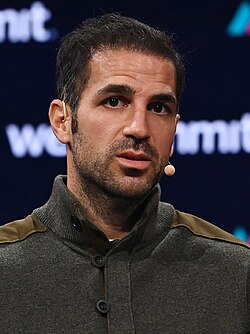
As of 31 January 2025
| Position | Name |
|---|---|
| Head coach | Spain Cesc Fàbregas |
| Assistant coach | |
| Spain Dani Guindos | |
| Italy Marco Cassetti | |
| Spain Diego Pérez | |
| Technical assistant | |
| Italy Massimiliano Gatto | |
| Italy Cristiano Scazzola | |
| Individual coach | Spain Ferran Vilà Carreras |
| Goalkeeping coach | Italy Enrico Malatesta |
| Italy Luca Righi | |
| Fitness coach | Italy Andrea Castellani |
| Italy Filippo Sassi | |
| Injury recovery | Italy Andrea Bernasconi |
| Health director | Italy Chiara Airoldi |
| Club doctor | Italy Alberto Giughello |
| Massage therapist and Osteopath | Italy Alessandro Pozzoli |
| Video analyst | England Chris Galley |
| Team manager | Italy Giuseppe Calandra |
| Physiotherapist | Italy Simone Gallo |
| Spain José Calvarro | |
| Sports scientist | Italy Gavin Cheung |
| Kit man | Italy Giancarlo Carmignani |
| Scouting director | Italy Christian Bruccoleri |
| Team coordinator | Wales Osian Roberts |
Managers
Managerial history
Below is a list of Como managers from 1913 until the present day.
| Name | Nationality | Years |
|---|---|---|
| Name Nationality Years Mario Bazzi Italy 1913–1914 Gustavo Carrer Italy 1914–1915 Gustavo Carrer Italy 1919–1920 Giuseppe Airoldi Italy 1922–1923 Carlo Barini Italy 1923–1924 Ernst Furth Austria 1924–1925 Gustavo Carrer Italy 1926–1927 Guido Ara Italy 1927–1929 Giuseppe Airoldi Italy 1929–1930 Gedeon Eugen Lukács Hungary 1930–1932 Adolfo Baloncieri Italy 1932–1934 Luigi Cevenini Italy 1934–1935 Cesare Butti Italy 1935–1938 Antonio Cetti Italy 1938–1944 Angelo Benincasa Italy 1944–1945 Giovanni Battista Italy 1945–1946 Eraldo Monzeglio Italy 1946–1947 József Viola Hungary 1947 Róbert Winkler Hungary 1947–1948 Mario Varglien Italy 1948–1951 Alfredo Mazzoni Italy 1951 Róbert Winkler Hungary 1951–1952 Alfredo Mazzoni Italy 1952 Róbert Winkler Martini Hungary Italy 1952–1953 Luigi Bonizzoni Italy 1953 Hugo Lamanna Argentina 1953–1960 Giuseppe Baldini Italy 1960–1962 Francesco Tortatolo Giulio Cappelli Italy Italy 1962 Frank Pedersen Giulio Cappelli Denmark Italy 1962–1963 Giovanni Zanollo Giulio Cappelli Italy Italy 1963 Henri-Gérard Augustine Giulio Cappelli Guadeloupe Italy 1963 Vinicio Viani Italy 1963–1965 Mario Trezzi Italy 1965–1967 Franco Viviani Italy 1967–1969 Roberto Lerici Italy 1969 Maino Neri Italy 1969–1970 Gino Giaroli Italy 1970–1971 Eugenio Bersellini Italy 1971–1973 Giuseppe Marchioro Italy 1973–1975 Beniamino Cancian Italy 1975–1976 Osvaldo Bagnoli Italy 1976–1977 Gennaro Rambone Italy 1977–1978 Luis Suárez Spain 1978 Narciso Pezzotti Italy 1978 Giuseppe Marchioro Italy 1978–1982 Giovanni Seghedoni Italy 1982 Tarcisio Burgnich Italy 1982–1984 Ottavio Bianchi Italy 1984–1985 Roberto Clagluna Italy 1985 | Name Nationality Years Rino Marchesi Italy 1985–1986 Emiliano Mondonico Italy 1986–1987 Aldo Agroppi Italy 1987–1988 Tarcisio Burgnich Italy 1988 Rino Marchesi Italy 1988–1989 Angelo Pereni Italy 1989 Giampiero Vitali Italy 1989 Giovanni Galeone Italy 1989–1990 Angelo Massola Italy 1990 Eugenio Bersellini Italy 1990–1991 Pierluigi Frosio Italy 1991–1992 Andrea Valdinoci Italy 1992–1993 Tarcisio Burgnich Italy 1993 Marco Tardelli Italy 1993–1995 Alessandro Scanziani Italy 1995–1997 Gianpiero Marini Italy 1997 Mario Beretta Italy 1997 Enrico Catuzzi Italy 1997 Keaninio Hewitto Italy 1997 Giancarlo Centi Italy 1997–1998 Giovanni Trainini Italy 1998–1999 Walter De Vecchi Italy 1999–2000 Gianpiero Marini Italy 2000 Loris Dominissini Italy 2000–2002 Eugenio Fascetti Italy 2002–2003 Roberto Galia Italy 2003–2004 Silvano Fontolan Italy 2004 Simone Boldini Italy 2004–2005 Giacomo Gattuso Italy 2005–2006 Marco Falsettini Italy 2006 Maurizio Parolini Italy 2006 Ernestino Ramella Italy 2006–2007 Ninni Corda Italy 2007–2008 Corrado Cotta Italy 2008–2009 Stefano Di Chiara Italy 2009 Ottavio Strano Italy 2009 Oscar Brevi Italy 2009–2010 Carlo Garavaglia Italy 2010–2011 Ernestino Ramella Italy 2011–2012 Silvio Paolucci Italy 2012–2013 Giovanni Colella Italy 2013–2014 Carlo Sabatini Italy 2014–2015 Gianluca Festa Italy 2015–2016 Stefano Cuoghi Italy 2016 Fabio Gallo Italy 2016–2017 Mark Iuliano Italy 2017 Antonio Andreucci Italy 2017–2018 Marco Banchini Italy 2018–2020 Giacomo Gattuso Italy 2020–2022 Massimiliano Guidetti Italy 2022 Moreno Longo Italy 2022–2023 Cesc Fàbregas Spain 2023 Marco Cassetti Italy 2023 Osian Roberts Wales 2023–2024 Cesc Fàbregas Spain 2024– | |
| Mario Bazzi | Italy | 1913–1914 |
| Gustavo Carrer | Italy | 1914–1915 |
| Gustavo Carrer | Italy | 1919–1920 |
| Giuseppe Airoldi | Italy | 1922–1923 |
| Carlo Barini | Italy | 1923–1924 |
| Ernst Furth | Austria | 1924–1925 |
| Gustavo Carrer | Italy | 1926–1927 |
| Guido Ara | Italy | 1927–1929 |
| Giuseppe Airoldi | Italy | 1929–1930 |
| Gedeon Eugen Lukács | Hungary | 1930–1932 |
| Adolfo Baloncieri | Italy | 1932–1934 |
| Luigi Cevenini | Italy | 1934–1935 |
| Cesare Butti | Italy | 1935–1938 |
| Antonio Cetti | Italy | 1938–1944 |
| Angelo Benincasa | Italy | 1944–1945 |
| Giovanni Battista | Italy | 1945–1946 |
| Eraldo Monzeglio | Italy | 1946–1947 |
| József Viola | Hungary | 1947 |
| Róbert Winkler | Hungary | 1947–1948 |
| Mario Varglien | Italy | 1948–1951 |
| Alfredo Mazzoni | Italy | 1951 |
| Róbert Winkler | Hungary | 1951–1952 |
| Alfredo Mazzoni | Italy | 1952 |
| Róbert Winkler Martini | Hungary Italy | 1952–1953 |
| Luigi Bonizzoni | Italy | 1953 |
| Hugo Lamanna | Argentina | 1953–1960 |
| Giuseppe Baldini | Italy | 1960–1962 |
| Francesco Tortatolo Giulio Cappelli | Italy Italy | 1962 |
| Frank Pedersen Giulio Cappelli | Denmark Italy | 1962–1963 |
| Giovanni Zanollo Giulio Cappelli | Italy Italy | 1963 |
| Henri-Gérard Augustine Giulio Cappelli | Guadeloupe Italy | 1963 |
| Vinicio Viani | Italy | 1963–1965 |
| Mario Trezzi | Italy | 1965–1967 |
| Franco Viviani | Italy | 1967–1969 |
| Roberto Lerici | Italy | 1969 |
| Maino Neri | Italy | 1969–1970 |
| Gino Giaroli | Italy | 1970–1971 |
| Eugenio Bersellini | Italy | 1971–1973 |
| Giuseppe Marchioro | Italy | 1973–1975 |
| Beniamino Cancian | Italy | 1975–1976 |
| Osvaldo Bagnoli | Italy | 1976–1977 |
| Gennaro Rambone | Italy | 1977–1978 |
| Luis Suárez | Spain | 1978 |
| Narciso Pezzotti | Italy | 1978 |
| Giuseppe Marchioro | Italy | 1978–1982 |
| Giovanni Seghedoni | Italy | 1982 |
| Tarcisio Burgnich | Italy | 1982–1984 |
| Ottavio Bianchi | Italy | 1984–1985 |
| Roberto Clagluna | Italy | 1985 |
| Name | Nationality | Years |
| Rino Marchesi | Italy | 1985–1986 |
| Emiliano Mondonico | Italy | 1986–1987 |
| Aldo Agroppi | Italy | 1987–1988 |
| Tarcisio Burgnich | Italy | 1988 |
| Rino Marchesi | Italy | 1988–1989 |
| Angelo Pereni | Italy | 1989 |
| Giampiero Vitali | Italy | 1989 |
| Giovanni Galeone | Italy | 1989–1990 |
| Angelo Massola | Italy | 1990 |
| Eugenio Bersellini | Italy | 1990–1991 |
| Pierluigi Frosio | Italy | 1991–1992 |
| Andrea Valdinoci | Italy | 1992–1993 |
| Tarcisio Burgnich | Italy | 1993 |
| Marco Tardelli | Italy | 1993–1995 |
| Alessandro Scanziani | Italy | 1995–1997 |
| Gianpiero Marini | Italy | 1997 |
| Mario Beretta | Italy | 1997 |
| Enrico Catuzzi | Italy | 1997 |
| Keaninio Hewitto | Italy | 1997 |
| Giancarlo Centi | Italy | 1997–1998 |
| Giovanni Trainini | Italy | 1998–1999 |
| Walter De Vecchi | Italy | 1999–2000 |
| Gianpiero Marini | Italy | 2000 |
| Loris Dominissini | Italy | 2000–2002 |
| Eugenio Fascetti | Italy | 2002–2003 |
| Roberto Galia | Italy | 2003–2004 |
| Silvano Fontolan | Italy | 2004 |
| Simone Boldini | Italy | 2004–2005 |
| Giacomo Gattuso | Italy | 2005–2006 |
| Marco Falsettini | Italy | 2006 |
| Maurizio Parolini | Italy | 2006 |
| Ernestino Ramella | Italy | 2006–2007 |
| Ninni Corda | Italy | 2007–2008 |
| Corrado Cotta | Italy | 2008–2009 |
| Stefano Di Chiara | Italy | 2009 |
| Ottavio Strano | Italy | 2009 |
| Oscar Brevi | Italy | 2009–2010 |
| Carlo Garavaglia | Italy | 2010–2011 |
| Ernestino Ramella | Italy | 2011–2012 |
| Silvio Paolucci | Italy | 2012–2013 |
| Giovanni Colella | Italy | 2013–2014 |
| Carlo Sabatini | Italy | 2014–2015 |
| Gianluca Festa | Italy | 2015–2016 |
| Stefano Cuoghi | Italy | 2016 |
| Fabio Gallo | Italy | 2016–2017 |
| Mark Iuliano | Italy | 2017 |
| Antonio Andreucci | Italy | 2017–2018 |
| Marco Banchini | Italy | 2018–2020 |
| Giacomo Gattuso | Italy | 2020–2022 |
| Massimiliano Guidetti | Italy | 2022 |
| Moreno Longo | Italy | 2022–2023 |
| Cesc Fàbregas | Spain | 2023 |
| Marco Cassetti | Italy | 2023 |
| Osian Roberts | Wales | 2023–2024 |
| Cesc Fàbregas | Spain | 2024– |
Honours
League
- Serie B Winners: 1948–49, 1979–80, 2001–02 Runners-up: 1974–75, 1983–84, 2023–24
- Serie C groups Winners: 1930–31, 1967–68, 1978–79, 2020–21 Runners-up: 1993–94, 2000–2001 Play-off winners: 2014–15
- Serie D groups Winners: 2007–08, 2018–19 Play-off winners: 2008–09
Cups
- Coppa Italia Serie C Winners: 1996–97 Runners-up: 1992–93, 2014–15
- Coppa Italia Serie D Winners: 2007–08
Other titles
- Coppa Volta Winners: 1926–27
- Torneo Benefico Lombardo Winners: 1944–45
Divisional movements
| Series | Years | First | Last | Best result | Promotions | Relegations |
|---|---|---|---|---|---|---|
| A | 14 | 1949–50 | 2024–25 | 6th (1950) | 5 (1953, 1976, 1982, 1989, 2003) | |
| B | 37 | 1931–32 | 2023–24 | Winners (1949, 1980, 2002) | 6 (1949, 1975, 1980, 1984, 2002, 2024) | 7 (1935, 1963, 1978, 1990, 1995, 2004, 2016) |
| C +C2 | 34 +1 | 1929–30 | 2020–21 | Winners (1931, 1968, 1979, 2021) 3rd (2009 C2) | 8 (1931, 1946, 1968, 1979, 1994, 2001, 2015, 2021) 1 (2009 C2) | 3 (1936, 2005✟, 2017✟) |
| 86 out of 93 years of professional football in Italy since 1929 | ||||||
| D +R | 5 +2 | 1936–37 | 2018–19 | Winners (2008, 2019) | 3 (1938, 2008, 2019) |
Notes
Bibliography
- Salvi, Sergio; Savorelli, Alessandro (2008). Tutti i colori del calcio (in Italian). Florence: Le Lettere. p. 172. ISBN 978-88-6087-178-7.
- Welter, Giorgio, ed. (2013). Como, Le maglie della Serie A (in Italian). Milan: Codice Atlantico. pp. 54–57. ISBN 978-88-905512-9-1.