Egyptian obelisks
In-game article clicks load inline without leaving the challenge.

Obelisks had a prominent role in the architecture and religion of ancient Egypt.
Approximately 30 remaining ancient Egyptian obelisks are known, not including modern or pre-modern pseudo-Egyptian obelisks, such as the numerous Egyptian-style obelisks commissioned by Roman Emperors. The oldest of these extant obelisks date from the Middle Kingdom period, during the reign of Pharaoh Senusret I.
There are also approximately 40 known obelisk fragments, catalogued by Hiroyuki Nagase and Shoji Okamoto.
Number
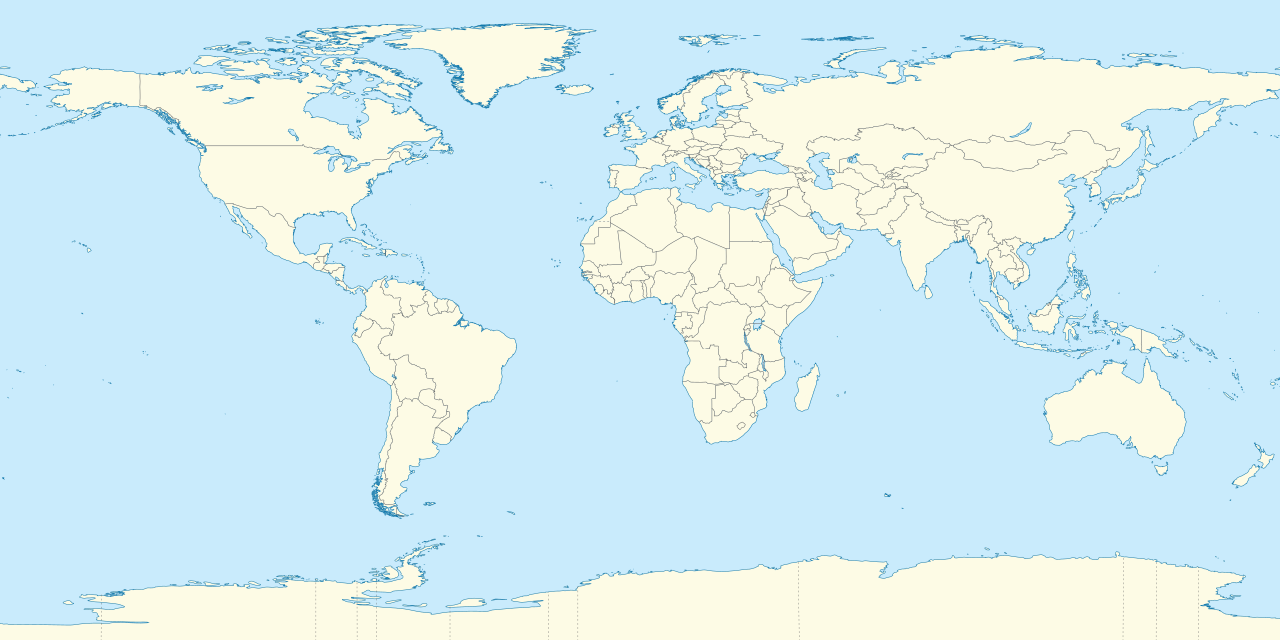
Only about 30 such obelisks are still in existence worldwide; figures vary between sources with different definitions of extant Egyptian obelisks. For example, David Allen states there are 29 such obelisks, with more in Italy than in Egypt. Only two known obelisks date prior to the New Kingdom, both of which were dedicated to the Middle Kingdom Pharaoh Senusret I. At least 22 of the known obelisks date to the New Kingdom, four date to the Late Period and one to the Ptolemaic period.
The international transportation of Egyptian obelisks dates to the Roman conquest of Egypt following the death of Cleopatra, and in modern times as Egyptian "gifts" to other major cities such as the Luxor Obelisk at the Place de la Concorde in Paris, and the Cleopatra's Needles on the Victoria Embankment and in Central Park in London and New York City respectively. Only five obelisks still stand at the ruins of Ancient Egyptian temples.
The largest known obelisk, the unfinished obelisk, was never erected and was discovered in its original quarry. It is nearly one-third larger than the largest ancient Egyptian obelisk ever erected (the Lateran Obelisk in Rome); if finished it would have measured around 41.75 metres (137.0 ft) and would have weighed nearly 1,090 tonnes (1,200 short tons), a weight equal to about 200 African elephants.
The most recent ancient obelisk to be re-erected is the 17-metre-tall Ramses II obelisk in Tahrir Square, the main city square of Cairo, having been reassembled from eight blocks discovered at Tanis in the late 19th century. Dr Khaled El-Anany, Egyptian Minister of Tourism and Antiquities, said, "When we go to European capitals like Rome or Paris or London, and also Washington [sic], we see that they use Egyptian obelisks in decorating their major tourist squares, so why do we not do the same?"
List
| Name | Image | Height (with base) | Pharaoh | Original location | Current location | Ref | |||
|---|---|---|---|---|---|---|---|---|---|
| Name | Reign | Place (since) | City | Sovereign state | |||||
| Unfinished obelisk | 41.75 m | Hatshepsut | 1479–1458 BC | Aswan (in situ) | Stone Quarries, Aswan | Aswan | Egypt | ||
| Lateran Obelisk | 32.18 m (45.70 m with base) | Thutmose III / Thutmose IV | 1479–1425 BC / 1401–1391 BC | Karnak | Lateran Palace | Rome | Italy | ||
| Karnak obelisks of Hatshepsut | 29.56 m | Hatshepsut | 1479–1458 BC | Karnak (in situ) | Karnak Temple | Luxor | Egypt | ||
| Vatican obelisk (a.k.a. St Peter's Square obelisk or Caligula's obelisk) | 25.5 m (41 m with base) | Unknown | Unknown | Alexandria | St. Peter's Square | Vatican City | Vatican City | ||
| Luxor obelisks (Luxor and Paris obelisks) | 25.03 m and 22.83 m | Ramesses II | 1279–1213 BC | Luxor Temple | Luxor Temple (in situ) | Luxor | Egypt | ||
| Place de la Concorde (1833) | Paris | France | |||||||
| Flaminio Obelisk (a.k.a. Popolo obelisk) | 24 m (36.5 m with base) | Seti I / Ramesses II | 1294–1279 BC / 1279–1213 BC | Heliopolis | Piazza del Popolo | Rome | Italy | ||
| Obelisk of Montecitorio (a.k.a. Solare obelisk) | 21.79 m (33.97 m with base) | Psamtik II | 595–589 BC | Heliopolis | Piazza di Montecitorio | Rome | Italy | ||
| Karnak obelisk of Thutmosis I | 21.20 m | Thutmose I | 1506–1493 BC | Karnak (in situ) | Karnak | Luxor | Egypt | ||
| Cleopatra's Needles (London and New York obelisks) | 21.00 m | Thutmose III | 1479–1425 BC | Heliopolis (via Alexandria) | Victoria Embankment (1878) | London | United Kingdom | ||
| Central Park (1881) | New York City | United States | |||||||
| Al-Masalla obelisk (a.k.a. Al Mataraiyyah obelisk) | 20.40 m | Senusret I | 1971–1926 BC | Heliopolis (in situ) | Al-Masalla area of Al-Matariyyah district in Heliopolis | Cairo | Egypt | ||
| Obelisk of Theodosius (a.k.a. Istanbul obelisk) | 18.54 m (25.6 m with base) | Thutmose III | 1479–1425 BC | Karnak | Sultanahmet Square | Istanbul | Turkey | ||
| Tahrir obelisk | 17 m | Ramesses II | 1279–1213 BC | Tanis | Tahrir Square (2020) | Cairo | Egypt | ||
| Cairo Airport obelisk | 16.97 m | Ramesses II | 1279–1213 BC | Tanis | Cairo International Airport (1984) | Cairo | Egypt | ||
| Hanging obelisk | 15.5 m | Ramesses II | 1279–1213 BC | Tanis | Grand Egyptian Museum | Cairo | Egypt | ||
| Pantheon obelisk (a.k.a. Macuteo or Rotonda obelisk) | 14.52 m (26.34 m with base) | Ramesses II | 1279–1213 BC | Heliopolis | Piazza della Rotonda | Rome | Italy | ||
| Gezira obelisk | 13.5 m (20.4 m with base) | Ramesses II | 1279–1213 BC | Tanis | Gezira Island, Cairo | Cairo | Egypt | ||
| Abgig obelisk (a.k.a. Crocodilopolis obelisk) | 12.70 m | Senusret I | 1971–1926 BC | Faiyum (local area, found fallen) | Abgig | Faiyum | Egypt | ||
| Philae obelisk | 6.70 m | Ptolemy IX | 116–107 BC | Philae (Temple of Isis) | Kingston Lacy (1815) | Dorset | United Kingdom | ||
| Boboli Obelisk | 6.34 m | Ramesses II | 1279–1213 BC | Heliopolis (via Rome) | Boboli Gardens (1790) | Florence | Italy | ||
| Elephant and Obelisk (a.k.a. Minerveo obelisk) | 5.47 m (12.69 m with base) | Apries | 589–570 BC | Sais | Piazza della Minerva (Roman period, rediscovered 1665) | Rome | Italy | ||
| Abu Simbel obelisks | 3.13 m | Ramesses II | 1279–1213 BC | Abu Simbel (Great Temple) | Nubian Museum | Aswan | Egypt | ||
| Urbino obelisk (a.k.a. Albani obelisk) | 3.00 m | Apries | 589–570 BC | Sais (via Rome) | Ducal Palace | Urbino | Italy | ||
| Poznań obelisk | 3.00 m | Ramesses II | 1279–1213 BC | Athribis (via Berlin, 1895) | Poznań Archaeological Museum (2002) | Poznań | Poland | ||
| Matteiano obelisk (a.k.a. Celimontana obelisk) | 2.68 m (12.23 m with base) | Ramesses II | 1279–1213 BC | Heliopolis | Villa Celimontana | Rome | Italy | ||
| Durham obelisk (a.k.a. Alnwick or Algernon obelisk) | 2.15 m | Amenhotep II | 1427–1401 BC | unknown (within the Thebaid) | Oriental Museum, University of Durham (1838) | Durham | United Kingdom | ||
| Dogali obelisk (a.k.a. Casanatese obelisk) | 2 m (6.34 m with base) | Ramesses II | 1279–1213 BC | Heliopolis | Baths of Diocletian | Rome | Italy | ||
| Abishemu obelisk | 1.25 m (1.45 m with base) | Abishemu (King of Byblos) | 1800s BC | Temple of the Obelisks | Beirut National Museum | Beirut | Lebanon | ||
| Karnak obelisk of Seti II | 0.95 m | Seti II | 1203–1197 BC | Karnak (in situ) | Karnak | Luxor | Egypt | ||
| Luxor obelisk | 0.95 m (original est. 3 m) | Ramesses III | 1186–1155 BC | Karnak | Luxor Museum (1923) | Luxor | Egypt | ||
| Obelisks of Nectanebo II | 0.95 m (original est. 5.5 m) | Nectanebo II | 360–342 BC | Hermopolis | British Museum | London | United Kingdom |
Bibliography
- Cooper, William Ricketts; Chabas, François (1877). . Bagster.
- Habachi, Labib (1977). The obelisks of Egypt : skyscrapers of the past. New York: Scribner. ISBN 978-0-684-14805-2. OCLC .
External links
- Hiroyuki Nagase and Shoji Okamoto, 2017,