Same-sex adoption
In-game article clicks load inline without leaving the challenge.
Same-sex adoption is the adoption of children or adults by same-sex couples. It may take the form of a joint adoption by the couple, or of the adoption by one partner of the other's biological child or adult (stepchild adoption).
Joint adoption by same-sex couples is permitted in 39 countries. Most countries and territories that allow same-sex marriage (exceptions being Aruba, Curaçao, Ecuador and several Mexican states), as well as several countries and dependent territories that do not (Croatia,[citation needed][original research?] Israel and two UK territories of Bermuda and the Cayman Islands) allow for same-sex joint adoption. In some of the countries with marriage, legislation for adoption preceded that for marriage.
According to U.S. census data, 54% of children adopted by gay male couples were boys. Among female couples, 56% were girls.
Adoption is only permitted for same sex married couples in 21 of the 31 Mexican states and Mexico City, despite a Supreme Court ruling that requires states to allow it. Stepchild adoption is permitted for same-sex couples in two countries without same-sex marriage - San Marino and Czechia permit step-child adoption in which the registered partner can adopt the biological and, in some cases, the adopted child of their partner.
Given that constitutions and statutes usually do not address the adoption rights of same-sex couples, judicial decisions often determine whether they can serve as parents either individually or as couples. Opponents of adoption by same-sex couples have argued that same-sex parenting adversely affects children. However, research consistently shows that gay and lesbian parents are as fit and capable as heterosexual parents, and their children are as psychologically healthy and well-adjusted as those reared by heterosexual parents.
Same-sex parents pursuing adoption must also contend with social pressures to conform to heteronormative gender roles. The concept of gender role models is necessitated by the bureaucratic organization of foster care and adoption agencies, particularly in the United States.
LGBTQ parenting

Prevalence of adoption
Statistics on the prevalence of adoption by same-sex couples across countries where it is legal are not consistently available.
In 2022, 1 in 6 adoptions in England were by same-sex couples. This number was a 17.4% rise from the previous year.
In the United States, as of 2024, 18% of all LGBTQ people (~2.57 million adults) parent children in their homes, with 14% of same-sex couples (167,000) parenting a minor in their homes. 21% of same-sex couples adopt which is a much higher rate than in different-sex couples (3%).
Quality of life outcomes

A common argument against the legalization of same-sex adoption is that children adopted by same-sex couples would have poorer quality of life outcomes. Overall, scientific research indicates that the children of same-sex couples fare just as well as the children of different-sex couples.
A 2004 study concluded that the sexual orientation of parents did not predict better or poorer "adoptive family functioning, adopted child's behavior, and parent's perceptions of helpfulness from family support networks".
A 2010 study evaluated the outcomes of young adopted children who had been placed in one of 56 lesbian and gay households since infancy. The study found no significant associations between parental sexual orientation and child adjustment.
Research published in 2009 studied 1,384 children with either heterosexual or same-sex adoptive parents and concluded that problematic behavior in children was not dependent on whether they had same-sex or opposite sex parents. The study also found that "adoptive parents are likely to encounter similar challenges in terms of risk factors for child behavioral problems and mitigating factors of such behavior."
A 2016 study of adopted children of same-sex parents showed that they perceive themselves to be more accepting, understanding and compassionate than children of different-sex parents. The children in the study also indicated that they often avoid sharing that their parents are lesbian or gay, and that many experience bullying or teasing.
Debate
Arguments
The adoption of children by LGBTQ people is an issue of active debate. In the United States, for example, legislation to prevent adoption by LGBTQ people has been introduced in many jurisdictions; such efforts have largely been defeated. Prior to 1973, state courts commonly barred gay and lesbian individuals from holding a parenting role, especially through adoption.
Major professional organizations have made statements in defense of adoption by same-sex couples. The American Psychological Association has supported adoption by same-sex couples, citing social prejudice as harming the psychological health of lesbians and gays while noting there is no evidence that their parenting causes harm. The American Medical Association has issued a similar position supporting second parent adoption by same-sex partner, stating that lack of formal recognition can cause health-care disparities for children of same-sex parents.
The following arguments are made in support of adoption by LGBTQ parents:
- The right of a child to have a family, guardians or people who can take care of their wellbeing.
- Human rights – child's and parent's right to have a family life.
- There are almost no differences between children raised by same-sex or straight couples. For that reason, sexual orientation of the parents has almost no relevance when it comes to raising a child.
- Evidence confirming that, despite the claims of those opposed to LGBTQ parenting, same-sex couples can provide good conditions to raise a child.
- For children, adoption is a better alternative to orphanage.
- Fewer formalities for step-parents in everyday life, as well as the situation of a death of a biological parent of a child.
Public opinion
| Country | Pollster | Year | For | Against | Don't know/neutral/no answer/other |
|---|---|---|---|---|---|
| Austria | Eurobarometer | 2023 | 65% | 30% | 5% |
| Belgium | Ipsos | 2021 | 72% | 21% | 7% |
| Bulgaria | Eurobarometer | 2006 | 12% | 68% | 20% |
| Croatia | Promocija Plus | 2025 | 28% | 52% | 20% |
| Cyprus | Eurobarometer | 2006 | 10% | 86% | 4% |
| Czech Republic Czech Republic | CVVM | 2019 | 47% | 47% | 6% |
| Denmark | Pew Research Center | 2017 | 75% | - | - |
| Estonia | HumanrightsEE | 2023 | 47% | 44% | 9% |
| Finland | Taloustutkimus | 2013 | 51% | 42% | 7% |
| France | Ipsos | 2021 | 62% | 29% | 10% |
| Germany | Ipsos | 2021 | 69% | 24% | 6% |
| Greece | KAPA Research | 2023 | 53% | 41% | 6% |
| Hungary | Ipsos | 2021 | 59% | 36% | 5% |
| Ireland | Red C Poll | 2011 | 60% | - | - |
| Italy | Eurispes | 2023 | 50.4% | 49.6% | 0% |
| Latvia | SKDS | 2023 | 27% | 23% | 46% |
| Lithuania | Eurobarometer | 2006 | 12% | 82% | 6% |
| Luxembourg | Politmonitor | 2013 | 55% | 44% | 1% |
| Malta | Misco | 2014 | 20% | 80% | - |
| Netherlands | Ipsos | 2021 | 83% | 12% | 5% |
| Norway | YouGov | 2012 | 54% | 34% | 12% |
| Poland | Ipsos | 2021 | 33% | 58% | 10% |
| Portugal | Pew Research Center | 2017 | 59% | 28% | 13% |
| Romania | Eurobarometer | 2006 | 8% | 82% | 10% |
| Russia | Ipsos | 2021 | 23% | 67% | 10% |
| Serbia | Civil Rights Defenders | 2020 | 22.5% | - | - |
| Slovakia | Eurobarometer | 2006 | 12% | 84% | 4% |
| Slovenia | Delo Stik | 2015 | 38% | 55% | 7% |
| Spain | Ipsos | 2021 | 77% | 17% | 6% |
| Sweden | Ipsos | 2021 | 79% | 17% | 4% |
| Switzerland | Pink Cross | 2020 | 67% | 30% | 3% |
| Ukraine | Kyiv International Institute of Sociology | 2023 | 30% | 48% | 22% |
| United Kingdom | Ipsos | 2021 | 72% | 19% | 9% |
| Country | Pollster | Year | For | Against | Don't know/neutral/no answer/other |
|---|---|---|---|---|---|
| Argentina | Ipsos | 2023 | 71% | 24% | 6% |
| Brazil | Ipsos | 2023 | 69% | 22% | 9% |
| Canada | Ipsos | 2023 | 74% | 17% | 9% |
| Chile | CADEM | 2022 | 70% | 28% | 2% |
| Colombia | Ipsos | 2023 | 53% | 40% | 7% |
| Mexico | Ipsos | 2023 | 60% | 34% | 6% |
| Peru | Ipsos | 2023 | 51% | 42% | 7% |
| United States | Ipsos | 2023 | 64% | 26% | 10% |
| Uruguay | Equipos Consultores | 2013 | 52% | 39% | 9% |
| Venezuela | Equilibrium Cende | 2023 | 48% (55%) | 39% (45%) | 13% |
| Country | Pollster | Year | For | Against | Don't know/neutral/no answer/other |
|---|---|---|---|---|---|
| Australia | Ipsos | 2021 | 71% | 21% | 8% |
| New Zealand | Research New Zealand | 2012 | 64% | 31% | 5% |
| Country | Pollster | Year | For | Against | Don't know/neutral/no answer/other |
|---|---|---|---|---|---|
| China | Ipsos | 2021 | 66% | 30% | 4% |
| India | Ipsos | 2021 | 66% | 21% | 13% |
| Israel | Midgam Institute | 2017 | 60% | - | - |
| Japan | Ipsos | 2021 | 68% | 20% | 13% |
| Malaysia | Ipsos | 2021 | 24% | 65% | 11% |
| Russia | Ipsos | 2021 | 23% | 67% | 10% |
| South Korea | Ipsos | 2021 | 46% | 45% | 9% |
| Turkey | Ipsos | 2021 | 39% | 44% | 18% |
| Country | Pollster | Year | For | Against | Neither | Margin of error | Source |
|---|---|---|---|---|---|---|---|
| Kenya Kenya | Pew Research Center | 2023 | 9% | 90% | 1% | ±3.6% | |
| Nigeria Nigeria | Pew Research Center | 2023 | 2% | 97% | 1% | ±3.6% | |
| South Africa South Africa | Ipsos | 2023 | 57% (66%) | 29% [10% support some rights] (34%) | 14% | ±3.5% | |
| Pew Research Center | 2023 | 38% | 58% | 4% | ±3.6% |
Legal status

Joint adoption by same-sex couples is legal in the following 39 countries, Mexico in some states:
- Andorra (2014)
- Argentina (2010)
- Australia (first jurisdiction 2002, last jurisdiction 2018)
- Austria (2016)
- Belgium (2006)
- Brazil (2010)
- Canada (first jurisdiction 1996, last jurisdiction 2011)
- Chile (2022)
- Colombia (2015)
- Costa Rica (2020)
- Croatia (2022)
- Cuba (2022)
- Denmark (2010) Greenland (2016) Faroe Islands (2017)
- Estonia (2024)
- Finland (2017)
- France (2013)
- Germany (2017)
- Greece (2024)
- Iceland (2006)
- Ireland (2016)
- Israel (2023)
- Liechtenstein (2023)
- Luxembourg (2015)
- Malta (2014)
- Netherlands (2001)
- New Zealand (2013)
- Norway (2009)
- Portugal (2016)
- Slovenia (2022)
- South Africa (2002)
- Spain (2005)
- Sweden (2003)
- Switzerland (2022)
- Taiwan (2023)
- Thailand (2025)
- United Kingdom England and Wales (2005) Scotland (2009) Northern Ireland (2013)
- United States (first jurisdiction 1993, last jurisdiction 2017)
- Uruguay (2009)
Joint adoption by same-sex couples is legal in the following subnational jurisdictions or dependent territories:
- UK Crown Dependencies and British Overseas Territories: Bermuda (2015) Cayman Islands (2019) Gibraltar (2014) Guernsey (2017) Isle of Man (2011) Jersey (2012) Pitcairn Islands (2015) Falkland Islands (2017) Saint Helena, Ascension and Tristan da Cunha (2017)
- Mexico: Aguascalientes (2019) Baja California (2017) Baja California Sur (2022) Campeche (2016) Chiapas (2017) Chihuahua (2017) Coahuila (2014) Colima (2016) Durango (2022 -- prohibition never existed) Jalisco (2019) Hidalgo (2019) Mexico City (2010) Michoacán (2016) Morelos (2016) Nayarit (2019) Nuevo Leon (2019) Puebla (2017) Querétaro (2017) Quintana Roo (2022) San Luis Potosí (2019) Tamaulipas (prior to 2022 -- there is no prohibition) Veracruz (2016)
- Caribbean Netherlands (2012)
The following countries permit step-child adoption in which the partner in a relationship can adopt the natural and/or the adopted child of his or her partner:
- San Marino (2018)
- Czechia (2025)
Step-child adoption is legal in the following subnational jurisdictions or dependent territories:
- Hong Kong (2021)
In Italy step-child adoption can only be recognized by court order since 2016.
Africa
South Africa
South Africa is the only African country to allow joint adoption by same-sex couples. The 2002 decision of the Constitutional Court in the case of Du Toit v Minister of Welfare and Population Development amended the Child Care Act, 1983 to allow both joint adoption and step-parent adoption by "permanent same-sex life partners". The Child Care Act has since been replaced by the Children's Act, 2005, which allows joint adoption by "partners in a permanent domestic life-partnership", whether same- or opposite-sex, and step-parent adoption by a person who is the "permanent domestic life-partner" of the child's current parent. Same-sex marriage has been legal since 2006, and is equivalent to opposite-sex marriage for all purposes, including adoption.
Americas

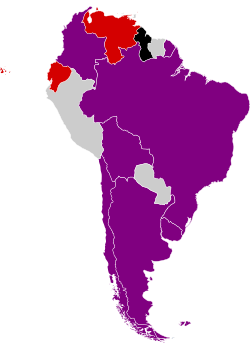
Argentina
Argentina allows adoption by same and different-sex marriages, and even by single people, since 2010. The law makes no difference in the requirements for adoption for any of these.
Canada
Canada has no nation-wide law legalizing same-sex adoption, but rather has smaller provincial laws that cover the entire nation. Same-sex adoption legalization in Canada began with British Columbia in 1996 and was finalized with Nunavut in 2011. By 2013, an Ipsos Global poll showed 70% of Canadians approved of same-sex adoption to some degree with 45% strongly approving.
Chile
Since March 10, 2022 joint parenthood of same-sex couples is legal in Chile after the entry into force of Law 21,400 on Equal Marriage, which explicitly guarantees non-discrimination based on sexual orientation and gender identity for custody purposes, filiation and adoption whether or not the couples are married or whether or not they had their children through assisted human fertilization. The law amends the Civil Code to recognize the parents of children as their mother and/or father, their two mothers, or their two fathers.
A 2021 survey, shows that 65% of Chileans support same-sex adoption.
Colombia
On 4 November 2015, in a 6-2 Constitutional Court ruling, Colombia decided to allow adoption by LGBTQ peoples. The ruling came before same-sex marriage became legal in the country on 28 April 2016.
Cuba
Cuba allows adoption by same-sex marriages (since September 2022 referendum) and different-sex marriages, and even by single people.
Honduras
As of May 2019, the Honduras Supreme Court is expected to rule on a decision regarding both same-sex marriage and adoption.
Mexico
Same-sex couples are able to adopt in Mexico City (since 2010), Coahuila (2014), Campeche (2016), Colima (2016), Michoacán (2016), Morelos (2016), Veracruz (2016), Baja California (2017), Chihuahua (2017), Querétaro (2017), Puebla (2018), Chiapas (2018), Nayarit (2019), Aguascalientes (2019), Hidalgo (2019), San Luis Potosí (2019), Quintana Roo (2022), Yucatan (2022), Durango (2022), Tamaulipas (2022), Guerrero (2022), Nuevo Leon (2023), Tabasco (2024).
In Mexico City, the Legislative Assembly of the Federal District passed legislation on 21 December 2009 enabling same-sex couples to adopt children. Eight days later, Head of Government ("Mayor") Marcelo Ebrard signed the bill into law, which officially took effect on 4 March 2010.
On 24 November 2011, the Coahuila Supreme Court struck down the state's law barring same-sex couples from adopting, urging the state's legislature to amend the adoption law as soon as possible. On 12 February 2014, the state's congress overwhelmingly approved the measure more than two years following the supreme court decision.
On 3 February 2017 the SCJN emitted tesis 08/2017 in which it is stated that the family of the LGBTQ community doesn't end with a couple, but that it also extends onto the right to have and raise children. Therefore, LGBTQ couples wishing to form a family and adopt children will be legally protected and can't be limited by any governmental entity.
In October 2021, a bill was introduced to the legislature of Baja California Sur.
In September 2022, a bill was passed in Quintana Roo.
United States
In 1979, Reverend John Kuiper of the Metropolitan Community Church and his husband became the first gay men in America to win the right to adopt a child. Adoption by LGBTQ individuals or same-sex couples is legal in all fifty states as of June 2017.
According to U.S. census data, 54% of children adopted by gay male couples were boys. Among female couples, 56% were girls.
Uruguay
A government-sponsored adoption law in Uruguay allowing LGBTQ adoption was approved by the lower house on 28 August 2009, and by the Senate on 9 September 2009. In October 2009, the law was signed by President and took effect. According to Equipos Mori Poll's, 53% of Uruguayans are opposed to same sex adoption against 39% that support it. Interconsult's Poll made in 2008 says that 49% are opposed to same sex adoption against 35% that support it.
Asia

LGBTQ rights for adoption of children in Asia are almost nonexistent, except in Israel, Thailand, and Taiwan. While some Asian countries allow individual LGBTQ individuals to petition to adopt, the majority of them have no laws for petitioning as same-sex couples, or rights for a same-sex partner to petition for adoption of their partner's child.
The issue of same-sex adoption has been the subject of a long-running political and legal battle in Israel that was resolved in December 2023, when the Israeli Supreme Court interpreted existing law to allow same-sex adoptions, as the law gives absolute priority to the welfare of the child and not to the gender of its parents.
Taiwan
Until 2023, members of same-sex couples could only adopt the biological child of their spouse (so-called stepchild adoptions). Taiwan law allowed for opposite-sex married people to jointly adopt, and also allowed single individuals to adopt, depending on the circumstances, including individual LGBTQ people. The same-sex marriage law only granted same-sex couples the right to adopt children genetically related to one of the spouses.
Europe
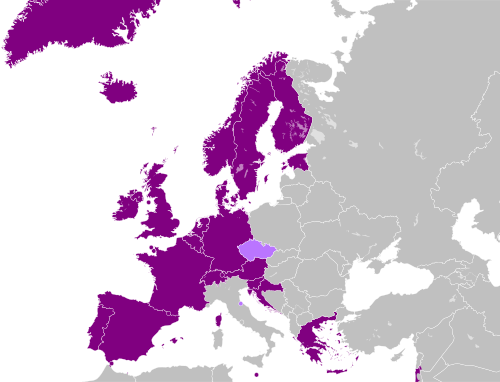
In February 2006, France's Court of Cassation ruled that both partners in a same-sex relationship can have parental rights over one partner's biological child. The result came from a case where a woman tried to give parental rights of her two daughters to her partner, with whom she was in a civil union. In the case of adoption, however, in February 2007, the same court ruled against a lesbian couple where one partner tried to adopt the child of the other partner. The court stated that the woman's partner cannot be recognized unless the mother withdrew her own parental rights. On 17 May 2013, French President François Hollande signed into law the bill that opened marriage and adoption rights linked to it for same sex couples.
In 1998, a nursery school teacher from Lons-le-Saunier, living as a couple with another woman, had applied for an authorization to adopt a child from the département (local government) of Jura. The adoption board recommended against the authorization because the child would lack a paternal reference, and thus the president of the département ruled against the authorization. The case was appealed before the administrative courts and ended before the Council of State, acting as supreme administrative court, which ruled against the woman. The European Court of Human Rights concluded that these actions and this ruling were a violation of Article 14 of the European Convention on Human Rights taken in conjunction with Article 8.
On 2 June 2006, the Icelandic Parliament unanimously passed a proposal accepting adoption, parenting and assisted insemination treatment for same-sex couples on the same basis as heterosexual couples. The law went into effect on 27 June 2006.
In Bulgaria, according to the Ministry of Justice the laws regarding adoption "lack a norm, concerning the sexual orientation of the individuals". Therefore, a single gay person or same-sex couples may adopt.
On 17 May 2013, the Portuguese parliament approved a bill in first reading allowing "co-adoption" of the biological or adopted child of the same-sex spouse or partner, where that spouse or partner is the only legally recognized parent of the child (e.g. the mother with the natural father not being registered). However, in October 2013 members of parliament opposed to the bill proposed a referendum on the issue and killed a motion to have the second vote in the plenary; the motion on the possible referendum was then considered, but the Constitutional Court declared it unconstitutional. On 14 March 2014, the original bill was rejected in second reading. On 20 November 2015, 5 proposals from several left-wing parties were voted favourably by the new parliament as result of 4 October General Elections.
In July 2014 through Life Partnership Act Croatia recognized an institution similar to step-child adoption called partner-guardian. A partner who is not a biological parent of a child can share parental responsibilities with a biological parent or parents if they agree to it, or if the court decides it is in the best interest of a child. Additionally, a biological parent or parents can temporarily give a partner who is not a biological parent full parental responsibilities. A partner who is not a biological parent can also gain permanent parental responsibilities through an institution of partner-guardian if both biological parents of a child have died, or exceptionally if a second biological parent of a child is unknown, and if the court decides it is in the best interest of a child.
In January 2015, the Constitutional Court of Austria found the existing laws on adoption to be unconstitutional and ordered the laws to be changed by 31 December 2015 to allow joint adoption by same-sex couples in Austria.
On 6 April 2015, the Children and Family Relationships Bill 2015 passed by Parliament in March 2015 which extends full adoption rights to cohabiting couples and those in civil partnerships was promulgated by the President of Ireland. The law went into effect a year later on 6 April 2016.
On 20 November 2015 the Portuguese Parliament approved; by 141 votes against 87 with 2 abstentions; a diploma presented by all the parties (except the right-wing PàF) to allow same-sex adoption. On 26 January 2016, the conservative Portuguese President Aníbal Cavaco Silva vetoed the bill and a week later the Portuguese Parliament overridden the veto. The law went into effect on 1 March 2016.
On 22 June 2016 the Italian Supreme Court of Cassation upheld a lower court's decision to approve a request for a lesbian to adopt her partner's daughter. Prosecutors had appealed against the decision by the Rome court of appeal. Decisions by the supreme court set a precedent.
In December 2020, Hungary explicitly legally banned adoption for same-sex couples within its constitution.
In April 2021, a court in Croatia ruled that same-sex partners have the right to adopt children. In May 2022, the High Administrative Court affirmed the ruling and rejected the appeal of the responsible Ministry.
In June 2022, the Constitutional Court of Slovenia ruled that same-sex partners have the right to jointly adopt. On 4 October 2022, the National Assembly (lower chamber of Slovenian parliament) passed the relevant act implementing this judgement, but a week later, the act was vetoed by the National Council (upper chamber of the parliament). This is to be followed by another vote on the act in the National Assembly and potentially a national referendum.
Estonia and Greece since 2024, allows full-joint adoption of children by same-sex couples - along with same-sex marriage being legalized at the same time.
On 1 January 2025, the Czechia will allow same-sex couples “partial adoption” of their own biological child or children - but not full joint adoption.
Oceania
Australia
In Australia, same-sex adoption is legal in all states and territories since April 2018.
New Zealand
The Marriage (Definition of Marriage) Amendment Act 2013, which came into force on 19 August 2013, allowed same-sex marriage and permitted married same-sex couples to jointly adopt children. Previously, an LGBTQ individual was able to adopt children, but same-sex couples could not adopt jointly.
Currently, there are no specific barriers preventing an LGBTQ individual from adopting children, except that male individuals cannot adopt a female child. Same-sex marriage law became effective from 19 August 2013, and since then married same-sex couples were able to adopt children jointly. Unmarried couples of any sex and couples in a civil union can now jointly adopt children, under a New Zealand High Court ruling in December 2015. The ban breached the New Zealand Bill of Rights Act 1990. The minimum age to adopt in New Zealand is 20 years for a related child, and 25 years or the child's age plus 20 years (whichever is greater) for an unrelated child.
Summary of laws by jurisdiction
| Country | LGBTQ individual may petition to adopt | Same-sex couple may jointly petition | Same-sex partner may petition to adopt partner's child | Same-sex couples are allowed to foster or stepchild foster |
|---|---|---|---|---|
| Afghanistan | No | No | No | No |
| Armenia | No | No | No | No |
| Azerbaijan | Yes | No | No | No |
| Bahrain | No | No | No | No |
| Bangladesh | No | No | No | No |
| Bhutan | No | No | No | No |
| Brunei | No | No | No | No |
| Cambodia | Yes | No | No | No |
| China | No | No | No | No |
| Chinese Taipei | Yes | Yes | Yes | Yes |
| East Timor | No | No | No | No |
| Hong Kong | Yes | No | No | Yes |
| India | Yes | No | No | No |
| Indonesia | No | No | No | No |
| Iran | No | No | No | No |
| Iraq | No | No | No | No |
| Israel | Yes | Yes | Yes | Yes |
| Japan | Yes | No | Yes (some prefectures) | Yes (some prefectures) |
| Kazakhstan | No | No | No | No |
| Kyrgyzstan | No | No | No | No |
| Kuwait | No | No | No | No |
| Laos | No | No | No | No |
| Lebanon | No | No | No | No |
| Macau | No | No | No | No |
| Malaysia | Yes | No | No | No |
| Mongolia | No | No | No | No |
| Myanmar | No | No | No | No |
| Nepal | No | No | No | No |
| North Korea | No | No | No | No |
| Oman | No | No | No | No |
| Pakistan | No | No | No | No |
| Palestine | No | No | No | No |
| Philippines | Yes | No | No | No |
| Qatar | No | No | No | No |
| Saudi Arabia | No | No | No | No |
| Singapore | Yes | No | No | No |
| South Korea | No | No | No | No |
| Sri Lanka | No | No | No | No |
| Syria | No | No | No | No |
| Tajikistan | No | No | No | No |
| Thailand | Yes | Yes | Yes | Yes |
| Turkey | Yes | No | No | No |
| Turkmenistan | No | No | No | No |
| United Arab Emirates | No | No | No | No |
| Uzbekistan | No | No | No | No |
| Yemen | No | No | No | No |
| Vietnam | Yes | No | No | No |
| Country | LGBTQ individual may petition to adopt | Same-sex couple may jointly petition | Same-sex partner may petition to adopt partner's child | Same-sex couples are allowed to foster or stepchild foster |
|---|---|---|---|---|
| Albania | Yes | No | No | No |
| Andorra | Yes | Yes | Yes | Yes |
| Austria | Yes | Yes | Yes | Yes |
| Belgium | Yes | Yes | Yes | Yes |
| Belarus | No | No | No | No |
| Bosnia and Herzegovina | Yes | No | No | No |
| Bulgaria | Yes | No | No | No |
| Croatia | Yes | Yes | Yes | Yes |
| Czech Republic | Yes | No | Yes | Yes |
| Cyprus | Yes | No | No | No |
| Denmark | Yes | Yes | Yes | Yes |
| Estonia | Yes | Yes | Yes | Yes |
| Faroe Islands | Yes | Yes | Yes | Yes |
| Finland | Yes | Yes | Yes | Yes |
| France | Yes | Yes | Yes | Yes |
| Georgia | No | No (explicit ban) | No (explicit ban) | No (explicit ban) |
| Germany | Yes | Yes | Yes | Yes |
| Gibraltar | Yes | Yes | Yes | Yes |
| Greece | Yes | Yes | Yes | Yes |
| Guernsey | Yes | Yes | Yes | Yes |
| Hungary | No | No (constitutional ban) | No (constitutional ban) | No (constitutional ban) |
| Iceland | Yes | Yes | Yes | Yes |
| Ireland | Yes | Yes | Yes | Yes |
| Isle of Man | Yes | Yes | Yes | Yes |
| Italy | No | No | Yes | Yes |
| Jersey | Yes | Yes | Yes | Yes |
| Kosovo | Yes | No | No | No |
| Latvia | Yes | No | No | No |
| Liechtenstein | Yes | Yes | Yes | Yes |
| Lithuania | No | No | No | No |
| Luxembourg | Yes | Yes | Yes | Yes |
| Malta | Yes | Yes | Yes | Yes |
| Moldova | No | No | No | No |
| Monaco | No | No | No | No |
| Montenegro | Yes | No | No | No |
| Netherlands | Yes | Yes | Yes | Yes |
| North Macedonia | Yes | No | No | No |
| Northern Cyprus | Yes | No | No | No |
| Norway | Yes | Yes | Yes | Yes |
| Poland | Yes | No | No | No |
| Portugal | Yes | Yes | Yes | Yes |
| Romania | No | No | No | No |
| Russia | No | No (constitutional ban) | No (constitutional ban) | No (constitutional ban) |
| San Marino | Yes | No | Yes | No |
| Serbia | Yes | No | No | No |
| Slovakia | Yes | No | No | No |
| Slovenia | Yes | Yes | Yes | Yes |
| Spain | Yes | Yes | Yes | Yes |
| Sweden | Yes | Yes | Yes | Yes |
| Switzerland | Yes | Yes | Yes | Yes |
| Ukraine | Yes | No | No | No |
| United Kingdom | Yes | Yes | Yes | Yes |
| Country | LGBTQ individual may petition to adopt | Same-sex couple may jointly petition | Same-sex partner may petition to adopt partner's child | Same-sex couples are allowed to foster or stepchild foster |
|---|---|---|---|---|
| Anguilla | No | No | No | No |
| Antigua and Barbuda | No | No | No | No |
| Argentina | Yes | Yes | Yes | Yes |
| Aruba | No | No | No | No |
| Bahamas | No | No | No | No |
| Barbados | No | No | No | No |
| Bonaire | Yes | Yes | Yes | Yes |
| Belize | No | No | No | No |
| Bermuda | Yes | Yes | Yes | Yes |
| Bolivia | Yes | No | No | No |
| Brazil | Yes | Yes | Yes | Yes |
| British Virgin Islands | No | No | No | No |
| Canada | Yes | Yes | Yes | Yes |
| Cayman Islands | No | No | No | No |
| Chile | Yes | Yes | Yes | Yes |
| Colombia | Yes | Yes | Yes | Yes |
| Costa Rica | Yes | Yes | Yes | Yes |
| Cuba | Yes | Yes | Yes | Yes |
| Curaçao | No | No | No | No |
| Dominica | No | No | No | No |
| Dominican Republic | No | No | No | No |
| Ecuador | Yes | No (constitutional ban | No (constitutional ban) | Yes |
| El Salvador | No | No | No | No |
| Falkland Islands | Yes | Yes | Yes | Yes |
| French Guiana | Yes | Yes | Yes | Yes |
| Greenland | Yes | Yes | Yes | Yes |
| Grenada | No | No | No | No |
| Guadeloupe | Yes | Yes | Yes | Yes |
| Guatemala | No | No | No | No |
| Guyana | No | No | No | No |
| Haiti | No | No | No | No |
| Honduras | No | No (constitutional ban) | No (constitutional ban) | No |
| Jamaica | No | No | No | No |
| Martinique | Yes | Yes | Yes | Yes |
| Mexico | Yes | Yes (some states) | Yes (some states) | Yes |
| Montserrat | No | No | No | No |
| Nicaragua | No | No | No | No |
| Paraguay | Yes | No | No | No |
| Peru | No | No | No | No |
| Puerto Rico | Yes | Yes | Yes | Yes |
| Saba | Yes | Yes | Yes | Yes |
| Saint Barthélemy | Yes | Yes | Yes | Yes |
| Saint Kitts and Nevis | No | No | No | No |
| Saint Lucia | No | No | No | No |
| Saint Martin | No | No | No | No |
| Saint Pierre and Miquelon | Yes | Yes | Yes | Yes |
| Saint Vincent and the Grenadines | No | No | No | No |
| Sint Eustatius | Yes | Yes | Yes | Yes |
| Sint Maarten | No | No | No | No |
| Suriname | No | No | No | No |
| Turks and Caicos Islands | No | No | No | No |
| Trinidad and Tobago | No | No | No | No |
| United States | Yes | Yes | Yes | Yes |
| United States Virgin Islands | No | No | No | No |
| Uruguay | Yes | Yes | Yes | Yes |
| Venezuela | No | No | No | No |
See also
- Same-sex marriage
- Civil union
- LGBTQ rights
- Heterosexism
- Adoption proceedings of Emma Rose
- Mommy Mommy, a 2007 documentary about a lesbian adoptive couple
- Preacher's Sons, a 2008 documentary about a gay adoptive couple
- Catholic Charities USA § Controversies
- Same-sex adult adoption
Further reading
- Lerner, Brenda Wilmoth; Lerner, K. Lee, eds. (2006). . Thomson Gale. ISBN 978-1-4144-0325-0. Primary resource collection and readings. Library of Congress. Jefferson or Adams Bldg General or Area Studies Reading Rms
- Lerner, Brenda Wilmoth; Lerner, K. Lee, eds. (2006). . Thomson Gale. ISBN 978-1-4144-0330-4. Primary resource collection and readings. Library of Congress. Jefferson or Adams Bldg General or Area Studies Reading Rms
- Stacey, J. & Davenport, E. (2002) Queer Families Quack Back, in: D. Richardson & S. Seidman (Eds) Handbook of Lesbian and Gay Studies. (London, SAGE Publications), 355–374.
- New Zealand Law Commission: Adoption- Options for Reform: Wellington: New Zealand Law Commission Preliminary Paper No 38: 1999: ISBN 1-877187-44-5
External links
- – News and current events pertaining to the rights and responsibilities of same-sex parents in adopting and parenting, as at 2009
- – News story of gay and lesbian adoptive families, and the surrogate and donor family