Ceremonial counties of England
In-game article clicks load inline without leaving the challenge.
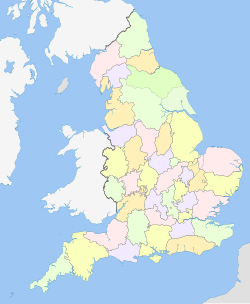
Ceremonial counties, formally known as counties for the purposes of the lieutenancies, are areas of England to which lord-lieutenants are appointed. A lord-lieutenant is the monarch's representative in an area.
Shrieval counties have the same boundaries and serve a similar purpose, being the areas to which high sheriffs are appointed. High sheriffs are the monarch's judicial representative in an area.
The ceremonial counties are defined in the Lieutenancies Act 1997, and the shrieval counties in the Sheriffs Act 1887. Both are defined as groups of counties used for local government.
History
The historic counties of England were originally used as areas for administering justice and organising the militia, overseen by a sheriff. From Tudor times onwards a lord-lieutenant was appointed to oversee the militia, taking some of the sheriff's functions.
Certain towns and cities were counties corporate, which gave them the right to appoint their own sheriffs and hold their own courts. Whilst in theory the counties corporate could have had separate lieutenants appointed for them, in practice all of them except London shared a lieutenant with the wider county from which they had been created. London had instead a commission of lieutenancy, headed by the Lord Mayor. The long-standing practice of appointing lieutenants jointly to the wider county and any counties corporate it contained was formalised by the Militia Act 1882.
Apart from the inclusion of the counties corporate, the counties for the purposes of lieutenancy generally corresponded to the judicial counties. The exception was Yorkshire, which was one judicial county, having a single Sheriff of Yorkshire, but from 1660 onwards each of Yorkshire's three ridings had its own lieutenant.
In 1889, elected county councils were established under the Local Government Act 1888, taking over the administrative functions of the quarter sessions. Certain towns and cities were made county boroughs, independent from the county councils. In counties where the quarter sessions had been held separately for different parts of the county, such as the Parts of Lincolnshire, each part was given its own county council. The area administered by a county council was called an administrative county. As such, some of the judicial or lieutenancy counties comprised several administrative counties and county boroughs.
The Ordnance Survey adopted the term 'geographical county' to describe the widest definition of the county. In most cases this was the lieutenancy county; the exceptions were Yorkshire, where the judicial county was larger on account of it being split into its three ridings for lieutenancy purposes, and the County of London where the administrative county was larger on account of the City of London and the rest of the county being separate for both judicial and lieutenancy purposes.
The counties lost their judicial functions in 1972, after which the main functions of the counties were the administrative functions of local government. Despite the loss of their functions, sheriffs continued to be appointed to the former judicial counties up until 1974.
In 1974, administrative counties and county boroughs were abolished, and a new system of metropolitan and non-metropolitan counties was introduced instead. Sheriffs were renamed 'high sheriffs' and both they and the lieutenants were appointed to the new versions of the counties.
The counties of Avon, Cleveland and Humberside, each of which had only been created in 1974, were all abolished in 1996. They were divided into unitary authorities; legally these are also non-metropolitan counties. As part of these reforms, it was decided to define counties for the purposes of lieutenancy differently from the local government counties in some cases, effectively reverting to the pre-1974 arrangements for lieutenancies. Whereas the lieutenancies had been defined slightly differently from the shrieval counties prior to 1974, it was decided in 1996 that the high sheriffs and lieutenants should be appointed to the same areas. Regulations amending the Sheriffs Act 1887 and specifying the areas for the appointment of lieutenants were accordingly brought in with effect from 1 April 1996.
The regulations were then consolidated into the Lieutenancies Act 1997. When Herefordshire, Rutland and Worcestershire were re-established as local government counties in 1997 and 1998 no amendment was made to the 1997 Act regarding them, allowing them to also serve as their own lieutenancy areas. The lieutenancy counties have not changed in area since 1998, although the definitions of which local government counties are included in each lieutenancy have been amended to reflect new unitary authorities being created since 1997.
In legislation the lieutenancy areas are described as 'counties for the purposes of the lieutenancies'; the informal term 'ceremonial county' has come into usage for such areas, appearing in parliamentary debates as early as 1996.
Shrieval counties
The shrieval counties are defined by the Sheriffs Act 1887 as amended, in a similar way to the lieutenancies defined by the Lieutenancies Act 1997. Each has a high sheriff appointed (except the City of London, which has two sheriffs).
Definition
The Lieutenancies Act 1997 defines counties for the purposes of lieutenancies in terms of metropolitan and non-metropolitan counties (created by the Local Government Act 1972, as amended) as well as Greater London and the Isles of Scilly (which lie outside the 1972 Act's system). Although the term is not used in the act, these counties are sometimes known as "ceremonial counties". The counties are defined in Schedule 1, paragraphs 2–5 as amended (in 2009, 2019 and 2023).
Generally, each time a new non-metropolitan county is created, the 1997 Act is amended to redefine the existing areas of the lieutenancies in terms of the new areas. No such amendment was made in 1997 when Rutland was made a unitary authority or in 1998 when Herefordshire and Worcestershire were re-established; those three therefore have been given their own lieutenants again since the passing of the 1997 Act. The actual areas of the ceremonial counties have not changed since 1998.
Lieutenancy areas since 1998
These are the 48 counties for the purposes of the lieutenancies in England, as currently defined:
| Location | Land area | Population (2024) | Density | Composition | ||
|---|---|---|---|---|---|---|
| (km2) | (mi2) | (/km2) | (/mi2) | |||
| Bedfordshire | 1,235 | 477 | 749,943 | 607 | 1,570 | BedfordCentral BedfordshireLuton |
| Berkshire | 1,262 | 487 | 992,327 | 786 | 2,040 | Bracknell ForestReadingSloughWest BerkshireWindsor and MaidenheadWokingham |
| Bristol | 110 | 42 | 494,399 | 4,508 | 11,680 | Bristol |
| Buckinghamshire | 1,874 | 724 | 884,656 | 472 | 1,220 | BuckinghamshireMilton Keynes |
| Cambridgeshire | 3,390 | 1,310 | 933,972 | 276 | 710 | CambridgeshirePeterborough |
| Cheshire | 2,346 | 906 | 1,139,884 | 486 | 1,260 | Cheshire EastCheshire West and ChesterHaltonWarrington |
| City of London | 2.89 | 1.12 | 15,111 | 5,229 | 13,540 | City of London |
| Cornwall | 3,562 | 1,375 | 585,655 | 164 | 420 | CornwallIsles of Scilly |
| Cumbria | 6,768 | 2,613 | 510,680 | 75 | 190 | CumberlandWestmorland and Furness |
| Derbyshire | 2,625 | 1,014 | 1,096,526 | 418 | 1,080 | DerbyshireDerby |
| Devon | 6,707 | 2,590 | 1,254,506 | 187 | 480 | DevonPlymouthTorbay |
| Dorset | 2,653 | 1,024 | 798,914 | 301 | 780 | DorsetBournemouth, Christchurch and Poole |
| Durham | 2,676 | 1,033 | 894,025 | 334 | 870 | County DurhamDarlingtonHartlepoolpart of Stockton-on-Tees north of the River Tees |
| East Riding of Yorkshire | 2,475 | 956 | 631,285 | 255 | 660 | East Riding of YorkshireKingston upon Hull |
| East Sussex | 1,791 | 692 | 844,752 | 472 | 1,220 | East SussexBrighton and Hove |
| Essex | 3,664 | 1,415 | 1,929,610 | 527 | 1,360 | EssexSouthend-on-SeaThurrock |
| Gloucestershire | 3,149 | 1,216 | 975,712 | 310 | 800 | GloucestershireSouth Gloucestershire |
| Greater London | 1,569 | 606 | 9,074,625 | 5,783 | 14,980 | None (see London boroughs) |
| Greater Manchester | 1,276 | 493 | 3,009,664 | 2,359 | 6,110 | Greater Manchester |
| Hampshire | 3,769 | 1,455 | 1,920,959 | 510 | 1,300 | HampshirePortsmouthSouthampton |
| Herefordshire | 2,180 | 840 | 191,047 | 88 | 230 | Herefordshire |
| Hertfordshire | 1,643 | 634 | 1,236,191 | 752 | 1,950 | Hertfordshire |
| Isle of Wight | 380 | 150 | 141,660 | 373 | 970 | Isle of Wight |
| Kent | 3,738 | 1,443 | 1,931,684 | 517 | 1,340 | KentMedway |
| Lancashire | 3,066 | 1,184 | 1,601,645 | 522 | 1,350 | Blackburn with DarwenBlackpoolLancashire |
| Leicestershire | 2,156 | 832 | 1,133,921 | 526 | 1,360 | LeicestershireLeicester |
| Lincolnshire | 6,976 | 2,693 | 1,120,749 | 161 | 420 | LincolnshireNorth LincolnshireNorth East Lincolnshire |
| Merseyside | 652 | 252 | 1,475,541 | 2,262 | 5,860 | Merseyside |
| Norfolk | 5,384 | 2,079 | 940,359 | 175 | 450 | Norfolk |
| North Yorkshire | 8,654 | 3,341 | 1,201,415 | 139 | 360 | MiddlesbroughNorth YorkshireRedcar and ClevelandYorkpart of Stockton-on-Tees south of the River Tees |
| Northamptonshire | 2,364 | 913 | 813,682 | 344 | 890 | North NorthamptonshireWest Northamptonshire |
| Northumberland | 5,020 | 1,940 | 331,420 | 66 | 170 | Northumberland |
| Nottinghamshire | 2,159 | 834 | 1,188,090 | 550 | 1,400 | NottinghamshireNottingham |
| Oxfordshire | 2,605 | 1,006 | 763,218 | 293 | 760 | Oxfordshire |
| Rutland | 382 | 147 | 41,443 | 109 | 280 | Rutland |
| Shropshire | 3,488 | 1,347 | 528,407 | 152 | 390 | ShropshireTelford and Wrekin |
| Somerset | 4,170 | 1,610 | 1,012,934 | 243 | 630 | Bath and North East SomersetNorth SomersetSomerset |
| South Yorkshire | 1,552 | 599 | 1,430,623 | 922 | 2,390 | South Yorkshire |
| Staffordshire | 2,714 | 1,048 | 1,177,578 | 434 | 1,120 | StaffordshireStoke-on-Trent |
| Suffolk | 3,800 | 1,500 | 786,231 | 207 | 540 | Suffolk |
| Surrey | 1,663 | 642 | 1,248,649 | 751 | 1,950 | Surrey |
| Tyne and Wear | 540 | 210 | 1,178,389 | 2,182 | 5,650 | Tyne and Wear |
| Warwickshire | 1,975 | 763 | 632,207 | 320 | 830 | Warwickshire |
| West Midlands | 902 | 348 | 3,036,605 | 3,368 | 8,720 | West Midlands |
| West Sussex | 1,991 | 769 | 915,037 | 460 | 1,200 | West Sussex |
| West Yorkshire | 2,029 | 783 | 2,435,236 | 1,200 | 3,100 | West Yorkshire |
| Wiltshire | 3,485 | 1,346 | 767,575 | 220 | 570 | SwindonWiltshire |
| Worcestershire | 1,741 | 672 | 621,360 | 357 | 920 | Worcestershire |
Geographical counties 1889–1974

After the creation of county councils in 1889, there were counties for judicial and shrieval purposes, counties for lieutenancy purposes, and administrative counties and county boroughs for the purposes of local government.
The 1888 Act used the term 'entire county' to refer to the group of administrative counties and county boroughs created within each judicial county. The Ordnance Survey used the term 'geographical county' to refer to this wider definition of the county.
Yorkshire had three lieutenancies, one for each riding, but was a single judicial county with one sheriff, and was counted as one geographical county by Ordnance Survey.
The counties lost their judicial functions in 1972 under the Courts Act 1971 which abolished the quarter sessions and assizes. Sheriffs continued to be appointed for each county despite the loss of the judicial functions. Certain towns and cities were counties corporate appointing their own sheriffs. The counties corporate were all included in a wider county for lieutenancy purposes, except the City of London which had its own lieutenants.
The geographical counties were relatively stable between 1889 and 1965. There were occasional boundary changes, notably following the Local Government Act 1894 which said that parishes and districts were no longer allowed to straddle county boundaries. After that most boundary changes were primarily to accommodate urban areas which were growing across county boundaries, such as when Caversham was transferred from Oxfordshire to Berkshire as a result of being absorbed into the County Borough of Reading in 1911.
The lieutenancies and judicial / shrieval counties were defined as groups of administrative counties and county boroughs, and so were automatically adjusted if the boundaries of those administrative areas changed. There were two exceptions to this rule (one only briefly). The county borough of Great Yarmouth straddled Norfolk and Suffolk for judicial and lieutenancy purposes until 1891 when it was placed entirely in Norfolk for those purposes. The county borough of Stockport straddled Cheshire and Lancashire for judicial and lieutenancy purposes – it was placed entirely in Lancashire for judicial purposes in 1956 but continued to straddle the two counties for lieutenancy purposes until 1974.
More significant changes to the geographical counties were made in 1965 with the creation of Greater London and of Huntingdon and Peterborough, which resulted in the abolition of the offices of Lord Lieutenant of Middlesex, Lord Lieutenant of the County of London, and Lord Lieutenant of Huntingdonshire and the creation of the Lord Lieutenant of Greater London and of the Lord Lieutenant of Huntingdon and Peterborough.
See also
- Counties of England
- Historic counties of England
- Counties in England by population
- List of ceremonial counties in England by GDP
- Lieutenancy areas of Scotland
- List of local governments in the United Kingdom
- Nomenclature of Territorial Units for Statistics
- Preserved counties of Wales
Notes
External links
- as in force today (including any amendments) within the United Kingdom, from legislation.gov.uk.