Ballon d'Or
In-game article clicks load inline without leaving the challenge.
The Ballon d'Or (French pronunciation: [balɔ̃dɔʁ] ⓘ; lit.'Golden Ball') is an annual association football award presented by French magazine France Football since 1956 to honour the player judged to have performed the best over the previous season.
Conceived by sports writers Gabriel Hanot and Jacques Ferran, the Ballon d'Or was based exclusively on voting by football journalists up until 2006. Originally, it was awarded only to players from Europe and was also known as the European Footballer of the Year award. In 1995, the Ballon d'Or was expanded to include all players of any origin active at European clubs. The award became a global prize in 2007 with all professional footballers being eligible; additionally, coaches and captains of national teams were also given the right to vote, before reverting to just journalists in 2016.
Between 2010 and 2015, in an agreement with FIFA, the award was merged with the FIFA World Player of the Year and rebranded as the FIFA Ballon d'Or. That partnership ended in 2016, and the award reverted to the Ballon d'Or, while FIFA also reinstated its own separate annual award, The Best FIFA Men's Player. In 2022, France Football modified the rules for the Ballon d'Or. The timing was changed so that the award is based on a football season rather than a calendar year, and an international jury of specialized journalists—one representative per country from the top 100 in the latest FIFA Men's World Ranking—was introduced to determine the winner. UEFA has co-organized the Ballon d'Or gala since 2024, with France Football retaining the voting system and the Ballon d'Or name.
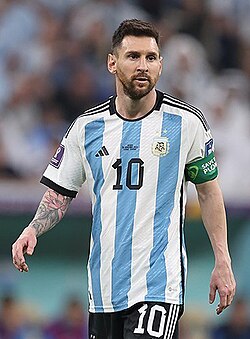
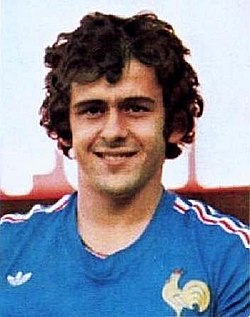
Lionel Messi has won the Ballon d'Or a record eight times, followed by Cristiano Ronaldo with five. Johan Cruyff, Michel Platini and Marco van Basten have each won the award three times, while Alfredo Di Stéfano, Franz Beckenbauer, Kevin Keegan, Karl-Heinz Rummenigge and Ronaldo have each won it twice. Ousmane Dembélé is the current holder of the award, having won its 69th edition in 2025.
Overview

The Ballon d'Or is widely regarded as the most prestigious individual award in football. Prior to 2007, it was based exclusively on voting by football journalists and was also known as the continental European Footballer of the Year award. Even after 2007, it was usually identified with and referred to by that name because of its origin as a European award, until it was merged with the FIFA World Player of the Year award cementing its new worldwide claim. Stanley Matthews of England was the inaugural winner of the award, and the oldest player to ever win it—at 41 years, 321 days old. Liberia's George Weah, the only African recipient, became the first non-European to win the award in 1995, the year that rules of eligibility were changed and the Ballon d'Or was expanded to include all players of any origin, active at European clubs; two years later, Ronaldo of Brazil became the first South American without a European citizenship to claim the award, and he is still the youngest winner ever at 21 years, 96 days old. The award became a global prize in 2007 with all professional footballers from clubs around the world being eligible; additionally, coaches and captains of national teams were also given the right to vote, before reverting to just journalists in 2016.

Lionel Messi holds the record for most Ballon d'Or wins with eight, while five-time winner Cristiano Ronaldo earned the most nominations with eighteen. Messi is the only player to win the award with three clubs and also the only one to win it while playing outside Europe, as well as being the player with the most podiums, finishing in the top-three a record fourteen times, including eleven consecutive from 2007 to 2017. Three players have won the award three times each: Johan Cruyff, Michel Platini and Marco van Basten. With seven awards each, Dutch, German, and Portuguese players have won the second most Ballons d'Or, underneath Argentina and France in first with eight. Players from West Germany (1972, 1981) and the Netherlands (1988) occupied the top-three spots in a single year. West German (1972) and Italian (1988–1990) clubs achieved the same feat, including two individual years dominated by Milan players (1988, 1989), a unique record until Spanish clubs experienced an unprecedented dominance (2009–2012, 2015, 2016) and Barcelona (2010) became the second club to occupy the top-three. The award shows a bias in favour of attacking players, and, over time, it has gone to a more exclusive set of leagues and clubs. Prior to 1995, ten leagues supplied Ballon d'Or winners, whereas only England, France, Germany, Italy, Spain and the United States have supplied winners since then. Spain's La Liga has the most Ballon d'Or winners overall, with twenty-four wins shared between Barcelona and Real Madrid; with twelve wins each, the two Spanish clubs also lead the overall club ranking for producing the most winners.
Between 2010 and 2015 inclusive, the award was merged with a similar one, the FIFA World Player of the Year award, to create the FIFA Ballon d'Or, which was awarded to the world's best male player before FIFA and France Football decided not to continue the merging agreement. The recipients of the joint FIFA Ballon d'Or are considered as winners by both award organizations. In 2020, Groupe Amaury, to which France Football belongs, decided that no award would be given for the year due to the impact of the COVID-19 pandemic on association football. It has been widely argued that the 2020 Ballon d'Or would likely have been awarded to Robert Lewandowski.
France Football modified the rules for the Ballon d'Or in 2022. They changed the timing so that awards were given not for achievements during a calendar year, but for a football season. It was also decided that an international jury of specialized journalists, with one representative per country, from the top 100 in the latest FIFA Men's World Ranking would determine the winner of the award; the plebiscite had previously been open to all countries since 2007. UEFA co-organizes the Ballon d'Or gala, a role it has held since 2024, with France Football retaining the voting system and the Ballon d'Or name.
Criteria
The Ballon d'Or is awarded based on three main criteria:
1) Individual performances, decisive and impressive character;
2) Team performances and achievements;
3) Class and fair play.
Nevertheless, critics have occasionally described the award as a "popularity contest", criticizing its voting process, its bias in favour of attacking players, and the idea of systematically singling out an individual in a team sport.
Winners




Note: Until 2021, the Ballon d'Or was awarded based on player performance during the calendar year. Since 2022, jurors have been instructed to take into account the previous season.
| Player (X) | Denotes the number of times the player had won the award at that time (for players with multiple wins) |
Notes
Wins by player


Wins by country


| Country | Players | Wins |
|---|---|---|
| France | 6 | 8 |
| Argentina | 1 | 8 |
| Germany | 5 | 7 |
| Netherlands | 3 | 7 |
| Portugal | 3 | 7 |
| Italy | 5 | 5 |
| Brazil | 4 | 5 |
| England | 4 | 5 |
| Spain | 3 | 4 |
| Soviet Union | 3 | 3 |
| Bulgaria | 1 | 1 |
| Croatia | 1 | 1 |
| Czech Republic | 1 | 1 |
| Czechoslovakia | 1 | 1 |
| Denmark | 1 | 1 |
| Hungary | 1 | 1 |
| Liberia | 1 | 1 |
| Northern Ireland | 1 | 1 |
| Scotland | 1 | 1 |
| Ukraine | 1 | 1 |
Wins by club


Additional awards
Seasonal awards

In addition to the Ballon d'Or award, France Football has introduced several complementary honours over the years to recognize excellence across different aspects of the game.
| Award | First awarded | Description |
|---|---|---|
| Ballon d'Or Féminin | 2018 | Awarded to the female player deemed to have performed the best over the previous season. |
| Kopa Trophy | 2018 | Awarded to the best performing player under the age of 21; since 2025, also awarded in women's football. |
| Yashin Trophy | 2019 | Awarded to the best goalkeeper of the season; since 2025, also awarded in women's football. |
| Gerd Müller Trophy | 2021 | Awarded to the highest-scoring player across club and international competitions over the season; originally introduced as Striker of the Year. |
| Club of the Year | 2021 | Awarded to the best performing club of the season, based on collective achievements; since 2023, also awarded in women's football. |
| Sócrates Award | 2022 | Awarded to footballers for outstanding humanitarian and social contributions off the pitch. |
| Johan Cruyff Trophy | 2024 | Awarded to the best coach of the season; includes men's and women's categories. |
Special awards

In addition to its annual awards, the Ballon d'Or has also been associated with a number of special and honorary distinctions, introduced on specific occasions to commemorate milestones, recognize all-time greatness, or address historical limitations of the award.
Super Ballon d'Or

The Super Ballon d'Or is an honorary award presented to Alfredo Di Stéfano in 1989, who was voted the greatest multiple-time Ballon d'Or winner ahead of Johan Cruyff and Michel Platini.
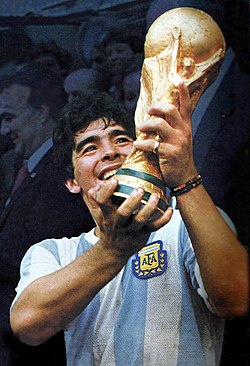
Additionally, other honorary distinctions have been awarded in connection with the Ballon d'Or. Diego Maradona received an honorary award in 1995, referred to as the Golden Ballon d'Or, in recognition of his services to football. Pelé received a similar honour during the 2013 FIFA Ballon d'Or ceremony, known as the FIFA Ballon d'Or Prix d'Honneur.
Football Player of the Century
In 1999, France Football voted Pelé as the Football Player of the Century after consulting their former Ballon d'Or recipients. Among the 34 previous winners, 30 cast their votes, while Stanley Matthews, Omar Sívori and George Best refused to vote, and Lev Yashin had died. Each voter was allotted five votes worth up to five points; however, Di Stéfano only chose a first place, Platini a first and second place, and George Weah two players for fifth place. Pelé was named the greatest by 17 voters, receiving almost double the number of points earned by the second place, Diego Maradona.
| Player | Pts | 1st | 2nd | 3rd | 4th | 5th |
|---|---|---|---|---|---|---|
| Brazil Pelé | 122 | 17 | 5 | 4 | 2 | 1 |
| Argentina Diego Maradona | 65 | 3 | 6 | 5 | 5 | 1 |
| Netherlands Johan Cruyff | 62 | 1 | 4 | 7 | 9 | 2 |
| Spain Alfredo Di Stéfano | 44 | 4 | 3 | 3 | 1 | 1 |
| France Michel Platini | 40 | 1 | 5 | 1 | 3 | 6 |
Le nouveau palmarès
To coincide with the 60th anniversary of the Ballon d'Or in 2016, France Football published an internationalized reevaluation of the awards presented before 1995, when only European players were eligible to win the award. 12 out of the 39 Ballons d'Or presented during this time period would have been awarded to South American players; in addition to Pelé—seven times—and Diego Maradona—twice—Garrincha, Mario Kempes, and Romário were retrospectively recognized as worthy winners. The original recipients, however, remain unchanged.
Ballon d'Or Dream Team

An all-time all-star team, the Ballon d'Or Dream Team, was published in December 2020 by France Football, honouring football's greatest players of all time. A second and a third team were also published.