EuroLeague
In-game article clicks load inline without leaving the challenge.
The EuroLeague is a European men's professional basketball club competition. The league is widely recognised as the top-tier and the most prestigious men's basketball league in Europe. The league consists of 20 teams, of which 16 are given long-term licences and wild cards, making the league a semi-closed league. The league was first organized by FIBA in 1958, subsequently by ULEB in 2000 and then solely by Euroleague Basketball.
The competition was introduced in 1958 as the FIBA European Champions Cup (renamed the FIBA EuroLeague in 1996), which operated under FIBA's umbrella until Euroleague Basketball was created for the 2000–01 season. The FIBA European Champions Cup and the EuroLeague are considered to be the same competition, with the change of name being simply a re-branding. From 2010 to 2025, it was sponsored by Turkish Airlines.
The EuroLeague is one of the most popular indoor sports leagues in the world, with an average attendance of 10,383 for league matches in the 2023–24 season. This was the fifth-highest of any professional indoor sports league in the world (the highest outside the United States), and the second-highest of any professional basketball league in the world, only behind the National Basketball Association (NBA).
The EuroLeague title has been won by 22 clubs, 15 of which have won it more than once. The most successful club in the competition is Real Madrid, with 11 titles while CSKA Moscow follow with 8 and Panathinaikos with 7. The latter is also the competition's most successful club during its modern era since 2000 with 6 trophies, while Virtus Bologna was the first ever winner in 2000–01.
Maccabi Tel Aviv was the competition's last ever champion during the FIBA period which was ended in 2001. Until then FIBA had organised 44 editions with Real Madrid also being the most decorated club during the FIBA era (1958–2001) with 8 titles.
History
FIBA era and the 2000 split
The FIBA European Champions Cup was originally established by FIBA and it operated from 1958 until the summer of 2001. Since the 1987–88 FIBA European Champions Cup and until 2001, the winner was decided by a final four.
The 1999–00 season was the last before the split of 2000 between FIBA and various top clubs backed by ULEB who launched its own top-tier competition. In the summer of 2000 the Euroleague Basketball was found.
FIBA had previously used the EuroLeague name for the competition since 1996, but it had never trademarked the name. As FIBA had no legal recourse on the usage of the name, ULEB grasped the opportunity and started a new league under the name of Euroleague', while FIBA renamed its top-tier competition the FIBA SuproLeague. Thus, the2000–2001 season started with two top European professional club basketball competitions: FIBA SuproLeague (renamed from FIBA EuroLeague) and EuroLeague by ULEB.
Top clubs were split between the two leagues: Panathinaikos, Maccabi Tel Aviv, CSKA Moscow and Efes Pilsen stayed with FIBA, while Olympiacos, Kinder Bologna, Real Madrid Teka, FC Barcelona, Paf Wennington Bologna, PAOK, Žalgiris Kaunas, Benetton Treviso, AEK and Tau Cerámica joined ULEB. The first Euroleague champion of the new era in 2000-01 was decided by a best of three series.
ULEB era (2001–2009)
In May 2001, Europe had two continental champions, Maccabi of the FIBA SuproLeague and Kinder Bologna of the ULEB Euroleague. Both organizations realized the need to come up with a unified competition and Euroleague Basketball negotiated terms and dictated proceedings which FIBA agreed to their terms. As a result, European club competition was fully integrated under Euroleague Basketball's umbrella and teams that competed in the FIBA SuproLeague during the 2000–01 season joined it as well.
The authority in European professional basketball was divided over club-country lines. FIBA stayed in charge of national team competitions (like the FIBA EuroBasket, the FIBA World Cup, and the Summer Olympics), while ULEB and Euroleague Basketball took over the major European club competition, establishing 3-year licences with top clubs - not based on sporting merit.
From that point on, FIBA's Korać Cup and Saporta Cup competitions lasted one more season and then Euroleague Basketball launched the ULEB Cup, now known as the EuroCup, following another major disagreement with FIBA who launched its own two competitions as an answer.
Euroleague Basketball (2009)
In 2009, Euroleague Properties S.A. (EP) was created and the competition's company Euroleague Basketball under Jordi Bertomeu took full control, limiting ULEB's role. During all this period many top European clubs had permanent presence in the competition via licences and regardless of their domestic performances.
In October 2015, FIBA tried to take control back, tempting 8 top European clubs (Panathinaikos, Olympiakos, Real Madrid, Barcelona, Maccabi Tel Aviv, CSKA Moscow, Fenerbahce and Efes Pilsen) to sign long-term licenses with the Federation in a 16-team brand new European league called the FIBA Basketball Champions League in a round-robin format (the other 8 spots would be decided on domestic performances). The clubs rejected the proposal, but they came up with an almost identical plan a few weeks later.
League era (2016–present)
In November 2015, Euroleague Basketball and IMG agreed on a 10-year joint venture. Both Euroleague Basketball and IMG will manage the commercial operation, and the management of all global rights covering both media and marketing. The deal was worth €630 million guaranteed over 10 years, with projected revenues reaching €900 million. Along with the deal the league changed into a true league format, with 16 teams playing each other team in the regular season followed by the playoffs. The A-licensed clubs were assured of participation for the following ten years in the new format.
After the new format of the EuroLeague and FIBA implementing national team windows, a conflict between the two organizations emerged. EuroLeague has been criticised by FIBA as well as several national federations for creating a 'closed league' and ignoring the principle of meritocracy. In July 2019, EuroLeague announced that from the 2019–20 season there will be no direct access to the league through domestic leagues anymore, effectively making it a closed league.
The EuroLeague saw increasing influence from the Middle East during the 2020s. The league had another milestone event in 2025, when it hosted the Final Four in Abu Dhabi, as the first final tournament to be held outside of Europe. The league further expanded to 20 teams in the 2025–26 season. As part of the expansion, Dubai Basketball was given a 5-year license, thus becoming the first team from outside of Europe (excluding Israeli teams) to play in the competition.
Title sponsorship
In years 2010–2025, EuroLeague was sponsored by Turkish Airlines. In a five-year €15 million deal, starting in the 2010–11 season, the competition was named 'Turkish Airlines Euroleague Basketball'. The agreement included an option to extend it for another five years. The option was activated in October 2013, extending the sponsorship deal until 2020. On July 1, 2025, it has ended sponsor naming rights of Turkish Airlines. In September 2025, EuroLeague announced a four-year partnership with the Abu Dhabi Department of Culture and Tourism and Etihad Airways, designating them as Main Partners of the EuroLeague and EuroCup competitions and Final Four Presenting Partner. The agreement includes brand visibility for Experience Abu Dhabi and Etihad Airways across arenas, live broadcasts and team jerseys in all EuroLeague and EuroCup games.
Names of the competition

- FIBA era: (1958–2001) FIBA European Champions Cup: (1958–1991) FIBA European League: (1991–1996) FIBA EuroLeague: (1996–2000) FIBA SuproLeague: (2000–2001)
- Euroleague Basketball era: (2000–present) ULEB Euroleague: (2000–2001) Euroleague: (2001–2016) EuroLeague: (2016–present)
*There were two competitions during the 2000–01 season. The SuproLeague, which was organized by FIBA, and the Euroleague, which was organized by ULEB and Euroleague Basketball.
Licences
The main difference between the competition run by FIBA Europe and the modern one since 2000 has been the licenses that guaranteed a club's participation in the Euroleague regardless of their performance in their national championship. The 3-year guaranteed participation was granted by an A-license. In 2009 the A-Licenses granted were 13, while in 2012 they became 14.
Until 2015, many major clubs would compete with a 3-year licence, while others would get a wild card or a B-License for one year. In 2015, 11 clubs signed long-term licenses with the Euroleague Basketball (until 2026) and they also became the company's shareholders leaving only 5 spots to other teams to participate. In 2021–22 season, ASVEL and Bayern Munich were added to the shareholders' group taking the number to 13. As of the 2025–26 season, the Euroleague Basketball offers 3-year licenses to clubs other than the 13 shareholders with the fee being 5 million euros in total (about 1.7 million euros per year). The EuroLeague Board of Directors, composed of the 13 shareholders, is responsible to evaluate each individual request of a club for a 3-year license. In 2025, Euroleague Basketball granted 3-year licenses (until 2028) to the following clubs:
- KK Crvena zvezda
- KK Partizan
- Virtus Bologna
- Valencia Basket
- Dubai Basketball (5-year license, until 2030)
A-Licenses history
| Club | First License | Second License | Third License | Fourth License | Fifth License | Shareholder |
|---|---|---|---|---|---|---|
| Olympiacos B.C. | 2000–2003 | 2003–2006 | 2006–2009 | 2009–2012 | 2012–2015 | 2015–2026 |
| Panathinaikos B.C. | 2001–2003 | - | 2006–2009 | 2009–2012 | 2012–2015 | 2015–2026 |
| Anadolu Efes S.K. | 2001–2003 | 2003–2006 | 2006–2009 | 2009–2012 | 2012–2015 | 2015–2026 |
| Maccabi Tel Aviv B.C. | 2001–2003 | 2006–2009 | 2009–2012 | 2012–2015 | 2015–2026 | |
| Real Madrid Baloncesto | 2000-2003 | - | 2006–2009 | 2009–2012 | 2012–2015 | 2015–2026 |
| Saski Baskonia | - | 2003–2006 | 2006–2009 | 2009–2012 | 2012–2015 | 2015–2026 |
| FC Barcelona Bàsquet | 2000–2003 | 2003–2006 | 2006–2009 | 2009–2012 | 2012–2015 | 2015–2026 |
| Fenerbahçe S.K. | - | - | 2006–2009 | 2009–2012 | 2012–2015 | 2015–2026 |
| BC Žalgiris | 2001–2003 | 2003–2006 | 2009–2012 | 2012–2015 | 2015–2026 | |
| PBC CSKA Moscow | 2001–2003 | 2003–2006 | 2009–2012 | 2012–2015 | 2015–2026 | |
| KK Olimpija | 2000–2003 | 2003–2006 | 2006–2009 | 2009–2012 | - | - |
| Virtus Roma | - | - | - | 2009-2011 | 2012–2015 | - |
| ASVEL Basket | 2001–2003 | 2003–2006 | - | - | - | 2021–2026 |
| Mens Sana Siena | - | 2003–2006 | 2006–2009 | 2009–2012 | 2012-2014 | - |
| Unicaja Malaga | - | 2006–2009 | 2009–2012 | 2012–2015 | - | |
| Prokom Trefl Sopot | - | - | - | 2009–2012 | 2012-2015 | - |
| EA7 Milano | - | - | - | - | 2012-2015 | 2015–2026 |
| Ülker G.S.K. | 2001–2003 | 2003–2006 | - | - | - | - |
| KK Cibona | 2000–2003 | 2003–2006 | 2006–2009 | - | - | - |
| AEK B.C. | - | 2003–2006 | - | - | - | - |
| Élan Béarnais Pau-Orthez | 2001–2003 | 2003–2006 | - | - | - | - |
| Le Mans Sarthe Basket | - | - | 2006–2009 | - | - | - |
| KK Zadar | 2000–2002 | - | - | - | - | - |
| KK Budućnost | 2000–2003 | - | - | - | - | - |
| Virtus Bologna | 2000–2002 | - | - | - | - | - |
| Fortitudo Bologna | 2000–2003 | 2003–2006 | - | - | - | - |
| Benetton Treviso | 2000–2003 | 2003–2006 | - | - | - | - |
| Opel Skyliners | 2000–2002 | - | - | - | - | - |
| London Towers | 2000–2002 | - | - | - | - | - |
| Alba Berlin | 2001–2003 | - | - | - | - | - |
| FC Bayern Munich | - | - | - | - | - | 2021–2026 |
Wild cards history
| Club | Period |
|---|---|
| Saint Petersburg Lions | 2000–2001 |
| Śląsk Wrocław | 2003–2004 |
| Mens Sana Siena | 2002–2003 |
| Darüşşafaka Basketbol | 2015–2017 |
| FC Bayern Munich | 2015–2016, 2019-2020 |
| SIG Strasbourg | 2015–2016 |
| Lokomotiv Kuban | 2015–2016 |
| Alba Berlin | 2021–2023, 2023–2025 |
| BC Zenit Saint Petersburg | 2019–2020, 2021-2022 |
| KK Crvena zvezda | 2021–2022, 2023–2024, 2025–2028 |
| KK Partizan | 2022–2023, 2024–2025, 2025–2028 |
| Valencia Basket | 2022–2023 |
| Virtus Bologna | 2023–2025, 2025–2028 |
| ASVEL Basket | 2020–2021 |
| AS Monaco | 2024–2026 |
| Dubai Basketball | 2025–2030 |
Competition systems
Tournament systems
The EuroLeague operated under a tournament system, from its inaugural 1958 season, through the 2015–16 season.
- FIBA European Champions Cup (1958 to 1986–87): The champions of European national domestic leagues, and the then current European Champions Cup title holders (except for the 1986–87 season), competing against each other, played in a tournament system. The league culminated with either a single game final, or a 2-game aggregate score finals (3 games if needed to break a tie).
- FIBA European Champions Cup (1987–88 to 1990–91): The champions of European national domestic leagues, competing against each other, played in a tournament system. The league culminated with a Final Four.
- FIBA European League (1991–92 to 1995–96): The champions of the European national domestic leagues, the then current European League title holders, along with some of the other biggest teams from the most important national domestic leagues, played in a tournament system. The league culminated with a Final Four.
- FIBA EuroLeague (1996–97 to 1999–00): The champions of the best European national domestic leagues, along with some of the other biggest teams from the most important national domestic leagues, played in a tournament system. The league culminated with a Final Four.
- *Euroleague (2000–01): Some of the European national domestic league champions, and some of the runners-up from various national domestic leagues, played in a tournament system. The league culminated with a best of 5 playoff finals.
- *FIBA SuproLeague (2000–01): Some of the European national domestic league champions, and some of the runners-up from various national domestic leagues, played in a tournament system. The league culminated with a Final Four.
- Euroleague (2001–02 to 2015–16): The champions of the best European national domestic leagues, along with some of the other biggest teams from the most important national domestic leagues, played in a tournament system. The league culminated with a Final Four.
*There were two competitions during the 2000–01 season. The SuproLeague, which was organized by FIBA, and the Euroleague, which was organized by Euroleague Basketball.
League system
Starting with the 2016–17 season, the EuroLeague operates under a league format.
- EuroLeague (2016–17 to present): The champions of the best European national domestic leagues, along with some of the other biggest teams from the most important national domestic leagues, playing in a true European-wide league system format. The league culminates with a Final Four.
Format

Starting with the 2016–17 season, the EuroLeague is made up of 20 teams, with each playing every other team twice (once at home and once away) in a double round robin league regular season, for a total of 38 games played by each team.
The top eight placed teams at the end of the regular season advance to playoffs, each playing a five-game playoff series against a single opponent. The regular season standings are used to determine which teams play each other, and in each pairing the higher placed team has home-court advantage in the series, playing three of the five games at home. The winners of each of the four playoff series advance to the Final Four, held at a predetermined site. The Final Four features two semi-finals, a third place game, and the championship game, all on the same weekend.[citation needed]
Each team plays a maximum 45 games per season: 38 in the regular season, a maximum of 5 during the playoffs, and 2 in the Final Four.[citation needed]
Qualification
Currently (and since the suspension of Russian teams because of the Russian invasion of Ukraine), 12 out of the 18 EuroLeague places are held by licensed clubs that have long-term licenses with Euroleague Basketball, and are members of the Shareholders Executive Board. These twelve licensed clubs are:
The remaining six EuroLeague places are held by associated clubs that have annual licences, of which one has a two-year wild card, three have one-year wild-cards and two are the finalists of the previous season's 2nd-tier European competition, the EuroCup. From the 2020–21 season, however, if the better of the two teams from the EuroCup makes it to the playoffs, it keeps the place for the following year.
European professional basketball club rankings
Current clubs
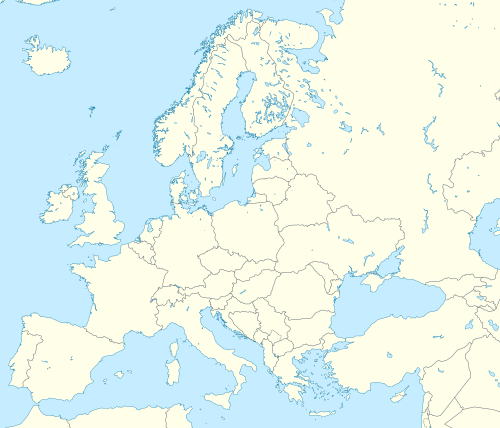
These are the teams that participate in the 2025–26 EuroLeague season:
Results
- 1958–2001: FIBA European Champions Cup, FIBA European League, FIBA Euroleague, FIBA Suproleague
- 2001–present: ULEB Euroleague, EuroLeague
FIBA era (1958–2001)
ULEB and ECA era (2000–present)
Team statistics
Titles by club
Titles by nation
| Rank | Country | Club | Titles | Runners-up |
|---|---|---|---|---|
| 1. | Spain Spain | Real Madrid | 11 | 10 |
| FC Barcelona | 2 | 6 | ||
| Joventut Badalona | 1 | 1 | ||
| Baskonia | – | 2 | ||
| 4 clubs | 14 | 19 | ||
| 2. | Italy Italy | |||
| Varese | 5 | 5 | ||
| Olimpia Milano | 3 | 2 | ||
| Virtus Bologna | 2 | 3 | ||
| Cantù | 2 | – | ||
| Virtus Roma | 1 | – | ||
| Treviso | – | 2 | ||
| Fortitudo Bologna | – | 1 | ||
| 7 clubs | 13 | 13 | ||
| 3. | Greece Greece | Panathinaikos | 7 | 1 |
| Olympiacos | 3 | 6 | ||
| AEK | – | 1 | ||
| 3 clubs | 10 | 8 | ||
| 4. | Soviet Union Soviet Union* | CSKA Moscow | 4 | 3 |
| Rīgas ASK | 3 | 1 | ||
| Dinamo Tbilisi | 1 | 1 | ||
| Žalgiris | - | 1 | ||
| 4 clubs | 8 | 6 | ||
| 5. | Socialist Federal Republic of Yugoslavia Yugoslavia* | Split | 3 | 1 |
| Cibona | 2 | – | ||
| Bosna | 1 | – | ||
| Partizan | 1 | – | ||
| 4 clubs | 7 | 1 | ||
| 6. | Israel Israel | Maccabi Tel Aviv | 6 | 9 |
| 7. | Russia Russia | CSKA Moscow | 4 | 3 |
| – | Turkey Turkey | Fenerbahçe | 2 | 2 |
| Anadolu Efes | 2 | 1 | ||
| 2 clubs | 4 | 3 | ||
| 9. | France France | Limoges CSP | 1 | – |
| Monaco | – | 1 | ||
| 2 clubs | 1 | 1 | ||
| 10. | Lithuania Lithuania | Žalgiris | 1 | – |
| 11. | Czechoslovakia Czechoslovakia* | Brno | – | 2 |
| USK Praha | – | 1 | ||
| 2 clubs | 0 | 3 | ||
| 12. | Bulgaria Bulgaria | Academic | – | 2 |
- Countries marked with an asterisk no longer exist.
Records
FIBA era
- Real Madrid has been the most successful team, having won the competition a record eleven times (four since 2000–01).
- Split (1988–89, 1989–90, 1990–91), is the only team to have won the competition three times in a row in the modern EuroLeague Final Four era (1987–88 season to present).
- Rīgas ASK, as a Soviet League club in the late 1950s and early 1960s (1958, 1958–59, 1959–60), is the only team to have won the competition three times in a row in the pre-EuroLeague Final Four era.
- Real Madrid (1963–64, 1964–65) & (1966–67, 1967–68), along with Varese (1971–72, 1972–73) & (1974–75, 1975–76), are the only teams to have won the European Championship twice in a row on two occasions in the pre-modern EuroLeague Final Four era.
- Cantù (1981–82, 1982–83), Cibona (1984–85, 1985–86), and Olimpia Milano (1986–87, 1987–88), are the other three teams to have won the European Championship twice in a row (only for one time) in the pre-modern EuroLeague Final Four era.
- The most points ever scored in a single game by an individual in the league's overall history (since 1958), is 99 points, by Radivoj Korać of OKK Beograd, on 14 January 1965, during the 1964–65 season, in a game against Alvik.
- The most points ever scored in a single game by an individual in the league since Euroleague Basketball has owned the competition (2000), is 50 points, by Nigel Hayes of Fenerbahçe, on 29 March 2024, during the 2023–24 season, in a game against Alba Berlin.
- The most points ever scored in a single EuroLeague Finals game by an individual is 47 points, in the 1978–79 season, by Žarko Varajić of Bosna, in a game against Emerson Varese on 5 April 1979.
- In a small area of less than 40 km2 (25 mi2), north of Milan, there are 3 clubs that have won a total of 10 FIBA European Champions' Cups, and played in a total of 16 finals: Pallacanestro Varese (5), Olimpia Milano (3) and Cantù (2)
Modern era (2000-present)
- Maccabi Tel Aviv (2003–04, 2004–05), Olympiacos (2011–12, 2012–13), and Anadolu Efes (2020–21, 2021–22) are the only teams to have won the EuroLeague twice in a row, becoming back-to-back EuroLeague champions in the Euroleague Basketball era (2000–01 season to present).
- Fenerbahçe are the only team which stayed undefeated at home after a 30-game regular season and secured the best record after a regular season (25–5) under the new format (2016–17 season to present). They are also the earliest EuroLeague Playoffs qualifiers ever in the modern EuroLeague era.
- Istanbul is the only city from which nine clubs have played in the competition: Beşiktaş, Darüşşafaka, Eczacıbaşı, Efes, Fenerbahçe, Galatasaray, Istanbul Technical University, Modaspor, and Ülker have participated in the EuroLeague.
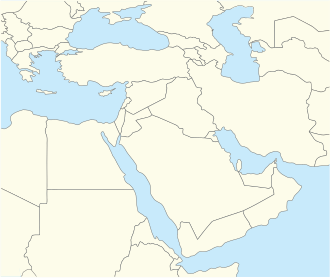
- Although Israel is located in the Middle East, its teams play in the EuroLeague, as its national federation is a member of FIBA Europe and its top professional league is a member of ULEB. Similarly, the Israel Football Association is a member of UEFA, enabling its national team and clubs to play in UEFA competitions.
- The record score differential for a EuroLeague Finals game was achieved at the 2004 Finals, in Tel Aviv, where the home club, Maccabi Tel Aviv, defeated Skipper Bologna, by a score of 118–74 (a 44-point difference).
- A crowd of 22,567, which filled Belgrade Arena on 5 March 2009, for a 2008–09 season Top 16 game between Partizan and Panathinaikos is the league's official all seated attendance record. Before that, a crowd of 18,500 all seated fans occurred at a Panathinaikos home game at the Olympic Indoor Hall, in Athens, against Tau Cerámica, on 12 April 2006, during the 2005–06 third quarterfinal playoff game.
EuroLeague awards
Season statistical leaders
All-time leaders

Since the beginning of the 2000–01 season (Euroleague Basketball era):
Individual performances
Attendances
Season averages
All averages include playoffs and Final Four games.
Historic average attendances
This list shows the averages attendances of each team since the double round robin regular season was established in 2016. All averages include playoffs games.
| Team / Season | 2016-17 | 2017-18 | 2018-19 | 2019-20 | 2020-21 | 2021-22 | 2022-23 | 2023-24 | 2024-25 |
|---|---|---|---|---|---|---|---|---|---|
| Alba Berlin | – | – | – | 9,930 | – | 3,825 | 8,820 | 9,406 | 9,180 |
| Anadolu Efes | 5,320 | 3,900 | 8,247 | 13,113 | – | 11,876 | 13,126 | 12,471 | 9,564 |
| ASVEL Basket | – | – | – | 5,326 | – | 4,237 | 5,301 | 7,565 | 7,368 |
| Bamberg Baskets | 6,415 | 6,188 | – | – | – | – | – | – | – |
| Barcelona | 4,931 | 5,679 | 5,793 | 5,977 | – | 5,174 | 6,353 | 6,444 | 6,242 |
| Baskonia | 11,633 | 11,351 | 11,138 | 10,661 | – | 6,885 | 8,898 | 9,970 | 9,482 |
| Bayern Munich | – | – | 4,349 | 4,688 | – | 2,673 | 5,549 | 6,218 | 10,898 |
| Budućnost | – | – | 4,792 | – | – | – | – | – | – |
| Crvena Zvezda | 9,818 | 6,277 | – | 11,744 | – | 6,042 | 7,085 | 17,842 | 18,239 |
| CSKA Moscow | 8,293 | 8,211 | 7,198 | 7,050 | – | – | – | – | – |
| Darüşşafaka | 4,677 | – | 2,691 | – | – | – | – | – | – |
| Fenerbahçe | 11,219 | 11,566 | 10,737 | 9,862 | – | 5,545 | 10,465 | 10,065 | 10,931 |
| Galatasaray | 4,806 | – | – | – | – | – | – | – | – |
| Gran Canaria | – | – | 4,823 | – | – | – | – | – | – |
| BC Khimki | – | 6,022 | 5,502 | 5,189 | – | – | – | – | – |
| Maccabi Tel Aviv | 10,888 | 10,731 | 10,522 | 10,038 | – | 8,429 | 10,400 | 648 | 178 |
| Málaga | – | 7,272 | – | – | – | – | – | – | – |
| Monaco | – | – | – | – | – | 3,536 | 4,392 | 4,052 | 4,071 |
| Olimpia Milano | 9,483 | 7,472 | 8,493 | 8,491 | – | 4,893 | 9,270 | 10,051 | 9,158 |
| Olympiacos | 9,360 | 8,913 | 8,203 | 7,287 | – | 7,037 | 10,449 | 11,535 | 11,631 |
| Panathinaikos | 11,172 | 13,005 | 12,530 | 9,858 | – | 3,883 | 6,173 | 15,299 | 17,464 |
| Paris Basketball | – | – | – | – | – | – | – | – | 7,621 |
| Partizan | – | – | – | – | – | – | 17,938 | 19,916 | 18,551 |
| Real Madrid | 10,312 | 10,030 | 9,792 | 9,649 | – | 5,943 | 8,128 | 8,914 | 9,236 |
| BC UNICS | 3,734 | – | – | – | – | – | – | – | – |
| Valencia Basket | – | 6,753 | – | 7,433 | – | – | 6,064 | 6,369 | |
| Virtus Bologna | – | – | – | – | – | – | 6,169 | 8,033 | 7,799 |
| Žalgiris | 11,418 | 13,560 | 14,808 | 14,221 | – | 7,630 | 14,839 | 14,773 | 14,872 |
| Zenit | – | – | – | 4,299 | – | – | – | – | – |
Individual game highest attendance
[citation needed]
| Rank | Home team | Score | Away team | Attendance | Arena | Date | Ref |
|---|---|---|---|---|---|---|---|
| 1 | Serbia Partizan | 63–56 | Greece Panathinaikos | 22,567 | Belgrade Arena | 5 March 2009 | |
| 2 | Serbia Partizan | 79–76 | Serbia Crvena zvezda Meridianbet | 21,854 | Belgrade Arena | 12 December 2025 | |
| 3 | Serbia Partizan | 64–80 | Spain Real Madrid | 21,374 | Belgrade Arena | 2 January 2014 | |
| 4 | Serbia Partizan | 76–67 | Israel Maccabi Tel Aviv | 21,367 | Belgrade Arena | 1 April 2010 | |
| 5 | Serbia Partizan | 56–67 | Russia CSKA Moscow | 21,352 | Belgrade Arena | 31 March 2009 | |
| 6 | Serbia Crvena zvezda Meridianbet | 80–86 | Lithuanian Basketball Federation Žalgiris | 20,999 | Belgrade Arena | 27 February 2025 | |
| 7 | Serbia Crvena zvezda Meridianbet | 72–78 | Spain Real Madrid | 20,997 | Belgrade Arena | 28 March 2025 | |
| 8 | Serbia Crvena zvezda Meridianbet | 94–98 | Spanish Basketball Federation Barcelona | 20,991 | Belgrade Arena | 18 October 2024 | |
| 9 | Serbia Crvena zvezda Meridianbet | 85–69 | French Federation of Basketball Paris Basketball | 20,990 | Belgrade Arena | 10 January 2025 | |
| 10 | Serbia Crvena zvezda Meridianbet | 91–96 | Turkish Basketball Federation Fenerbahçe Beko | 20,989 | Belgrade Arena | 15 January 2025 |
Media coverage
The EuroLeague season is broadcast on television, and can be seen in up to 201 countries and territories. It can be seen by up to 245 million (800 million via satellite) households weekly in China.
EuroLeague basketball has been televised in the United States through the ESPN family of networks since 2023, starting with the playoffs of the 2022–2023 season. It was also televised in the United States and Canada on NBA TV and available online through ESPN3 (in English) and ESPN Deportes (in Spanish) until the 2017–2018 season. Starting with the 2017-2018 Final Four playoffs, and continuing into the 2018-2019 and 2019–2020 seasons, the coverage moved to FloSports, before returning later to the ESPN networks.
The EuroLeague Final Four is broadcast on television in up to 213 countries and territories. The EuroLeague also has its own internet pay TV service, called EuroLeague TV.
Broadcasters
This is a partial list of television broadcasters that provide coverage of the EuroLeague.
Sponsors
| Premium partners BKT Motorola Mobility Experience Abu Dhabi Adidas | Official Partners VISA Spalding AX Armani Exchange DenizBank Castrol Enerjisa Commodities Vatanmed McDavid Uludağ Gazoz | Licensing Partners Amazon Panini |
Source:
See also
- EuroLeague versus NBA games
- European professional club basketball system
- All-EuroLeague Team
- EuroLeague Final Four