Hungary national football team
In-game article clicks load inline without leaving the challenge.
The Hungary national football team (Hungarian: magyar labdarúgó-válogatott, pronounced [ˈmɒɟɒrˈlɒbdɒruːɡoːˈvaːloɡɒtotː]) represents Hungary in men's international football, and is controlled by the Hungarian Football Federation. The team has made nine appearances in the FIFA World Cup, and five in the UEFA European Championship. Hungary plays their home matches at the Puskás Aréna, in Budapest, which opened in November 2019.
Hungary has a respectable football history, having won three Olympic gold medals, finishing runners-up in the 1938 and 1954 World Cup, and third place in the 1964 European Championship. Hungary revolutionized the sport in the 1950s, laying the tactical fundamentals of Total Football and dominating international football with the remarkable Golden Team which included legend Ferenc Puskás, one of the top goalscorers of the 20th century, to whom FIFA dedicated the Puskás Award, given annually to the player who scored the "most beautiful" goal of the calendar year. The side of that era has the all-time highest Football Elo Ranking in the world, with 2230 in 1954, and one of the longest undefeated runs in football history, remaining unbeaten in 31 games, spanning over four years including the much heralded Match of the Century.
The Hungarian team faced a severe drought starting from their elimination at the 1986 World Cup, failing to qualify for a major tournament for thirty years and reaching their lowest FIFA ranking (87) in 1996, as well as finishing sixth in their group of the Euro 2008 qualifiers. They then began a turnaround, qualifying for three consecutive European Championship in 2016, 2020 and 2024, as well as achieving promotion to the 2022–23 UEFA Nations League A.
History
Although Austria and Hungary were constituent countries of the dual monarchy known as the Austro-Hungarian Empire, they formed separate football associations and teams around the start of the 20th century.
Early years
1910s

The national side first appeared at the Summer Olympic Games in 1912 in Stockholm, Sweden. The team had to ask for donations in order to be able to go to the Games. Hungary lost 7–0 to England and thus were eliminated. After the Olympic Games Hungary played two matches against Russia in Moscow. The first match was a 9–0 win and the second 12–0, which is still a record for the national side. The top scorer of the two matches was Imre Schlosser who scored seven goals. The beginning of World War I had a deep impact on the thriving Hungarian football. Both the country and the clubs were suffering financial problems. During WWI Hungary played Austria 16 times. In 1919 England claimed the exclusion of the Central Powers (including Hungary) from FIFA. When FIFA refused England's plea, the British (English, Scottish, Welsh, and Irish) associations decided to resign from FIFA.
1920s

Budapest was denied the opportunity to host the 1920 Summer Olympics, which were held in Belgium. The countries of the Central Powers (Germany, Austria-Hungary, Ottoman Empire and Bulgaria) were excluded from the Olympics. Hungary used a unique 2–3–5 formation.
During this period the Fogl brothers (József and Károly Fogl) played in the national team. Between 1921 and 1924, Béla Guttmann also played six times for the team. At the 1924 Summer Olympics in Paris, Guttmann objected to the fact that there were more officials than players in the Hungary squad and that the hotel was more suitable for socialising than match preparation, and to demonstrate his disapproval he hung dead rats on the doors of the travelling officials. At the 1924 Summer Olympics, in the first match Hungary beat Poland. They then lost to Egypt. As a consequence, both the head coach and the head of the Hungarian Football Federation resigned.
Between 1927 and 1930, Hungary participated in the Central European International Cup which is considered to be the first international tournament, with Austria, Czechoslovakia, Italy and Switzerland. In the final, Hungary lost to Italy 5–0. On 12 June 1927, Hungary beat France 13–1, which is still a record. József Takács scored six goals.
Golden Era
1930s
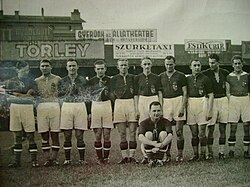
The first FIFA World Cup was held in Uruguay in 1930, but Hungary were not invited and did not take part in the tournament; there were no qualification matches. Hungary first appeared in the 1934 World Cup in Italy. Hungary's first World Cup match was against Egypt on 27 May 1934, a 4–2 win. The goals were scored by Pál Teleki, Géza Toldi (2) and Jenő Vincze. In the quarter-finals, Hungary faced neighbouring arch-rivals Austria and lost 2–1, the only Hungarian goal coming from György Sárosi.
Hungary entered the 1936 Olympics, where in the first round they were eliminated by Poland, 0–3.
The 1938 World Cup was held in France. The first match was played against Dutch East Indies and Hungary won 6–0. Sárosi and Gyula Zsengellér each scored twice while Vilmos Kohut and Toldi scored one goal each. In the quarter-finals, Hungary beat Switzerland 2–0 with goals by Sárosi and Zsengellér. In the semi-final at the Parc des Princes, Paris, Hungary beat Sweden 5–1 with goals by Ferenc Sas and Sárosi and a hat-trick by Zsengellér. In the final, Hungary faced Italy at the Stade Olympique de Colombes, Paris and fell 4–2. The Hungarian goals were scored by Pál Titkos and Sárosi.
1950s
This Hungarian team was best known as one of the most formidable and influential sides in football history, which revolutionised the play of the game. Centred around the dynamic and potent quartet of strikers Ferenc Puskás, Sándor Kocsis, attacking half-back József Bozsik and second striker Nándor Hidegkuti, the Aranycsapat ("Golden Team") of the "Magnificent Magyars" captivated the football world with an exciting brand of play with innovative tactical nuances. Excluding the 1954 World Cup Final, they achieved a remarkable record of 43 victories, 6 draws, and 0 defeats from 14 May 1950 until they lost 3–1 to Turkey on 19 February 1956.

In the 1952 Summer Olympics in Helsinki, Hungary beat Romania 2–1 with a goal each from Czibor and Kocsis in the preliminary round. In the first round Hungary beat Italy 3–0; in the quarter-finals Hungary beat Turkey 7–1; and in the semi-finals Hungary faced Sweden, the 1948 Olympic champions and won 6–0. In the final, Hungary beat Yugoslavia 2–0 with a goal each from Puskás and Czibor and thus won the Olympic title for the first time.
On 25 November 1953, England played Hungary at Wembley Stadium, London in a match later dubbed as the "match of the century". The English team were unbeaten for 90 years at home. In front of 105,000 spectators Nándor Hidegkuti scored in the first minute. At half-time the score was 4–2 to Hungary. In the second half the Hungarians scored twice more (Hidegkúti and József Bozsik). The final score was 6–3.

On 23 May 1954, the Hungary national team beat England 7–1 (which remains their worst defeat to date) at the Puskás Ferenc Stadium. At that time in Hungary there was a saying about the match: Az angolok egy hétre jöttek és hét-egyre mentek, which is a double play on words. The word "week" in Hungarian is called "hét", meaning the number seven: "the English came for one week and left with 7:1."
The 1954 World Cup was held in Switzerland. The first match was played against South Korea and Hungary won 9–0 at the Hardturm, Zürich. In the second group match, Hungary played against West Germany and won 8–3 at St. Jakob Stadium, Basel. In the quarter-finals, Hungary beat Brazil 4–2 at the Wankdorf Stadium, Bern. In the semi-finals, Hungary faced two-time World Cup winner Uruguay in Lausanne; Hungary won 4–2 after extra time. In the final, Hungary played West Germany again. Although Hungary won the group match against the Germans, they lost 3–2 in the final in Bern at the Wankdorf Stadium. The Golden Team, built around the legendary Ferenc Puskás, led 2–0, but ended up losing 2–3 in a game the West Germans subsequently christened "The Miracle of Bern". In 2010, journalist Erik Eggers speculates in a study that the German team may have used drugs to beat the Hungarian team, who were considered "invincible" at that time.
Hungary saw the 1956 revolution break out just weeks before the 1956 Olympics in Melbourne, which was also the scene of the Blood in the Water Match. The football team also qualified as the defending champions, but they were withdrawn from the tournament. The political situation in Hungary caused several athletes to defect during the Olympics, including key players in the team. This marked the effective end of the Golden Team, as they would never play for the national team again. Among others, Puskás moved to Real Madrid and later played for Spain, whereas Kocsis and Czibor left for Barcelona.
Hungary qualified for the 1958 World Cup in Sweden. They played their first match against Wales at the Jarnvallen stadium in Sandviken and drew 1–1. The second group match was played against hosts Sweden, where Hungary lost 2–1 at the Råsunda Stadium, Solna. Although Hungary won their last group match against Mexico at the Jarnvallen stadium in Sandvinken, they were eliminated from the World Cup after losing a play-off to Wales, who they had drawn level with on points. The Welsh had drawn all their group matches and then beat the once-mighty Hungarians in a play-off match to decide which nation should follow Sweden into the knock-out stage. Had goal difference been the decider, Hungary would have gone through, as the Hungarians had a goal tally of 6–3 compared to 2–2 for Wales. As it was, Wales instead met Brazil in the quarter-finals and were the recipient of young Pelé's first World Cup goal.
1960s
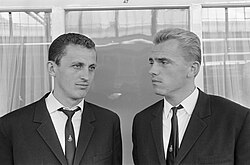
In 1960, Hungary entered the Olympics held in Rome and was drawn into Group D with France, Peru and India. Hungary finished top of the group after winning all matches by a combined goal difference of +12. In the semi-finals, they lost to Denmark 0–2, but beat Italy in the bronze medal match 2–1 thanks to a goals from Orosz and Dunai.
Hungary qualified for the 1962 World Cup, held in Chile. On 31 May 1962, in the first group match, Hungary beat England 2–1 thanks to goals scored by Lajos Tichy and Flórián Albert at El Teniente stadium in Rancagua. The second match on 3 June was even more convincing against Bulgaria; the match was won 6–1 in Rancagua. The last group match was against Argentina and it was a goalless draw. Hungary qualified for the quarter-finals by gaining five points and winning the group. In the quarter-finals, however, Hungary was eliminated by Czechoslovakia by 1–0 at El Teniente.
In 1964, Hungary again qualified for the 1964 Olympics held in Tokyo and was drawn into Group B with defending champions Yugoslavia, Morocco and North Korea, the latter withdrawing. In their first match against Morocco, Hungary won 6–0 with all six goals scored by Ferenc Bene. In their second match, Hungary won narrowly (6–5) against Yugoslavia and advanced into the next round along with runners-up Yugoslavia. In the quarter-finals, Hungary beat Romania 2–0 with goals from Csernai. In the semi-finals, they beat United Arab Republic (Egypt) 6–0 with four goals from Bene and two from Komora. In the final, Hungary beat Czechoslovakia 2–1 thanks from an own goal by Weiss and a goal by Bene, winning their second gold medal.
Hungary qualified for the 1964 European Nations' Cup which was held in Spain. They played against Spain in the semi-finals, losing 2–1 after extra time. The only Hungarian goal was scored by Ferenc Bene. In the third place play-off Hungary beat Denmark 3–1 after extra time.
Hungary also managed to qualify for the 1966 World Cup which was held in England. On 13 July, Hungary lost their first group match against Eusébio's Portugal (3–1) at Old Trafford in Manchester. Two days later, in the second group match Hungary beat Brazil at Goodison Park, Liverpool. In the last group match, on 20 July, Hungary beat Bulgaria 3–1. Hungary finished second in the group and qualified for the quarter-finals, where they were eliminated by the Soviet Union 2–1 at Roker Park in Sunderland.
In 1968 Olympics, Hungary qualified as defending champions to defend their title and was drawn into Group C with Israel, Ghana and El Salvador. Hungary finished top and advanced into the next round with Israel. In the quarter-finals, Hungary beat Guatemala narrowly, 1–0. In the semi-finals, they beat Japan 5–0. In the final, they beat Bulgaria 4–1 and won their third title, being the most successful team at the Olympics in football (Great Britain also won three titles but their first title is in 1904, and football only became an official event in 1908). However, Hungary failed to qualify for the 1970 FIFA World Cup, following a heavy 4–1 defeat to Czechoslovakia during a qualification play-off, which many see as the beginning of a period of long-standing decline.
Flórián Albert was named European Footballer of the Year in 1967. He scored 255 goals in 351 matches from 1958 to 1974.
Slow regression
1970s
Hungary came back again as long-time defending champions in the 1972 Olympics in Munich and was drawn into Group C with Denmark, Iran and Brazil. They finished top and advanced into the next round with Denmark. In their second group round, they were drawn into Group 1 with East Germany, West Germany and Mexico. They again finished top undefeated and advanced into the finals with East Germany. In the finals, they faced Poland and lost 1–2.
Hungary qualified for the finals of the UEFA Euro 1972 which was held in Belgium. In the semi-finals, Hungary faced the Soviet Union and lost 1–0. In the third place play-off, Hungary lost to Belgium 2–1. The Hungarians would not appear at the European Championship again until Euro 2016.
Hungary participated in the 1978 World Cup which was held in Argentina. Facing the hosts, Argentina won the match 2–1. Hungary played their second group match against Italy and the Azzurri emerged victorious, 3–1. Hungary's third match was played against Michel Platini's France losing 3–1.

1980s
During the 1980s, Hungary qualified for the World Cup twice. The first group match of the 1982 tournament in Spain was played against El Salvador, where Hungary won 10–1 at Estadio Nuevo, Elche. After the massive win, the Magyars lost to 4–1 to Diego Maradona's Argentina in the second match of the group stages. Maradona scored twice, while the only Hungarian goal was scored by Pölöskei at the Estadio José Rico Pérez in Alicante. After Hungary drew in the last match against Belgium, they were eliminated from the World Cup.
Hungary's last World Cup appearance to date was the 1986 World Cup in Mexico. In the first match of the group Hungary lost 6–0 to the Soviet Union. Although Hungary won their second match against Canada 2–0, they lost to Michel Platini's France 3–0 in the last group match.
Era of decline
1990s
During the 1990s, Hungary were not able to qualify for any international tournaments except for the 1996 Summer Olympics held in Atlanta. In 1996, the team reached its lowest FIFA World Ranking at 87th. The fall of the Hungarian communist regime caused financial problems to many Hungarian clubs. Formerly successful clubs like Ferencváros and Újpest faced financial crisis and bankruptcy. This had a profound effect on the Hungary national team as well, as earlier, the biggest clubs from Budapest (Ferencváros, Újpest, Honvéd and MTK) produced players for the national side. Another important reason for the decline can be attributed to the Bosman ruling; since the Hungarian clubs lost the financial aid from the state in the early 1990s, they were not able to compete with richer Western European clubs.
Hungarian legend Ferenc Puskás was appointed as the head coach of the national side in 1993. He led the team for only four matches, however, as the former Honvéd and Real Madrid star failed to make an impact. The only success in the 1990s was the qualification of Hungary to the 1996 Summer Olympics. Antal Dunai's team played its first group match against Nigeria and lost to 1–0 in Orlando. In the second group match, Hungary played Brazil and lost 3–1. The last group match was played against Japan, a 3–2 loss. Hungary were eliminated in the 1998 World Cup qualifying play-offs by Yugoslavia with a 12–1 aggregate score.

2000s
During the 2000s, the Hungarian national soccer team faced several challenges and did not achieve significant success in major international tournaments. They struggled to qualify for major competitions like the FIFA World Cup and the UEFA European Championship. Despite their efforts, the team often fell short in the qualification stages, which was a source of disappointment for fans and players alike. The lack of consistent performance and the inability to compete at the highest levels led to a period of stagnation for Hungarian soccer on the international stage.
However, there was a bright spot in 2009 when the Hungary U-20 team won a bronze medal at the FIFA U-20 World Cup in Egypt. The U-20 team’s success was seen as a potential turning point for Hungarian soccer, highlighting the country’s ability to develop young talent, including Vladimir Koman and Ádám Szalai.
Throughout the decade, Hungarian clubs also made some progress in European competitions, though they did not reach the later stages. The domestic league saw fluctuating performances, with clubs like Ferencváros and Debrecen occasionally making it to the group stages of the UEFA Champions League and UEFA Europa League.
Resurgence
2010s
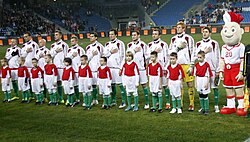
The Hungary national under-20 team head coach Sándor Egervári was appointed as head coach for the senior side ahead of Euro 2012 qualifying in which Hungary were drawn against Finland, Moldova, the Netherlands, San Marino and Sweden. Hungary won six, drew one and lost three games as they finished the group in third place with 19 points. During the qualification process, in September 2011, Hungary reached the 27th place in the FIFA World Ranking, their highest position to date. At the end of the year, the national team played Liechtenstein as a commemoration of the recently deceased Flórián Albert, the only Hungarian football player to win the Ballon d'Or.
Hungary were drawn in Group D in their 2014 World Cup qualifying, along with the Netherlands, Turkey, Romania, Estonia and Andorra. They amassed 14 points entering the penultimate round of games, but suffered a joint national record defeat 8–1 to the Netherlands, which resulted in the resignation of head coach Sándor Egervári. For their final group game, a 2–0 win against Andorra, Hungary were led by caretaker manager József Csábi. They finished in third place in the group, on 17 points, missing out on qualification.
Attila Pintér was appointed as head coach of the national team in December 2013. Some[who?] had seen this decision as controversial, given Pintér's low popularity with fans and players alike. The team played their first game at the newly constructed Groupama Arena on 7 September 2014, a 2–1 defeat to Northern Ireland in Euro 2016 qualifying. Pintér was subsequently dismissed, with Pál Dárdai appointed as a temporary replacement for three matches. He turned down an offer to manage the team on a permanent basis, but was kept on.
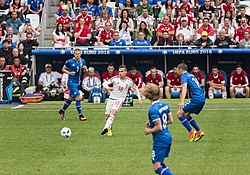
On 15 November 2015, a Storck-led Hungary qualified for its first European Championship (UEFA Euro 2016) in 44 years and its major tournament in 30 years. Hungary beat Norway in the first leg of the qualifying playoffs 1–0; the only goal was scored by László Kleinheisler. On the return match, Hungary beat Norway 2–1 and qualified for the Euro 2016 finals. After beating Austria 2–0 and drawing with Iceland, Hungary played an exciting 3–3 draw against eventual Euro winners Portugal. Hereupon, Hungary managed to qualify for the round of 16 with a game to spare, marking their best Euro or World Cup performance in over 40 years.
Hungary failed to qualify for the 2018 FIFA World Cup in Russia after finishing outside of the qualification places. Along the way, they drew against the Faroe Islands and were humiliated after being defeated by Andorra 1–0. After failing to qualify, manager Bernd Storck resigned. On 10 November 2017, Hungary was embarrassed again when they were defeated by Luxembourg 2–1 in a friendly. On 30 October 2017, Georges Leekens was appointed as a new head coach. Hungary lost both matches in March 2018, the first defeat was another embarrassing one against minnows Kazakhstan (2–3).
On 19 June 2018, after three losses and one draw under his reign, Leekens was let go and Marco Rossi was appointed in his place.
2018–19 UEFA Nations League C saw Hungary drawn with Finland, Greece and Estonia. Hungary had a nearly successful performance, but losses to Finland and Greece shattered their hope to finish in the top of the group. However, UEFA revised the formula aftermath, meaning Hungary was officially promoted to 2020–21 UEFA Nations League B, having finished second before.
The UEFA Euro 2020 qualifying drew a mixed result for the Hungarians. Grouped in group E, they faced Croatia, Wales, Slovakia and Azerbaijan; the former occupied the silver medal in the 2018 FIFA World Cup while the latter was one of 12 host countries in the tournament. Hungary performed successfully against Croatia and Wales at home, obtaining needed victories, as well as successive wins over Azerbaijan. However, two straight defeats to Slovakia and away losses to Croatia and Wales, with the final loss happened when Hungary had a chance to qualify directly, sent Hungary into a disappointing fourth-place finish at the expense of the Welsh who qualified directly instead. However, Hungary was able to obtain a play-off spot, thanked for finishing second in their group at the Nations League, behind Finland, and was scheduled against Bulgaria.
2020s

While Hungary could only gain a play-off spot in hope to reach the UEFA Euro 2020, Hungary's strong result in previous Nations League gathered more optimism. Hungary began their quest in 2020–21 UEFA Nations League B sharing a group with Russia, Turkey and Serbia. Hungary impressed in their 1–0 victory against host Turkey, Dominik Szoboszlai scoring the game's only goal with a 30-meter free kick. However, Hungary faced a setback when Russia, who Hungary had failed to win against since 1978, beat them at home 3–2. A series of good results followed later, with two draws against Russia and Serbia, an important away win over the Serbs in Belgrade, and more importantly, a much needed 2–0 win over Turkey at home. This meant that Hungary was able to gain promotion at the expense of Russia to the 2022–23 UEFA Nations League A.
In October 2020, Hungary participated in the play-offs to qualify for UEFA Euro 2020, where they faced Bulgaria in their first game of the play-off series. After making an away trip to Sofia, Hungary shone with a 3–1 win to reach the final of the play-off to face Iceland a month later, behind closed doors. The team qualified for the tournament winning 2–1, with last-minute strikes from Loïc Nego and Dominik Szoboszlai to take Hungary into the competition despite an earlier mistake by Péter Gulácsi.

With Euro 2020 being postponed to 2021 because of COVID-19, Hungary was drawn in the "group of death" of the tournament. Group F featured Portugal, the defending European champions, France, and Germany. The Hungarians fought against the odds and put on a heroic performance; despite losing 3–0 to Portugal, the Hungarians recorded two points against France and Germany.
2022 again brought the "group of death" for Hungary, as during the 2022–23 UEFA Nations League the team had to face off three former world champions in group A3, Italy, Germany, and England respectively. While prior the matches the team was widely considered to be a key contestant for relegation, the Red-White-Greens quickly proved their worth when they beat Euro 2020 runner-up England 1–0 with a Dominik Szoboszlai penalty an hour into the match. After the victory, expectations were cooled with a 2–1 defeat against Italy in Cesena, nevertheless, an early Zsolt Nagy goal that could only be equalized by Jonas Hofmann resulted in a 1–1 draw against Germany, placing the team second in the group behind Italy. On 14 June, Hungary visited England in Wolverhampton, achieving a stunning 0–4 victory against Gareth Southgate's squad, taking the group's lead after Italy's defeat to Germany. For the last two matchdays, Hungary couldn’t be relegated unless they lost to and England defeated both Germany and Italy. Although England would lose 1-0 to Italy and as a result were relegated in the Nations League with a match to spare anyways, the Hungarians didn’t want to rely on other results as Ádám Szalai, the long-time forward who announced his retirement a day before the match, scored a heeler to win the game against Germany 1–0 in Leipzig. On 26 September, Hungary only needed a draw to qualify for the UEFA Nations League Finals, however they lost to Italy 2–0 in the Puskás Aréna.
Team image
Rivalry
Hungary has a long-standing rivalry with its neighbour Romania. The rivalry dates back to the Treaty of Trianon, where Hungary lost Transylvania to Romania, after World War I. They throw flares and matches between the two sides usually end in a fight between Hungarian and Romanian supporters; however, recently also before the matches conflicts have emerged outside the stadium. This was seen as they shared the same group in qualification for the 1982 FIFA World Cup, UEFA Euro 2000, 2002 World Cup, 2014 World Cup and UEFA Euro 2016.
The match-up between Austria and Hungary is the second most-played international in football (only Argentina–Uruguay met each other in more matches), although the two teams have only met each other three times since 2000.
Supporters
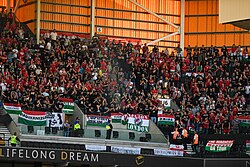
The Carpathian Brigade is an official supporters' group for the Hungary national football team. The first organized debut of this group was at a Hungary vs. Malta 2010 World Cup qualification match on 1 April 2009 at Ferenc Puskás Stadium.
The group was officially formed on 15 May 2009. This date has been commemorated as the group's birthday ever since, with group members displaying fireworks, pyros and organizing marches every year, to celebrate the birth of the "Brigade".
Over the early years of the 2010s, the group would establish themselves as a household name on Ferenc Puskás Stadium's B-stand, and would acquire a reputation for violence and hooliganism.
In September 2013, the Carpathian Brigade would dominate Hungarian headlines after clashing with the police, Romanian supporters, and displaying an overall unruly behaviour during an away day to Bucharest prior to a World-Cup qualifier against Romania. In hindsight, this specific tour to Romania is often considered by many as the starting point of the group's infamy.
In October 2014 Hungarian fans travelled to Bucharest en masse to support the national team in their EURO 2016 qualification game. Just like the previous year, crowd trouble and impromptu fights between Hungarian and Romanian fans occurred ahead of and during the game. After being goaded into a fight by the home fans, Hungarian ultras broke the cordon separating the two fanbases, and attempted to enter the romanian sector. The police prevented the fight from escalating into a full-out mass brawl, by using teargas to separate the crowd. The two sets of fans also clashed with the local police force as well.
In September 2015, Hungary would host Romania for a Euro qualifier in Budapest. On the eve of the match Hungarian fans were looking for Romanians in downtown Budapest, but their effort to fight was spoilt by the police. Prior to the match, members of the Carpathian Brigade attacked the police force and attempted to fight Romanian fans. This would mark one of the most violent days in Hungarian hooligan history. Hungarian ultras hurled beer cans and rocks at the police and threw pyros at a group of Middle Eastern migrants taking refuge at Keleti station. 51 people were detained after the game, four of whom were Romanian. 38 people needed medical help, and six police officers were taken to hospital. Numerous police cars were set on fire, and the outbreak of fighting rendered some trams to temporarily halt functioning.
Heavy support for the Hungary national team also comes from Transylvania, Slovakia, Vojvodina, Zakarpattia and Western Europe.
Kits and crest
Hungary's traditional home colours are cherry red shirts, white shorts and green socks. The combination of the colours represent the Hungarian flag. However, the team sometimes wears all white kit even at home. The coat of arms are worn on the left side of the shirt, where the human heart can be found. When the Hungarian players listen to the national anthem of Hungary, "Himnusz", they usually put their arms on to their chest. The current coat of arms could have always been found on the shirt of the national team in contrast with many other national teams which wear the logo of the football federation. Adidas is currently the designer of the Hungary kits.
Kit suppliers
| Kit supplier | Period |
|---|---|
| Hungary In-House | 1902–1976 |
| United Kingdom Umbro | 1966 |
| West Germany Adidas | 1976–1989 |
| United Kingdom Umbro | 1990–1994 |
| Germany Adidas | 1995–present |
Home stadium

The home stadium of the Hungary national side is the Puskás Aréna. Formerly, it was the Ferenc Puskás Stadium (also called the Népstadion). The stadium was built between 1948 and 1953 using a large number of volunteers, including soldiers. On 23 May 1954, England lost to 7–1 against Hungary. The capacity of the stadium at the end was 35,100 (approved by UEFA) though its original capacity exceeded 100,000. The stadium also hosted one of the Derbies of Budapest, including Ferencváros, Újpest, MTK, Honvéd or Vasas. The national team's final match played at the stadium was a 3–0 win for Hungary against Kazakhstan on 7 June 2014.
On 19 September 2014, UEFA selected Budapest to host three group stage games and one round of 16 game at Euro 2020.
On 15 November 2019, the Puskás Aréna opened with a match against Uruguay. The idea to invite the Uruguay national football team came from Károly Jankovics, who is the leader of the Hungarian community in Montevideo.
Ferencváros' Groupama Arena was the temporary home of the national team between 2014 and 2019 during qualification for Euro 2016, the 2018 World Cup and Euro 2020.
Results and fixtures
The following is a list of match results in the last 12 months, as well as any future matches that have been scheduled.
Win Draw Loss Fixture
2025
| 6 June Friendly | Hungary | 0–2 | Sweden | Budapest, Hungary |
| 19:30 CEST (UTC+02:00) | Nygren 49' Ayari 65' | Stadium: Puskás Aréna Attendance: 55,000 Referee: Atilla Karaoglan (Turkey) |
| 10 June Friendly | Azerbaijan | 1–2 | Hungary | Baku, Azerbaijan |
| 20:00 AZT (UTC+04:00) | Dadashov 7' | B. Varga 5' Szoboszlai 33' | Stadium: Dalga Arena Attendance: 1,200 Referee: Viktor Shimusik (Belarus) |
| 6 September 2026 FIFA World Cup qualification | Republic of Ireland | 2–2 | Hungary | Dublin, Ireland |
| 20:45 (19:45 BST (UTC+01:00)) | Ferguson 49' Idah 90+3' | B. Varga 2' Sallai 15' | Stadium: Aviva Stadium Attendance: 51,137 Referee: Harm Osmers (Germany) |
| 9 September 2026 FIFA World Cup qualification | Hungary | 2–3 | Portugal | Budapest, Hungary |
| 20:45 CEST (UTC+02:00) | Varga 21', 84' | Silva 36' Ronaldo 58' (pen.) Cancelo 86' | Stadium: Puskás Aréna Attendance: 61,473 Referee: Erik Lambrechts (Belgium) |
| 11 October 2026 FIFA World Cup qualification | Hungary | 2–0 | Armenia | Budapest, Hungary |
| 18:00 CEST (UTC+02:00) | Lukács 56' Gruber 90+4' | Stadium: Puskás Aréna Attendance: 57,285 Referee: Chris Kavanagh (England) |
| 14 October 2026 FIFA World Cup qualification | Portugal | 2–2 | Hungary | Lisbon, Portugal |
| 19:45 WEST (UTC+01:00) | Ronaldo 22', 45+3' | Szalai 8' Szoboszlai 90+1' | Stadium: Estádio José Alvalade Attendance: 47,854 Referee: Srđan Jovanović (Serbia) |
| 13 November 2026 FIFA World Cup qualification | Armenia | 0–1 | Hungary | Yerevan, Armenia |
| 21:00 AMT (UTC+04:00) | B. Varga 33' | Stadium: Vazgen Sargsyan Republican Stadium Attendance: 14,247 Referee: José María Sánchez (Spain) |
| 16 November 2026 FIFA World Cup qualification | Hungary | 2–3 | Republic of Ireland | Budapest, Hungary |
| 15:00 CET (UTC+01:00) | Lukacs 3' Varga 37' | Parrott 15' (pen.), 80', 90+6' | Stadium: Puskás Aréna Attendance: 59,411 Referee: Espen Eskås (Norway) |
2026
| 28 March Friendly | Hungary | 1–0 | Slovenia | Budapest, Hungary |
| 18:00 UTC+1 | Schön 79' | Stadium: Puskás Aréna Attendance: 50,252 Referee: Rohit Saggi (Norway) |
| 31 March Friendly | Hungary | 0–0 | Greece | Budapest, Hungary |
| 19:00 UTC+2 | Stadium: Puskás Aréna Attendance: 54,849 Referee: Florian Badstübner (German) |
| 5 June Friendly | Hungary | v | Finland | Budapest, Hungary |
| --:-- UTC+2 | Stadium: Puskás Aréna |
| 9 June Friendly | Hungary | v | Kazakhstan | Debrecen, Hungary |
| --:-- UTC+2 | Stadium: Nagyerdei Stadion |
| 25 September 2026–27 UEFA Nations League | Hungary | v | Ukraine | Budapest, Hungary |
| 20:45 UTC+2 | Stadium: Puskás Aréna |
| 28 September 2026–27 UEFA Nations League | Northern Ireland | v | Hungary | Belfast, Northern Ireland |
| 19:45 UTC+1 | Stadium: Windsor Park |
| 2 October 2026–27 UEFA Nations League | Hungary | v | Georgia | Budapest, Hungary |
| 20:45 UTC+2 | Stadium: Puskás Aréna |
| 5 October 2026–27 UEFA Nations League | Ukraine | v | Hungary | TBD |
| 21:45 UTC+3 |
| 14 November 2026–27 UEFA Nations League | Georgia | v | Hungary | Tbilisi, Georgia |
| 21:00 UTC+4 | Stadium: Boris Paichadze Dinamo Arena |
| 17 November 2026–27 UEFA Nations League | Hungary | v | Northern Ireland | Budapest, Hungary |
| 20:45 UTC+1 | Stadium: Puskás Aréna |
Coaching staff
| Position | Name |
|---|---|
| Head coach | Italy Marco Rossi |
| Assistant Coaches | Italy Cosimo Inguscio Hungary Ádám Szalai |
| Goalkeeping Coach | Hungary István Kövesfalvi |
| Technical Manager | Hungary Attila Tömő |
| Fitness Coaches | Hungary Gábor Schuth Hungary Szabolcs Szusza |
| Doctor | Hungary Ádám Szilas |
| Chief Press Officer | Hungary Gergő Szabó |
| Masseur | Hungary Tamás Halmai |
| Kit Manager | Hungary László Hegyesi |
Players
Current squad
The following players were called up for the friendly matches against Slovenia and Greece on 28 and 31 March 2026; respectively. Caps and goals updated as of 31 March 2026, after the match against Greece.
Recent call-ups
The following players have also been selected by Hungary in the past twelve months.
Player records
As of 11 October 2025
Players in bold are still active with Hungary.
Most appearances

| Rank | Player | Caps | Goals | Career |
|---|---|---|---|---|
| 1 | Balázs Dzsudzsák | 109 | 21 | 2007–2022 |
| 2 | Gábor Király | 108 | 0 | 1998–2016 |
| 3 | József Bozsik | 101 | 11 | 1947–1962 |
| 4 | Zoltán Gera | 97 | 26 | 2002–2017 |
| 5 | Roland Juhász | 95 | 6 | 2004–2016 |
| 6 | László Fazekas | 92 | 20 | 1968–1983 |
| 7 | Ádám Nagy | 88 | 2 | 2015–present |
| 8 | Gyula Grosics | 86 | 0 | 1947–1962 |
| Ádám Szalai | 86 | 26 | 2009–2022 | |
| 10 | Ferenc Puskás | 85 | 84 | 1945–1956 |
Top goalscorers

| Rank | Player | Goals | Caps | Ratio | Career |
|---|---|---|---|---|---|
| 1 | Ferenc Puskás (list) | 84 | 85 | 0.99 | 1945–1956 |
| 2 | Sándor Kocsis (list) | 75 | 68 | 1.1 | 1948–1956 |
| 3 | Imre Schlosser (list) | 59 | 68 | 0.87 | 1906–1927 |
| 4 | Lajos Tichy | 51 | 72 | 0.71 | 1955–1971 |
| 5 | György Sárosi | 42 | 62 | 0.68 | 1931–1943 |
| 6 | Nándor Hidegkuti | 39 | 69 | 0.57 | 1945–1958 |
| 7 | Ferenc Bene | 36 | 76 | 0.47 | 1962–1979 |
| 8 | Gyula Zsengellér | 32 | 39 | 0.82 | 1936–1947 |
| Tibor Nyilasi | 32 | 70 | 0.46 | 1975–1985 | |
| 10 | Flórián Albert | 31 | 74 | 0.42 | 1959–1974 |
Captains
| Name | Captained | Major tournament as captain |
|---|---|---|
| Tibor Nyilasi | 1981–1985 | 1982 FIFA World Cup |
| Antal Nagy | 1985–1986 | 1986 FIFA World Cup |
| Imre Garaba | 1986–1991 | |
| Lajos Détári | 1991–1994 | |
| István Kozma | 1995 | |
| János Bánfi | 1996–1997 | |
| Béla Illés | 1998–2001 | |
| Gábor Király | 2002–2003 | |
| Zoltán Gera | 2004–2005 | |
| Pál Dárdai | 2006 | |
| Zoltán Gera | 2007–2013 | |
| Balázs Dzsudzsák | 2014–2019 | UEFA Euro 2016 |
| Ádám Szalai | 2020–2022 | UEFA Euro 2020 |
| Dominik Szoboszlai | 2022– | UEFA Euro 2024 |
Competitive record
FIFA World Cup
Champions Runners-up Third place Fourth place
| FIFA World Cup record | Qualification record | |||||||||||||||
|---|---|---|---|---|---|---|---|---|---|---|---|---|---|---|---|---|
| Year | Round | Position | Pld | W | D | L | GF | GA | Squad | Position | Pld | W | D | L | GF | GA |
| Uruguay 1930 | Did not enter | Did not enter | ||||||||||||||
| Italy 1934 | Quarter-finals | 6th | 2 | 1 | 0 | 1 | 5 | 4 | Squad | 1st | 2 | 2 | 0 | 0 | 8 | 2 |
| France 1938 | Runners-up | 2nd | 4 | 3 | 0 | 1 | 15 | 5 | Squad | 1st | 1 | 1 | 0 | 0 | 11 | 1 |
| Brazil 1950 | Did not enter | Did not enter | ||||||||||||||
| Switzerland 1954 | Runners-up | 2nd | 5 | 4 | 0 | 1 | 27 | 10 | Squad | Qualified by default | ||||||
| Sweden 1958 | Group stage | 10th | 4 | 1 | 1 | 2 | 7 | 5 | Squad | 1st | 4 | 3 | 0 | 1 | 12 | 4 |
| Chile 1962 | Quarter-finals | 5th | 4 | 2 | 1 | 1 | 8 | 3 | Squad | 1st | 4 | 3 | 1 | 0 | 11 | 5 |
| England 1966 | 6th | 4 | 2 | 0 | 2 | 8 | 7 | Squad | 1st | 4 | 3 | 1 | 0 | 8 | 3 | |
| Mexico 1970 | Did not qualify | P/O | 7 | 4 | 1 | 2 | 17 | 11 | ||||||||
| West Germany 1974 | 3rd | 6 | 2 | 4 | 0 | 12 | 7 | |||||||||
| Argentina 1978 | Group stage | 15th | 3 | 0 | 0 | 3 | 3 | 8 | Squad | P/O | 6 | 4 | 1 | 1 | 15 | 6 |
| Spain 1982 | 14th | 3 | 1 | 1 | 1 | 12 | 6 | Squad | 1st | 8 | 4 | 2 | 2 | 13 | 8 | |
| Mexico 1986 | 18th | 3 | 1 | 0 | 2 | 2 | 9 | Squad | 1st | 6 | 5 | 0 | 1 | 12 | 4 | |
| Italy 1990 | Did not qualify | 3rd | 8 | 2 | 4 | 2 | 8 | 12 | ||||||||
| United States 1994 | 4th | 8 | 2 | 1 | 5 | 6 | 11 | |||||||||
| France 1998 | P/O | 10 | 3 | 3 | 4 | 11 | 20 | |||||||||
| South Korea Japan 2002 | 4th | 8 | 2 | 2 | 4 | 14 | 13 | |||||||||
| Germany 2006 | 4th | 10 | 4 | 2 | 4 | 13 | 14 | |||||||||
| South Africa 2010 | 4th | 10 | 5 | 1 | 4 | 10 | 8 | |||||||||
| Brazil 2014 | 3rd | 10 | 5 | 2 | 3 | 21 | 20 | |||||||||
| Russia 2018 | 3rd | 10 | 4 | 1 | 5 | 14 | 14 | |||||||||
| Qatar 2022 | 4th | 10 | 5 | 2 | 3 | 19 | 13 | |||||||||
| Canada Mexico United States 2026 | 3rd | 6 | 2 | 2 | 2 | 11 | 10 | |||||||||
| Morocco Portugal Spain 2030 | To be determined | To be determined | ||||||||||||||
| Saudi Arabia 2034 | ||||||||||||||||
| Total | Runners-up | 9/22 | 32 | 15 | 3 | 14 | 87 | 57 | — | Total | 138 | 65 | 30 | 44 | 246 | 186 |
UEFA European Championship
Champions Runners-up Third place/Semi-finalists Fourth place
| UEFA European Championship record | Qualification record | |||||||||||||||
|---|---|---|---|---|---|---|---|---|---|---|---|---|---|---|---|---|
| Year | Round | Position | Pld | W | D | L | GF | GA | Squad | Position | Pld | W | D | L | GF | GA |
| France 1960 | Did not qualify | FR | 2 | 0 | 0 | 2 | 1 | 4 | ||||||||
| Spain 1964 | Third place | 3rd | 2 | 1 | 0 | 1 | 4 | 3 | Squad | QF | 6 | 4 | 2 | 0 | 14 | 8 |
| Italy 1968 | Did not qualify | QF | 8 | 5 | 1 | 2 | 17 | 8 | ||||||||
| Belgium 1972 | Fourth place | 4th | 2 | 0 | 0 | 2 | 1 | 3 | Squad | QF | 9 | 5 | 3 | 1 | 17 | 9 |
| Socialist Federal Republic of Yugoslavia 1976 | Did not qualify | 2nd | 6 | 3 | 1 | 2 | 15 | 8 | ||||||||
| Italy 1980 | 2nd | 6 | 2 | 2 | 2 | 9 | 9 | |||||||||
| France 1984 | 4th | 8 | 3 | 1 | 4 | 18 | 17 | |||||||||
| West Germany 1988 | 3rd | 8 | 4 | 0 | 4 | 13 | 11 | |||||||||
| Sweden 1992 | 4th | 8 | 2 | 4 | 2 | 10 | 9 | |||||||||
| England 1996 | 4th | 8 | 2 | 2 | 4 | 7 | 13 | |||||||||
| Belgium Netherlands 2000 | 4th | 10 | 3 | 3 | 4 | 14 | 10 | |||||||||
| Portugal 2004 | 4th | 8 | 3 | 2 | 3 | 15 | 9 | |||||||||
| Austria Switzerland 2008 | 6th | 12 | 4 | 0 | 8 | 11 | 22 | |||||||||
| Poland Ukraine 2012 | 3rd | 10 | 6 | 1 | 3 | 22 | 14 | |||||||||
| France 2016 | Round of 16 | 13th | 4 | 1 | 2 | 1 | 6 | 8 | Squad | 3rd (PO winners) | 12 | 6 | 4 | 2 | 14 | 10 |
| Europe 2020 | Group stage | 20th | 3 | 0 | 2 | 1 | 3 | 6 | Squad | 4th (PO winners) | 10 | 6 | 0 | 4 | 13 | 13 |
| Germany 2024 | 18th | 3 | 1 | 0 | 2 | 2 | 5 | Squad | 1st | 8 | 5 | 3 | 0 | 16 | 7 | |
| United Kingdom Republic of Ireland 2028 | To be determined | To be determined | ||||||||||||||
| Italy Turkey 2032 | ||||||||||||||||
| Total | Third place | 5/17 | 14 | 3 | 4 | 7 | 16 | 25 | — | Total | 139 | 63 | 29 | 47 | 226 | 181 |
UEFA Nations League
Champions Runners-up Third place Fourth place
| UEFA Nations League record | ||||||||||||
|---|---|---|---|---|---|---|---|---|---|---|---|---|
| Season | Division | Group | Round | Pos | Pld | W | D | L | GF | GA | RK | P/R |
| 2018–19 | C | 2 | Group stage | 2nd | 6 | 3 | 1 | 2 | 9 | 6 | 31/55 | |
| 2020–21 | B | 3 | 1st | 6 | 3 | 2 | 1 | 7 | 4 | 20/55 | ||
| 2022–23 | A | 3 | 2nd | 6 | 3 | 1 | 2 | 8 | 5 | 8/55 | ||
| 2024–25 | A | 3 | 3rd | 8 | 1 | 3 | 4 | 5 | 17 | 11/55 | ||
| Total | Group stage | 4/4 | 26 | 10 | 7 | 9 | 29 | 32 | 8th |
Olympic Games

The first three Olympic football events were only unofficial tournament, with a few nations represented by a club team. Beginning in 1908, the Olympic football tournament became an official event.
After 1988, the football event was changed into an under-23-only tournament.
Gold medal Silver medal Bronze medal Fourth place
| Olympic Games record | ||||||||||
|---|---|---|---|---|---|---|---|---|---|---|
| Year | Host | Round | Position | Pld | W | D | L | GF | GA | Squad |
| 1896 | Greece Athens | No football tournament | ||||||||
| 1900 | France Paris | Did not enter | ||||||||
| 1904 | United States St. Louis | |||||||||
| 1908 | United Kingdom London | Withdrew | ||||||||
| 1912 | Sweden Stockholm | Round 2 | 10th | 1 | 0 | 0 | 1 | 0 | 7 | Squad |
| 1920 | Belgium Antwerp | Did not enter | ||||||||
| 1924 | France Paris | Round 2 | 9th | 2 | 1 | 0 | 1 | 5 | 3 | Squad |
| 1928 | Netherlands Amsterdam | Did not enter | ||||||||
| 1932 | United States Los Angeles | No football tournament | ||||||||
| 1936 | Nazi Germany Berlin | Round 1 | 13th | 1 | 0 | 0 | 1 | 0 | 3 | Squad |
| 1948 | United Kingdom London | Did not enter | ||||||||
| 1952 | Finland Helsinki | Gold medal | 1st | 6 | 6 | 0 | 0 | 20 | 2 | Squad |
| 1956 | Australia Melbourne | Did not enter | ||||||||
| 1960 | Italy Rome | Bronze medal | 3rd | 5 | 4 | 0 | 1 | 17 | 9 | Squad |
| 1964 | Japan Tokyo | Gold medal | 1st | 5 | 5 | 0 | 0 | 22 | 6 | Squad |
| 1968 | Mexico Mexico City | Gold medal | 1st | 5 | 5 | 1 | 0 | 18 | 3 | Squad |
| 1972 | West Germany Munich | Silver medal | 2nd | 7 | 5 | 1 | 1 | 21 | 5 | Squad |
| 1976 | Canada Montreal | Did not qualify | ||||||||
| 1980 | Soviet Union Moscow | |||||||||
| 1984 | United States Los Angeles | Withdrew | ||||||||
| 1988 | South Korea Seoul | Did not qualify | ||||||||
| Since 1992 | See Hungary national under-21 football team | |||||||||
| Total | Gold medal | 8/19 | 32 | 26 | 2 | 5 | 103 | 38 | — |
Team records

The match between Austria and Hungary in Vienna in 1902 was the first international match played between two non-British European countries.
Hungary was the first team from outside the United Kingdom and Ireland to beat England at home, famously winning 6–3 at Wembley on 25 November 1953. Six months later they beat England 7–1 in 1954, this time in Budapest. This still ranks as England's record defeat.
Gusztáv Sebes holds the highest ratio of victories per game (over 30 matches only) with 72% (49 wins, 12, draws, 7 defeats).
Hungary has the distinction of setting the highest Elo football rating ever achieved by a national side, a high of 2230 in 1954. It was set after Hungary's 4–2 victory over Uruguay in the 1954 World Cup semi-finals on 30 June 1954, the final match in their 31-game unbeaten streak (see below). Germany and England come in second (2223 in 2014) and third (2212 in 1928) respectively.
The youngest-ever player of the Hungarian national team, József Horváth, is the second youngest scorer of European national teams according the IFFHS.
Ferenc Puskás is recognized to be the top scorer of the 20th century, by the IFFHS.
Top international goalscorers of the 20th century
Two of the top six international goalscorers of the 20th century were Hungarian, both of them from the Golden Team of the 1950s.[citation needed]
| # | Player | Nation | Goals scored | Games played | Years active |
|---|---|---|---|---|---|
| 1. | Ferenc Puskás | Hungary | 84 goals | 85 internationals | 1945–1956 |
| 2. | Kunishige Kamamoto | Japan | 80 goals | 84 internationals | 1964–1977 |
| 3. | Pelé | Brazil | 77 goals | 91 internationals | 1957–1971 |
| 4. | Sándor Kocsis | Hungary | 75 goals | 68 internationals | 1948–1956 |
| 5. | Majed Abdullah | Saudi Arabia | 71 goals | 116 internationals | 1978–1994 |
| 6. | Gerd Müller | West Germany | 68 goals | 62 internationals | 1966–1974 |
Undefeated run
Hungary was the first team to eclipse an 1888 Scottish record of being undefeated in 22 consecutive matches. They bettered the old mark by nine additional games to 31, now the third-longest unbeaten streak, going undefeated from 14 May 1950 to 4 July 1954, when they lost the World Cup final to West Germany.
Italy holds the longest string at 37 unbeaten matches.
* = not official
| Opponent | Type | Date | Result |
|---|---|---|---|
| Poland | Exhibition game | 4 June 1950 | 5–2 |
| Albania | Exhibition game | 24 September 1950 | 12–0 |
| Austria | Exhibition game | 29 October 1950 | 4–3 |
| Bulgaria | Exhibition game | 12 November 1950 | 1–1 |
| Poland | Exhibition game | 27 May 1951 | 6–0 |
| Czechoslovakia | Exhibition game | 14 October 1951 | 2–1 |
| Finland | Exhibition game | 18 November 1951 | 8–0 |
| East Germany | Exhibition game | 18 May 1952 | 5–0* |
| Poland | Exhibition game | 15 June 1952 | 5–1 |
| Finland | Exhibition game | 22 June 1952 | 6–1 |
| Romania | 1952 Olympics | 15 July 1952 | 2–1 |
| Italy | 1952 Olympics | 21 July 1952 | 3–0 |
| Turkey | 1952 Olympics | 24 July 1952 | 7–1 |
| Sweden | 1952 Olympics | 28 July 1952 | 6–0 |
| Yugoslavia | 1952 Olympics | 2 August 1952 | 2–0 |
| Switzerland | Central European Cup | 20 September 1952 | 4–2 |
| Czechoslovakia | Exhibition game | 19 October 1952 | 5–0 |
| Austria | Exhibition game | 26 April 1953 | 1–1 |
| Italy | Central European Cup | 17 May 1953 | 3–0 |
| Sweden | Exhibition game | 5 July 1953 | 4–2 |
| Bulgaria | Exhibition game | 4 October 1953 | 1–1 |
| Czechoslovakia | Exhibition game | 4 October 1953 | 5–1 |
| Austria | Exhibition game | 11 October 1953 | 3–2 |
| Sweden | Exhibition game | 15 November 1953 | 2–2 |
| England | Exhibition game | 25 November 1953 | 6–3 |
| Egypt | Exhibition game | 12 February 1954 | 3–0 |
| Austria | Exhibition game | 11 April 1954 | 1–0 |
| England | Exhibition game | 23 May 1954 | 7–1 |
| South Korea | 1954 FIFA World Cup | 17 June 1954 | 9–0 |
| West Germany | 1954 FIFA World Cup | 20 June 1954 | 8–3 |
| Brazil | 1954 FIFA World Cup | 27 June 1954 | 4–2 |
| Uruguay | 1954 FIFA World Cup | 30 June 1954 | 4–2 (a.e.t.) |
Record defeat against Hungary
A total of 10 countries have suffered their biggest ever defeat against the Hungarian national football team. Of these teams, 6 are members of UEFA, 3 of CAF and one of CONCACAF. The win against El Salvador is the biggest scoreline in men's FIFA World Cup final history.
| 29 October 1911 Friendly | Hungary | 9–0 | Switzerland | Budapest, Hungary |
| 15:00 (UTC+1:00) | Bíró 1' Koródy 5', 26' Schlosser 18', 56', 62', 79', 83', 85' | Stadium: Millenáris Sporttelep Attendance: 15,000 Referee: Hugo Meisl (Austria) | ||
| Note: Imre Schlosser set the goal scoring record for Hungary (23 goals). This match was also the biggest victory of the Hungary football team at the time. |
| 6 April 1924 Friendly | Hungary | 7–1 | Italy | Budapest, Hungary |
| 16:30 (UTC+1:00) | Braun 17', 42' (pen.) Eisenhoffer 49' Molnár 59', 60', 69' Opata 70' | Cevenini 76' (pen.) | Stadium: Hungária körúti stadion Attendance: 35,000 Referee: Max Seemann (Austria) |
| 25 March 1938 1938 FIFA World Cup qualification | Hungary | 11–1 | Greece | Budapest, Hungary |
| Zsengellér 14', 23' (pen.), 24', 65', 81', 83' Titkos 17', 65' Vincze 26' Nemes 36', 40', 51' | Makris 89' | Stadium: Hungária körúti stadion Attendance: 12,000 Referee: Denis Xifando (Romania) |
| 6 June 1948 1948 Balkan Cup | Hungary | 9–0 | Romania | Budapest, Hungary |
| Mészáros 30', 46' Egresi 43', 61', 72' Puskás 58', 82' Kocsis 67', 85' | Stadium: Megyeri úti Stadion Attendance: 45,000 Referee: Antun Mlinarić (Yugoslavia) |
| 24 September 1950 Friendly | Hungary | 12–0 | Albania | Budapest, Hungary |
| 15:30 | Puskás 18', 36', 75', 82' Budai 33', 52', 60', 65' Palotás 39', 50' Kocsis 42', 53' | Stadium: Megyeri úti Stadion Attendance: 38,000 Referee: Nemčovský Josef (Czechoslovakia) |
| 23 May 1954 Friendly | Hungary | 7–1 | England | Budapest, Hungary |
| Lantos 10' Puskás 17', 71' Kocsis 19', 57' Hidegkuti 59' Tóth 63' | Broadis 68' | Stadium: Népstadion Attendance: 92,000 Referee: Giorgio Bernardi (Italy) |
| 24 July 1960 Friendly | Hungary | 10–1 | Tunisia | Budapest, Hungary |
| Albert 6', 70', 81', 88' Göröcs 17' (40) Solymosi 32' Pál 38' Kuharszki 49', 76' | Stadium: Népstadion Attendance: 25,000 Referee: József Pósfai (Hungary) |
| 11 October 1964 1964 Olympics | Hungary | 6–0 | Morocco | Tokyo, Japan |
| 14:00 | Bene 13', 38' (pen.), 70', 74', 78', 87' | Stadium: National Olympic Stadium Attendance: 65,793 Referee: Kim Duk-chun (South Korea) |
| 15 June 1982 1982 World Cup | Hungary | 10–1 | El Salvador | Elche, Spain |
| 21:00 CEST | Nyilasi 4', 83' Pölöskei 11' Fazekas 23', 54' Tóth 50' L. Kiss 69', 72', 76' Szentes 70' | Ramírez Zapata 64' | Stadium: Nuevo Estadio Attendance: 23,000 Referee: Ibrahim Youssef Al-Doy (Bahrain) |
All-time team record
The following table shows Hungary's all-time international record, correct as of 31 March 2026.
| Against | Played | Won | Drawn | Lost | GF | GA | GD |
|---|---|---|---|---|---|---|---|
| Total | 1011 | 475 | 221 | 315 | 2017 | 1484 | +533 |
Head-to-head record
The following table shows Hungary's all-time international record. Updated 31 March 2026, after the match against Greece.
Positive Record Neutral Record Negative Record
| Against | Played | Won | Drawn | Lost | GF | GA | GD |
|---|---|---|---|---|---|---|---|
| Albania | 8 | 5 | 1 | 2 | 19 | 2 | +17 |
| Algeria | 1 | 1 | 0 | 0 | 3 | 1 | +2 |
| Andorra | 6 | 5 | 0 | 1 | 17 | 3 | +14 |
| Antigua and Barbuda | 1 | 1 | 0 | 0 | 3 | 0 | +3 |
| Argentina | 7 | 1 | 1 | 5 | 6 | 15 | −9 |
| Armenia | 3 | 3 | 0 | 0 | 5 | 0 | +5 |
| Australia | 3 | 0 | 0 | 3 | 2 | 8 | −6 |
| Austria | 137 | 67 | 30 | 40 | 299 | 252 | +47 |
| Azerbaijan | 8 | 8 | 0 | 0 | 21 | 3 | +18 |
| Belarus | 3 | 0 | 2 | 1 | 4 | 7 | −3 |
| Belgium | 13 | 2 | 2 | 9 | 16 | 31 | −15 |
| Bohemia | 5 | 2 | 2 | 1 | 18 | 14 | +4 |
| Bolivia | 2 | 2 | 0 | 0 | 9 | 2 | +7 |
| Bosnia and Herzegovina | 6 | 3 | 3 | 0 | 8 | 3 | +5 |
| Brazil | 6 | 3 | 1 | 2 | 14 | 12 | +2 |
| Bulgaria | 25 | 14 | 6 | 5 | 60 | 27 | +33 |
| Canada | 2 | 2 | 0 | 0 | 3 | 0 | +3 |
| Chile | 3 | 1 | 1 | 1 | 6 | 9 | −3 |
| China | 1 | 0 | 0 | 1 | 1 | 2 | −1 |
| Colombia | 1 | 1 | 0 | 0 | 3 | 1 | +2 |
| Costa Rica | 1 | 1 | 0 | 0 | 1 | 0 | +1 |
| Croatia | 12 | 2 | 6 | 4 | 10 | 19 | −9 |
| Cyprus | 8 | 7 | 0 | 1 | 14 | 5 | +9 |
| Czech Republic | 10 | 4 | 4 | 2 | 24 | 20 | +4 |
| Czechoslovakia | 39 | 20 | 10 | 9 | 85 | 60 | +15 |
| Denmark | 16 | 9 | 4 | 3 | 40 | 16 | +24 |
| East Germany | 17 | 9 | 4 | 4 | 30 | 17 | +13 |
| El Salvador | 2 | 1 | 1 | 0 | 11 | 2 | +9 |
| Egypt | 4 | 2 | 1 | 1 | 9 | 5 | +4 |
| England | 26 | 7 | 3 | 16 | 36 | 61 | −25 |
| Estonia | 7 | 5 | 1 | 1 | 17 | 5 | +12 |
| Faroe Islands | 4 | 3 | 1 | 0 | 4 | 1 | +3 |
| Finland | 18 | 12 | 3 | 3 | 47 | 12 | +35 |
| France | 23 | 12 | 3 | 8 | 48 | 32 | +16 |
| Georgia | 2 | 1 | 0 | 1 | 5 | 4 | +1 |
| Germany | 57 | 21 | 17 | 19 | 99 | 99 | 0 |
| Greece | 23 | 6 | 7 | 10 | 37 | 33 | +4 |
| Iceland | 12 | 8 | 1 | 3 | 24 | 12 | +12 |
| India | 1 | 1 | 0 | 0 | 2 | 1 | +1 |
| Iran | 4 | 4 | 0 | 0 | 11 | 1 | +10 |
| Israel | 6 | 2 | 2 | 2 | 6 | 5 | +1 |
| Italy | 36 | 9 | 9 | 18 | 57 | 67 | −10 |
| Ivory Coast | 1 | 0 | 1 | 0 | 0 | 0 | 0 |
| Japan | 2 | 2 | 0 | 0 | 4 | 2 | +2 |
| Jordan | 1 | 0 | 1 | 0 | 1 | 1 | 0 |
| Kazakhstan | 2 | 1 | 0 | 1 | 5 | 3 | +2 |
| Kosovo | 1 | 1 | 0 | 0 | 2 | 0 | +2 |
| Kuwait | 1 | 1 | 0 | 0 | 1 | 0 | +1 |
| Latvia | 7 | 6 | 0 | 1 | 16 | 7 | +9 |
| Lebanon | 1 | 1 | 0 | 0 | 4 | 1 | +3 |
| Liechtenstein | 3 | 2 | 1 | 0 | 10 | 0 | +10 |
| Lithuania | 7 | 5 | 2 | 0 | 18 | 4 | +14 |
| Luxembourg | 12 | 10 | 1 | 1 | 50 | 14 | +36 |
| Malta | 12 | 9 | 2 | 1 | 28 | 6 | +22 |
| Mexico | 7 | 1 | 1 | 5 | 6 | 15 | −9 |
| Moldova | 7 | 4 | 2 | 1 | 10 | 6 | +4 |
| Montenegro | 5 | 1 | 2 | 2 | 7 | 8 | −1 |
| Netherlands | 19 | 5 | 3 | 11 | 30 | 58 | −26 |
| New Zealand | 3 | 3 | 0 | 0 | 6 | 2 | +4 |
| North Macedonia | 3 | 2 | 1 | 0 | 6 | 0 | +6 |
| Northern Ireland | 7 | 5 | 1 | 1 | 9 | 4 | +5 |
| Norway | 19 | 9 | 5 | 5 | 35 | 20 | +15 |
| Peru | 2 | 0 | 0 | 2 | 3 | 5 | −2 |
| Poland | 34 | 21 | 5 | 8 | 92 | 43 | +49 |
| Portugal | 16 | 0 | 5 | 11 | 14 | 38 | −24 |
| Qatar | 3 | 2 | 1 | 0 | 8 | 2 | +6 |
| Republic of Ireland | 16 | 5 | 7 | 4 | 30 | 25 | +5 |
| Romania | 26 | 11 | 8 | 7 | 48 | 32 | +16 |
| Russia | 31 | 6 | 9 | 16 | 47 | 52 | −5 |
| San Marino | 6 | 6 | 0 | 0 | 26 | 0 | +26 |
| Saudi Arabia | 2 | 0 | 2 | 0 | 2 | 2 | 0 |
| Scotland | 9 | 4 | 2 | 3 | 18 | 14 | +4 |
| Serbia | 37 | 18 | 10 | 9 | 64 | 58 | +6 |
| Slovakia | 6 | 0 | 2 | 4 | 2 | 7 | −5 |
| Slovenia | 5 | 2 | 0 | 3 | 4 | 5 | −1 |
| South Korea | 2 | 2 | 0 | 0 | 10 | 0 | +10 |
| Spain | 13 | 3 | 5 | 5 | 18 | 21 | −3 |
| Sweden | 46 | 18 | 10 | 18 | 90 | 80 | +10 |
| Switzerland | 47 | 30 | 5 | 12 | 132 | 69 | +63 |
| Turkey | 18 | 10 | 2 | 6 | 37 | 22 | +15 |
| Ukraine | 2 | 2 | 0 | 0 | 5 | 2 | +3 |
| United Arab Emirates | 2 | 2 | 0 | 0 | 6 | 1 | +5 |
| United States | 3 | 1 | 1 | 1 | 2 | 2 | 0 |
| Uruguay | 4 | 1 | 2 | 1 | 7 | 6 | +1 |
| Wales | 12 | 4 | 2 | 6 | 15 | 17 | −2 |
| Total | 1011 | 475 | 221 | 315 | 2,017 | 1,484 | +533 |
FIFA ranking
Last updated on 19 December 2024
| Key to FIFA World Ranking table |
|---|
| Highest position |
| Lowest position |
| Year | Jan | Febr. | Mar. | Apr. | May | Jun. | Jul. | Aug. | Sep. | Oct. | Nov. | Dec. |
|---|---|---|---|---|---|---|---|---|---|---|---|---|
| 1992 | – | – | – | – | – | – | – | – | – | – | – | 36. (–) |
| 1993 | – | – | – | – | – | – | – | 42. (36) | 48. (34) | 49. (33) | 50. (34) | 50. (34) |
| 1994 | 50. (34) | 49. (34) | 52. (32) | 53. (32) | 49. (33) | 56. (30) | 55 (31.) | 55 (31.) | 54. (32) | 52. (32) | 59. (31) | 61. (31) |
| 1995 | 61. (31) | 63. (30) | 63. (30) | 57. (32) | 53. (35) | 54. (35) | 55. (35) | 61. (30) | 54. (32) | 65. (32) | 60. (33) | 62. (33) |
| 1996 | 64. (33) | 66. (33) | 66. (33) | 74. (29) | 82. (26) | 82. (26) | 87. (26) | 81. (29) | 74. (32) | 78. (32) | 72. (34) | 75. (34) |
| 1997 | 75. (34) | 76. (34) | 76. (34) | 72. (35) | 74. (35) | 71. (38) | 71. (38) | 72. (38) | 71. (38) | 68. (40) | 78. (37) | 77. (37) |
| 1998 | 77. (37) | 84. (36) | 82. (36) | 73. (37) | 62. (41) | 62. () | 56. (42) | 60. (41) | 59. (41) | 49. (44) | 45. (46) | 46. (47) |
| 1999 | 45. (533)1 | 46. (531) | 47. (528) | 45. (540) | 44. (540) | 46. (532) | 48. (531) | 50. (530) | 43. (547) | 46. (538) | 47. (536) | 45. (533) |
| 2000 | 46. (533) | 50. (532) | 50. (530) | 53. (526) | 54. (524) | 53. (523) | 50. (529) | 53. (528) | 49. (540) | 53. (532) | 48. (555) | 47. (556) |
| 2001 | 48. (556) | 49. (554) | 47. (560) | 48. (559) | 53. (551) | 53. (561) | 54. (559) | 54. (557) | 64. (540) | 67. (532) | 64. (540) | 66. (537) |
| 2002 | 67. (537) | 68. (535) | 68. (531) | 68. (528) | 68. (523) | 68. (523) | 67. (511) | 71. (499) | 64. (517) | 54. (546) | 58. (533) | 56. (533) |
| 2003 | 58. (532) | 56. (538) | 56. (535) | 58. (534) | 54. (544) | 49. (570) | 48. (568) | 48. (564) | 52. (549) | 67. (525) | 67. (524) | 72. (517) |
| 2004 | 72. (516) | 74. (514) | 67. (531) | 72. (519) | 68. (522) | 74. (519) | 78. (514) | 77. (514) | 76. (523) | 68. (540) | 74. (539) | 64. (562) |
| 2005 | 63. (562) | 65. (561) | 69. (556) | 69. (556) | 69. (552) | 65. (561) | 66. (559) | 65. (557) | 66. (557) | 66. (562) | 71. (551) | 74. (547) |
| 2006 | 70. (552) | 72. (550) | 72. (548) | 75. (538) | 76. (535) | 76. (535) | 84. (383)2 | 80. (383) | 59. (484) | 76. (437) | 67. (466) | 62. (483) |
| 2007 | 61. (494) | 64. (474) | 64. (474) | 58. (518) | 57. (521) | 66. (461) | 65. (461) | 65. (464) | 55. (544) | 48. (630) | 52. (581) | 50. (588) |
| 2008 | 50. (594) | 52. (598) | 51. (594) | 56. (546) | 57. (546) | 52. (580) | 52. (591) | 50. (591) | 50. (561) | 62. (507) | 56. (551) | 47. (603) |
| 2009 | 47. (606) | 43. (629) | 48. (596) | 44. (662) | 43. (662) | 43. (687) | 44. (681) | 43. (681) | 47. (669) | 50. (645) | 55. (603) | 54. (613) |
| 2010 | 52. (615) | 48. (645) | 52. (589) | 56. (567) | 57. (565) | 57. (565) | 62. (534) | 62. (534) | 51. (567) | 44. (598) | 43. (615) | 42. (632) |
| 2011 | 41. (632) | 37. (632) | 36. (654) | 52. (559) | 52. (559) | 45. (603) | 47. (603) | 45. (613) | 27. (754) | 36. (701) | 37. (665) | 37. (665) |
| 2012 | 37. (665) | 37. (678) | 37. (658) | 36. (692) | 35. (692) | 31. (735) | 31. (716) | 28. (746) | 37. (663) | 49. (593) | 30. (753) | 32. (750) |
| 2013 | 32. (750) | 33. (728) | 32. (752) | 33. (749) | 33. (749) | 33. (759) | 32. (749) | 30. (746) | 30. (744) | 43. (636) | 44. (668) | 44. (668) |
| 2014 | 46. (668) | 44. (673) | 43. (652) | 44. (623) | 45. (623) | 47. (624) | 38. (642) | 34. (656) | 54. (548) | 50. (561) | 44. (632) | 45. (632) |
| 2015 | 45. (632) | 48. (634) | 46. (659) | 43. (665) | 43. (665) | 42. (685) | 31. (763) | 35. (763) | 37. (740) | 33. (741) | 33. (759) | 20. (945) |
| 2016 | 20. (945) | 19. (945) | 19. (945) | 18. (925) | 18. (925) | 20. (886) | 19. (915) | 19. (915) | 20. (913) | 22. (891) | 26. (826) | 26. (826) |
| 2017 | 26. (826) | 27. (830) | 27. (834) | 31. (801) | 31. (801) | 33. (802) | 57. (616) | 56. (616) | 59. (629) | 53. (642) | 53. (630) | 53. (630) |
| 2018 | 54. (630) | 49. (630) | 50. (637) | 50. (604) | 49. (604) | 51. (612) | 51. (612) | 51. (1409)3 | 49. (1409) | 55. (1400) | 51. (1412) | 51. (1412) |
| 2019 | 51. (1412) | 52. (1412) | 52. (1412) | 51. (1419) | 51. (1419) | 42. (1442) | 45. (1442) | 45. (1442) | 50. (1429) | 50. (1429) | 52. (1416) | 52. (1416) |
| 2020 | 52. (1416) | 52. (1416) | 52. (1416) | 52. (1416) | 52. (1416) | 52. (1416) | 52. (1416) | 52. (1418) | 47. (1439) | 40. (1460) | 40. (1460) | 40. (1460) |
| 2021 | 40. (1460) | 40. (1460) | 37. (1469) | 37. (1469) | 37. (1469) | 37. (1469) | 37. (1469) | 37. (1474) | 40. (1457) | 43. (1450) | 39. (1465) | 39. (1466) |
| 2022 | 39. (1466) | 41. (1466) | 40. (1466) | 40. (1466) | 40. (1466) | 37. (1487) | 37. (1487) | 37. (1487) | 37. (1487) | 36. (1492) | 36. (1492) | 36. (1493) |
| 2023 | 36. (1493) | 36. (1493) | 36. (1493) | 33. (1504) | 33. (1504) | 36. (1505) | 36. (1505) | 36. (1505) | 32. (1518) | 30. (1522) | 27. (1525) | 27. (1525) |
| 2024 | 27. (1525) | 27. (1525) | 27. (1525) | 26. (1532) | 26. (1532) | 27. (1529) | 31. (1518) | 31. (1518) | 32. (1511) | 32. (1519) | 30. (1517) | 30. (1517) |
| 2025 | 30. (1517) |
Notes
- Note 1: in January 1999 FIFA changed the system of the ranking calculation
- Note 2: in July 2006 FIFA changed the system of the ranking calculation
- Note 3: in August 2018 FIFA changed the system of the ranking calculation
Honours
Global
- FIFA World Cup Runners-up (2): 1938, 1954
- Olympic Games Gold medal (3): 1952, 1964, 1968 Silver medal (1): 1972 Bronze medal (1): 1960
Continental
- UEFA European Championship Third place (1): 1964
Regional
- Central European International Cup Champions (1): 1948–53 Runners-up (1): 1955–60 Third place (2): 1931–32, 1933–35
- Balkan Cup Champions (1): 1947
Summary
| Competition | Total | |||
|---|---|---|---|---|
| FIFA World Cup | 0 | 2 | 0 | 2 |
| UEFA European Championship | 0 | 0 | 1 | 1 |
| Olympic Games | 3 | 1 | 1 | 5 |
| Total | 3 | 3 | 2 | 8 |
See also
- Austria–Hungary football rivalry
- Hungary-Romania football rivalry
- Hungary men's national under-21 football team
- Hungary men's national under-19 football team
- Hungary men's national under-17 football team
- Hungary women's national football team