Secretary-General of the United Nations
In-game article clicks load inline without leaving the challenge.
The secretary-general of the United Nations (UNSG or UNSECGEN) is the Head of the United Nations who oversees the United Nations Secretariat, one of the six principal organs of the United Nations, it also represents all 193 nations on the global stage.
The role of the secretary-general and of the secretariat is laid out by Chapter XV (Articles 97 to 101) of the United Nations Charter. However, the office's qualifications, selection process and tenure are open to interpretation; they have been established by custom.
Selection and term of office
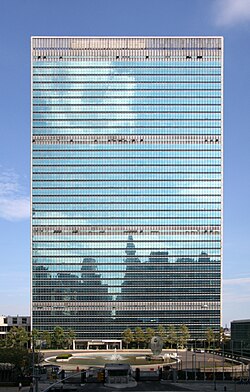
The secretary-general is appointed by the General Assembly upon the recommendation of the Security Council. As the recommendation must come from the Security Council, any of the five permanent members of the council can veto a nomination. Most secretaries-general are compromise candidates from middle powers and have little prior fame.
Unofficial qualifications for the job have been set by precedent in previous selections. The appointee may not be a citizen of any of the Security Council's five permanent members. The General Assembly resolution 51/241 in 1997 stated that, in the appointment of "the best candidate", due regard should be given to regional (continental) rotation of the appointee's national origin and to gender equality, although no woman has yet served as secretary-general. All appointees to date have been career diplomats.
The length of the term is discretionary, but all secretaries-general since 1971 have been appointed to five-year terms. Every secretary-general since 1961 has been re-selected for a second term, with the exception of Boutros Boutros-Ghali, who was vetoed by the United States in the 1996 selection. While the position does not have a formal term limit, incumbent secretary-generals have avoided seeking a third term since the 1981 selection, when China cast a record 16 vetoes against a third term for Kurt Waldheim.
The selection process is opaque and is often compared to a papal conclave. Since 1981, the Security Council has voted in secret in a series of straw polls; it then submits the winning candidate to the General Assembly for ratification. No candidate has ever been rejected by the General Assembly, and only once, in 1950, has a candidate been voted upon despite a UNSC veto.
In 2016, the General Assembly and the Security Council sought nominations and conducted public debates for the first time. However, the Security Council voted in private and followed the same process as previous selections, leading the president of the General Assembly to complain that it "does not live up to the expectations of the membership and the new standard of openness and transparency".
Powers and duties
The UN Charter designates the secretary-general as the "chief administrative officer" of the UN, and gives the secretary-general the power to make employment decisions about Secretariat staff. The Charter also empowers the secretary-general to inform the Security Council of "any matter which in his opinion may threaten the maintenance of international peace and security", and allows the secretary-general to perform "such other functions as are entrusted" by other United Nations organs. These provisions have been interpreted as providing broad leeway for officeholders to serve a variety of roles as suited to their preferences, skill set, or circumstances. The UN describes the role of the secretary-general as combining the functions and responsibilities of an advocate, diplomat, civil servant, and chief executive officer.
The secretary-general's routine duties include overseeing the activities and duties of the secretariat; attending sessions with United Nations bodies; consulting with world leaders, government officials, and other stakeholders; and travelling the world to engage with global constituents and bring attention to certain international issues. The secretary-general publishes an annual report on the work of the UN, which includes an assessment of its activities and an outline future priorities. The secretary-general is also the chairman of the United Nations System Chief Executives Board for Coordination (CEB), a body composed of the heads of all UN funds, programmes, and specialised agencies, which meets twice a year to discuss substantive and management issues facing the United Nations System.
Many of the secretary-general's powers are informal and left open to individual interpretation; some appointees have opted for more activist roles, while others have been more technocratic or administrative. The secretary-general is often reliant upon the use of their "good offices", described as "steps taken publicly and in private, drawing upon his independence, impartiality and integrity, to prevent international disputes from arising, escalating or spreading". Consequently, observers have variably described the office as the "world's most visible bully pulpit" or as the "world's moderator". Examples include Dag Hammarskjöld's promotion of an armistice between the warring parties of Arab-Israel conflict, Javier Perez de Cuellar's negotiation of a ceasefire in the Iran-Iraq War, and U Thant's role in deescalating the Cuban Missile Crisis.
Residence
The official residence of the secretary-general is a townhouse at 3 Sutton Place, Manhattan, in New York City, United States. The townhouse was built for Anne Morgan in 1921 and donated to the United Nations in 1972.
Initiatives
Youth 2030
Youth 2030 is a UN system-wide Youth Strategy, launched on 24 September 2018 by the Secretary-General. It "seeks to strengthen and increase commitments at the global, regional and national level to meet young people's needs, help them realize their rights, and recognize their positive contributions as agents of change. Denmark was the first member country to make a financial commitment to the strategy, and on 19 September the Misk Foundation signed a partnership agreement with the Office of the United Nations Secretary-General's Envoy on Youth, pledging support.
Our Common Agenda
Our Common Agenda is "the Secretary-General's vision for the future of global cooperation". It calls for cooperation and multilateralism to promote action that achieves the Sustainable Development Goals.
Youth Advisory Group on Climate Change
The Secretary-General's Youth Advisory Group on Climate Change was launched on 27 July 2020, in the midst of the COVID-19 pandemic. The group was convened under the Youth2030 strategy and Our Common Agenda, as a way for the Secretary-General to engage directly with young people on issues related to climate change. Initially established with seven members, it was expanded to 14 with the third cohort beginning its term on 12 August 2025. Each group has a two-year term.
List of secretaries-general
| No. | Portrait | Name (born–died) | Term of office | Country | UN Regional Group | ||
|---|---|---|---|---|---|---|---|
| Took office | Left office | Time in office | |||||
| Acting | Gladwyn Jebb (1900–1996) | 24 October 1945 | 2 February 1946 | 101 days | United Kingdom | Commonwealth of Nations | |
| Jebb served as executive secretary of the Preparatory Commission of the United Nations in August 1945 and was appointed Acting United Nations secretary-general until the appointment of the first secretary-general. | |||||||
| 1 | Trygve Lie (1896–1968) | 2 February 1946 | 10 November 1952 | 6 years, 282 days | Norway | Western Europe | |
| Lie, a foreign minister and former labour leader, was recommended by the Soviet Union to fill the post. After the UN involvement in the Korean War, the Soviet Union vetoed Lie's reappointment in 1951. The United States circumvented the Soviet Union's veto and recommended reappointment directly to the General Assembly. Lie was reappointed by a vote of 46 to 5, with eight abstentions. The Soviet Union remained hostile to Lie; he resigned in 1952. | |||||||
| 2 | Dag Hammarskjöld (1905–1961) | 10 April 1953 | 18 September 1961 † | 8 years, 161 days | Sweden | Western European and Others | |
| After a series of candidates were vetoed, Hammarskjöld emerged as an option that was acceptable to the Security Council. He was re-elected unanimously to a second term in 1957. Angered by Hammarskjöld's leadership during the Congo Crisis, the Soviet Union suggested replacing the position of secretary-general by a troika. Facing great opposition from the Western nations, the Soviet Union gave up on its suggestion. Hammarskjöld died in a plane crash in Northern Rhodesia (now Zambia) in 1961. U.S. president John F. Kennedy called him "the greatest statesman of our century". Hammarskjöld was posthumously awarded the 1961 Nobel Peace Prize. | |||||||
| Acting | U Thant (1909–1974) | 3 November 1961 | 30 November 1962 | 1 year, 27 days | Burma | Asian | |
| 3 | 30 November 1962 | 31 December 1971 | 9 years, 31 days | ||||
| Following Hammarskjöld's death, the developing world insisted on a non-European secretary-general; U Thant was unanimously recommended but due to opposition from the French (Thant had chaired a committee on Algerian independence) and the Arabs (Burma supported Israel), Thant was only appointed for the remainder of Hammarskjöld's term (1 year and 5 months, until 10 April 1963). The following year, on 30 November, Thant was unanimously re-elected and his partial term was promoted to a full 5-year term ending on 3 November 1966. On 2 December 1966, Thant was again unanimously re-elected, and appointed by a General Assembly session to a 5-year-and-2-month term aligned with the calendar year. Thant did not seek a third election. Thant was the first Asian secretary-general. | |||||||
| 4 | Kurt Waldheim (1918–2007) | 1 January 1972 | 31 December 1981 | 10 years | Austria | Western European and Others | |
| Waldheim launched a discreet but effective campaign to become the secretary-general. Despite initial vetoes from China and the United Kingdom, Waldheim was elected in the third round. In 1976, China initially blocked Waldheim's re-election but relented on the second ballot. In 1981, Waldheim's re-election for a third term was blocked by China, which vetoed his selection through 15 rounds. From 1986 to 1992, Waldheim served as president of Austria. In 1985, it was revealed that a post-World War II UN War Crimes Commission had labeled Waldheim as a suspected war criminal based on his involvement with the Wehrmacht. | |||||||
| 5 | Javier Pérez de Cuéllar (1920–2020) | 1 January 1982 | 31 December 1991 | 10 years | Peru | Latin American and Caribbean | |
| Pérez de Cuéllar was selected after a five-week deadlock between the re-election of Waldheim and China's candidate, Salim Ahmed Salim of Tanzania. Pérez de Cuéllar, a Peruvian diplomat who a decade earlier had served as President of the UN Security Council during his time as Peruvian ambassador to the UN, was a compromise candidate. He became the first and thus far only secretary-general from the Americas. He was re-elected unanimously in 1986. | |||||||
| 6 | Boutros Boutros-Ghali (1922–2016) | 1 January 1992 | 31 December 1996 | 5 years | Egypt | African | |
| The 102-member Non-Aligned Movement insisted that the next secretary-general come from Africa. With a majority in the General Assembly and the support of China, the "Non-Aligned Movement had the votes necessary to block any unfavorable candidate". The Security Council conducted five anonymous straw polls and Boutros-Ghali emerged with 11 votes on the fifth round. In 1996, the United States vetoed the re-appointment of Boutros-Ghali due to political fallout over the Battle of Mogadishu. | |||||||
| 7 | Kofi Annan (1938–2018) | 1 January 1997 | 31 December 2006 | 10 years | Ghana | African | |
| On 13 December 1996, the Security Council recommended Annan. He was confirmed four days later by the vote of the General Assembly. Annan and the UN were the recipients of the 2001 Nobel Peace Prize. | |||||||
| 8 | Ban Ki-moon (b. 1944) | 1 January 2007 | 31 December 2016 | 10 years | South Korea | Asia-Pacific | |
| Ban was Foreign Minister of South Korea and became the first East Asian to be selected as the secretary-general. He was unanimously elected to a second term on 21 June 2011. | |||||||
| 9 | António Guterres (b. 1949) | 1 January 2017 | Incumbent | 9 years, 105 days | Portugal | Western European and Others | |
| Guterres is the first former head of government to become secretary-general, and the first secretary-general born after the establishment of the United Nations. He was the prime minister of Portugal from 1995 to 2002. He has also been president of the Socialist International (1999–2005) and United Nations High Commissioner for Refugees (2005–2015). Since August 2024, Guterres also holds East-Timorese citizenship. |

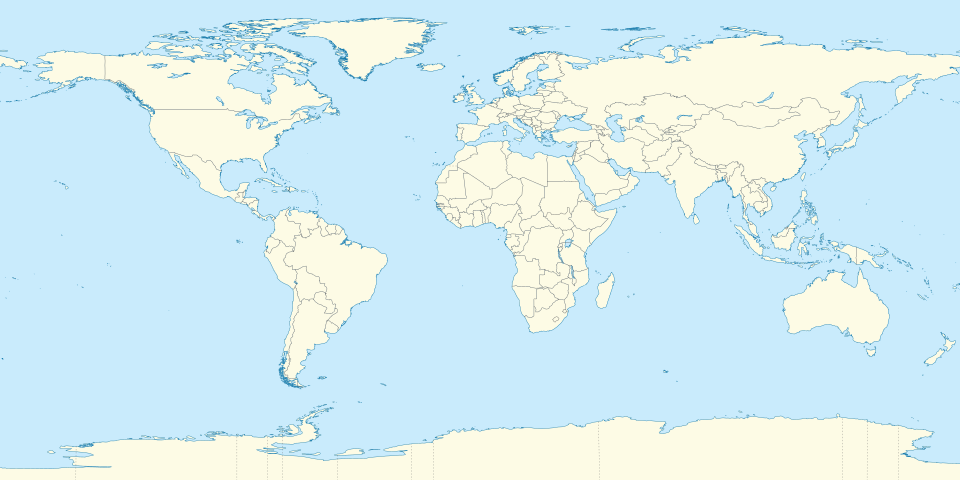
Statistics
| # | Country of Origin | Secretary-General | Born | Age at start of first term | Time in office (total) | Age at retirement | Lifespan | |
|---|---|---|---|---|---|---|---|---|
| Died | Age | |||||||
| – | United Kingdom | Jebb, Gladwy Gladwyn Jebb | 25 April 1900 | 45 years, 182 days 24 October 1945 | 102 days | 45 years, 283 days 2 February 1946 | 24 October 1996 | 96 years, 182 days |
| 1 | Norway | Lie, TrygveTrygve Lie | 16 July 1896 | 49 years, 201 days 2 February 1946 | 6 years, 283 days | 56 years, 117 days 10 November 1952 | 30 December 1968 | 72 years, 167 days |
| 2 | Sweden | Hammarskjöld, DagDag Hammarskjöld | 29 July 1905 | 47 years, 255 days 10 April 1953 | 8 years, 162 days | 56 years, 51 days 18 September 1961 | 18 September 1961 | 56 years, 51 days |
| 3 | Burma | Thant, U U Thant | 22 January 1909 | 52 years, 285 days 3 November 1961 | 10 years, 59 days | 62 years, 343 days 31 December 1971 | 25 November 1974 | 65 years, 307 days |
| 4 | Austria | Waldheim, Kurt Kurt Waldheim | 21 December 1918 | 53 years, 11 days 1 January 1972 | 10 years, 0 days | 63 years, 10 days 31 December 1981 | 14 June 2007 | 88 years, 175 days |
| 5 | Peru | Pérez de Cuéllar, Javier Javier Pérez de Cuéllar | 19 January 1920 | 61 years, 347 days 1 January 1982 | 10 years, 0 days | 71 years, 346 days 31 December 1991 | 4 March 2020 | 100 years, 45 days |
| 6 | Egypt | Boutros-Ghali, Boutros Boutros Boutros-Ghali | 14 November 1922 | 69 years, 48 days 1 January 1992 | 5 years, 0 days | 74 years, 47 days 31 December 1996 | 16 February 2016 | 93 years, 94 days |
| 7 | Ghana | Annan, Kofi Kofi Annan | 8 April 1938 | 58 years, 268 days 1 January 1997 | 10 years, 0 days | 68 years, 267 days 31 December 2006 | 18 August 2018 | 80 years, 132 days |
| 8 | South Korea | Ban, Ki-moon Ban Ki-moon | 13 June 1944 | 62 years, 202 days 1 January 2007 | 10 years, 0 days | 72 years, 201 days 31 December 2016 | 2026-04-16(living) | 81 years, 307 days |
| 9 | Portugal | Guterres, AntónioAntónio Guterres | 30 April 1949 | 67 years, 246 days 1 January 2017 | 9 years, 105 days | (incumbent) | 2026-04-16(living) | 76 years, 351 days |
By regional group
| UN Regional Group | Secretaries-General | Terms |
|---|---|---|
| African Group | 2 | 3 |
| Asia-Pacific Group | 2 | 4 |
| Eastern European Group | 0 | 0 |
| Latin American and Caribbean Group | 1 | 2 |
| Western European and Others Group | 4 | 8 |
See also
Further reading
- Jodok Troy (2020). "The United Nations Secretary-General as an International Civil Servant". The International History Review. 43(4):906–927.