Unicameralism
In-game article clicks load inline without leaving the challenge.
Unicameralism (from uni- "one" + Latin camera "chamber") is a type of legislature consisting of one house or assembly that legislates and votes as one. Unicameralism has become an increasingly common type of legislature, making up nearly 60% of all national legislatures and an even greater share of subnational legislatures.
Sometimes, as in New Zealand and Denmark, unicameralism comes about through the abolition of one of two bicameral chambers, or, as in Sweden, through the merger of the two chambers into a single one, while in others a second chamber has never existed from the beginning.
Rationale for unicameralism and criticism
The principal advantage of a unicameral system is more efficient lawmaking, as the legislative process is simpler and there is no possibility of deadlock between two chambers. Proponents of unicameralism have also argued that it reduces costs, even if the number of legislators stays the same, since there are fewer institutions to maintain and support financially. More popular among modern-day democratic countries, unicameral, proportional legislatures are widely seen as both more democratic and effective.
Proponents of bicameral legislatures say that having two legislative chambers offers an additional restraint on the majority, though critics note that there are other ways to restrain majorities, such as through non-partisan courts and a robust constitution.
List of unicameral legislatures
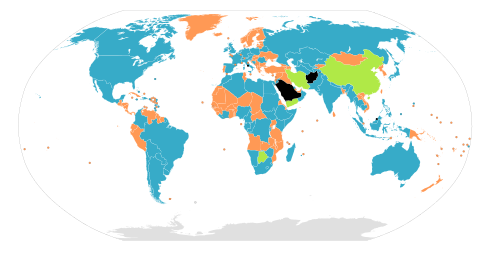
Approximately half of the world's sovereign states are currently unicameral. The People's Republic of China is somewhat in-between, with a legislature and a formal advisory body. China has a Chinese People's Political Consultative Conference which meets alongside the National People's Congress, in many respects an advisory "upper house".
Many subnational entities have unicameral legislatures. These include the state of Nebraska and territories of Guam and the Virgin Islands in the United States, the Chinese special administrative regions of Hong Kong and Macao, the Australian state of Queensland as well as the Northern Territory and the Australian Capital Territory, a majority of the provinces of Argentina, all of the provinces and territories in Canada, all of the regions of Italy, all of the provinces of Nepal, all of the Spanish autonomous communities, both of the autonomous regions of Portugal, most of the states and union territories of India, all of the states of Nigeria, and all of the states of Brazil and Germany. In the United Kingdom, the devolved Scottish Parliament, the Welsh Senedd, the Northern Ireland Assembly, and the London Assembly are also unicameral.
National (UN member states and observers)
Federal
| Country | Unicameral body | Seats | Notes |
|---|---|---|---|
| Germany | Bundestag | 630 | The Bundestag is technically the unicameral parliament of Germany, since the Basic Law (German constitution) defines the Bundesrat not as a chamber of the legislature, but as a completely separate legislative institution. |
| Iraq | Council of Representatives | 329 | A provision exists for the founding of a "Council of Union", but no move to this effect has been initiated by the existing Council |
| Micronesia | Congress | 14 | |
| Saint Kitts and Nevis | National Assembly | 15 | |
| United Arab Emirates | Federal National Council | 40 | |
| Venezuela | National Assembly | 285 |
Unitary
Territorial
State parliaments with limited recognition
| Country | Unicameral body | Seats | Notes |
|---|---|---|---|
| Abkhazia | People's Assembly | 35 | |
| Kosovo | Assembly | 120 | |
| Northern Cyprus | Assembly of the Republic | 50 | |
| Sahrawi Arab Democratic Republic | National Council | 53 | |
| South Ossetia | Parliament | 34 | |
| Taiwan | Legislative Yuan | 113 | The original constitution is partially superseded by the additional articles only on Taiwan which replaced the tricameral parliament into a unicameral one. A sunset clause in the additional articles will terminate them in the event of a hypothetical resumption of ROC rule in mainland China. |
| Transnistria | Supreme Council | 33 |
Subnational
Federations

- All legislatures and legislative councils of the regions and communities of Belgium
- All legislative assemblies in all states of Brazil
- All legislative assemblies of the provinces and territories of Canada
- All Landtage of the states of Germany
- All legislative assemblies of the states of Malaysia
- All legislatures in all states of Mexico
- All legislatures of the provinces in Nepal
- All legislatures of the provinces and territories in Pakistan
- The legislature of the state of Nebraska, and council of the District of Columbia in the United States
- The tribal councils of the Five Civilized Tribes in the state of Oklahoma
- Parliament of Queensland and the legislative assemblies of the territories of Australia (but not the other states)
- Provincial legislatures of the provinces of South Africa
- Narodna skupština of Republika Srpska
- 15 of the 23 provinces of Argentina — Chaco, Chubut, Córdoba, Formosa, Jujuy, La Pampa, La Rioja, Misiones, Neuquén, Río Negro, San Juan, Santa Cruz, Santiago del Estero, Tierra del Fuego, Tucumán, and the autonomous city of Buenos Aires.
- 22 of the 28 states and union territories of India — Arunachal Pradesh, Assam, Chhattisgarh, Goa, Gujarat, Haryana, Himachal Pradesh, Jharkhand, Kerala, Madhya Pradesh, Manipur, Meghalaya, Mizoram, Nagaland, Odisha, Punjab, Rajasthan, Sikkim, Tamil Nadu, Tripura, Uttarakhand, and West Bengal; and 3 of the union territories — Delhi, Jammu and Kashmir, and Puducherry.
Devolved governments
- Regional councils of France
- Iraqi Kurdistan Parliament
- Regional councils of Italy
- Regional House of Representative councils of Indonesian provinces, regencies, and cities
- Bangsamoro Parliament in Philippines
- Parliaments (variously named Parlamento, Cortes, Junta) of the Autonomous communities of Spain
- City and County Councils of the administrative divisions of Taiwan
- Councils of the oblasts of Ukraine
- Countries of the United Kingdom: Northern Ireland Assembly Scottish Parliament Welsh Senedd
Others
- Local People's Congresses of all levels of provinces, regions, and municipalities of the People's Republic of China
- National Council of the Palestine Liberation Organization
List of historical unicameral legislatures
National
- The First Protectorate Parliament and Second Protectorate Parliament of the Kingdom of England, regulated by the Instrument of Government (dissolved)
- Parliament of the Kingdom of Scotland until 1707 (dissolved)
- Congress of the Confederation was unicameral before being replaced in 1789 by the current, bicameral United States Congress.
- Provisional Congress of the Confederate States was unicameral before being replaced by the bicameral Confederate States Congress in 1862.
- Ministry of Dáil Éireann of the Irish Republic a revolutionary state between 1919 to 1922 was unicameral during the Irish War of Independence. Replaced by the bicameral Irish Free State government's Seanad (upper house) & Dail (lower house)
- Congress of Deputies of Second Spanish Republic was unicameral between 1931 and 1936. Dissolved at the end of Spanish Civil War
- Sejm of Poland under Soviet influence was unicameral between 1947 and 1989. The bicameral parliament was restored following the end of communist rule.
- The Parliament of Uzbekistan was unicameral before being replaced in 2005 by the current, bicameral Oliy Majlis.
- National Assembly of Cameroon was unicameral before being replaced in 2013 by the current, bicameral Parliament of Cameroon.
- Chamber of People's Representative of Equatorial Guinea was unicameral before being replaced in 2013 by the current, bicameral Parliament of Equatorial Guinea.
- National Assembly of Kenya was the country's unicameral legislature before becoming the lower house of the bicameral Parliament of Kenya in 2013.
- National Assembly of Ivory Coast was the country's unicameral legislature before becoming the lower house of the bicameral Parliament of Ivory Coast in 2016.
- Central National Committee and the Provisional People's Representative Council of Indonesia was the unicameral legislature of the Republic of Indonesia during the War of Independence and the Liberal democracy era.
- The National Assembly of Togo
- The National Assembly of Chad
Subnational
- General Assembly of Georgia until 1789
- General Assembly of Pennsylvania until 1790
- General Assembly of Vermont until 1836
- Legislature of Nebraska
Other
- Assembly of Representatives of Yishuv community in Mandatory Palestine from 1920 to 1949
Unicameralism in the Philippines
Though the current Congress of the Philippines is bicameral, the country experienced unicameralism in 1898 and 1899 (during the First Philippine Republic), from 1935 to 1941 (the Commonwealth era) and from 1943 to 1944 (during the Japanese occupation). Under the 1973 Constitution, the legislative body was called Batasang Pambansa, which functioned also a unicameral legislature within a parliamentary system (1973–1981) and a semi-presidential system (1981–1986) form of government.
The ongoing process of amending or revising the current Constitution and form of government is popularly known as Charter Change. A shift to a unicameral parliament was included in the proposals of the constitutional commission created by President Gloria Macapagal Arroyo. Unlike in the United States, senators in the Senate of the Philippines are elected not per district and state but nationally; the Philippines is a unitary state. The Philippine government's decision-making process, relative to the United States, is more rigid, highly centralised, much slower and susceptible to political gridlock. As a result, the trend for unicameralism as well as other political system reforms are more contentious in the Philippines.
While Congress is bicameral, all local legislatures are unicameral: the Bangsamoro Parliament, the Sangguniang Panlalawigan (Provincial Boards), Sangguniang Panlungsod (City Councils), Sangguniang Bayan (Municipal Councils), Sangguniang Barangay (Barangay Councils), and the Sangguniang Kabataan (Youth Councils).
Unicameralism in the United States
Three U.S. states and territories have a unicameral legislature: the state of Nebraska, and the territories of Guam and the Virgin Islands.
The Nebraska Legislature (also called the Unicameral) is the supreme legislative body of the state of Nebraska and the only unicameral state legislature in the United States. Its members are called "senators", as it was originally the upper house of a bicameral legislature before the Nebraska House of Representatives dissolved in 1937. The legislature is also notable for being nonpartisan and officially recognizes no party affiliation, making Nebraska unique among US states. With 49 members, it is also the smallest legislature of any US state.
A 2018 study found that efforts to adopt unicameralism in Ohio and Missouri failed due to rural opposition. There was a fear in rural communities that unicameralism would diminish their influence in state government.
Local government legislatures of counties, cities, or other political subdivisions within states are usually unicameral and have limited lawmaking powers compared to their state and federal counterparts.
Some of the 13 colonies which became independent, such as Pennsylvania, New Jersey and New Hampshire had initially introduced strong unicameral legislature and (relatively) less powerful governors with no veto power. Pennsylvania's constitution lasted only 14 years. In 1790, conservatives gained power in the state legislature, called a new constitutional convention, and rewrote the constitution. The new constitution substantially reduced universal male suffrage, gave the governor veto power and patronage appointment authority, and added an upper house with substantial wealth qualifications to the unicameral legislature. Thomas Paine called it a constitution unworthy of America.[citation needed]
In 1944, Missouri held a vote on changing the General Assembly to a unicameral one, which was narrowly rejected by the voters 52.42–47.58. Only the city of St. Louis and the St. Louis County voted in favor, whilst Jackson County (containing the bulk of Kansas City) narrowly voted against, and all other counties voted against the change to unicameralism.
In 1970, North Dakota voters voted to call a constitutional convention. In 1972, a change to a unicameral legislature was approved by 69.36–30.64, however, since the voters rejected the new constitution at the same referendum, it never took effect.
In 1999, Governor Jesse Ventura proposed converting the Minnesota Legislature into a single chamber. Although debated, the idea was never adopted.
The US territory of Puerto Rico held a non-binding referendum in 2005. Voters approved changing its Legislative Assembly to a unicameral body by 456,267 votes in favor (83.7%) versus 88,720 against (16.3%). If both the territory's House of Representatives and Senate had approved by a 2⁄3 vote the specific amendments to the Puerto Rico Constitution that are required for the change to a unicameral legislature, another referendum would have been held in the territory to approve such amendments. If those constitutional changes had been approved, Puerto Rico could have switched to a unicameral legislature as early as 2015.
On June 9, 2009, the Maine House of Representatives voted to form a unicameral legislature, but the measure did not pass the Senate.
Because of legislative gridlock in 2009, former Congressman Rick Lazio, a prospective candidate for governor, has proposed that New York adopt unicameralism.
The United States as a whole was subject to a unicameral Congress during the years 1781–1788, when the Articles of Confederation were in effect. The Confederate States of America, pursuant to its Provisional Constitution, in effect from February 8, 1861, to February 22, 1862, was governed by a unicameral Congress.
See also
- Bicameralism – Legislature with two chambers
- Tricameralism – Government practice of having three legislative chambers
Further reading
- Martin, Shane; Strøm, Kaare W. (2023). "Cameral Structures". Legislative Assemblies: Voters, Members, and Leaders. Oxford University Press. doi:. ISBN 9780198890829.